
Introducing solid foods to your baby is a major milestone that brings both excitement and a fair share of messy adjustments. A successful transition to complementary feeding depends heavily on choosing the right baby food eating set. The ideal beginner set is designed to accommodate a baby’s developing motor skills while prioritizing safety, durability, and ease of cleaning. Rather than purchasing adult tableware in miniature, parents must look for specialized features that support early self-feeding and parent-led spoon-feeding.
When selecting your baby’s first tableware, the core components to look for include shallow bowls, soft-tipped spoons, and reliable suction bases. Shallow bowls make it easier for parents to scoop out purees and for babies to see their food. Spoons designed for beginners must feature soft, flexible tips that protect sensitive, teething gums. Suction bases are highly practical for keeping dishes secured to the table, though their holding power depends greatly on the texture of the surface beneath them.
Material safety is the most critical factor when choosing any feeding product. Parents should always verify “food-grade silicone” and “BPA-free” labels on the actual product packaging rather than relying solely on online marketing claims. High-quality food-grade silicone is non-porous, highly resistant to bacteria, and does not leach chemicals into warm food. Checking for compliance certifications on the physical box ensures the materials meet rigorous international safety standards before they ever touch your baby’s food.
Products mentioned in this guide
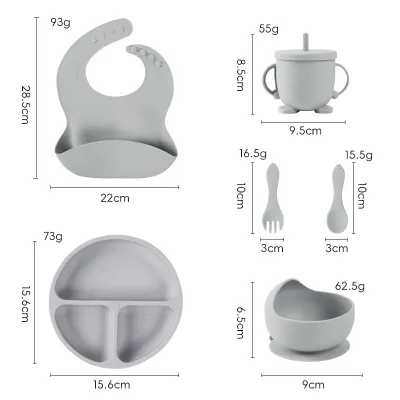
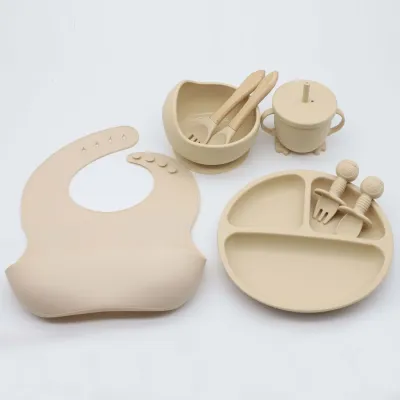
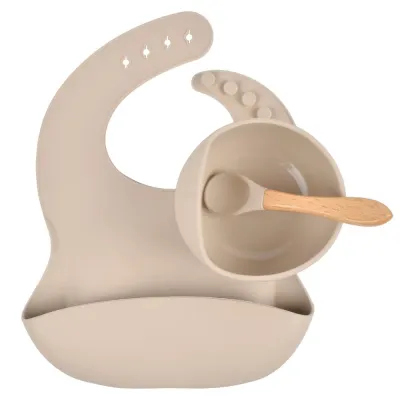
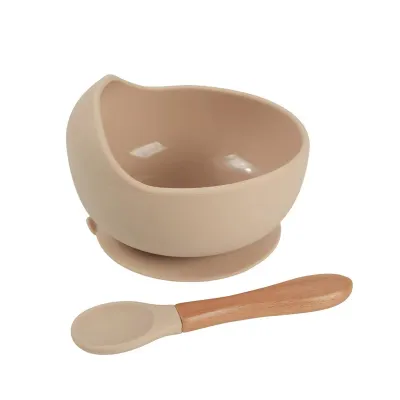
![[Same Day Ship] 3Pcs/Set Baby Dinnerware Anti-hot Wheat Training Plate Baby Feeding Bowl Set Tableware Plates with Spoon and Fork](https://img.lazcdn.com/g/p/9cda1e044dc592f7b066dd13eb7d6311.jpg_400x400q80.jpg_.webp)
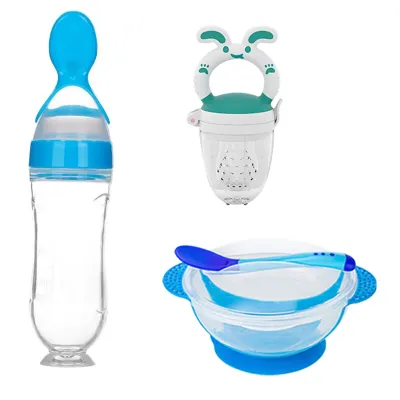
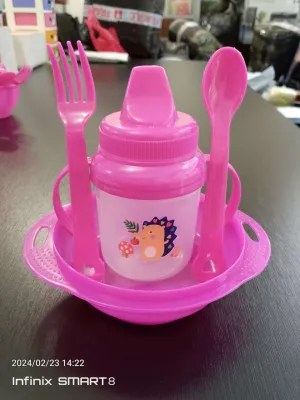
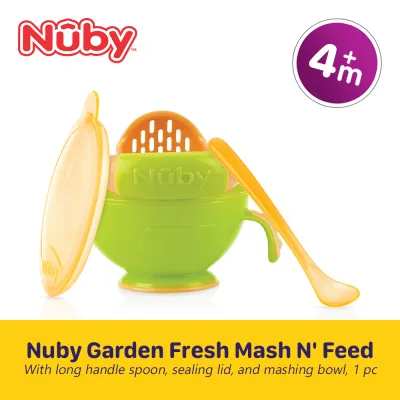
Prices are valid at publication and may change. Please refer to the product page for the latest price.
Ergonomic design plays a vital role in encouraging early self-feeding attempts. Beginner spoons should have shallow bowls to prevent overfilling, which can cause gagging, and short, wide handles that are easy for tiny hands to grasp. Some starter spoons feature textured collars that prevent the baby from inserting the spoon too far into their mouth. These small design details help build your baby’s confidence and coordination as they learn to navigate the journey from milk to solids.
Suction bases are excellent tools for minimizing mealtime messes, but they are not entirely foolproof. The effectiveness of a suction base relies on creating a vacuum seal, which works best on completely smooth, non-porous surfaces like plastic highchair trays or polished glass. Textured wood or laminate tables often allow air to seep under the suction ring, causing the bowl to slide or tip. Understanding this limitation helps parents set realistic expectations and choose the right spot for daily feedings.
Finally, practical daily use requires tableware that is easy to clean and maintain. In the tropical climate of the Philippines, high humidity can encourage bacterial growth if food residue is left in hard-to-reach crevices. Parents should compare dishwasher-safe items against hand-wash-only pieces, keeping in mind that simple, one-piece molded designs are generally the easiest to sanitize. Choosing items without complex valves or hidden seams makes daily cleanup much more manageable for busy households.
Recommended Baby Food Eating Sets for Starting Solids
To help you navigate the wide variety of options available, beginner eating sets can be categorized by feeding style. Whether you plan to follow traditional parent-led purees, Baby-Led Weaning (BLW), or a flexible mixed feeding approach, matching the tableware to your method makes a significant difference. Below are the three primary types of starter sets, along with their practical applications, limitations, and key pre-purchase checks.
Suction Bowl and Soft Spoon Combos for Purees
Suction bowl and soft spoon combos are the classic entry point for traditional spoon-feeding. These sets typically consist of one or two deep suction bowls paired with soft, flexible silicone or heat-sensitive spoons. Widely available, stable brand lines in the Philippines, such as those from Tommee Tippee or Munchkin, offer excellent starter sets that can be easily found at major local baby retailers and official online stores.
These combos are ideal for the early stages of complementary feeding, usually around six months of age, when parents are doing the majority of the feeding. The deep bowl design allows parents to easily scoop up thin purees, mashed vegetables, or iron-fortified baby cereals. The soft spoon tips are gentle on delicate gums and help babies practice the transition from sucking to swallowing solid foods.
However, these sets do have specific limitations. The suction base may fail to stick securely to textured wooden dining tables, which are common in many Philippine homes. Additionally, the small, shallow spoons included in these starter kits are designed for tiny portions and will quickly be outgrown as your baby’s appetite and portion sizes increase over the first few months of eating solids.
Before purchasing, always perform a quick pre-purchase check. Read the product label to verify the bowl’s microwave safety limits and check if the spoons feature heat-sensitive technology. Heat-sensitive spoons change color if the food is too hot, providing an extra layer of safety for busy parents. Ensure that all components are certified food-safe and designed specifically for the six-month-plus age range.
Divided Silicone Plates for Baby-Led Weaning
Divided silicone plates are designed specifically for babies who are exploring finger foods and practicing self-feeding. These sets usually feature a wide plate divided into two or three sections, often accompanied by short, chunky training utensils. Well-known options like Bumkins, along with reputable local silicone brands available in Philippine baby boutiques, offer durable designs made from thick, heavy-duty silicone.
This configuration is highly suited for Baby-Led Weaning (BLW) or mixed feeding approaches. The divided sections allow parents to offer a variety of food groups—such as soft-cooked vegetable spears, fruits, and grains—without them mixing together. This visual separation helps babies identify different textures and flavors, while the low outer walls of the plate make it easy for them to scoop up food with their fingers.
Despite their popularity, divided plates have a few practical drawbacks. They tend to be bulky and less convenient for travel or dining out compared to compact bowls. Furthermore, the deep sections can sometimes make it difficult for very young beginners to scoop out softer foods with a spoon, occasionally leading to frustration during early self-feeding practice.
Your pre-purchase check for divided plates must focus on size and stability. Measure your highchair tray beforehand to ensure the plate’s dimensions will fit flat on the surface; oversized plates will not seal properly if they overlap the tray’s curved edges. Additionally, gently press the sides of the plate to verify that the silicone is thick and rigid enough to prevent the plate from collapsing or tipping when filled with food.
Comprehensive Starter Kits with Training Cups
Comprehensive starter kits offer an all-in-one solution for parents who want a complete tableware transition kit. These extensive sets typically include a mix of suction bowls, divided plates, small forks, spoons, and a spill-proof training cup or beaker. Established baby care brands like Pigeon or Philips Avent offer highly reliable comprehensive starter lines that guide your child through various feeding milestones.
These kits are highly cost-effective for long-term use, taking your child from their very first spoonful at six months all the way into toddlerhood. Because they contain components for every stage of the feeding journey, they also make highly practical and appreciated gifts for baby showers or first birthdays. Buying a complete kit saves parents the hassle of purchasing individual pieces as their baby’s skills develop.
On the downside, some components of a comprehensive kit may not be useful right away. For example, a training cup or a fork may be too complex for a six-month-old beginner to handle, meaning these items will have to be stored away for several months. Some parts of the kit may be outgrown quickly, while others, like the plates and cups, will continue to be used for years.
When evaluating a comprehensive kit, pay close attention to the training cup’s valve mechanism. Verify how easily the valve can be disassembled and cleaned. In the warm, humid climate of the Philippines, moisture trapped in small cup valves can quickly lead to mold growth. Choosing a cup with a simple, easy-to-wash valve design is essential for maintaining long-term hygiene.
Comparing Beginner Eating Set Features
To help you quickly identify the best option for your family, the table below compares the structural and functional differences of the three primary beginner eating set categories.

| Set Type | Best Feeding Style | Key Components | Primary Limitation | Cleaning/Maintenance Note |
|---|---|---|---|---|
| Suction Bowl Combos | Purees & Parent-Led Feeding | 1-2 suction bowls, soft silicone spoons | Spoons are quickly outgrown as portions increase | Hand-wash or top-rack dishwasher safe |
| Divided Plates | Baby-Led Weaning (BLW) | Divided suction plate, short utensils | Bulky design may not fit all highchair trays | Check silicone thickness before UV sterilizing |
| Comprehensive Kits | Mixed Feeding & Long-Term Use | Bowls, plates, utensils, training cup | Some items are too complex for early beginners | Disassemble cup valves completely to prevent mold |
While comprehensive kits offer excellent long-term value, baby preferences can be highly unpredictable. It is often wisest for parents to start with a basic, budget-friendly suction bowl or a single divided plate first. Once you observe your baby’s unique feeding style and hand-eye coordination, you can confidently invest in a larger, more complete set tailored to their specific needs.
Tips for Using the Eating Set During First Feedings
Introducing new tableware to a baby requires patience and a bit of practice. To get the most out of your suction bases, always ensure both the bottom of the suction cup and the highchair tray are completely clean, dry, and free of grease or soapy residue. For an extra-strong hold, wipe the suction base with a slightly damp cloth just before pressing it firmly down in the center to push out all the trapped air.
When introducing a spoon for the first time, try using the “two-spoon method.” Give your baby a spare, empty soft spoon to hold, explore, and mouth. While their hands and mouth are occupied with the training spoon, you can use the second spoon to feed them. This approach keeps their hands busy, reduces the urge to grab the active spoon, and helps them associate the utensil with the act of eating.
It is important for parents to manage expectations during the first few weeks of solids. Spills, dropped utensils, and food throwing are completely normal developmental behaviors as babies explore gravity and sensory textures. A baby food eating set is a tool designed to minimize and contain the mess, but it will not eliminate it entirely. Embracing the messy phase as a learning experience makes mealtimes much more enjoyable for both parent and child.
Safety must always remain your top priority during mealtimes. Never leave your baby unattended while they are using their eating set. Before every meal, do a quick visual check to ensure your baby is not biting off pieces of the silicone spoon or chewing on the edges of the bowl. If you notice any damage, remove the item immediately to prevent any potential choking hazards.
Cleaning and Safety Maintenance for Baby Tableware
Maintaining strict hygiene is essential for protecting your baby’s developing immune system. After every meal, wash all tableware immediately with warm water and a mild, baby-safe dish soap. Allowing food residue to dry and harden on silicone can make it much harder to clean and may lead to persistent food odors or staining over time.
Before sterilizing any part of your baby’s eating set, always consult the manufacturer’s packaging for specific temperature limits. While high-quality silicone can generally withstand high heat, some plastic components, spoon handles, or suction rings may warp or degrade if exposed to extreme temperatures. Always verify if an item is safe for boiling, steam sterilizing, dishwashers, or UV sterilizers before exposing it to heat.
Regular safety inspections are crucial for all baby tableware. Every few weeks, gently stretch the silicone spoons and bowl edges, inspecting them under good light for micro-tears, deep bite marks, or material degradation. Over time, constant chewing and exposure to heat can weaken silicone, potentially creating small pieces that could tear off and pose a choking hazard.
Establish a clear stop-condition for your baby’s tableware. If you observe any deep, persistent stains that do not wash out, sticky or tacky surfaces, structural tears, or a suction base that has warped and no longer sticks, it is time to discard the item. Replacing worn-out pieces promptly ensures that mealtimes remain safe, clean, and healthy for your growing little one.
Frequently Asked Questions (FAQ)
When should I introduce a baby food eating set?
Baby food eating sets are typically introduced when your baby is developmentally ready for complementary feeding, which is usually around six months of age. Key signs of readiness include your baby being able to sit up with minimal support, holding their head steady, showing active interest in your food, and losing the tongue-thrust reflex that automatically pushes solid food out of their mouth. If you are unsure whether your baby is ready to start solids, always consult your pediatrician for personalized guidance.
Are silicone suction bowls safe for hot foods?
High-quality, food-grade silicone is naturally heat-resistant and safe for serving warm foods, but you must always verify the specific temperature limits printed on the product’s packaging. Never place silicone baby bowls directly on open flames, stovetops, or heating elements. Regardless of the bowl’s heat tolerance, always stir the food thoroughly and let it cool down to a safe, lukewarm temperature before feeding your baby to prevent accidental burns to their sensitive mouth.
How do I get a suction bowl to stick properly to the table?
To achieve a strong suction hold, you must use a completely smooth, clean, and non-porous surface, such as a plastic highchair tray, glass, or polished laminate. Start by wiping both the table surface and the bowl’s suction base with a damp cloth to remove any dust, lint, or oil. Press down firmly in the very center of the bowl to force out all the air and create a vacuum seal. Keep in mind that suction bases will naturally fail to stick to textured wood, matte finishes, or curved surfaces.

Community discussion
Share your experience or ask a question. Comments are reviewed before publication.