
Returning to work after maternity leave in the Philippines presents unique challenges for breastfeeding mothers. Balancing office hours, long commutes, and milk expression requires a reliable tool. The Baoneo breast pump has emerged as a popular budget-friendly option, but deciding whether it fits your specific routine requires comparing its portability, suction comfort, and long-term value against more established alternatives. While budget-friendly models offer an accessible entry point, working mothers must weigh their immediate convenience against the durability, local parts availability, and refined suction settings of premium brands.
Identify Your Daily Pumping Constraints
Your daily schedule dictates your pumping needs. If your workday spans nine hours or more, you will likely need to pump three to four times to maintain your milk supply. Understanding how much time you can realistically carve out for breaks is the first step in choosing a pump.
Commuting conditions in the Philippines heavily influence your gear choices. Navigating crowded trains, buses, or jeepneys means every cubic inch of your bag is valuable. A bulky pump with heavy motors and multiple cords can quickly become a daily burden during transit.
Products mentioned in this guide
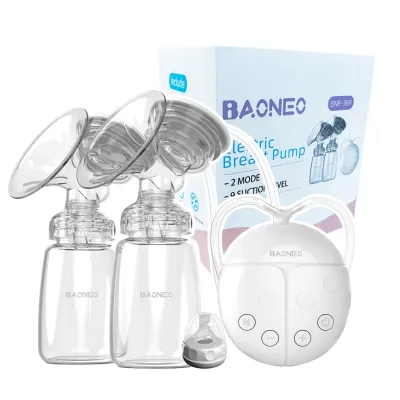
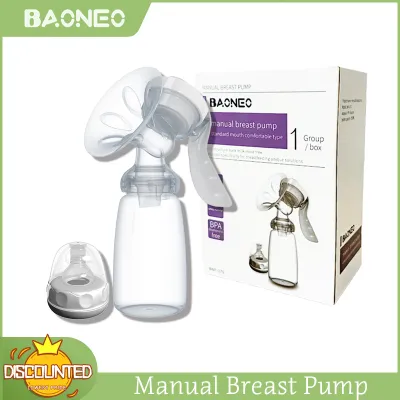
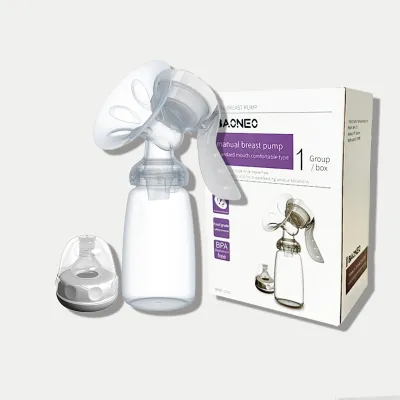
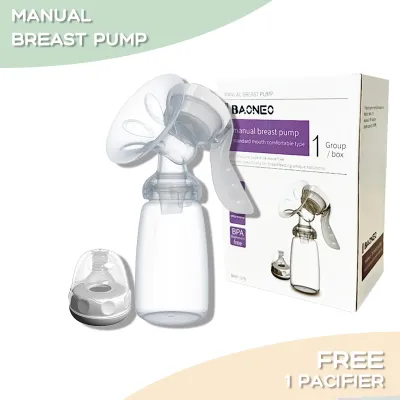
Prices are valid at publication and may change. Please refer to the product page for the latest price.
Workplace facilities also vary widely. While Republic Act 10028 mandates that workplaces in the Philippines provide lactation stations with necessary facilities, the actual setup can range from a fully equipped private room to a simple curtained corner. If your office lacks private power outlets, a battery-operated or wearable pump becomes essential.
Privacy levels at work will determine whether you need a highly discreet wearable pump or if a traditional double-electric pump is manageable. Wearable pumps slip directly into your nursing bra, allowing you to work at your desk, while traditional pumps require a dedicated space and a hands-free pumping bra.
Evaluate Portability and Commute Convenience
Portability is a key factor when comparing the Baoneo breast pump to other market options. Baoneo offers compact and wearable designs that eliminate external tubes and dangling bottles. This design contrasts with traditional double-electric pumps, which rely on a central motor unit connected by tubing to the breast shields.

Weight and physical footprint directly affect your daily commute. Wearable models are self-contained, fitting entirely within your bra, which frees up space in your commuter bag. However, you must verify the weight of the motor assembly on your chest, as heavier wearable motors can cause the bra to sag or shift during movement.
Battery performance is critical when you are away from power outlets for extended periods. You should check the manufacturer’s specified battery capacity, usually measured in milliampere-hours (mAh), to estimate how many pumping sessions a single charge will support. Many modern pumps utilize USB-C charging ports, allowing you to recharge via a laptop or a standard power bank during your shift.
Noise level is another crucial consideration for office environments. A loud, buzzing pump motor can cause unwanted attention during quiet office hours or virtual meetings. When evaluating pumps, look for manufacturer decibel (dB) ratings and user feedback regarding motor noise to ensure the device operates quietly enough for your workspace.
Assess Suction Performance and Comfort
Suction efficiency determines how quickly and comfortably you can express milk during limited break times. Most modern electric pumps, including Baoneo models, feature dual modes: a rapid, shallow stimulation mode to trigger letdown, and a slower, deeper expression mode to mimic a baby’s natural nursing pattern.
Adjustable suction levels are vital for preventing nipple pain and tissue damage. A pump with a wide range of intensity settings allows you to customize the pressure to your comfort level on any given day. You should always start at the lowest setting and gradually increase it to your maximum comfortable vacuum level.
Flange fit is the most critical factor for both comfort and milk output. An improperly sized breast shield can cause friction, pain, and blocked milk ducts. Check whether the pump package includes multiple flange sizes or if the brand offers compatible silicone inserts to adjust the tunnel diameter to your specific measurements.
Safety features should not be overlooked when selecting a pump. Look for models that include automatic shut-off timers, which typically turn the device off after 20 or 30 minutes to prevent over-pumping. Always consult a lactation consultant or healthcare professional if you experience persistent pain or a sudden drop in milk supply.
Compare Price, Parts, and Long-Term Value
Upfront cost is often the primary driver for choosing budget-friendly brands like Baoneo. In the Philippine market, these budget models are typically priced under ₱2,000, making them highly accessible. In contrast, premium international brands can range from ₱8,000 to well over ₱15,000, representing a significant financial investment.
The initial purchase price is only one part of the financial equation; you must also consider the cost of replacement parts. Silicone valves, membranes, and diaphragms degrade over time with regular use and sterilization. Before buying, search local online marketplaces to ensure that replacement parts for your specific pump model are affordable and readily available.
Compatibility with standard baby bottles is another practical factor. Some pumps allow you to express milk directly into wide-neck or standard-neck bottles, reducing the need to transfer milk and minimizing the risk of spills. If a pump uses a proprietary container system, factor in the cost of purchasing extra matching bottles.
Warranty coverage and customer support vary significantly between budget and premium brands. Premium brands often provide comprehensive warranties and local service centers in major cities. For budget brands, verify the seller’s return policy and warranty terms, as resolving technical issues or replacing a faulty motor can sometimes be more challenging.
Make Your Final Choice: Decision Framework
To make your final decision, align your budget with your daily working conditions. A budget-friendly wearable pump like the Baoneo is an excellent choice if you want to try hands-free pumping without a large financial commitment, or if you need a secondary pump to keep at your office desk.
If your job involves constant physical movement, field travel, or back-to-back meetings, a lightweight, self-contained wearable pump is highly advantageous. However, if you have a dedicated desk or access to a private lactation room with power outlets, a traditional double-electric pump might offer more robust suction customization and longer overall durability.
Mothers who require precise suction adjustments, specialized flange sizes, or ultra-quiet operation may find that investing in a premium brand is more suitable for their long-term breastfeeding journey. Carefully weigh the convenience of low upfront costs against the long-term reliability and customer support of established brands.
Regardless of the brand you choose, always prioritize hygiene and safety. Ensure the pump features a closed system with a physical barrier to prevent milk from entering the motor or tubing, which can lead to mold growth. Regularly inspect all silicone components for wear and tear to maintain optimal suction and hygiene.
Frequently Asked Questions (FAQ)
How often should I replace breast pump parts?
Wearable silicone parts such as duckbill valves, membranes, and backflow protectors require regular replacement to maintain proper suction and hygiene. If you pump three or more times a day, duckbill valves should generally be replaced every 1 to 2 months, while silicone diaphragms and membranes should be replaced every 2 to 3 months.
Inspect these parts regularly for any signs of stretching, tearing, or cloudiness. Even tiny, invisible tears in a silicone valve can cause a noticeable drop in suction power, which can affect your milk expression and overall supply.
Can I use a power bank to charge my breast pump at work?
Many modern breast pumps with rechargeable batteries can be charged using a standard power bank, provided the voltage and current outputs match. You must check your pump’s user manual or the label on the motor to verify the required input, which is commonly 5V and 1A or 2A.
Using a power bank or charger with incompatible voltage can damage the internal battery or void the manufacturer’s warranty. Always use the charging cable supplied with the pump or a high-quality certified alternative to ensure safe and efficient power delivery.

Community discussion
Share your experience or ask a question. Comments are reviewed before publication.