
Quick Diagnosis: Do You Need a Walker, a Stroller, or Both?
Preparing for a new baby often involves navigating an overwhelming sea of gear recommendations. Well-meaning relatives and targeted online ads can make you feel like every single item is an absolute necessity for your child’s development. Among the most common points of confusion for parents is deciding between a baby walker and a stroller. While both of these items feature wheels and assist with mobility, they serve completely different purposes in your baby’s daily routine and physical journey.
To make a quick diagnosis, ask yourself whether you are looking for outdoor transport or an indoor developmental toy. A stroller is an essential, long-term tool designed for safe outdoor transport, comfortable naps, and family outings from birth through the toddler years. In contrast, a push walker is a short-term, indoor developmental toy intended to support a specific physical milestone—learning to balance and walk independently.
Because they perform entirely different jobs, these two items are rarely mutually exclusive. A stroller is a non-negotiable necessity for almost every family, whereas a push walker is an optional activity toy used during a very brief developmental window. Your decision to buy one, both, or skip the walker entirely depends on your family’s lifestyle, your living space, and your baby’s current physical milestones.
Products mentioned in this guide
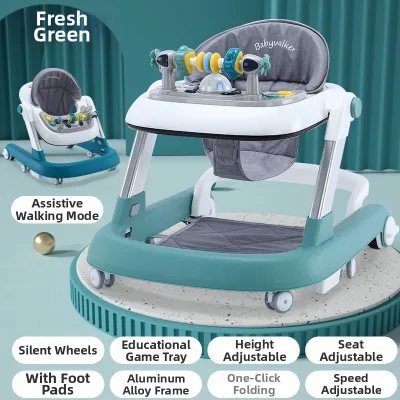
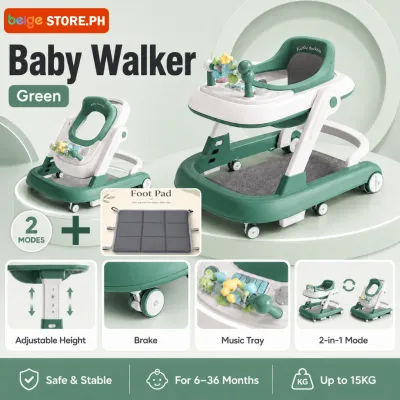
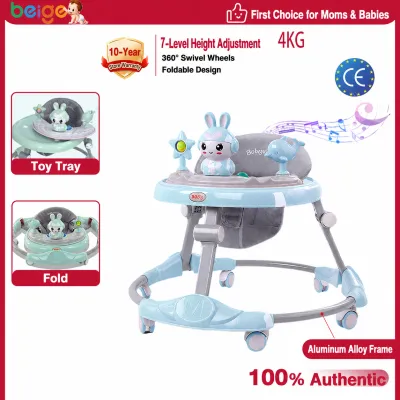
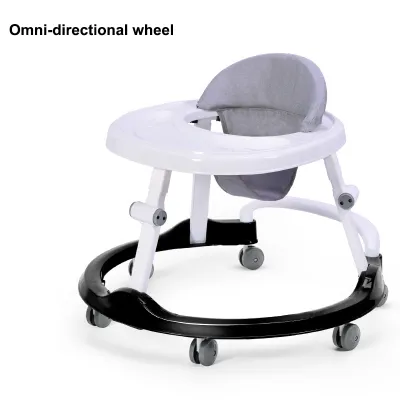
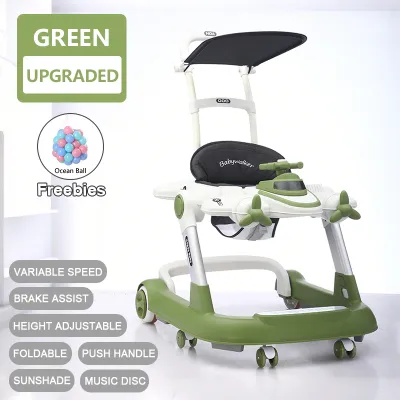
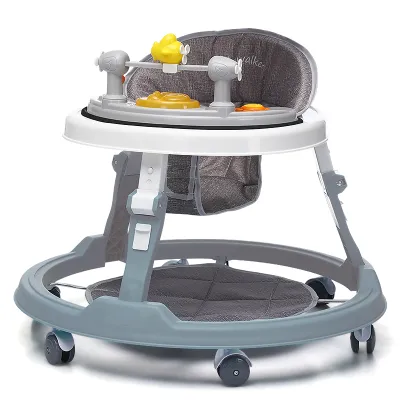
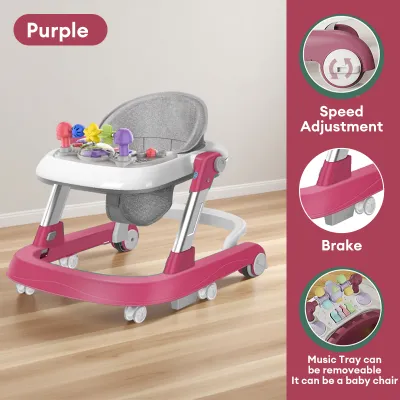
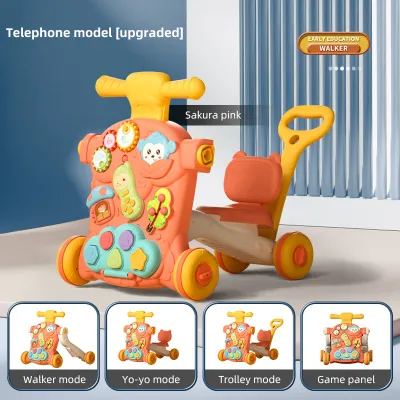
Prices are valid at publication and may change. Please refer to the product page for the latest price.
Core Differences: How Strollers and Walkers Support Your Baby
To choose the right gear, it is important to understand how strollers and walkers function and the specific age ranges they support. Strollers are built primarily for transit, outdoor mobility, and convenience. From the day your baby is born, a stroller equipped with a fully reclined seat or a compatible bassinet provides a secure, flat surface for sleep on the go.

In tropical climates like the Philippines, where high humidity, intense heat, and sudden rain showers are common, a stroller acts as a mobile protective shield. It offers a shaded canopy to block harsh UV rays and can be outfitted with rain covers or insect nets to protect your baby from mosquitoes. A quality stroller supports your child from infancy up to their toddler years, usually until they reach the manufacturer’s maximum weight limit, which is often around 15 to 22 kilograms.
Baby walkers, on the other hand, serve an active developmental purpose indoors. However, you must clearly distinguish between traditional sit-in walkers and modern push walkers (also known as activity walkers). Traditional sit-in walkers feature a wheeled frame with a suspended fabric seat that allows a non-walking baby to scoot across the floor. Pediatricians and global health organizations widely discourage these devices due to severe safety risks and potential developmental delays.
Because of these concerns, this article focuses strictly on push walkers. A push walker is an interactive toy with a handlebar that a baby stands behind and pushes forward. These are designed for babies who are already learning to stand and cruise. Unlike sit-in models, push walkers require babies to bear their own weight, engage their core muscles, and practice natural balance. They are typically used for a very short window, usually lasting only two to four months as the baby transitions to independent walking.
Diagnostic Checklist: Signs Your Baby is Ready for Each Gear
Evaluating your daily routines and your baby’s physical milestones will help you determine exactly when to introduce each piece of gear.
When a Stroller is Essential
Evaluate your daily outdoor frequency and lifestyle. If you regularly run errands, take walks in your neighborhood, or rely on public transportation, a stroller is a crucial tool. Carrying a growing baby in a carrier during hot, humid days can quickly lead to physical exhaustion and heat discomfort for both you and your little one. A stroller with excellent ventilation keeps your baby cool and comfortable while giving your back a rest.
Consider your travel plans and weekend activities. If your family frequently visits shopping malls, parks, or travels out of town, a stroller provides a familiar, safe space for your baby to rest, nap, or sit up and observe the world. It also relieves you from the physical strain of carrying your baby for hours, allowing you to store diaper bags and personal items in the under-seat basket.
When a Push Walker is Appropriate
Look for specific physical milestones rather than relying solely on age. Before you introduce a push walker, your baby must demonstrate the necessary core strength and motor skills. Observe whether your baby can sit independently without support, pull themselves up to a standing position using sturdy furniture, and take sideways steps while holding on to surfaces—a milestone known as cruising.
These actions indicate that your baby’s muscles and joints are developing the stability required for upright movement. Introducing any walking gear before your baby reaches these natural milestones can place undue strain on their developing body. A push walker is not designed to teach a baby how to stand; rather, it is a tool to help a baby who can already stand practice their balance and coordination under close adult supervision.
Essential Safety and Development Checks Before You Buy
Before purchasing any mobility gear, parents must carefully evaluate safety features and environmental hazards to protect their child.
Traditional sit-in walkers pose extreme hazards, including the risk of rolling down stairs, tipping over on uneven surfaces, or allowing babies to reach dangerous items like hot liquids or electrical cords. Because of these risks, many pediatric experts advise skipping sit-in models entirely. When selecting a push walker, safety must remain your top priority.
When shopping for a push walker, look for models that feature adjustable wheel resistance or tension controls. This feature allows you to stiffen the wheels so the walker does not roll away too quickly when your baby takes their first tentative steps. Ensure the walker has a wide, weighted base to prevent it from tipping backward when your baby pulls themselves up using the handle. Check the product for smooth, rounded edges and verify that there are no small gaps where tiny fingers could get pinched.
For strollers, always verify the safety features before use. A robust 5-point harness is essential to keep your baby securely strapped in, preventing them from sliding out or climbing up. Test the braking system to ensure it locks both rear wheels firmly, especially when stopping on inclined surfaces. In tropical environments, prioritize strollers with large, extendable canopies that offer UPF protection and feature mesh panels for optimal airflow.
Always read the manufacturer’s manual to confirm the stroller’s weight and age limits. Never leave your baby unattended in a stroller or a push walker, even for a brief moment. Remember to engage the stroller’s parking brakes every time you stop, and use the safety wrist strap if your stroller is equipped with one. Ensure the walking environment for a push walker is completely flat, free of loose rugs, and blocked off from any stairs or drop-offs with secure safety gates.
Your Action Plan: What to Buy, Borrow, or Skip
To make the most of your budget and space, choose a purchasing path that aligns with your family’s daily life.
- Path 1 (Active Outdoor Family): If your family loves spending time outdoors, visiting parks, or navigating busy urban areas, prioritize investing in a high-quality, durable stroller. Stroller prices vary widely, ranging from budget-friendly options under ₱5,000 to mid-range models between ₱5,000 and ₱15,000, and premium models above ₱15,000. Because a push walker is only useful for a brief window, consider borrowing one from a friend or purchasing a well-maintained second-hand model. This approach allows you to allocate more of your budget to a premium stroller that will last for years.
- Path 2 (Mostly Indoor/Apartment Living): If you live in a compact apartment or primarily spend time indoors, a massive, heavy stroller may be impractical. Instead, opt for a lightweight, compact-folding stroller that is easy to store in tight spaces and quick to pack into a car trunk for occasional trips. For your indoor space, a sturdy, low-profile push walker can provide excellent entertainment and physical activity. Look for a push walker that doubles as an activity center, featuring interactive buttons, puzzles, or blocks to maximize its play value even when your baby isn't actively walking.
- Path 3 (Baby is Already Walking): If your baby has already mastered independent walking and can take several steps without losing balance, you can skip the push walker entirely. Investing in one at this stage offers very little developmental benefit. However, do not retire your stroller just yet. Even when toddlers can walk, they tire quickly during long outings. Keeping a stroller on hand—or transitioning to a lightweight toddler wagon—ensures you can still enjoy long walks or shopping trips without carrying a tired, fussy toddler.
Before purchasing any second-hand gear or accepting hand-me-downs, always verify the product’s safety history. Check manufacturer websites or official product safety databases to ensure the specific model has not been recalled. Inspect the item thoroughly for any structural damage, worn-out straps, loose screws, or cracked plastic. Ensure that all locking mechanisms function perfectly and that the product’s weight limits align with your baby’s current size.
Frequently Asked Questions (FAQ)
Can a baby walker delay walking?
Yes, traditional sit-in walkers can actually delay natural walking development. Because sit-in walkers support the baby’s weight and allow them to move by pushing off with their toes, they do not encourage the development of the core and upper leg muscles needed for independent walking. They can also prevent babies from seeing their own feet, which is an important part of learning balance. Conversely, push walkers do not cause these delays because they require the baby to bear their own weight and practice natural balance. If you have any concerns about your baby’s motor skill development, consult a pediatrician for personalized guidance.
At what age should I stop using a stroller?
There is no single, universal age to stop using a stroller, as children develop physical stamina at different rates. Most families begin transitioning away from strollers between the ages of 3 and 5. To decide when to transition, check your stroller’s manual for its maximum weight and height limits to ensure your child can still ride safely. Consider your child’s walking stamina and your daily routine; if your child can comfortably walk long distances, follow safety instructions in public spaces, and stay close to you, you can gradually phase out stroller use or switch to a toddler wagon for occasional long trips.

Community discussion
Share your experience or ask a question. Comments are reviewed before publication.