
Choosing the right soothing gear for your newborn can feel overwhelming with so many options on the market. There is no single “best” choice among a baby rocking chair, a bouncer, and a motorized swing. The ideal option depends entirely on your baby’s unique soothing preferences, your available living space, and your daily caregiving routine. Each device offers a distinct type of motion and level of interaction, making it essential to understand how they function before making a purchase.
By comparing the mechanics, safety guidelines, and practical daily convenience of these three popular baby gear categories, you can make an informed decision that fits your household. Whether you prioritize hands-free convenience, portability, or close-contact bonding, understanding the strengths and limitations of each option will help you select the perfect soothing tool for your family.
How Rocking Chairs, Bouncers, and Swings Actually Work
To choose the right gear, it helps to understand the mechanics behind how each device moves and how much effort it requires from you or your baby. A baby rocking chair relies on manual, caregiver-driven motion. This classic choice is designed to foster close-contact soothing. You sit nearby and gently nudge the chair with your hand or foot, keeping you actively engaged in the soothing process. This manual interaction allows you to adjust the speed and intensity instantly based on your baby’s cues, making it a highly interactive experience that promotes bonding.
Products mentioned in this guide
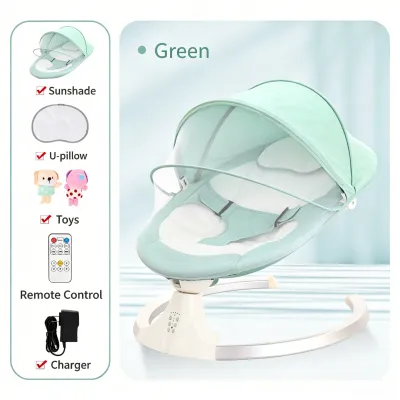
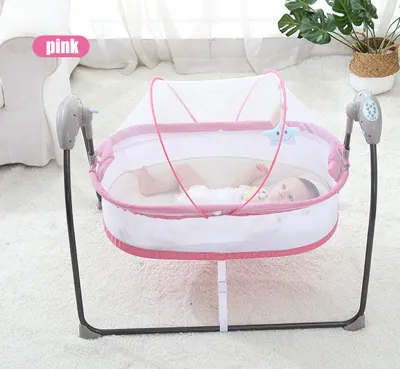
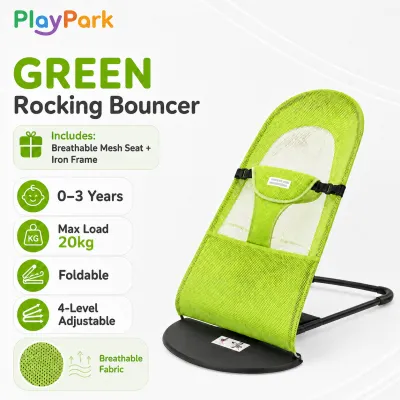
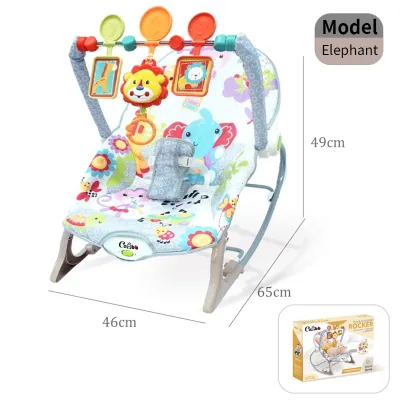
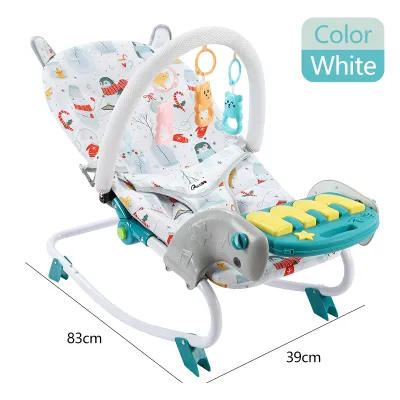
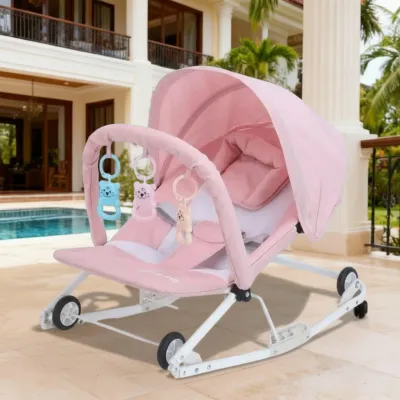
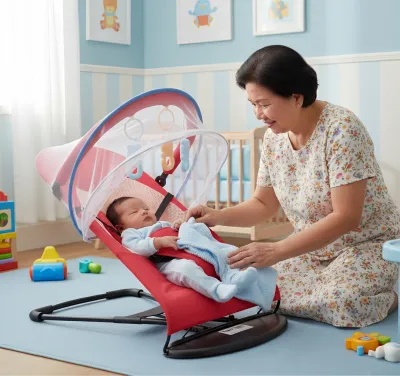
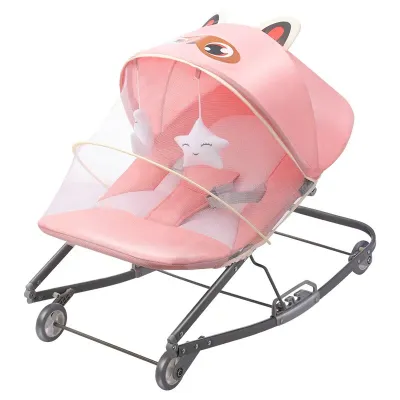
Prices are valid at publication and may change. Please refer to the product page for the latest price.
In contrast, a baby bouncer features a passive, baby-driven movement. It does not require plugs, batteries, or constant manual effort from a caregiver. Instead, it features a flexible frame that responds directly to your infant’s own kicks, wiggles, and natural movements. This subtle, springy bounce can be highly satisfying for active babies who enjoy self-soothing. Because the motion stops when the baby stops moving, it encourages physical self-awareness and helps newborns learn cause-and-effect early on.
A baby swing uses automated, motorized motion to deliver consistent, hands-free calming. Powered by batteries or an electrical outlet, these swings sway back and forth or side to side at adjustable speeds, mimicking the rhythmic rocking motion that many newborns find comforting. Many modern models offer multiple speed settings and different motion patterns, making them highly effective for babies who need continuous movement to stay calm, giving caregivers a much-needed hands-free break.
Safety Rules and Newborn Suitability for Each Gear
Safety is the most critical consideration when introducing any new gear to your newborn’s routine. The most important rule for all three types of gear is that they are designed for supervised, awake soothing only. They must never be used for unsupervised sleep, naps, or overnight rest. If your baby falls asleep in a bouncer, swing, or rocking chair, you must transfer them to a safe, flat sleep surface immediately to minimize safety risks.

Newborns lack the head and neck control necessary to keep their airways open when seated at an angle. If a baby falls asleep in a semi-reclined seat, their heavy head can tilt forward toward their chest, potentially causing positional asphyxiation. To prevent this, always verify that the seat angle provides proper head and neck support for newborns, ensuring their airway remains completely clear and unobstructed.
Before purchasing or using any soothing gear, always check the manufacturer’s label for minimum weight, maximum weight, and developmental milestone limits. Do not rely solely on general age guidelines, as babies grow and develop at vastly different rates. Additionally, ensure that you properly secure the built-in harness—ideally a three-point or five-point harness—every time you place your baby in the seat, even if it is only for a few minutes.
Finally, safety standards and certifications are dynamic and subject to change. Before making a purchase, take the time to verify that the product packaging or manufacturer’s website indicates compliance with current safety standard certifications. Regularly inspect the gear for any signs of wear, loose parts, or fabric tears, and stop using the device immediately if you notice any damage.
Comparing Space, Power, and Daily Convenience
When deciding between these three options, practical household factors like space, power sources, and cleaning convenience play a major role in how much utility you will get out of the gear. In many homes, especially urban apartments where space is at a premium, the physical footprint of baby gear is a major consideration. A large motorized swing can take up a permanent, substantial area on your living room floor, whereas a compact bouncer can easily be folded flat and slid under a sofa or bed when not in use.
Power requirements also dictate where you can place and use the gear. Motorized swings require a nearby electrical outlet or a steady supply of batteries, which can limit your layout options and add to long-term operating costs. Bouncers and manual rocking chairs require zero external power, giving you complete freedom to place them anywhere in your home, from the living room to a shaded balcony.
Daily maintenance is another crucial factor, especially in warm, humid tropical climates where babies sweat easily and spit-ups are common. Damp fabrics can quickly become breeding grounds for mold, mildew, and bacteria. It is essential to choose gear with a fully removable, machine-washable seat cover. Look for quick-drying, breathable mesh fabrics that promote airflow to keep your newborn cool, dry, and comfortable.
To help you quickly compare these practical dimensions, the table below summarizes the key differences between the three types of soothing gear:
| Gear Type | Motion Type | Power Source | Space Requirements | Ideal Use Case |
|---|---|---|---|---|
| Baby Rocking Chair | Manual, caregiver-driven | None (manual effort) | Moderate footprint | Close-contact soothing and long-term nursery use |
| Baby Bouncer | Passive, baby-driven | None (baby's movement) | Compact and portable | Small spaces, easy room-to-room transport, self-soothing |
| Baby Swing | Automated, motorized | Batteries or plug-in | Large, stationary footprint | Hands-free calming with consistent, rhythmic motion |
Which Soothing Gear Should You Choose?
To make the final decision, consider your daily routine, your home’s layout, and your baby’s unique temperament. There is no one-size-fits-all answer, but matching your specific household needs to the strengths of each device will guide you to the right choice.
Choose a baby rocking chair if you prefer close physical contact, want manual control over the soothing rhythm, and want a piece of gear that can transition into long-term nursery furniture as your child grows. A rocking chair is an excellent investment for parents who plan to spend a lot of time holding, feeding, and reading to their baby in a dedicated, comfortable spot.
Choose a baby bouncer if your floor space is limited, you need to move the gear easily between rooms, and your baby responds well to their own physical movements. A bouncer is highly convenient for caregivers who need a safe, portable place to set the baby down while they shower, cook, or complete daily household tasks nearby.
Choose a baby swing if your baby requires continuous, automated motion to settle down and your home has plenty of dedicated floor space to accommodate a larger, stationary device. A swing can be a lifesaver for high-need babies who find comfort in rhythmic, repetitive movement, allowing you to take a hands-free break while keeping your baby calm and content under your supervision.
Before finalizing your purchase, verify if your baby has specific positional preferences. Some newborns dislike being reclined, while others find the side-to-side sway of a swing highly comforting. If possible, observe how your baby reacts to different types of motion before investing in a high-end device, and always prioritize safety, supervision, and manufacturer guidelines.
Frequently Asked Questions (FAQ)
Can a newborn sleep overnight in a bouncer or swing?
No, a newborn should never sleep overnight or unsupervised in a bouncer or swing. Safe sleep guidelines state that infants must sleep on a flat, firm surface, such as a crib, bassinet, or play yard, free of loose bedding, pillows, or soft toys. Sleeping in a semi-reclined position increases the risk of positional asphyxiation, as a newborn’s heavy head can tilt forward and block their airway. If your baby falls asleep in a bouncer or swing, transfer them to a safe sleep space immediately.
When should I stop using a baby swing or bouncer?
You must stop using a baby swing or bouncer as soon as your baby reaches the manufacturer’s maximum weight limit or begins to meet certain developmental milestones, whichever comes first. Specifically, you must discontinue use immediately when your baby can sit up unassisted, roll over, or attempt to climb out of the seat. These milestones often dictate the end of use long before the maximum weight limit is reached, as a mobile baby can easily tip the device over and sustain injuries.

Community discussion
Share your experience or ask a question. Comments are reviewed before publication.