
The choice between a baby caddy and a diaper bag isn’t about finding a single winner; it’s about matching your daily parenting flow. If you find yourself constantly moving between an air-conditioned bedroom and a breezy living room in a warm tropical climate, your organizational needs will differ from a parent who is always on the move. A caddy for baby serves as a portable, open-access station for quick diaper changes at home, while a diaper bag is your secure, weather-resistant lifeline for trips outside. Understanding how these two tools function can save you from unnecessary purchases and keep your daily routine seamless.
Core Differences Between a Baby Caddy and a Diaper Bag
A baby caddy is a stationary, open-top home organizer designed specifically for quick access. Typically made of lightweight materials like felt, cotton rope, or woven plastics, it features multiple compartments and a sturdy overhead handle. Its primary purpose is to keep diapers, wipes, creams, and grooming essentials organized in one place, allowing you to carry the entire setup from room to room as you move throughout the day.
In contrast, a diaper bag is a mobile, secure carrier built specifically for transporting baby supplies outside the home. Available in backpack, tote, or messenger styles, diaper bags are constructed from durable, weather-resistant fabrics and feature secure closures like zippers and magnetic snaps. They are designed to withstand the wear and tear of travel, protect contents from rain or dust, and keep bottles insulated.
Products mentioned in this guide
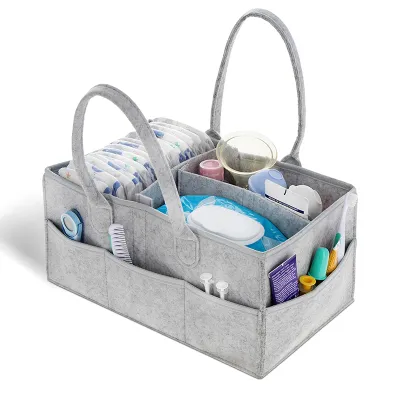
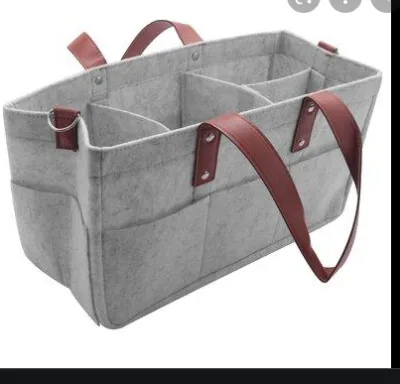
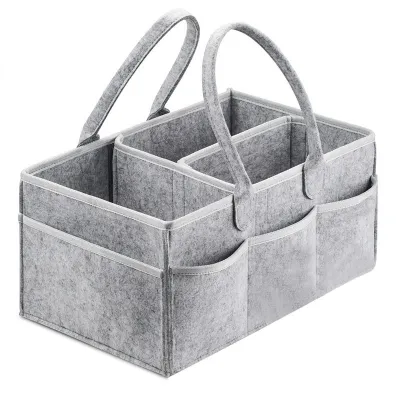
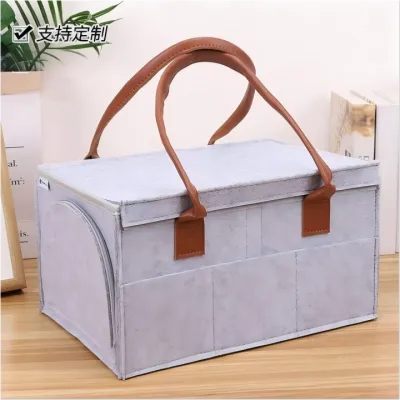
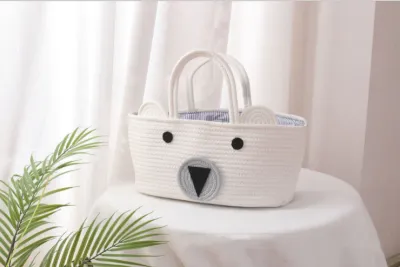

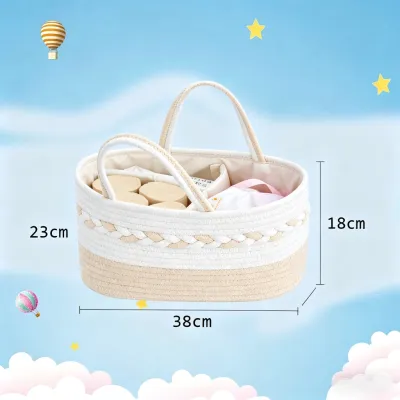
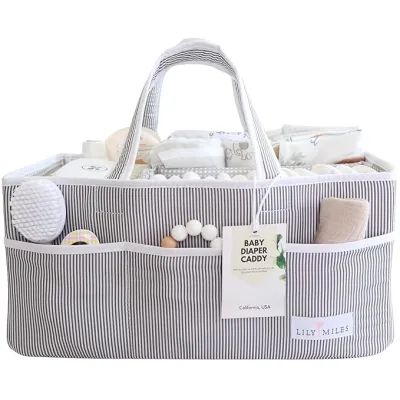
Prices are valid at publication and may change. Please refer to the product page for the latest price.
These two items serve complementary rather than competing roles in most households. While you could technically use a diaper bag at home or carry a caddy to the park, doing so often creates unnecessary friction. Using them together—the caddy as your stationary home base and the diaper bag as your mobile transit kit—creates a highly efficient system for managing baby gear.
Comparing Key Features for Everyday Use
To determine which option fits your lifestyle, it helps to look at how they perform across three main areas: mobility, storage layout, and environmental adaptability. Evaluating these physical characteristics ensures you choose gear that supports, rather than complicates, your daily tasks.

Portability and Mobility
A baby caddy is built for short-distance, room-to-room transport. It typically features a simple overhead handle or two side straps. This design is perfect for carrying supplies from the bedroom to the living room or downstairs to a play area. However, carrying a fully loaded, open-top caddy over long distances is physically awkward. Because it lacks shoulder straps or a backpack harness, it requires one of your hands to remain occupied, which can be challenging when you are also carrying a baby.
In contrast, a diaper bag is engineered for long-distance mobility. Backpack-style diaper bags distribute weight evenly across both shoulders, keeping your hands completely free to hold your baby, navigate public transport, or push a stroller. This ergonomic design reduces physical strain during extended outings. While you can carry a diaper bag around the house, its enclosed structure and wearable straps make it less convenient for quick, repetitive grabs during a diaper change on the sofa.
Storage Capacity and Layout
The internal layout of a caddy for baby is optimized for speed and visibility. With an open-top design and adjustable felt or fabric dividers, you can see all your supplies at a single glance. This allows for easy, one-handed grabbing—a crucial feature when you need to keep one hand safely on a wriggling baby during a diaper change. However, this open design means there is no protection against spills if the caddy is knocked over or tilted.
A diaper bag prioritizes security and containment. It features zippered compartments, elasticized pockets, and often insulated sleeves designed to keep bottles upright and at a stable temperature. This enclosed structure prevents items from falling out, even if the bag is tossed into a car trunk or placed under a stroller. The trade-off is accessibility: finding a specific item in a diaper bag often requires unzipping multiple compartments, which can be difficult to manage with one hand.
Versatility Across Environments
At home, aesthetic integration is often a priority. Many baby caddies are made from soft felt, woven cotton rope, or neutral fabrics designed to blend seamlessly with your living room or nursery decor. They sit neatly on side tables or shelves without looking like cluttered baby gear. However, these materials are rarely suited for the outdoors. A felt caddy can easily absorb moisture, dirt, or dust if placed on a park bench or a public restroom counter.
Diaper bags are built with rugged, weather-resistant exteriors like nylon or polyester to handle outdoor environments. In tropical climates where sudden downpours or high humidity are common, these easy-to-clean materials protect your baby’s clean clothes and diapers from getting damp. While a diaper bag can function as a temporary changing station at home, its bulky, utilitarian appearance may not fit the relaxed aesthetic of your living spaces. Additionally, using a diaper bag at home means you constantly have to pack and unpack it, defeating its purpose as a ready-to-go travel kit.
How to Decide Based on Your Parenting Routine
Choosing between these two items—or deciding to invest in both—comes down to analyzing your daily habits and living space. Whether you are budgeting ₱500 for a simple organizer or ₱3,000 for a premium travel setup, matching your gear to your lifestyle prevents wasted spending.
Choose a diaper bag if your lifestyle involves frequent trips outside the home. If you regularly commute, visit family, run errands, or travel, a diaper bag is indispensable. It provides the secure, weather-resistant storage needed to keep diapers dry and bottles insulated during transit. It is also the only practical option if you frequently use public restrooms or changing facilities, where you need to keep your supplies clean, enclosed, and easily wearable.
Choose a caddy for baby if you spend the majority of your time at home or live in a multi-story house. Running up and down stairs every time your baby needs a diaper change or a fresh change of clothes quickly becomes exhausting. Placing a well-stocked caddy on each floor or in the main living area creates an instant, organized changing station without requiring extra furniture. It is also ideal for parents who prefer a minimalist nursery setup and want to keep changing supplies tucked away in a closet or under a crib when not in use.
Consider both if your routine is a hybrid of active outings and structured home time. Many parents find that using a stationary caddy at home and keeping a dedicated diaper bag packed by the door offers the perfect balance. This setup ensures you never have to scramble to pack a bag before leaving the house, nor do you have to rummage through a deep backpack for a simple diaper change in your own living room.
Essential Specs and Safety Checks Before Purchasing
Before purchasing either item, it is important to verify specific structural and material details to ensure they are safe and practical for daily use. Do not rely solely on product names or aesthetic appeal; instead, look for verifiable specifications.
First, check the manufacturer’s labels for material safety and care instructions. Because both caddies and diaper bags will inevitably come into contact with diaper creams, milk spills, and dirt, prioritize materials that are easy to clean. Look for wipeable, water-resistant linings or machine-washable fabrics. If you are purchasing a fabric or felt caddy, verify that the materials are free from harsh chemical treatments or dyes that could irritate a baby’s sensitive skin.
Second, evaluate the structural stability of any caddy for baby. A safe caddy should have a wide, weighted base and reinforced bottom panels to prevent it from tipping over when fully loaded. If a caddy is top-heavy or has flimsy sides, it can easily collapse or spill its contents—including sharp items like baby nail clippers or heavy bottles of lotion—onto your changing area.
Finally, inspect the construction quality of diaper bags. Check the durability of the shoulder straps, the strength of the stitching at key tension points, and the quality of the zippers. A diaper bag must support the weight of multiple diapers, heavy packs of wet wipes, water bottles, and spare clothing. Verifying these physical details beforehand ensures your gear remains reliable and safe throughout your parenting journey.
Frequently Asked Questions (FAQ)
Can a baby caddy replace a diaper bag for travel?
A baby caddy is not a suitable replacement for a diaper bag during general travel. Because a caddy has an open-top design, its contents are highly vulnerable to spilling, dirt, and weather elements like rain or dust. It also lacks the secure zippered pockets and insulated compartments necessary for keeping bottles fresh and small items safe. While a caddy can be useful for short, supervised car rides—where it can sit flat on a seat to keep supplies organized in the vehicle—you should rely on a secure, enclosed diaper bag once you step out of the car.
What should I check to ensure a caddy for baby is stable?
To ensure a baby caddy is stable and safe from tipping, check its base-to-height ratio; a wider, lower-profile design is inherently more stable than a tall, narrow one. Look for models with reinforced bottom inserts, such as thick cardboard or plastic panels sewn into the fabric, which help the caddy maintain its shape. When packing the caddy, always place heavier items like full packs of wipes, lotions, and creams at the bottom to lower the center of gravity, while keeping lighter items like diapers and onesies on top.

Community discussion
Share your experience or ask a question. Comments are reviewed before publication.