
Are you considering buying a wooden baby walker for your little one but feel overwhelmed by safety concerns? It is a common dilemma for parents. The short answer is that yes, wooden baby walkers are generally safe, but their safety depends entirely on the specific design of the walker and how it is used.
When most pediatric experts discuss the safety hazards of baby walkers, they are referring to traditional sit-in wheeled models. In contrast, most wooden baby walkers on the market today are push walkers—sturdy, walk-behind toys designed for babies who are already learning to stand. While these push toys are significantly safer than sit-in models, they still carry unique risks that require careful selection and constant vigilance.
No piece of baby gear, regardless of how well-designed or expensive it is, can ever replace active adult supervision. Understanding the physical mechanics of these toys and preparing your home environment are essential steps to keeping your baby safe as they take their first steps.
Products mentioned in this guide
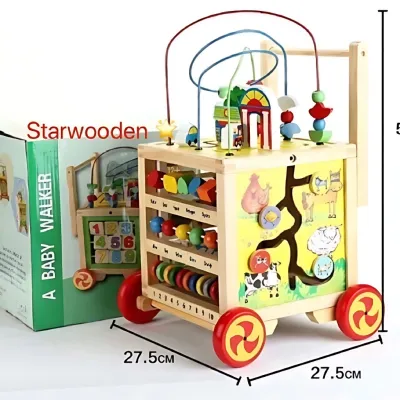
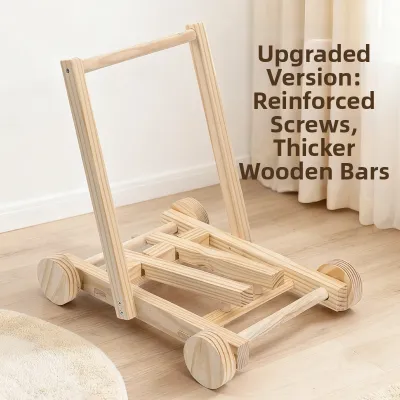
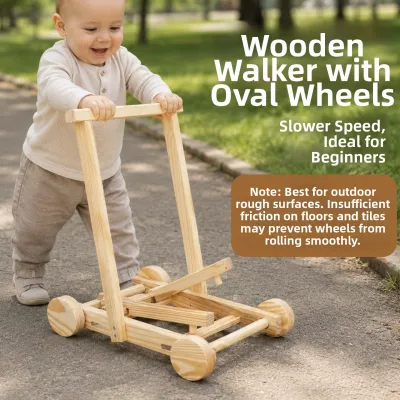

Prices are valid at publication and may change. Please refer to the product page for the latest price.
Sit-In vs. Push Walkers: Understanding the Critical Difference
To evaluate safety accurately, you must first distinguish between the two primary types of walkers available on the market. Many parents use the term “walker” interchangeably, which leads to confusion regarding safety warnings and pediatric recommendations.
Sit-In Baby Walkers (The Unsafe Option)
Traditional sit-in baby walkers feature a fabric seat suspended inside a large plastic or metal frame with wheels at the base. The baby sits inside the frame with their feet touching the ground, allowing them to scoot around rapidly.
Medical and child safety organizations worldwide strongly discourage the use of sit-in walkers. Because these devices allow babies to move at speeds of up to one meter per second, infants can quickly roll into hazardous areas before a caregiver can react. Common accidents associated with sit-in models include falling down stairs, tipping over on uneven surfaces, and gaining access to high countertops where hot liquids, sharp objects, or toxic household items are stored.
Furthermore, sit-in walkers hold the baby in an unnatural upright position before their muscles are ready. This suspension can lead to poor posture, toe-walking, and delayed motor development because the baby is not practicing the balance required for independent walking.
Wooden Push Walkers (The Safer Alternative)
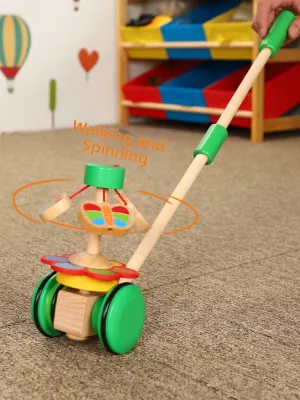
Wooden push walkers, often designed as small wooden carts, wagons, or activity centers, are entirely different. These are walk-behind toys that require the baby to stand independently, grip a handle, and push the cart forward while walking behind it.
This design supports natural physical development. Because the baby must bear their own weight and balance themselves without a seat, they actively build core strength, leg muscle coordination, and spatial awareness. The walker acts as a supportive guide rather than a mechanical crutch.
However, push walkers are only appropriate for babies who have reached the developmental milestone of pulling themselves up to a standing position independently. Introducing a push walker too early, before your baby’s muscles and joints can support their weight, can lead to falls and physical strain.
Key Safety Risks to Watch for in Wooden Push Walkers
While wooden push walkers are a much safer alternative to sit-in models, they are not entirely risk-free. Recognizing these specific hazards allows you to select a safer model and supervise your child more effectively.

Tipping and Rollovers
One of the most common hazards with wooden push walkers is the risk of the cart flipping backward onto the baby. This typically happens when an infant tries to use the handle to pull themselves up from a sitting position. If the walker is too light or lacks a balanced wheelbase, the downward and backward force will cause the front wheels to lift off the ground, tipping the heavy wooden frame directly onto the child.
Speed and Runaways
Many homes in the Philippines feature smooth, polished flooring such as ceramic tiles, marble, or polished concrete. These surfaces offer very little friction. If a wooden push walker has rigid, free-spinning wheels without any traction, it can easily slide forward too quickly on these slick floors. When the walker moves faster than the baby’s legs can keep up, the child will lose their balance and fall forward, potentially striking their face or chest on the wooden handle.
Pinch Points and Splinters
Many wooden walkers are designed as multi-functional activity centers featuring wooden gears, sliding beads, shape sorters, or small doors. If the manufacturing quality is poor, these moving parts can easily pinch small fingers. Additionally, high humidity levels in tropical climates can cause low-quality wood or compressed fiberboards to warp, swell, or degrade over time, leading to rough edges and dangerous splinters.
Toxic Finishes
Babies naturally explore their environment by mouthing objects, especially when they are teething. The handle and colorful activity pieces of a wooden walker are prime targets for chewing. If the manufacturer used cheap varnishes, chemical glues, or lead-based paints, your baby faces a serious ingestion hazard. Ensuring the materials are certified non-toxic is a non-negotiable safety step.
The Ultimate Safety Checklist Before You Buy
Before purchasing a wooden baby walker, use this detailed safety checklist to evaluate the construction, materials, and design of the product.
Structural Stability and Anti-Tip Design
- Wide Wheelbase: Ensure the wheels are positioned wide apart, extending slightly beyond the main frame of the cart to provide a stable foundation.
- Low Center of Gravity: Look for a design that is bottom-heavy. A lower center of gravity makes the walker much harder to tip over.
- Forward Handle Placement: The pushing handle should be positioned forward, ideally centered between the front and rear axles rather than hanging off the far back. This ensures that when the baby applies downward pressure, the force is distributed evenly across all four wheels.
- Weighted Base Option: Some high-quality wooden carts allow you to place heavy items, such as books or wooden building blocks, inside the cart compartment to add weight and prevent tipping.
Adjustable Wheel Speed and Floor Grip
- Rubberized Treads: Look for wheels wrapped in high-friction rubber or silicone strips. These bands prevent the wooden wheels from sliding uncontrollably on slick ceramic tiles or polished wood floors.
- Adjustable Resistance: Check if the wheel axles feature adjustable tension screws or lock nuts. This feature allows you to tighten the wheels to slow down the rolling speed for beginners, and loosen them as your baby's walking confidence grows.
Non-Toxic Materials and Smooth Finishes
- Solid Wood Construction: Prioritize walkers made from solid, durable hardwoods like beech, birch, or plantation-grown rubberwood. Avoid cheap medium-density fiberboard (MDF), which easily chips, splinters, and degrades in humid environments.
- Certified Baby-Safe Finishes: Verify that the product documentation or packaging explicitly states the use of water-based, lead-free, non-toxic paints and food-grade finishes. Look for recognized safety standards such as EN71 (European Toy Safety Standard) or ASTM F963 (American Toy Safety Standard).
- Hand-Inspected Edges: Physically run your hands over every corner, edge, and joint of the walker. Ensure all edges are rounded, the wood is perfectly smooth, and there are no exposed metal screws, staples, or rough hardware.
Age and Developmental Appropriateness
- Manufacturer Specifications: Always check the manufacturer's recommended age, weight, and height limits. Do not ignore these guidelines based on the product's visual appeal.
- Milestone Readiness: Observe your baby's physical development. Only introduce the push walker if your baby can already pull themselves up to a standing position and maintain their balance while holding onto furniture. If they cannot yet stand, store the walker away to avoid straining their hips and joints.
Safe Usage Rules and When to Retire the Walker
Buying a safe wooden walker is only half the battle; maintaining a safe play environment is equally important for preventing injuries.
Environment Prep
Before letting your baby use the walker, prepare the room to minimize hazards. Clear the floor of loose rugs, power cords, and stray toys that could catch on the wheels and cause a sudden stop. Block off all stairways, steps, and balconies with secure, hardware-mounted baby gates. Pad the sharp corners of low coffee tables, television stands, and cabinets. Additionally, block access to wet areas like bathrooms and kitchens, where slippery floors and hot appliances present severe risks.
Active Supervision
Always remain within arm’s reach of your baby while they are using the push walker. Never leave your child unattended in a room with the walker, even for a few seconds. If the walker rolls too quickly or starts to tip, you must be close enough to physically catch your baby and stabilize the toy.
When to Stop Using
You should retire or repurpose the wooden push walker once your baby is walking confidently on their own without needing to hold onto the handle. Additionally, if your child begins using the walker in unintended ways—such as trying to climb on top of the handle, standing inside the toy cart, or ramming it into walls and glass doors at high speeds—it has become a hazard and should be removed from their play area.
Frequently Asked Questions (FAQ)
Can a wooden push walker delay my baby's walking development?
No, a wooden push walker will not typically delay your baby’s walking development when used correctly. Unlike sit-in walkers, which suspend the baby and prevent natural leg alignment, push walkers require your baby to stand flat-footed, bear their own body weight, and engage their core and leg muscles. This active physical engagement supports the natural development of balance and coordination. However, if you notice any unusual walking patterns, such as your baby consistently walking on their tiptoes or dragging one leg, stop using the walker and consult a pediatrician or pediatric physical therapist for guidance.
Are second-hand wooden baby walkers safe to use?
Second-hand wooden baby walkers can be safe, but they require a rigorous safety inspection before use. First, search online for the specific brand and model to ensure it has not been recalled for safety defects. Inspect the toy thoroughly for structural integrity: check for loose joints, missing screws, worn-out rubber wheel treads, and deep splinters. Ensure any adjustable wheel-resistance mechanisms are still functional. Finally, avoid older, unbranded second-hand wooden toys, as it is difficult to verify if the paint used on them is non-toxic and lead-free.

Community discussion
Share your experience or ask a question. Comments are reviewed before publication.