
While the desire to prevent or correct a flat spot on your baby’s head is completely natural, pediatricians and pediatric societies globally advise against using baby head shaping pillows for unsupervised sleep. These products, often marketed as solutions for positional plagiocephaly, introduce significant safety hazards into a baby’s sleeping environment. For parents navigating the challenges of newborn care, understanding the risks associated with these pillows is essential for maintaining a safe sleep space.
Instead of relying on commercial sleep accessories that promise quick fixes, caregivers can protect their infants by focusing on evidence-based positioning techniques and safe sleep environments. This guide explores the physical risks of head-shaping products, what medical authorities recommend, and how to safely support your baby’s physical development.
Understanding the Safety Concerns Around Head Shaping Pillows
Baby head shaping pillows are typically small, contoured cushions designed with a hollow center or a circular indent meant to cradle an infant’s soft skull. While the design aims to distribute pressure evenly, the physical structure of these pillows poses severe risks to an infant’s airway. Because newborns lack the neck strength and motor control to lift or turn their heads when positioned on soft, elevated, or contoured surfaces, their heads can easily tilt forward or slide into a position that compresses their windpipe.
Products mentioned in this guide
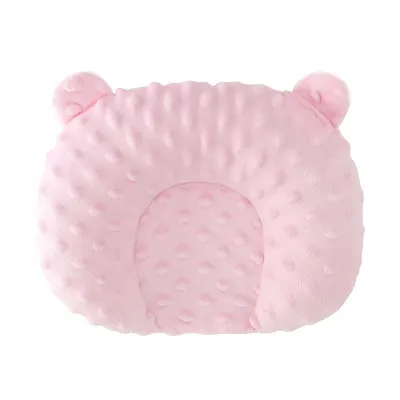
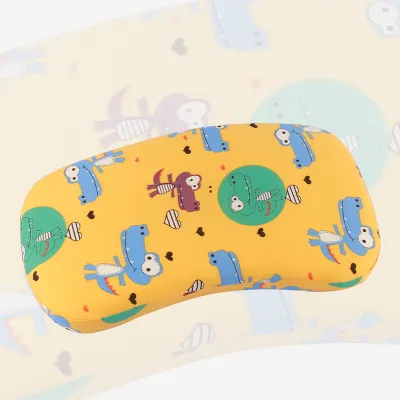
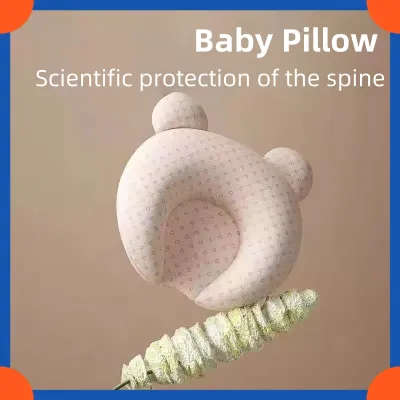
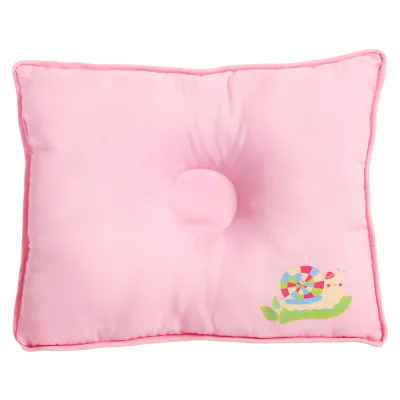
Prices are valid at publication and may change. Please refer to the product page for the latest price.
In a soft or contoured sleeping environment, the risk of suffocation and entrapment increases dramatically. If a baby rolls slightly or turns their face into the side of a contoured pillow, the fabric and filling can block their nose and mouth. Unlike older children, infants cannot easily extricate themselves from these tight spaces, leading to a high risk of rebreathing carbon dioxide or complete airway obstruction.
To protect an infant’s developing airway, the sleep surface must be firm, flat, and entirely bare. A firm surface ensures that the baby’s head does not sink into the material, keeping the airway straight and open. Introducing any pillow, regardless of its marketed purpose or shape, disrupts this flat plane and compromises the safety of the sleep space.
Furthermore, a baby’s natural startle reflex and limited mobility interact unpredictably with contoured bedding. When a baby startles or attempts to move, a contoured pillow can restrict their natural head rotation, trapping them in an awkward angle. This restriction not only affects their comfort but can also strain their delicate neck muscles and limit their ability to clear their airway if they spit up.
In tropical climates where high humidity and warm temperatures are common, soft and dense pillow materials can also trap body heat. Overheating is a recognized risk factor for sleep-related infant deaths. When a baby’s head is cradled in a thick, non-breathable foam or fabric cushion, their ability to regulate body temperature is hindered, adding an environmental hazard to the existing physical risks.
What Mainstream Pediatric Guidelines Say About Infant Sleep
Mainstream medical consensus is clear and unanimous: infants should sleep on their backs on a firm, flat surface free of any loose bedding, pillows, bumper pads, or positioning devices. These guidelines are established by leading pediatric organizations worldwide, including the American Academy of Pediatrics (AAP) and the Philippine Pediatric Society (PPS). These authorities emphasize that the safest crib is a bare crib.

The “Safe to Sleep” campaign, supported by pediatricians globally, has successfully reduced infant mortality rates by promoting simple, non-commercial sleep practices. The core principles require placing the baby on their back for every sleep session, using a tight-fitting sheet over a firm infant mattress, and keeping all soft objects out of the sleep area. Head shaping pillows directly violate these core safety principles.
When researching baby products, parents often encounter marketing claims that suggest a pillow is “pediatrician-approved” or “medically designed.” It is crucial to verify these claims against official guidelines rather than taking product packaging at face value. Recognized medical societies do not endorse or approve specific brands of head shaping pillows for unsupervised sleep, as no clinical evidence supports their safety in a crib or bassinet.
Medical consensus strongly advises against using any positional sleepers or head-shaping devices during unsupervised sleep. If a baby is left to sleep on these devices without continuous, active adult supervision, the risk of a silent airway obstruction is simply too high. Pediatricians emphasize that positional plagiocephaly is primarily a cosmetic concern that can be safely managed through active, awake-time physical positioning rather than risky sleep accessories.
Instead of spending money on unproven and potentially hazardous sleep positioning accessories, parents are encouraged to invest their resources in a high-quality, certified firm infant mattress. Ensuring your baby’s primary sleep surface meets international safety standards is one of the most effective steps you can take to support their health and safety during their first year of life.
How to Evaluate Product Labels and Manufacturer Warnings
If you are considering purchasing any baby accessory, learning to critically evaluate product labels and manufacturer warnings is a vital skill. Many head shaping pillows are sold on online marketplaces with vague safety claims. Parents must look past the promotional graphics and locate the actual product warning labels, which are often printed in small text on the packaging or on a tag sewn into the product.
First, check the specified age, weight, and developmental milestone restrictions. Many manufacturers state that their products are only suitable for infants who cannot yet roll over or push up on their hands and knees. Exceeding these developmental limits is highly hazardous, as an active baby can easily wedge themselves under or beside the pillow, leading to entrapment.
Look closely for mandatory safety warnings, suffocation hazard disclaimers, and “awake-only” use instructions. Many manufacturers include a disclaimer stating the product is not intended for unsupervised sleep or should only be used while the baby is awake and under active adult supervision. If a product label contains these warnings, the pillow must never be placed in a crib, bassinet, or playpen where the baby might fall asleep.
Additionally, verify any claims regarding “breathable” materials. While some fabrics allow better airflow than others, no material is entirely safe if it is pressed tightly against an infant’s nose and mouth for an extended period. Do not assume that a label claiming “breathability” makes a pillow safe for unsupervised sleep; the physical shape and softness of the pillow still pose a physical obstruction risk.
Finally, check if the product explicitly references recognized infant safety standards, such as those set by the Consumer Product Safety Commission (CPSC) or equivalent international standards. Be skeptical of vague terms like “certified safe” that do not name a specific, verifiable testing body. If a manufacturer cannot provide clear, verifiable safety certifications for their materials and design, it is best to avoid the product entirely.
Safe, Evidence-Based Alternatives for Flat Head Prevention
Fortunately, parents can easily prevent and manage flat spots on a baby’s head using safe, cost-free, and evidence-based techniques. The most effective method is implementing supervised tummy time while your baby is awake. Tummy time helps build the neck, shoulder, and back muscles necessary for motor development while completely removing pressure from the back of the skull.
You can begin tummy time shortly after bringing your baby home from the hospital, starting with short sessions of two to three minutes, two to three times a day. As your baby grows stronger, gradually increase the duration and frequency of these sessions. Always ensure that an adult is actively watching the baby during tummy time and that the baby is fully awake.
Another highly effective strategy is alternating your baby’s head position during sleep and daily activities. When placing your baby down to sleep on their back, gently turn their head to the left for one sleep session, and to the right for the next. This simple rotation distributes the natural pressure of the mattress evenly across the back of the head.
Babies naturally tend to look toward sources of light, windows, or interesting sights in a room. In a typical home, you can use this natural instinct to your advantage by changing the baby’s orientation in their crib. By placing their head at the opposite end of the crib every other day, they will naturally turn their head in a different direction to look toward the door or the center of the room, preventing constant pressure on one spot.
It is also beneficial to minimize the amount of time your baby spends lying on their back in car seats, carriers, bouncers, or swings when they are awake. While these devices are useful for transport and short periods of supervised rest, keeping your baby in them for extended periods increases the cumulative pressure on the back of their head. Holding your baby in an upright position, using a baby carrier, or practicing floor play are excellent ways to relieve this pressure.
If you notice a persistent flat spot or if your baby seems to prefer turning their head to only one side, consult your pediatrician. They can evaluate your baby for conditions like torticollis, a tightening of the neck muscles that can contribute to flat spots. A professional evaluation can guide you toward safe, targeted stretching exercises or a referral to a pediatric physical therapist.
When to Stop Using Sleep Accessories and Seek Medical Advice
If you have been using any type of sleep accessory or positioning aid, it is critical to recognize the immediate signs that require you to stop using the product. Discontinue use immediately if you observe any signs of discomfort, restricted breathing, or improper neck alignment. If your baby’s chin is pressed down toward their chest while using an accessory, their airway may be partially restricted, requiring immediate removal of the product.
In warm and humid environments, pay close attention to signs of overheating. If your baby wakes up with damp hair, a sweaty neck, or a heat rash around their head and shoulders, the materials in their bedding may be trapping too much heat. Overheating is a serious safety concern that requires adjusting the room temperature, improving ventilation, and removing any dense, non-breathable cushions or fabrics from the baby’s vicinity.
There is a strict rule regarding developmental milestones: stop using any positioning aids or specialized cushions the moment your baby shows signs of rolling over, pushing up, or outgrowing the manufacturer’s specified limits. Once a baby can roll, they can easily turn their face into a soft surface or trap themselves against the edges of a pillow, creating an immediate suffocation hazard.
Parents should also monitor their baby’s head shape closely during routine check-ups. If you notice significant asymmetry, a flattening that does not improve with repositioning, or if your baby seems to have a limited range of motion in their neck, seek professional medical advice. A pediatrician can provide an accurate diagnosis and recommend safe, clinical interventions rather than relying on over-the-counter consumer products.
Remember that early intervention is key for addressing head shape concerns. Most mild cases of positional plagiocephaly resolve naturally as babies gain head control, sit up, and spend more time off their backs. By focusing on safe sleep environments and active daytime positioning, you can support your baby’s physical development while keeping them safe from sleep-related hazards.
Frequently Asked Questions (FAQ)
Can I use a head shaping pillow during supervised daytime naps?
No, pediatricians do not recommend using head shaping pillows for daytime naps, even if you believe you are supervising the baby. The safety rules for sleep apply equally to nighttime sleep and daytime naps. True safe sleep requires a firm, flat, and bare surface at all times.
Active supervision can easily be disrupted if a caregiver falls asleep, steps out of the room, or becomes distracted by household tasks. Because airway obstruction can happen silently and quickly, it is safest to keep the nap environment completely free of pillows and positioning devices. Reserve any head-shaping products strictly for supervised, fully awake play sessions if specified by the manufacturer.
Do pediatricians recommend helmets for flat head syndrome?
Pediatricians may recommend cranial orthoses, commonly known as baby helmets, but only for moderate to severe cases of plagiocephaly and typically after conservative repositioning techniques have not shown improvement. These helmets are medical devices that must be prescribed, custom-fitted, and regularly monitored by a qualified specialist, such as a pediatric neurosurgeon or orthotist.
Helmets work by gently directing skull growth into a more symmetrical shape as the baby’s head expands. They are not over-the-counter products and should never be purchased without a formal medical evaluation. For most infants, early physical repositioning, increased tummy time, and addressing any neck muscle tightness are highly effective and are always the first line of recommendation before considering a helmet.

Community discussion
Share your experience or ask a question. Comments are reviewed before publication.