
When brushing your baby’s first teeth, seeing them swallow the toothpaste instead of spitting it out is a completely expected part of the process. Infants and toddlers under the age of two do not yet possess the oral motor skills or coordination required to rinse and spit. While infant-specific toothpastes, such as Aquafresh Milkteeth 0-2 Years, are formulated with this developmental stage in mind, determining whether it is safe for your baby to swallow depends on several critical factors. These include the exact amount of toothpaste applied to the brush, the fluoride concentration listed on the packaging, and the consistent supervision of a caregiver. By understanding how to verify product labels, practice controlled application, and implement safe brushing techniques, you can ensure your baby’s early oral hygiene routine remains both effective and safe.
Why Babies Swallow Toothpaste and General Safety
During the first two years of life, a baby’s swallowing reflex is highly active, while the voluntary muscle control needed to spit out liquids or paste is still developing. When you introduce a toothbrush and toothpaste into their mouth, their natural instinct is to swallow whatever is placed on their tongue. This makes the ingestion of small amounts of toothpaste during daily brushing virtually unavoidable.
To accommodate this developmental reality, manufacturers formulate infant toothpastes differently from those designed for older children and adults. Standard adult toothpastes often contain high concentrations of fluoride, strong foaming agents like sodium lauryl sulfate (SLS), and intense mint flavorings that can irritate a baby’s delicate oral tissues. In contrast, infant formulas are typically designed to be much milder, with lower levels of active ingredients and gentle flavors that make the brushing experience less overwhelming for a young child.
Products mentioned in this guide
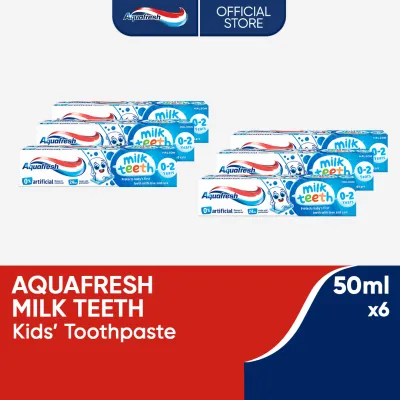
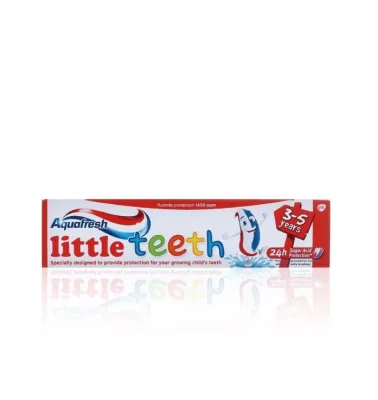
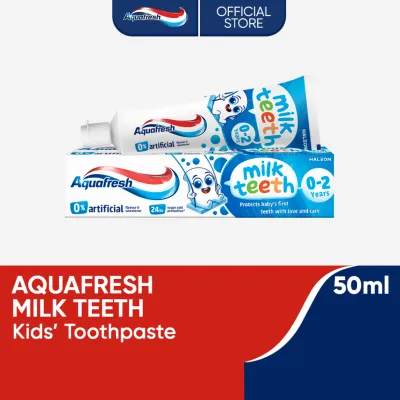
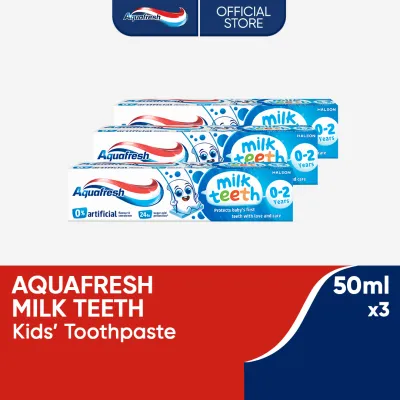
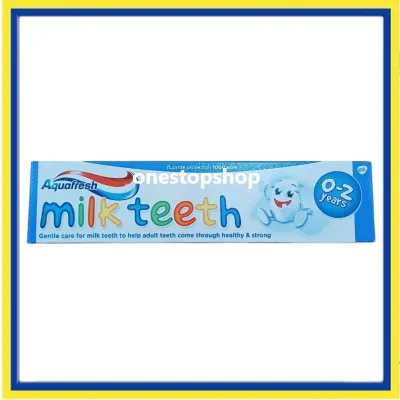
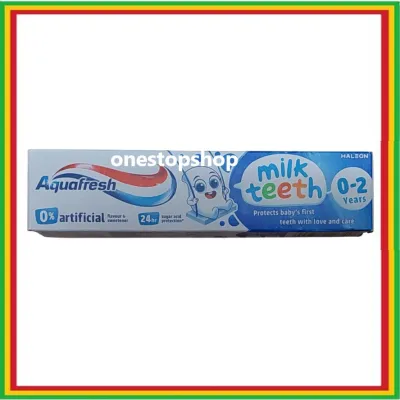
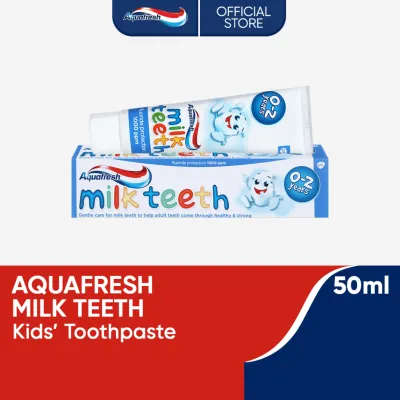
Prices are valid at publication and may change. Please refer to the product page for the latest price.
However, the presence of an “infant” or “baby” label does not mean that unlimited swallowing is entirely risk-free. Even the mildest ingredients can cause mild stomach upset if ingested in large quantities. The safety of any baby toothpaste relies heavily on strict portion control and proper caregiver management. Toothpaste should always be treated as a hygiene product rather than a food item or a treat, and the tube must be stored safely out of your baby’s reach between brushing sessions.
How to Check the Aquafresh Milkteeth Label for Safety
To evaluate the safety of Aquafresh Milkteeth 0-2 Years toothpaste for your child, you must become familiar with reading and interpreting the product label. The most critical component to locate on the packaging is the fluoride concentration, which is typically measured in parts per million (ppm). Pediatric dental guidelines generally recommend specific, low-fluoride concentrations for infants to balance cavity prevention with the risk of ingestion. You should locate this number on the box or the back of the tube and verify that it aligns with the current recommendations of your pediatrician or pediatric dentist.

Next, carefully read the manufacturer’s warnings and usage instructions printed on the packaging. Reliable baby toothpastes will explicitly state the recommended age range—in this case, 0 to 2 years—and provide clear guidelines on the exact amount of product to use. Look for specific cautionary statements regarding accidental ingestion, which often instruct caregivers to supervise brushing closely and to contact a healthcare professional if a large quantity is swallowed outside of normal brushing.
Additionally, inspect the ingredient list for other components that require verification. Check for the absence of harsh foaming agents, artificial dyes, or strong preservatives that could cause sensitivity or irritation in your baby’s mouth. In tropical climates like the Philippines, where high humidity and warm temperatures are common, it is also important to check the storage instructions on the label. Ensuring the product is stored in a cool, dry place away from direct sunlight helps maintain the stability of the formulation and prevents the ingredients from separating or degrading over time.
Brushing Techniques to Minimize Swallowing
Implementing correct brushing techniques is the most effective way to minimize the amount of toothpaste your baby swallows during their daily oral care routine. The single most important rule for babies under two years old is to control the portion size. You should apply only a tiny, thin smear of toothpaste to the bristles of the brush—an amount no larger than a single grain of dry rice. This minimal quantity ensures that even if your baby swallows the entire amount during brushing, the total intake of active ingredients remains negligible and well within safe limits.
Your physical positioning during brushing also plays a major role in how much control you have over the process. Try cradling your baby in your lap with their head resting gently against your arm, or stand behind them while they look upward slightly. This angle provides you with maximum visibility into their mouth, allowing you to guide the toothbrush precisely over their teeth and gums while preventing them from grabbing the brush. In warm tropical environments, choosing a comfortable, well-ventilated area for brushing can help keep your baby calm and cooperative, reducing sudden movements that might lead to accidental swallowing.
After you finish brushing, you can physically remove excess toothpaste residue from your baby’s mouth since they cannot spit. Take a clean, damp washcloth, a piece of sterile gauze, or a soft silicone finger brush and gently wipe down their teeth, gums, and tongue. This simple step effectively lifts away the leftover foam and food particles, significantly reducing the volume of toothpaste that ends up being swallowed without causing discomfort to your child.
What to Do If Your Baby Swallows Too Much Toothpaste
It is vital to distinguish between the expected, microscopic amounts of toothpaste swallowed during a properly supervised brushing session and the accidental ingestion of a large quantity directly from the tube. If your baby manages to find the toothpaste tube and swallows a significant amount, you must take immediate, structured action.
First, remain calm and do not attempt to induce vomiting. Inducing vomiting can cause the baby to choke or aspirate the toothpaste into their lungs, which poses a much greater immediate danger. Instead, offer your baby a small amount of water or milk to drink. Milk is particularly helpful because the calcium it contains can bind with fluoride in the stomach, helping to reduce its absorption into the body and minimizing potential stomach irritation.
Next, monitor your baby closely for any physical symptoms of over-ingestion. Common signs of swallowing too much toothpaste include mild stomach discomfort, nausea, vomiting, or unusual lethargy. If your baby exhibits any of these symptoms, or if you suspect they have swallowed a large portion of the tube, stop home care immediately. Contact your pediatrician, a local poison control center, or seek emergency medical attention right away. When seeking medical help, always bring the specific toothpaste tube with you so the healthcare providers can inspect the exact ingredient list and concentration to determine the appropriate treatment.
When to Consult a Pediatric Dentist
Navigating your baby’s early oral care can raise many questions, making professional guidance invaluable. Pediatric dental associations generally recommend scheduling your baby’s first dental visit around the eruption of their first tooth, or by their first birthday at the latest. This early visit establishes a dental home and allows a professional to monitor the development of your baby’s jaw and emerging teeth.
During this consultation, a pediatric dentist can provide a personalized assessment of your baby’s specific fluoride needs. This assessment takes into account several individual factors, including your baby’s daily diet, feeding habits, and the fluoride levels in your local water supply, which can vary significantly depending on your municipality. The dentist can help you determine whether a low-fluoride toothpaste like Aquafresh Milkteeth 0-2 is the most suitable option for your child’s specific cavity risk level.
To get the most out of this appointment, bring the specific toothpaste tube you are currently using to the clinic. This allows the dentist to review the exact ingredient profile, verify the fluoride concentration, and provide tailored instructions on how to use it safely. They can also demonstrate proper brushing angles and techniques, giving you the confidence to manage your baby’s oral hygiene safely at home.
Frequently Asked Questions (FAQ)
Can I use regular family toothpaste for my 1-year-old?
No, you should avoid using regular family toothpaste for a one-year-old. Family and adult toothpastes contain significantly higher concentrations of fluoride and stronger foaming agents that are not suitable for infants who cannot spit. Regularly swallowing these high-fluoride formulas during the critical early years of tooth development can lead to dental fluorosis, a condition that causes white spots or streaks on the permanent teeth forming beneath the gums. Stick to toothpastes specifically formulated for the 0-2 age group to ensure safety.
Should I wipe my baby's gums before teeth erupt?
Yes, establishing oral hygiene habits should begin well before your baby’s first tooth appears. You should gently wipe your baby’s gums at least once a day, preferably after the last feeding of the day. Wrap a clean, damp washcloth or a piece of sterile gauze around your clean index finger and gently massage their gums to remove food residue and bacteria. Do not use any toothpaste at this stage; plain water is all that is needed until the first tooth erupts.
Does infant toothpaste contain sugar or artificial sweeteners?
Infant toothpastes are formulated without decay-causing sugars like sucrose, as adding sugar would actively contribute to early childhood cavities. Instead, manufacturers use baby-safe flavorings and non-cariogenic sweeteners, such as sorbitol or xylitol, to give the paste a pleasant taste. These ingredients make the brushing experience more acceptable to infants, helping caregivers establish a cooperative routine without risking tooth decay. Always check the ingredient list on the packaging to verify the absence of added sugars.

Community discussion
Share your experience or ask a question. Comments are reviewed before publication.