
Finding the right baby walker for boys under ₱2,000 on popular e-commerce platforms in the Philippines requires a careful balance of budget, safety, and developmental appropriateness. While many parents search for a “baby walker for boys” featuring playful car, dinosaur, or space themes, the primary focus must always be on structural safety and how the gear impacts your child’s physical development. With a strict ₱2,000 budget, you can find reliable options, but you must know which features to prioritize and which marketing claims to verify.
Understanding Walker Types and Safety Guidelines
Before browsing online catalogs, you must understand the distinction between the two primary types of baby walkers: traditional sit-in walkers and push (walk-behind) walkers. A sit-in walker features a wheeled frame with a suspended fabric seat inside, allowing a baby to sit upright and move around by pushing off the floor with their toes. A push walker, on the other hand, is a sturdy toy on wheels with a handle that a baby grips while walking behind it, using their own balance and leg strength to push it forward.
Pediatricians and child development experts worldwide raise significant safety and developmental concerns regarding traditional sit-in walkers. Because these devices allow babies to move at rapid speeds before they have developed natural balance or spatial awareness, they present a high risk of accidental falls, particularly down steps or stairs. Additionally, sit-in walkers can actually delay natural motor milestone development. They encourage babies to walk on their tiptoes, which can tighten the heel cords, and they bypass the crucial core-strengthening and balancing phases that occur during crawling and pulling up to stand.
Products mentioned in this guide
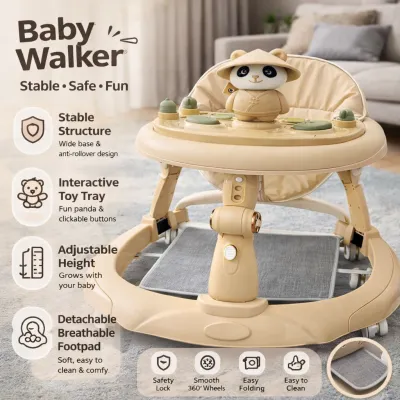
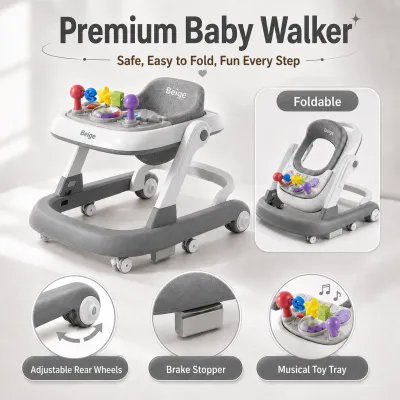
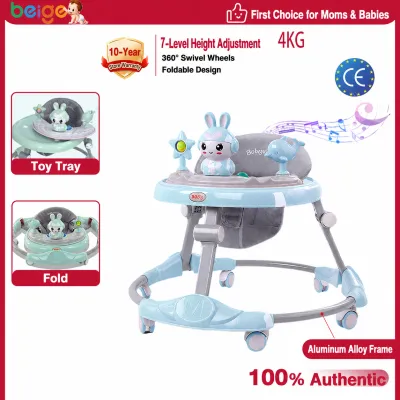
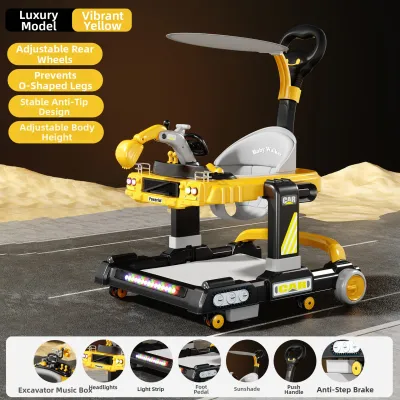
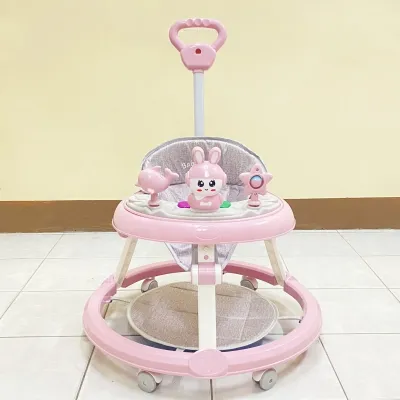
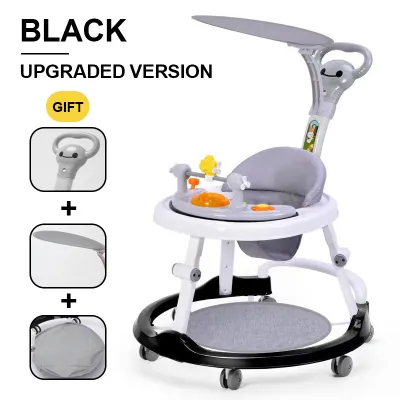
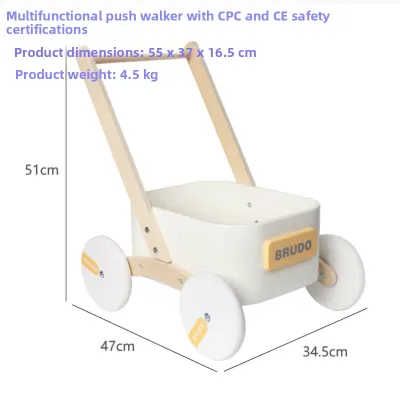
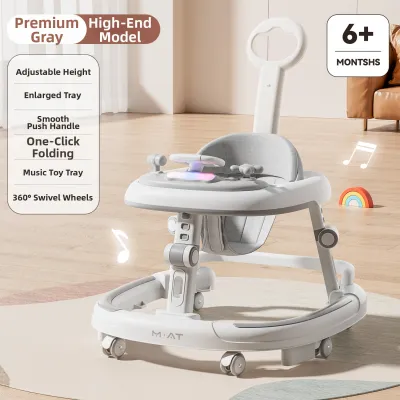
Prices are valid at publication and may change. Please refer to the product page for the latest price.
In contrast, push walkers are widely recommended by child development experts because they support natural walking mechanics. A push walker requires your child to actively balance, engage their core, and place their feet flat on the floor, which mimics the natural progression of independent walking. The baby only uses the walker when they are physically ready to pull themselves up and take steps, reducing the risk of forcing muscle groups into unnatural positions.
When shopping for a baby walker, you will encounter numerous themed designs, such as miniature racing cars, cartoon animals, or dinosaur activity centers. While these aesthetic themes are engaging and can keep your baby entertained, they must never compromise the walker’s structural stability. A car-themed toy tray is a fun addition, but it is useless if the walker’s frame is too narrow or top-heavy. Always prioritize a wide, robust base over flashy visual designs or complex electronic toy attachments.
Finding a Safe Baby Walker for Boys Under ₱2,000
When working with a strict budget of ₱2,000 on major online marketplaces, you must establish a clear priority matrix to ensure your money goes toward safety rather than superficial features. The foundation of your purchase must always be structural integrity and reliable braking or stopping mechanisms. Adjustable ergonomic features, such as height settings or speed-control wheels, should be your secondary priority. Electronic toy modules, music players, and flashing lights should be treated as non-essential extras that you can easily skip to save money.

Be highly cautious of suspiciously low-priced listings on e-commerce platforms, particularly those priced well under ₱1,000. These ultra-cheap models often cut corners by using thin, brittle plastics that can crack under pressure, or they may lack secure locking joints. If a walker collapses while your baby is inside or holding onto it, the risk of injury is severe. It is far better to buy a mid-range, structurally sound walker with simple manual toys than a cheap, flimsy model loaded with cheap electronic gadgets.
Another critical factor to consider when shopping online in the Philippines is the total cost of delivery. Shipping fees for bulky baby gear can vary significantly depending on your location, especially if you reside outside Metro Manila, such as in the Visayas or Mindanao regions. When calculating your ₱2,000 limit, always look at the final checkout price including shipping and potential return delivery costs. Some sellers offer vouchers or free shipping promotions that can help you stay within your budget without forcing you to buy a lower-quality product.
To get the best value, know where to compromise and where to hold firm. You can easily compromise on battery-operated toys; manual activities like spinning gears, sliding beads, and shape sorters are excellent for fine motor skills and do not require expensive battery replacements. However, you must hold firm on safety features like a wide, stable anti-tip base and high-quality wheel bearings. Investing your budget in these physical components ensures the walker remains safe and functional throughout your baby’s learning phase.
Essential Features to Check Before You Buy
To ensure the baby walker you select is safe and durable, you must carefully review the product specifications and images for key structural features.
Base and Wheels
The base of any baby walker must be wider than the top frame to prevent the unit from tipping over when your baby leans to one side. For sit-in models, look for a base equipped with friction strips or rubber grip pads on the bottom. These stoppers are designed to grab the floor and halt the walker if a wheel slips off an edge or encounters an uneven surface. The wheels themselves should turn smoothly, but they must not spin so freely that the walker can slide away from your baby with the slightest touch.
Push Walker Specifics
If you choose a push walker, look for models that feature adjustable wheel resistance or speed-control dials. This mechanism allows you to tighten the wheels so they do not roll faster than your baby can walk, preventing the toy from sliding out from under them. Additionally, check if the walker has a weighted base or a compartment that you can fill with water or sand. A weighted base lowers the center of gravity, making it much harder for a pulling baby to flip the walker backward onto themselves.
Sit-in Walker Specifics
If you decide to purchase a sit-in walker, you must verify that it has multiple height adjustment settings. Your baby’s feet must be able to rest flat on the floor to encourage proper leg alignment and walking posture; if they can only reach the floor with their tiptoes, the height is incorrect. Furthermore, because the Philippine climate is hot and humid, look for a seat made of breathable, moisture-wicking mesh fabric. The fabric seat should be easily detachable and machine-washable to handle inevitable spills and diaper leaks.
Build Quality and Folding Mechanisms
Many budget-friendly walkers are designed to fold flat for easy storage in smaller homes. If the walker has a folding frame, examine the listing to ensure it features secure locking pins or double-lock safety hinges. These mechanisms prevent the walker from accidentally collapsing while your baby is actively using it. Avoid any models that rely solely on simple friction-fit joints without a physical locking pin.
How to Evaluate Online Listings and Seller Claims
Shopping on online marketplaces requires a healthy dose of skepticism, as product listings are designed to look as appealing as possible.
To determine the true quality of a walker, scroll past the polished, computer-generated manufacturer images and look closely at genuine buyer photos in the review section. Real-world photos reveal the actual scale of the walker, the thickness of the plastic, and how the colors look under normal home lighting. Pay close attention to reviews written by parents who have used the product for several weeks, as they often highlight issues like squeaky wheels, loose screws, or peeling stickers.
Always check the product description for explicit weight limits, age recommendations, and material specifications. A walker designed for babies up to 12 kilograms should not be used for a heavier toddler, even if the listing title claims it is suitable for “all ages.” Look for listings that specify the use of non-toxic, BPA-free plastics, as babies frequently chew on the toy trays and handles of their walkers.
Before clicking the purchase button, send a direct message to the seller to clarify details that may not be clear in the listing. Ask them to confirm the exact assembled dimensions, the current stock availability, and their specific return policy for defective or damaged items. A responsive, helpful seller who provides clear answers is generally more reliable than a store that uses automated, unhelpful templates.
Finally, remember that terms like “100% safe,” “pediatrician approved,” or “certified” in listing titles are often just marketing buzzwords used to boost search rankings. True safety cannot be guaranteed by a text listing; it requires you to physically inspect the product upon delivery. Check for sturdy assembly, smooth edges, and clear manufacturer safety labels before allowing your baby to use the walker.
Setting Up a Safe Play Environment at Home
Even the safest, most expensive baby walker can become hazardous if used in an unprepared environment. Before your baby takes their first steps in a walker, you must thoroughly babyproof the designated play area.
Start by preparing the floor surface. Clear away all small objects, toys, and loose items that could get caught in the walker’s wheels and cause a sudden stop or tip-over. Secure any loose electrical cords, charger cables, or low-hanging curtain cords that your baby could reach or get tangled in. If you have slippery tile or wooden floors, ensure there are no loose rugs or mats that could slide around or bunch up under the walker.
You must block access to all high-risk areas in your home. Use sturdy safety gates to seal off stairways, steps, and raised thresholds, as stair falls are the most common cause of walker-related injuries. Keep doors to the kitchen, bathrooms, and laundry areas firmly closed. In a sit-in walker, your baby will be taller and faster than usual, allowing them to reach items on low tables or countertops—keep hot liquids, heavy objects, tablecloths, and cleaning chemicals completely out of their reach.
It is vital to understand that a baby walker is not a babysitter and does not replace active caregiver supervision. You must maintain constant, direct line-of-sight supervision whenever your baby is using the walker. Avoid looking at your phone or leaving the room, even for a few seconds.
If you are using a sit-in walker, limit your baby’s sessions to short intervals of 15 to 20 minutes once or twice a day. Overusing a sit-in walker can prevent your baby from developing the muscle strength and coordination they need for crawling and standing independently. Ensure your baby gets plenty of unrestricted floor time on a play mat, where they can roll, crawl, and sit up naturally, which are the true foundations of healthy physical development. If you notice any unusual walking patterns or have concerns about your child’s motor development, consult a pediatrician or a pediatric physical therapist for professional guidance.
Frequently Asked Questions (FAQ)
At what age can a baby start using a push walker?
A baby’s readiness for a push walker is determined by their developmental milestones rather than a specific chronological age. Generally, a baby is ready to use a push walker when they can pull themselves up to a standing position independently and maintain their balance while holding onto furniture. This milestone typically occurs between 9 and 12 months of age, but you should always wait until your baby shows these signs of physical readiness before introducing a push walker.
Do traditional sit-in walkers help babies walk faster?
No, traditional sit-in walkers do not help babies walk faster, and they can actually delay independent walking. Sit-in walkers support the baby’s body weight artificially, preventing them from developing the core strength and balance required to stand on their own. They also encourage walking on tiptoes and sliding rather than taking natural steps. A push walker is a better alternative for supporting natural walking mechanics, as it requires the baby to support their own weight and balance actively.

Community discussion
Share your experience or ask a question. Comments are reviewed before publication.