
Giving your child a dietary supplement requires careful planning, clear boundaries, and a thorough understanding of the product’s specific guidelines. While gummy supplements like Scott’s DHA gummies are designed to be appealing and easy for children to consume, they are active nutritional supplements that must be administered with care. As a parent, your primary responsibility is to ensure that the supplement is appropriate for your child’s developmental stage and that you are following the exact dosage instructions provided by the manufacturer.
Because formulations, ingredient concentrations, and gummy sizes can change over time, there is no universal rule that applies to every single bottle on the shelf. The safest and most reliable way to determine the correct daily dosage and minimum age requirement is to read the physical product label before every single use. This guide focuses on the essential safety practices, developmental checks, storage solutions, and routine-building strategies to help you manage your child’s supplement intake safely and effectively.
Checking Age Appropriateness and Daily Dosage
Before you purchase or open a bottle of Scott’s DHA gummies, the very first step is to locate and read the manufacturer’s age recommendations printed directly on the packaging. Gummy supplements are generally formulated for children who have reached a specific age where their digestive systems and chewing capabilities can handle the dense texture. Relying on general advice from friends, family, or outdated online articles can be risky, as manufacturers frequently update their product lines, serving sizes, and age limits to align with the latest pediatric safety standards.
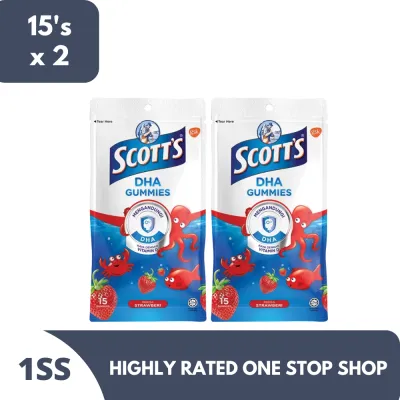
Products mentioned in this guide




![Scotts DHA Gummies Strawberry + Orange 60s [Pack of 2] Helps Support Brain Development](https://img.lazcdn.com/g/p/57c252d1cbab5822cf70bdee533730fd.png_400x400q80.png_.webp)

![Explorer Pack: Scotts 100% Vitamin C Pastilles 50s [Pack of 4] + DHA Gummies 60s [Pack of 4]](https://img.lazcdn.com/g/p/0d0fe08e93a6dcb615928ed203113acf.jpg_400x400q80.jpg_.webp)
Prices are valid at publication and may change. Please refer to the product page for the latest price.
Once you have verified that your child meets the minimum age requirement, you must carefully check the recommended daily serving size. This information is typically located on the back or side panel of the bottle under the “Supplement Facts” or “Directions for Use” section. Keep in mind that the serving size might be split into multiple gummies per day, or it may vary depending on the child’s age bracket. Never assume that one gummy equals one serving; always verify the exact count specified on your specific bottle to avoid under-dosing or accidental over-dosing.
Even if the product label indicates that your child is within the recommended age range, it is highly recommended to consult a pediatrician before introducing any new supplement to their daily routine. A healthcare professional can evaluate your child’s overall diet, assess whether they are already getting sufficient nutrients from food sources, and ensure that the supplement will not interact with any existing medications or health conditions. This professional consultation is especially crucial if your child has food allergies, dietary restrictions, or a sensitive stomach, as the pediatrician can provide personalized guidance tailored to your child’s unique developmental needs.
Safe Administration and Choking Prevention
The physical safety of your child during the consumption of gummy vitamins is a critical consideration that parents must actively manage. Unlike liquid vitamins or chewable tablets that dissolve quickly, gummy supplements have a thick, chewy texture that requires thorough mastication before swallowing. Before introducing these supplements, you must honestly assess your child’s chewing and swallowing abilities. If your child tends to swallow food in large chunks or struggles with sticky textures, they may not be developmentally ready for a gummy supplement, regardless of what the age label says.

Active supervision is non-negotiable whenever your child is consuming a gummy supplement. This means you should be physically present, watching them chew the gummy completely, and ensuring they do not try to swallow it whole. Avoid the temptation to hand your child a gummy while you are distracted or walking away to another room. By maintaining direct visual contact, you can intervene immediately if the child experiences any difficulty or starts to choke.
To minimize the risk of choking, establish a strict rule that the child must be sitting completely upright and calm while taking their daily gummy. Do not allow your child to consume supplements while they are running, playing, laughing, crying, or lying down on the couch. Physical activity increases the likelihood of a gummy accidentally slipping down the windpipe before it has been properly chewed. Creating a quiet, seated moment for their daily supplement not only ensures physical safety but also helps the child focus on chewing the gummy thoroughly.
Establishing a Daily Routine for Consistency
Integrating a daily supplement into your child’s schedule is much easier when you pair it with an existing, consistent daily habit. In many households in the Philippines, mornings can be hectic as families prepare for school, daycare, or work, while evenings might be filled with homework and bedtime preparations. Finding a stable “anchor” in your daily routine—such as right after breakfast, alongside an afternoon snack, or immediately after dinner—helps ensure that you never forget to administer the supplement. Consistency not only helps you remember but also helps your child’s body adapt to a regular nutritional routine.
When presenting the gummy to your child, it is vital to frame it as a standard health step rather than a candy reward or a treat. Because these supplements are flavored and shaped like candy, children can easily confuse them with regular sweets, leading to persistent begging or attempts to access the bottle independently. By using clear, matter-of-fact language—such as calling it “your daily vitamin” rather than “your daily candy”—you set healthy boundaries and teach your child to respect supplements as health products.
For older children, you can encourage active participation and compliance by using simple visual tracking tools. A colorful wall chart where your child can place a sticker after taking their daily gummy can make the routine engaging without turning the supplement itself into a reward. This visual feedback helps children understand the concept of daily health habits and fosters a sense of responsibility for their own well-being as they grow.
Proper Storage and Overconsumption Prevention
The tropical climate of the Philippines presents unique challenges when it comes to storing gummy supplements. High temperatures and intense humidity can quickly cause the gummies to melt, stick together, or degrade in quality, rendering them difficult to dose accurately. To preserve the texture and integrity of the ingredients, store the bottle in a cool, dry place away from direct sunlight, heat sources, and moisture. Avoid storing them in humid areas like the bathroom or on kitchen countertops near the stove; instead, opt for a pantry shelf or a dedicated cabinet that remains consistently cool.
To prevent accidental overconsumption, the supplement container must be kept tightly sealed and stored strictly out of your child’s sight and reach. Many children are highly creative and determined when it comes to reaching items they perceive as treats, so simply placing the bottle on a standard countertop is not sufficient. Treat the supplement bottle with the exact same level of caution you would use for prescription medications, storing it in a high, locked cabinet or a secure childproof container.
Consistently reinforcing the boundary that these gummies are vitamins, not candy, is your best defense against unsupervised access. If your child understands that the bottle contains health supplements that can only be opened and administered by an adult, they are less likely to seek them out when you are not looking. Make it a habit to close the child-resistant cap fully until it clicks or locks after every single use, and never leave the open bottle unattended on a table or counter.
Monitoring for Reactions and When to Consult a Doctor
Whenever you introduce a new dietary supplement to your child’s routine, it is important to monitor them closely for any physical or behavioral changes over the following days. While many children tolerate gummy supplements well, some individuals may experience mild digestive discomfort, such as bloating, gas, or loose stools, as their bodies adjust to the ingredients. Keep a close eye on their skin as well, looking out for any signs of rashes, hives, or itching that could indicate an allergic reaction to the gelatin, pectin, flavorings, or active ingredients.
It is also crucial to understand the potential risks associated with exceeding the recommended daily dose of supplements. Unlike water-soluble vitamins that the body can easily flush out in urine, fat-soluble components and certain nutrients can accumulate in the body if consumed in excessive amounts over time. This accumulation can place unnecessary strain on your child’s developing organs and lead to adverse health effects. Always stick strictly to the recommended serving size and avoid the temptation to give extra gummies, even if your child begs for them.
Establish clear “stop-conditions” so you know exactly when to discontinue use and seek professional medical advice. If your child experiences persistent stomach pain, ongoing diarrhea, vomiting, skin rashes, or sudden changes in behavior after starting the supplement, stop giving them the gummies immediately. Contact your pediatrician to discuss these symptoms, as they can help determine whether the reaction is linked to the supplement or if there is an underlying issue that needs to be addressed.
Frequently Asked Questions (FAQ)
Can I give Scott's DHA gummies to my toddler?
Gummy supplements are generally not recommended for toddlers who have not yet fully developed their chewing and swallowing coordination. The dense, rubbery texture of a gummy poses a significant choking hazard for very young children who may attempt to swallow it whole or fail to grind it down completely with their back teeth. To ensure your child’s safety, always check the manufacturer’s strict minimum age requirement printed on the product packaging before offering any gummy. If your child is too young or is not yet developmentally ready to handle chewy textures safely, consult your pediatrician to discuss alternative DHA formats, such as liquid drops or chewable soft gels that are specifically designed for younger age groups.
What should I do if my child eats more than the recommended dose?
If your child accidentally consumes more than the recommended daily dose of gummies, remain calm but take immediate action. First, locate the product packaging and keep it in your hand so you can quickly read the exact ingredients, concentrations, and dosage details to medical professionals. Contact your pediatrician or your local poison control center immediately to explain the situation and receive professional, case-specific guidance based on your child’s weight and the amount consumed. Do not attempt to induce vomiting or administer any home remedies, such as forcing water or milk, unless you are explicitly instructed to do so by a qualified healthcare professional.
Should the gummies be taken with food?
To determine whether the gummies should be taken with or without food, you should always refer to the specific instructions printed on the product label. While some formulations can be taken at any time of day, administering dietary supplements alongside a meal or a light snack can often help minimize the risk of mild stomach upset, especially in children with sensitive digestive systems. Additionally, taking certain nutrients with a meal that contains healthy fats can sometimes support optimal absorption. Ultimately, you should follow your pediatrician’s personalized advice, which will be based on your child’s specific dietary habits, digestive health, and daily routine.

Community discussion
Share your experience or ask a question. Comments are reviewed before publication.