
Starting solids is a major milestone in your baby’s development, and introducing the right utensils can make this transition both successful and enjoyable. When you are looking for Disney spoon and fork sets, the vibrant colors and familiar characters like Mickey Mouse, Minnie Mouse, or Disney Princesses can instantly capture your baby’s attention and create a positive association with mealtime. However, choosing the most suitable set requires looking beyond the charming designs to evaluate the physical dimensions, material safety, and ergonomic features of each utensil. The ideal set must match your baby’s current oral motor skills and physical coordination to ensure safety and comfort during self-feeding.
In the Philippines, where weaning often begins with warm, comforting bowls of lugaw, mashed saba bananas, or pureed local vegetables, the tropical climate and humidity also play a role in how you select and maintain baby tableware. High humidity means that utensils must be exceptionally easy to clean and dry to prevent the growth of mold and bacteria in hidden crevices. By focusing on practical design elements first and character themes second, you can find a Disney-themed set that keeps your baby safe, comfortable, and excited to explore new flavors.
Essential Features for a Baby's First Utensils
When your baby is just starting solids, usually around six months of age, their oral motor skills are still developing. At this stage, babies do not eat the way adults do; instead of wrapping their lips around a deep spoon bowl, they tend to scrape food off the utensil using their upper lip. For this reason, the depth of the spoon bowl is a critical feature to evaluate. A spoon with a shallow bowl allows your baby to easily clear the food with their lips, preventing frustration and ensuring they actually swallow the puree. If a spoon bowl is too deep, food remains trapped at the bottom, which can lead to over-insertion and trigger your baby’s sensitive gag reflex.
Products mentioned in this guide
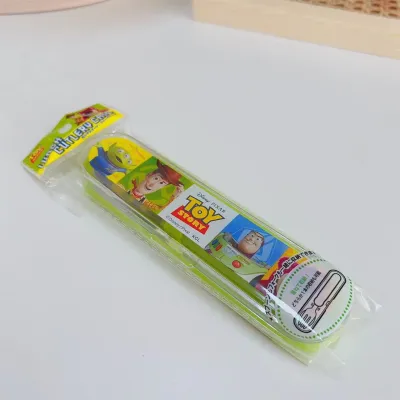
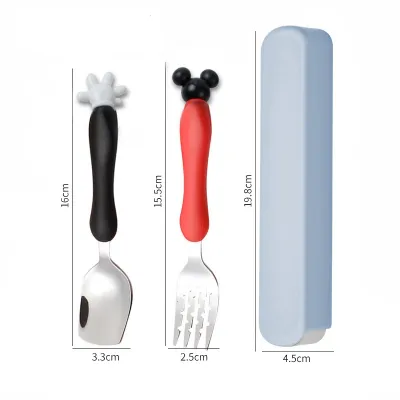
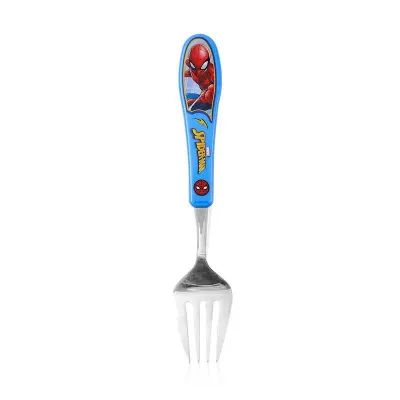
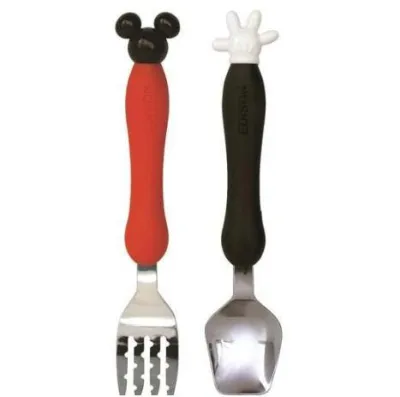
Prices are valid at publication and may change. Please refer to the product page for the latest price.
The design of the fork tines is equally important for early self-feeding safety. A beginner’s fork should never have sharp, pointed tines that could puncture or scratch your baby’s delicate gums, tongue, or the roof of their mouth. Instead, look for forks with short, blunt, and rounded tines that are designed to pierce soft, steamed foods like kamote (sweet potato) or carrots without posing a safety hazard. The tines should be spaced widely enough to prevent food from getting tightly wedged, which makes self-feeding easier and simplifies the cleaning process afterward.
As your baby transitions from being fed by a caregiver to attempting self-feeding, their grip style will evolve. Initially, infants use a palmar grasp, wrapping their entire fist around the handle of the utensil. To support this developmental stage, the handles of your Disney spoon and fork set should be short, thick, and ergonomically contoured. A short handle prevents the baby from poking the utensil too far into their mouth, while a thick, rounded grip fits naturally into their small fist. Look for handles that feature textured surfaces, non-slip silicone ridges, or rubberized outer layers, which provide extra traction when your baby’s hands are slippery with food or sweat in our warm tropical climate.
Material safety is the most critical factor when choosing any product that comes into contact with your baby’s food. You must verify the safety labels directly on the product packaging rather than relying solely on online product titles or marketing descriptions. Look for explicit certifications indicating that the materials are food-grade, BPA-free, phthalate-free, and PVC-free. High-quality food-grade silicone and premium, durable plastics are the standard materials for early weaning utensils. Inspecting the packaging for these specific safety standards ensures that no harmful chemicals will leach into your baby’s warm meals during preparation or feeding.
Balancing Disney Themes with Practical Feeding Needs
Character-themed baby products are incredibly appealing, but it is essential to ensure that the Disney designs do not compromise the functionality of the utensils. Many themed sets feature elaborate 3D character handles, large decorative toppers, or oversized silhouettes of beloved characters. While these designs look delightful on the high chair, they can add significant weight to the handle. A top-heavy spoon or fork is difficult for a baby to balance, often causing the utensil to tip backward out of their hand or flip over when placed inside a small suction bowl, spilling food onto the floor.

Another practical concern with highly detailed 3D character designs is the presence of joints, seams, and deep crevices. Sculpted character ears, bows, or clothing details can easily trap tiny food particles, purees, and moisture. In the warm and humid climate of the Philippines, any food residue left behind in these hard-to-reach areas can quickly become a breeding ground for bacteria, yeast, and mold. When evaluating a Disney set, run your fingers over the handle to check for smooth transitions and minimal seams. If the character design is integrated as a flat, printed graphic sealed inside a smooth plastic handle, it will be much easier to sanitize thoroughly after every meal.
Ergonomic shapes must always take precedence over purely aesthetic character silhouettes. For example, a spoon handle shaped exactly like a character’s body might have awkward angles or sharp plastic edges that dig into your baby’s palm. A well-designed utensil set will prioritize a smooth, rounded, and symmetrical handle shape that accommodates a natural grip, using printed graphics or simple color schemes to represent the Disney theme. This ensures that your baby can focus on the complex task of bringing food to their mouth without being hindered by an uncomfortable or distracting utensil shape.
Additionally, consider how the visual design affects your baby’s focus during mealtime. While a colorful Mickey Mouse or Disney Princess graphic can make the high chair more inviting, an overly complex or interactive toy-like utensil might distract your baby from the actual task of eating. The primary goal of weaning is to help your baby develop a healthy relationship with food and learn self-feeding skills. Choosing a set with a clean, functional eating end and a simple, beautifully illustrated handle strikes the perfect balance between playful engagement and practical utility.
How to Evaluate and Shortlist Disney Utensil Sets
When shopping for Disney spoon and fork sets in local baby boutiques or on reputable online marketplaces, it is vital to read the manufacturer’s age recommendations and developmental guidelines. Do not select a set based solely on your favorite character or movie. Many themed utensil sets are labeled for toddlers aged 12 months, 18 months, or older. These older-stage sets often feature stainless steel tines or deeper, wider spoon bowls that are completely unsuitable and potentially unsafe for a six-month-old baby who is just starting solids. Always match the product’s recommended age bracket with your baby’s current physical capabilities.
To ensure you are purchasing a genuine and safe product, look for recognized safety standard marks and compliance labels on the packaging. Authentic Disney-licensed baby products undergo rigorous safety testing to meet international standards, such as the European standard EN 14372 or US FDA regulations. These compliance marks are usually printed clearly on the back of the packaging along with the manufacturer’s or distributor’s details. Be cautious of generic, unbranded items that use Disney imagery without official licensing, as these products may not adhere to strict chemical safety standards or durability requirements.
It is also helpful to compare the contents of different utensil sets to determine if they align with your current weaning setup. Some Disney spoon and fork sets are sold as simple two-piece kits, which are excellent if you already have a collection of baby bowls and plates. Other sets are packaged as comprehensive weaning bundles that include matching suction plates, divided bowls, training cups, or travel cases. If you frequently travel to visit family or dine out, a set that includes a compact, snap-close travel case is highly practical, as it keeps the utensils clean in your diaper bag and seals away dirty utensils after use.
Before making a final purchase, inspect the physical quality of the utensils if you are shopping in a physical store, or read verified customer feedback regarding durability if shopping online. Check that the edges of the plastic or silicone are completely smooth, with no rough manufacturing seams or sharp plastic flashing left behind from the molding process. The transition between the handle and the eating end should feel sturdy and seamless, with no signs of loose parts or weak joints that could snap under pressure when your baby bites down on the utensil.
Daily Care, Cleaning, and When to Replace Utensils
Proper maintenance of your baby’s utensils is essential for preserving hygiene and extending the lifespan of the product. Always refer to the specific manufacturer instructions on the packaging regarding sterilization methods and temperature limits. While some high-quality silicone spoons can withstand the high heat of boiling water, steam sterilizers, or UV sterilizers, certain plastics used in decorated handles may warp, crack, or release chemicals when exposed to extreme temperatures. If the packaging specifies “hand wash only” or warns against microwave sterilization, adhere strictly to these guidelines to protect the integrity of the materials.
Regular inspection of the utensils before every single meal is a crucial safety habit. Examine the spoon bowls and fork tines closely for any signs of wear, such as deep scratches, discoloration, or rough patches. In our humid tropical environment, deep scratches in plastic or silicone can harbor microscopic food particles and moisture, making them incredibly difficult to sanitize completely. Furthermore, if your Disney set features painted characters or decorative coatings, check to ensure the paint is not peeling, bubbling, or chipping away, as these small flakes can easily be ingested by your baby.
You must also be vigilant about checking for loose decorative parts or structural damage. If a spoon handle has a glued-on character topper or a multi-piece construction, check that the joints remain perfectly tight and secure. If you notice any wobbling, separation of materials, or hairline cracks, stop using the utensil immediately. A loose topper or a cracked handle poses a severe choking hazard and can pinch your baby’s fingers or lips during use. Replacing worn-out utensils promptly is a small but vital step in maintaining a safe feeding environment.
Finally, pay attention to your baby’s developmental milestones to know when it is time to transition away from their beginner Disney set. As your baby approaches their toddler years, their fine motor skills will improve, and they will begin to transition from a palmar grasp to a mature pincer grasp. They will also start eating denser, more textured foods that require a sturdier utensil to scoop and pierce. When you notice your child easily manipulating their beginner utensils but struggling to scoop heavier foods, it is time to transition them to a toddler-sized Disney set with longer handles and slightly firmer, larger eating surfaces.
Frequently Asked Questions (FAQ)
Silicone vs. Plastic: Which Material Suits Early Weaning?
Silicone and plastic each offer distinct advantages for babies starting solids, and the best choice depends on your baby’s immediate developmental needs. Food-grade silicone is highly flexible, soft, and gentle on tender, teething gums, making it an excellent material for the very first weeks of weaning when babies are still learning to coordinate their mouth movements. Silicone is also highly heat-resistant, durable, and less prone to scratching, which simplifies the sterilization process.
Plastic utensils, on the other hand, are firmer and provide more structural support, which is highly beneficial as your baby begins to transition to thicker purees, mashed foods, and soft finger foods. The rigidity of a high-quality, BPA-free plastic spoon makes it much easier to scoop up denser foods like mashed squash or thick rice porridge. However, plastic is more susceptible to scratching over time. You should always check the individual product labels to verify the specific material grades, temperature limits, and care instructions for both materials.
Are Themed Utensils Safe for Microwaves and Sterilizers?
Not all themed baby utensils are safe for use in microwaves, steam sterilizers, or boiling water, and assuming they are can lead to damaged products or safety hazards. Many Disney-themed utensils feature vibrant, multi-colored graphics, metallic accents, or mixed-material handles that combine plastic, silicone, and metal cores. These decorative elements and mixed materials often have different heat expansion rates, which can cause the utensils to warp, crack, or separate when exposed to high heat.
To ensure safety, you must read the manufacturer’s care manual or packaging labels before exposing any themed utensil to heat sterilization or microwave use. Never place utensils with metallic paints, foil decals, or metal components inside a microwave, as this can cause sparking and ruin the product. If a utensil is labeled as not suitable for high-heat sterilization, wash it thoroughly with warm, soapy water and allow it to air dry completely in a well-ventilated area to maintain optimal hygiene.

Community discussion
Share your experience or ask a question. Comments are reviewed before publication.