
Choosing the right baby spoons and forks is a fundamental step in supporting your child’s transition from a milk-only diet to solid foods. This developmental milestone, known as weaning, involves much more than simply introducing new flavors; it requires your baby to learn entirely new oral and motor skills. During this transition, the physical design of their feeding tools plays a critical role in their success, safety, and confidence at the dining table.
Using utensils that do not match your baby’s developmental stage can lead to frustration, mealtime resistance, and even safety hazards like gagging or choking. For instance, a spoon that is too deep makes it difficult for an infant to clear food with their lips, while a fork with sharp tines poses an obvious risk to sensitive gums. By understanding how your baby’s physical abilities evolve, you can select utensils that act as helpful learning aids rather than obstacles.
Understanding Weaning Stages and Utensil Needs
The weaning process is a gradual journey that unfolds in distinct phases, each requiring a different approach to feeding tools. In the Philippines, where family meals are highly social and vibrant, introducing infants to local staples like mashed squash, sweet potatoes, or rice porridge typically begins around six months of age. At this initial stage, the baby’s primary task is learning how to swallow non-liquid foods and manage the sensation of a utensil in their mouth.
Products mentioned in this guide
Prices are valid at publication and may change. Please refer to the product page for the latest price.
Physiologically, infants must overcome the tongue-thrust reflex, which naturally pushes solid objects out of the mouth. During these early weeks, feeding is almost entirely parent-led, meaning the caregiver controls the spoon. The ideal utensil for this phase must accommodate the baby’s delicate oral structures and limited coordination, focusing on comfort and gentle introduction rather than self-feeding efficiency.
As babies reach eight to ten months, they enter an active phase of exploration and grasping. This period is marked by the development of the palmar grasp, where the infant uses their entire fist to clutch objects. You will notice your baby reaching for the spoon, dipping their hands into the food, and attempting to bring the utensil to their mouth. This stage is naturally messy, but it is a vital step for sensory development and hand-eye coordination. Utensils designed for this phase must be easy to grip with a full fist and short enough to prevent the baby from shoving the head too far back into their throat.
By twelve to eighteen months, toddlers begin refining their motor skills, transitioning from a full-fist grip to a more precise finger-led grip. They start to master the hand-eye coordination required to scoop food onto a spoon and guide it successfully to their mouth. This is also the stage where they learn the concept of piercing food with a fork. Utensils for this advanced phase should mimic adult cutlery in function but remain scaled down to fit toddler hands, offering the durability needed for daily practice.
Key Features to Evaluate in Baby Spoons and Forks
When browsing an online marketplace or visiting a local baby boutique, evaluating the materials used in infant cutlery is paramount. Whether you are budgeting around ₱150 to ₱500 for a high-quality set or looking for basic starter tools, look for products that explicitly state they are made from food-grade silicone, high-quality stainless steel, or BPA-free plastics. In the warm and humid climate of the Philippines, materials must be highly resistant to moisture retention to prevent the growth of mold and bacteria. Food-grade silicone is particularly popular for early stages because it is soft, flexible, and highly resistant to heat and degradation.

Handle design is another critical factor that directly influences your baby’s ability to self-feed. For infants practicing their grip, look for short, bulbous handles that fit naturally into a small palm. Anti-slip features, such as textured silicone sleeves, matte finishes, or raised ridges, are highly beneficial for keeping the utensil secure in slippery, food-covered hands. Avoid long, thin handles for self-feeding, as they are difficult for young babies to control and increase the risk of accidental throat poking.
The head of the spoon or fork requires close inspection before purchase. A high-quality baby spoon should have a very shallow bowl, allowing the infant to easily remove food using their upper lip. For forks, the tines must be blunt and rounded to prevent injury to the gums and tongue, yet firm enough to pierce soft, steamed vegetables or fruits. Many modern self-feeding utensils also incorporate built-in choke guards—widened collars located just below the utensil head that physically prevent the child from inserting the tool too deeply into their mouth.
Finally, consider the cleaning and sterilization requirements of the utensils. Because baby items require frequent sanitizing, verify that the materials can withstand boiling water, steam sterilizers, or top-rack dishwasher cycles without warping or releasing harmful chemicals. In humid tropical environments, utensils should have seamless designs without hidden crevices where water can pool, as trapped moisture can quickly lead to mold development during storage.
Matching Utensils to Your Baby's Developmental Milestones
During Stage 1, which focuses on the initial introduction of purees, the parent is the primary handler of the utensil. For this phase, long-handled spoons are highly practical because they allow caregivers to scrape the bottom of deep baby food jars or bowls easily. The spoon head should be made of ultra-soft, flexible silicone to protect the baby’s sensitive gums and newly emerging teeth. These spoons should be narrow and shallow, holding just enough food for a single, manageable bite.
As your baby transitions to Stage 2 and begins showing a strong desire to feed themselves, you should introduce short, chunky utensils. Pre-spoons or starter spoons are excellent for this phase; these often feature textured, flat heads instead of deep bowls, allowing food to cling to the surface regardless of how the baby dips or holds the tool. This design eliminates the frustration of scooping, helping your baby build confidence as they practice bringing the utensil to their mouth.
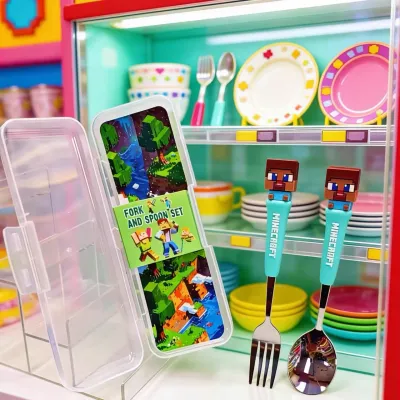
By Stage 3, your toddler is ready for more advanced tools that resemble adult cutlery. This is the ideal time to introduce small stainless steel spoons and forks with comfortable silicone or plastic handles. Because toddlers at this stage are highly observant and love to mimic older siblings or parents, using themed utensils can be an excellent way to encourage independent eating. A themed set, such as a Minecraft spoon and fork set, can make mealtime exciting for older toddlers who are fans of the game, turning a potentially stressful meal into an engaging activity. When choosing themed sets, always verify that they are designed specifically for toddlers, featuring rounded fork tines and ergonomic handles suitable for their age group.
Safety Checks and Daily Maintenance for Baby Utensils
Ensuring the ongoing safety of your baby’s feeding tools requires a consistent routine of physical inspections and proper hygiene. Before every meal, take a few seconds to examine each spoon and fork closely. Check for hairline cracks in plastic handles, peeling or tearing along the edges of silicone spoon bowls, and any loose parts where different materials join together. Teething babies often chew on their utensils, which can accelerate wear and tear, so look out for deep bite marks that could harbor bacteria or break off into small choking hazards.
Cleaning routines must be carried out diligently, especially in tropical climates where humidity levels are high. Wash all utensils immediately after use with mild, baby-safe dishwashing liquid and warm water. If the manufacturer’s instructions permit, sterilize the utensils regularly using steam or boiling water. After washing, place the utensils on a clean, elevated drying rack in a well-ventilated area to ensure they dry completely; never store damp baby utensils in closed, dark cabinets where mold can easily flourish.
Knowing when to retire a utensil is just as important as keeping it clean. Over time, repeated exposure to high heat, dishwashers, and acidic foods will cause plastics and silicone to degrade. If a spoon becomes sticky to the touch, develops a persistent odor, shows significant discoloration, or exhibits any structural weakness, it is time to replace it. Investing in a new set of utensils ensures that your growing child always has access to safe, hygienic, and functional tools for their daily meals.
Frequently Asked Questions (FAQ)
When should I introduce a fork to my baby?
Most toddlers are developmentally ready to try using a fork between twelve and fifteen months of age, though some may show interest slightly earlier or later. Key signs of readiness include your child successfully using a spoon to scoop food, demonstrating improved hand-eye coordination, and attempting to stab food with their fingers or a spoon. When you introduce a fork, ensure it is a toddler-specific model with blunt, rounded tines made of thick plastic or food-grade silicone, and always supervise your child closely during meals to prevent them from running or playing with the utensil.
Are themed utensils safe for early weaning?
Themed utensils, such as a Minecraft spoon and fork set, are generally designed and sized for older toddlers rather than infants in the early stages of weaning. Early weaning requires highly specialized, ultra-soft, and shallow silicone spoons to protect delicate gums and accommodate a baby’s limited oral motor skills. Before introducing any themed utensil set, always check the manufacturer’s recommended age label on the packaging, verify that the materials are certified food-grade and BPA-free, and ensure the physical dimensions are appropriate for your child’s current hand size and developmental stage.

Community discussion
Share your experience or ask a question. Comments are reviewed before publication.