
Finding the right gear to support your baby’s developmental milestones while keeping them safe and entertained is a top priority for parents in the Philippines. A 4-in-1 baby walker offers a versatile, space-saving solution by combining multiple developmental stages into a single piece of equipment. Instead of purchasing separate stationary play centers, seated walkers, push toys, and toddler tables, a multi-functional walker adapts as your child grows. However, choosing the right model requires understanding how these configurations work, assessing your home environment, and verifying critical safety features.
By selecting a high-quality model, you can provide your baby with a secure environment to play and explore. This guide breaks down what to look for when comparing options, how to ensure your baby is developmentally ready, and how to maintain the equipment for long-term use.
What Does "4-in-1" Actually Mean in Baby Walkers?
When shopping for baby gear, you will frequently encounter the term “4-in-1,” but its exact definition can vary significantly depending on the manufacturer. Generally, this designation means the product can be reconfigured into four distinct modes to match your child’s physical development. Understanding these modes helps you maximize the utility of the gear and ensures you use each configuration at the appropriate developmental stage.
Products mentioned in this guide
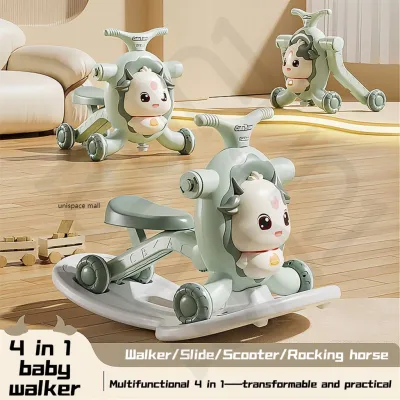
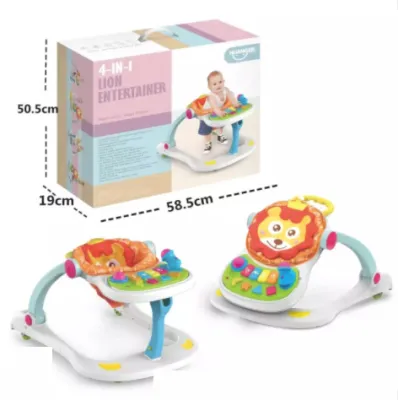

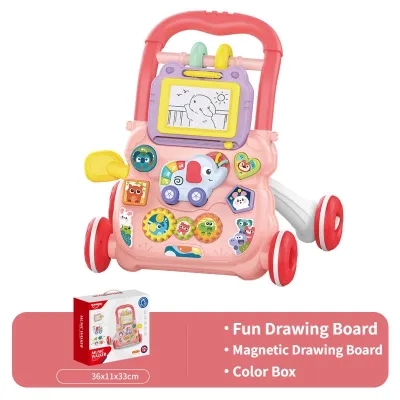
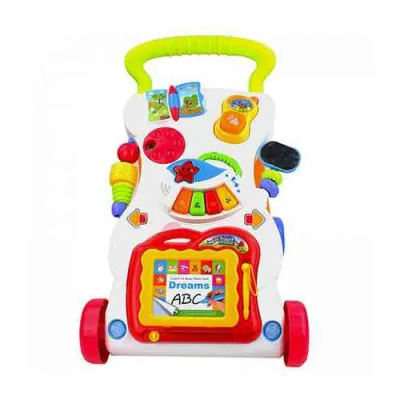
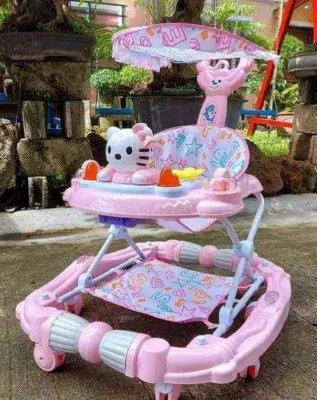
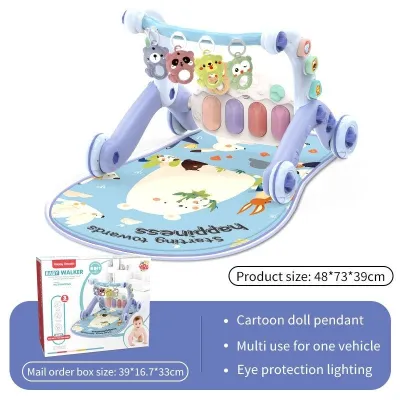
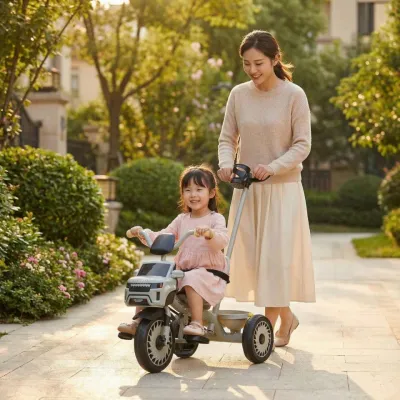
Prices are valid at publication and may change. Please refer to the product page for the latest price.
The first common configuration is the stationary activity center. In this mode, the walker’s wheels are locked, retracted, or blocked by a steadying base, allowing your baby to sit safely in a suspended fabric seat. They can spin, bounce, or play with the surrounding toy tray without moving across the room. This setup is ideal for younger babies who can sit up with support but are not yet ready to navigate floor spaces independently.
The second configuration is the classic seated walker. Here, the wheels are unlocked, enabling your baby to use their feet to glide across flat floors. The fabric seat supports their weight while they practice leg coordination and explore their surroundings. This mode requires a flat, unobstructed floor surface and constant adult supervision to ensure the baby does not navigate toward hazards.
The third mode is the walk-behind or push walker. As your baby grows and begins pulling themselves up to stand, the fabric seat is removed entirely. Your child stands behind the frame, holding onto a built-in handlebar for support as they push the device forward. This configuration encourages independent balance, upright posture, and natural walking mechanics.
The fourth configuration varies widely by brand but often takes the form of a ride-on toy or a standalone activity table. Some models allow toddlers to sit on a small seat and scoot around using their feet, while others convert into a low play table where the child can stand and interact with toys. Because transition mechanisms and weight limits differ greatly between these modes, always read the specific product manual to understand how to safely convert the walker and verify the weight capacity for each stage.
Safety Checks and Developmental Readiness
Before introducing your baby to a 4-in-1 walker, it is essential to assess their physical readiness. Placing a baby in a walker too early can strain their developing muscles and skeletal structure. Your baby should be able to hold their head up steadily without assistance and demonstrate good trunk control when sitting. They should also be able to bear some weight on their legs when you hold them upright. If your baby cannot yet perform these actions, they are not ready for a seated walker.

Structural safety is another critical factor to evaluate before purchase. Look for a walker with a wide, stable base that extends well beyond the width of the upper frame. This design prevents the walker from tipping over if your baby leans heavily to one side or bumps into furniture. Additionally, check for stair-fall prevention mechanisms, such as rubber friction strips or safety stoppers on the underside of the base. These stoppers are designed to grip the floor and halt the walker if a wheel slips over an uneven surface or a small step.
You must also inspect the locking mechanisms of the frame. A high-quality walker should feature secure locking pins or double-lock systems that prevent the frame from collapsing while in use or during transition between modes. Ensure that all folding joints are shielded to prevent your baby’s fingers from getting pinched.
Finally, do not rely solely on online marketing claims regarding safety. Always verify safety certifications and age or weight limits directly on the product packaging or the manufacturer’s official label. Look for recognized standards, such as ASTM F977 or EN 1273, which indicate the product has undergone rigorous safety testing. Checking these details ensures the model you choose is structurally sound and appropriate for your baby’s current size.
Essential Features to Compare Before Purchasing
Evaluating a 4-in-1 baby walker requires looking closely at features that affect daily usability, comfort, and compatibility with your home. The first feature to examine is seat ergonomics. The fabric seat should have a deep, supportive pocket that keeps your baby’s hips in a natural position. Look for thick, breathable padding that prevents chafing around the thighs, especially in the warm, humid climate of the Philippines. Height adjustability is equally important; the walker should offer multiple height settings so you can adjust it as your baby grows, ensuring their feet can touch the floor properly without putting undue pressure on their joints.
The interactive toy tray is another major consideration. While colorful lights and sounds can keep your baby entertained, look for a tray with removable toys. This allows you to clean the tray easily and use the flat surface for snacks or other playthings. Check the battery requirements and ensure the battery compartment is securely screwed shut. Opt for toys that encourage fine motor skills, such as spinning gears, bead mazes, or textured surfaces, rather than just electronic buttons.
Wheel design plays a massive role in how well the walker functions on your floors. If your home has polished concrete, ceramic tiles, or hardwood floors, look for wheels with rubberized grips or soft outer rings. These provide better traction and prevent the walker from sliding too quickly or scratching your floors. Some models feature adjustable speed controls or lockable rear wheels, which are incredibly helpful when your baby is learning to use the push-walker mode and needs a slower, more controlled pace.
Lastly, consider the overall footprint and foldability of the walker. A bulky frame can be difficult to navigate through narrow hallways or doorways. If you have limited space, look for a model that folds down flat. This allows you to store the walker under a bed, behind a door, or in a closet when it is not in use, keeping your living areas organized and clutter-free.
How to Choose the Right Model for Your Home and Baby
Selecting the right 4-in-1 baby walker depends heavily on your living conditions and your baby’s unique personality. If you live in a compact apartment or condominium, space is likely your primary constraint. In this scenario, prioritize a model with a compact base and a streamlined folding mechanism. A smaller footprint makes it easier for your baby to navigate around furniture without getting stuck, and a flat-folding design ensures the walker does not dominate your living room when playtime is over.
For highly active babies who are always on the move, focus on stability and resistance. An active baby will push the walker with significant force, so a model with a heavier, sturdier base is essential to prevent tipping. Look for walkers that feature adjustable resistance wheels in the push-walker mode. This feature allows you to tighten the wheels to create friction, preventing the walker from rolling away too quickly and helping your baby maintain their balance as they take their first steps.
If you have a busy household or multiple children, durability and ease of cleaning should be your top priorities. Look for walkers made from high-quality, non-porous plastics that can withstand frequent wiping and sanitizing. The fabric seat pad should be easily removable and machine-washable. In the tropical climate of the Philippines, sweat and spilled liquids can quickly lead to odors or mold, so a seat pad that is easy to wash and quick to dry is a major advantage.
When you are ready to buy, check reputable online marketplaces or official brand stores to compare options. This allows you to view current availability, read verified customer reviews, and check pricing in Philippine Pesos (₱). Be cautious of unbranded models that seem unusually cheap, as they may lack essential safety features or durable materials. Investing in a well-reviewed model from a trusted retailer ensures you receive a product that is safe, durable, and worth the price.
Daily Supervision and Maintenance Rules
Owning a 4-in-1 baby walker comes with the responsibility of daily maintenance and strict supervision. Before every use, perform a quick visual inspection of the walker. Check for any loose screws, cracked plastic parts, or worn-out wheel grips. Ensure that the fabric seat is securely attached to the frame and that all locking pins are fully engaged. If you notice any damage or wear, discontinue use immediately until the part can be repaired or replaced.
Active supervision is the most critical safety rule when using any baby walker. A walker gives a baby sudden, unexpected mobility, allowing them to move much faster than usual and reach objects that were previously out of hand. Never leave your baby unattended in the walker, even for a moment. Keep the walker completely away from stairs, steps, raised thresholds, and wet areas like bathrooms or kitchens. Ensure that cords, tablecloths, hot liquids, and cleaning chemicals are completely out of your baby’s reach while they are in the walker.
Regular cleaning is essential for maintaining hygiene and extending the life of the walker. Wipe down the plastic frame and toy tray daily with a damp cloth and mild, baby-safe soap. For the fabric seat, always refer to the manufacturer’s care label. If it is machine-washable, use a gentle cycle with mild detergent. In humid tropical environments, make sure the fabric seat is completely dry before reattaching it to the frame to prevent the growth of mold or mildew.
Finally, know when to stop using the walker or transition to the next mode. You should stop using the seated walker mode immediately if your baby’s head or chest rises above the top of the seat back, if their feet can rest completely flat on the floor with bent knees even at the highest setting, or if they attempt to climb out of the harness. Always adhere strictly to the maximum weight and height limits specified by the manufacturer to ensure your baby’s safety.
Frequently Asked Questions (FAQ)
At what age or size should a baby stop using the seated walker mode?
The transition away from the seated walker mode depends on your baby’s physical size and development rather than a strict age limit. You should stop using this mode when your baby reaches the manufacturer’s maximum height or weight limit, which is typically around 11 to 12 kilograms. Physical signs also indicate it is time to transition; if your baby’s knees are bent even at the highest height setting, or if they are constantly trying to climb out of the seat, it is time to remove the seat and transition to the push-walker or activity table mode.
Can a 4-in-1 walker delay a baby's walking milestones?
Pediatric experts generally advise limiting the time a baby spends in a seated walker to prevent over-reliance on the device. Spending too much time in a seated walker can encourage babies to walk on their tiptoes and does not engage the core and hip muscles needed for independent walking. To support natural development, limit seated walker use to short intervals of 15 to 20 minutes per day, and prioritize plenty of floor play, tummy time, and crawling. The push-walker mode of a 4-in-1 device is generally considered more supportive of natural walking mechanics because it requires the baby to balance and bear their own weight.
How do I properly clean and maintain the fabric seat?
To clean the fabric seat, first remove it from the walker frame and check the manufacturer’s care label for specific instructions. Most seats can be hand-washed or machine-washed on a gentle cycle using a mild, baby-safe detergent. Avoid using harsh bleach or fabric softeners that could irritate your baby’s sensitive skin. After washing, hang the seat to air-dry completely in a well-ventilated area. Ensure it is entirely dry before reattaching it to the frame, as any lingering moisture can lead to mold growth, especially in humid climates.

Community discussion
Share your experience or ask a question. Comments are reviewed before publication.