
Finding the right wooden baby walker in the Philippines involves balancing safety, physical stability, and developmental readiness. Unlike lightweight plastic alternatives, a high-quality wooden push walker offers the substantial weight needed to support a baby who is just learning to pull themselves up and take their first tentative steps. To make the best choice for your home, you must look beyond aesthetics and focus on functional design elements like adjustable wheel resistance, a low center of gravity, and non-toxic finishes that can withstand tropical humidity. By understanding what makes a wooden walker stable and safe, you can confidently select a toy that supports your child’s physical milestones while ensuring a secure play environment.
Why Choose a Wooden Push Walker for Your Child
Wooden push walkers have become a preferred choice for many parents in the Philippines who prioritize durability, developmental support, and classic design. One of the primary advantages of wood over plastic is its natural weight distribution. Plastic walkers are often highly lightweight, which can cause them to slide forward too quickly or tip over when a baby applies downward pressure to stand up. A well-constructed wooden walker provides a solid, heavy base that resists sudden movements, offering a more predictable and stable support system for a child learning to balance.
Beyond physical stability, wooden toys are highly valued for their longevity and aesthetic appeal. In many Filipino households, baby gear is passed down through siblings, cousins, or future generations. High-quality timber, when properly maintained, resists the cracking and degradation that often affects aging plastic. This durability makes a wooden walker an excellent long-term investment for your family. Additionally, the minimalist and natural look of wooden toys blends seamlessly into modern home interiors, avoiding the visual clutter often associated with bright, battery-operated plastic gear.
Products mentioned in this guide
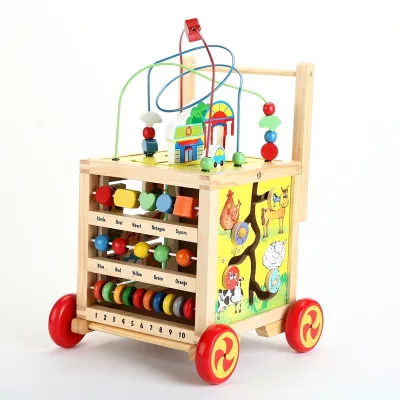
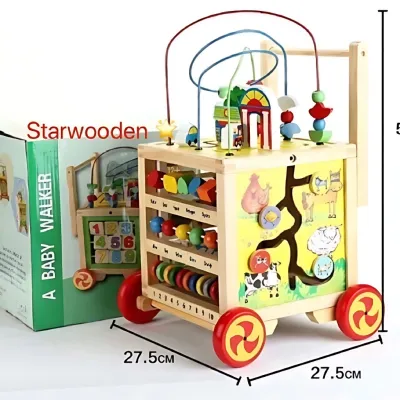
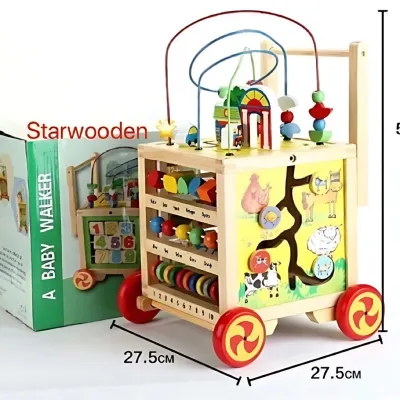
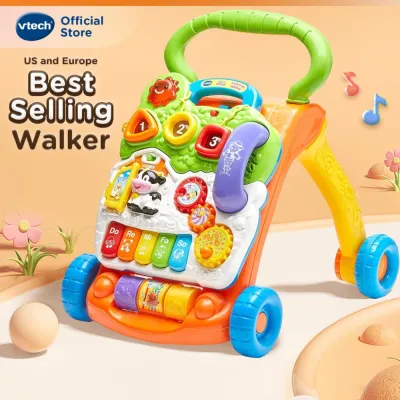
Prices are valid at publication and may change. Please refer to the product page for the latest price.
Environmental considerations also play a significant role in this choice. Many parents prefer to minimize their household’s plastic footprint by opting for toys made from sustainably sourced wood. Wooden walkers often utilize water-based, non-toxic paints and finishes, reducing your child’s exposure to synthetic chemicals during a developmental stage where mouthing toys is common. By choosing a wooden push toy, you are supporting sustainable manufacturing practices while providing your child with a tactile, natural play experience that stimulates sensory development without relying on flashing lights or loud electronic sounds.
Key Features to Evaluate Before You Buy
When shopping for a wooden walker, the physical specifications of the toy must match your child’s physical proportions and your home’s layout. The first and most critical feature to evaluate is the base weight and the center of gravity. A safe wooden walker should have a wide, rectangular wheelbase that distributes weight evenly across the floor. The center of gravity must be low, meaning the heaviest components of the toy—such as activity blocks or storage compartments—should be positioned close to the ground. This design prevents the walker from flipping backward when your baby pulls on the handlebar to stand.

The handlebar itself requires careful inspection. Look for a walker with a handlebar height that aligns comfortably with your baby’s chest or waist level when standing. If the handlebar is too high, your baby may have to reach upward, which compromises their balance and pushes their center of gravity too far forward. The grip thickness should be small enough for tiny hands to wrap around completely, ensuring a secure hold. Some premium wooden models offer adjustable handlebar heights, allowing the toy to grow alongside your child as they transition from early cruising to confident walking.
Wheel design and resistance mechanisms are equally vital, especially when navigating different flooring types in Filipino homes, such as smooth ceramic tiles, polished hardwood, or textured play mats. Look for wheels equipped with rubber traction strips or rubberized outer rings. These rubber elements provide essential friction, preventing the walker from sliding out from under your baby on slick tile surfaces. Additionally, some wooden walkers feature adjustable tension screws on the wheels. This allows you to tighten the wheels to create resistance, slowing down the walker for early steps, and then loosen them as your child gains speed and confidence.
Safety Checks and What to Verify on the Label
Safety must always be your top priority when introducing any mobile baby gear into your home. Before making a purchase, you must carefully read the product packaging and manufacturer documentation for accurate age grading and maximum weight limits. Never assume a walker is suitable for your child based solely on its appearance or product name. Manufacturers design these toys with specific developmental stages and weight capacities in mind to ensure structural integrity. Using a walker that is too light or too small for your baby’s weight can lead to structural failure or tipping hazards.
A thorough visual and tactile inspection is necessary before allowing your baby to use a wooden walker. Run your hands along every wooden surface, edge, and corner to check for splinters, rough patches, or sharp angles. The wood should be perfectly sanded and smooth to the touch. Examine the joints and fasteners to ensure all screws, dowels, and bolts are recessed and tightly secured. Loose hardware can pose a choking hazard or cause the walker to collapse during use. Additionally, verify that the paint or finish is labeled as non-toxic, lead-free, and water-based, as babies frequently chew on the handlebar during teething phases.
You should also look for recognized safety certification marks on the packaging. While specific standards vary by manufacturer and country of origin, reputable brands will display compliance stickers indicating they have undergone rigorous safety testing. Look for markings such as the EN71 certification (European safety standard for toys) or ASTM F963 (American standard). In the local market, look for official import clearance seals or local toy safety compliance labels. If a product lacks clear manufacturer labeling, safety certifications, or contact information, it is best to avoid it in favor of a fully documented and verified alternative.
Matching the Walker to Your Baby’s Developmental Stage
Children progress through physical milestones at their own unique pace, meaning a walker that is perfect for one baby might be frustrating or unsafe for another. To choose the right wooden walker, you must assess your baby’s current mobility level and match it to the appropriate design category. This conditional approach ensures that the toy provides the right level of physical support and cognitive engagement without overwhelming your child.
For babies in the early pull-up stage, who are just beginning to find their footing but cannot yet take steps, a heavy, stationary activity center with a sturdy push handle is ideal. At this stage, the walker serves primarily as a support structure to help them practice standing. The walker should be heavy enough to remain completely stationary when the baby pulls themselves up from a sitting position. Look for models that feature engaging, built-in sensory activities on the front panel—such as gears, bead mazes, or shape sorters—to keep them entertained while sitting or kneeling on the floor.
As your baby transitions to the first steps stage, their needs shift toward balance and forward movement. For this phase, look for a wooden walker with a wide wheelbase and adjustable wheel resistance. The resistance mechanism is crucial here, as it prevents the walker from rolling forward faster than your baby can walk, helping them maintain their balance and build leg strength. The design should allow the baby to stand comfortably behind the handlebar with their feet positioned between the rear wheels, preventing them from tripping over the frame as they push forward.
Once your child reaches the confident walking stage, they no longer need the walker for physical support, but they will still enjoy using it for imaginative play. At this point, a lighter, multi-activity push cart or a wooden wagon-style walker is highly suitable. These designs often feature a spacious cargo bed where toddlers can load up their favorite stuffed animals, blocks, or books to transport them around the house. This type of play encourages creative thinking, spatial awareness, and independent exploration, transforming the walker from a physical development aid into a beloved toy for active play.
Where to Buy and How to Verify Authenticity
Finding a genuine, high-quality wooden walker in the Philippines requires careful shopping, as counterfeit or poorly made replicas can pose significant safety risks. When browsing online e-commerce platforms, always prioritize official brand stores, flagship malls, or authorized local distributors. These sellers are more likely to provide authentic products that meet international safety standards. Avoid third-party sellers with generic store names, unusually low prices, or listings that lack detailed product specifications and clear manufacturer branding.
Before checking out your digital cart, take the time to verify the seller’s ratings, customer reviews, and return policies. Look for reviews that include real photos and detailed feedback about the product’s weight, wood quality, and ease of assembly. A reputable seller should offer a clear return policy or local warranty coverage in case the product arrives with manufacturing defects, missing hardware, or shipping damage. If you prefer a hands-on shopping experience, visiting physical baby boutiques and specialty toy shops allows you to inspect the wood quality, test the wheel resistance, and feel the weight of the walker in person before making a decision.
Upon delivery of your wooden walker, perform a final authenticity and quality check before assembling the toy. Verify that the packaging is intact, sealed, and features official brand logos, safety warning labels, and clear assembly instructions. Check for local distributor stickers or authenticity seals on the box. If the packaging appears generic, damaged, or lacks clear manufacturer details, contact the seller immediately for clarification. Taking these precautionary steps ensures that you are introducing a safe, genuine, and durable toy into your child’s play environment.
Frequently Asked Questions (FAQ)
At what age is it safe to introduce a push walker?
A child’s readiness for a push walker depends on their physical milestones rather than a strict chronological age, though most babies begin showing interest between 9 and 12 months. Before introducing a push walker, your baby should demonstrate the ability to pull themselves up to a standing position independently and cruise along furniture for support. They should also be able to stand briefly without holding onto anything.
It is important to understand the critical safety distinction between traditional sit-in walkers and modern push walkers. Pediatricians generally advise against sit-in walkers because they suspend the baby in an unnatural upright position and can allow them to move dangerously fast. A wooden push walker, by contrast, requires active muscle engagement, balance, and coordination, supporting natural motor development. Always ensure active caregiver supervision and set up a safe, flat play area free of stairs, sharp furniture corners, or loose rugs before letting your baby practice.
How do I clean and maintain the wooden surfaces?
To preserve the structural integrity and finish of your wooden walker, you must clean it using gentle, low-risk methods. Wipe the wooden surfaces regularly with a clean, slightly damp microfiber cloth to remove dust, fingerprints, and drool. Avoid using harsh chemical cleaners, bleach, or abrasive scrubbing pads, as these can strip away the protective non-toxic finish and damage the underlying wood fibers. If a deeper clean is necessary, use a mild, baby-safe soap diluted in warm water, making sure to dry the wood completely with a soft towel immediately afterward.
In addition to cleaning, perform periodic maintenance checks to ensure the walker remains safe for daily use. Inspect the toy every few weeks for loose screws, worn wheel parts, or peeling paint, tightening any hardware as needed. Because wood is a natural, porous material, it is sensitive to environmental changes. Store the walker indoors, away from direct sunlight, open windows, or areas of extreme humidity, such as bathrooms or damp storage rooms. This prevents the wood from warping, cracking, or developing mold, ensuring the toy remains safe and sturdy for years to come.
Can a wooden walker damage hardwood or tile floors?
Whether a wooden walker will scratch or scuff your floors depends largely on the wheel material and the cleanliness of your play area. Walkers equipped with bare wooden or hard plastic wheels can slide on slick tile floors or leave fine scratches on polished hardwood surfaces. To prevent floor damage, look for wooden walkers that feature rubberized treads or soft rubber rings wrapped around the wheels. These rubber elements not only provide essential traction for your baby but also act as a protective barrier for your flooring.
You can also take preventive measures within your home to protect both your floors and your baby. Placing large, interlocking foam play mats or low-pile area rugs in your child’s primary play zone creates a safe, high-traction surface for walking practice. Regularly sweep or vacuum the floors to remove small dirt particles, sand, or grit, as these can get trapped under the walker’s wheels and cause scratches when pushed across hardwood or tile. Monitoring your baby during their first few uses will help you identify any potential scuff marks and adjust their play area accordingly.
Community discussion
Share your experience or ask a question. Comments are reviewed before publication.