
Choosing between a wearable breast pump like the Wondermore and a traditional plug-in model is a highly personal decision that depends on your daily schedule, work environment, and comfort preferences. While wearable pumps offer unmatched mobility by fitting entirely inside your bra, traditional pumps often provide robust, highly customizable suction that some mothers find more efficient for complete milk expression. Balancing these factors requires looking closely at how you spend your day, whether you are working from home, commuting in the heat, or managing household chores.
Every mother’s breastfeeding journey is unique, and the equipment you choose should seamlessly integrate into your lifestyle rather than add to your daily stress. By evaluating how each pump type handles mobility, milk expression efficiency, comfort, and ongoing maintenance, you can make an informed choice that supports your long-term feeding goals.
Understanding How Wearable and Traditional Pumps Differ
The primary distinction between wearable and traditional breast pumps lies in their physical design and how they are worn during use. Wearable breast pumps are self-contained, compact units where the motor, collection cup, and flange are integrated into a single pod. This pod is designed to slip directly into a standard nursing bra, eliminating the need for external tubes, wires, or dangling bottles. This streamlined form factor allows you to maintain a natural silhouette and move around freely while expressing milk.
Products mentioned in this guide
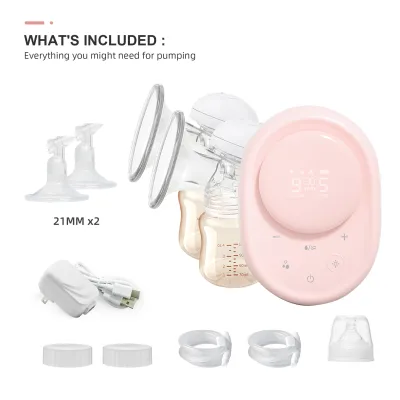
Prices are valid at publication and may change. Please refer to the product page for the latest price.
In contrast, traditional breast pumps utilize a separate, often larger motor unit that remains external to your body. This motor connects via silicone tubing to breast shields (flanges) and collection bottles that hang downward from your breasts. Because the bottles and tubing are external, traditional pumps require you to remain relatively still or use a specialized hands-free pumping bra to keep the parts secured in place.
Power sources also differ significantly between the two categories. Wearable models rely on built-in, rechargeable lithium-ion batteries that must be charged via USB cables between sessions. Traditional pumps are typically powered by a direct connection to a wall outlet, though some modern models offer the flexibility of external battery packs or rechargeable bases. The setup and assembly steps reflect these designs; wearables require aligning a few integrated parts inside a cup, while traditional pumps involve connecting tubing, valves, membranes, flanges, and bottles before each session.
Evaluating Convenience and Hands-Free Mobility
For many mothers, the ability to multitask is the deciding factor when choosing a breast pump. Wearable pumps excel in providing freedom of movement, allowing you to perform light household chores, tend to your baby, or work at a computer desk without being anchored to a specific spot. Because there are no cords to worry about, you can move from room to room, prepare meals, or even fold laundry while actively pumping.

Traditional pumps, even those with rechargeable battery packs, present a different physical burden. While you can find hands-free bras that hold the flanges in place, you are still carrying external bottles and a motor unit, which can limit your physical range. Bending over or moving quickly can cause the external bottles to shift, potentially breaking the suction seal or causing milk to spill. The physical weight of the bottles hanging from your chest can also feel more cumbersome over extended periods compared to the self-contained design of a wearable.
Daily transit and commuting scenarios highlight these differences further. In the Philippines, navigating a daily commute in tropical heat and humidity presents unique challenges. Wearing a wearable pump inside your bra during a warm commute can sometimes lead to localized sweating and skin warmth, as the integrated motor generates a small amount of heat during operation. On the other hand, traditional pumps are highly impractical for active transit, requiring a stable, stationary setup. However, once you arrive at a dedicated office lactation room, a traditional pump provides a reliable, stationary setup that does not rely on battery life.
Comparing Pumping Efficiency and Milk Output
When evaluating milk output, it is essential to understand how to verify suction performance and customization options. Traditional breast pumps are widely recognized for their robust motors, which often offer a wider range of adjustable suction levels and distinct let-down stimulation modes. To ensure effective milk expression, you should verify the manufacturer’s specifications for maximum suction strength, typically measured in millimeters of mercury (mmHg), and compare the available cycle speeds.
Wearable pumps have smaller, integrated motors designed to operate on battery power. While modern wearable technology has advanced significantly, the compact motor size may offer different suction profiles compared to heavy-duty traditional models. To maximize efficiency with a wearable, precise flange fit and positioning are critical. Because you cannot easily see your nipple alignment once the pump is inside your bra, you must practice positioning the flange carefully to ensure the nipple is centered, preventing friction and ensuring optimal milk flow.
Bottle capacity is another practical consideration for mothers with a high milk supply. Wearable pump cups generally have a limited capacity, often holding between 120ml and 180ml of milk per breast. If you experience heavy let-downs or typically express larger volumes, you must monitor the fill level closely to prevent the milk from overflowing into the motor unit. Traditional pumps utilize standard baby bottles that can easily accommodate 150ml to 250ml or more, making them highly suitable for high-volume sessions without the risk of overflow.
Assessing Comfort, Fit, and Discretion
Physical comfort during pumping is closely tied to correct flange sizing and material quality. Regardless of the pump type you choose, using an incorrectly sized flange can lead to nipple pain, tissue damage, and reduced milk output. When selecting a pump, check if the manufacturer provides multiple flange insert sizes or if they are sold separately. In humid climates, skin sensitivity can increase, making soft, food-grade silicone flanges or inserts highly desirable to minimize friction and chafing.
The weight distribution of the device also affects your physical comfort. A wearable pump places the entire weight of the motor, battery, and collected milk directly onto your chest and bra straps. This can cause temporary physical strain or pulling if your bra does not provide adequate support. Traditional pumps distribute this weight differently; the heavy motor sits on a flat surface, leaving only the lightweight plastic flanges and bottles attached to your breasts, which many mothers find less tiring for long sessions.
Discretion is a key priority for mothers who need to pump in shared workspaces or public areas. Wearable pumps are designed to be low-profile and fit under loose clothing, allowing for highly discreet use. However, they are not completely silent. You should verify the manufacturer’s decibel (dB) ratings to ensure the motor noise is quiet enough for your environment. Traditional pumps tend to have larger, louder motors that vibrate, though some models feature quiet technology or long tubing that allows you to place the motor further away to muffle the sound.
Managing Cleaning, Maintenance, and Ongoing Costs
Daily upkeep is a significant part of the pumping routine, and the number of parts you must wash and sterilize can impact your daily schedule. Wearable pumps often feature fewer detachable parts, which can simplify the assembly process. However, because these parts are designed to fit compactly inside a small cup, they may have intricate crevices, narrow valves, or curved surfaces that require careful cleaning with specialized brushes to prevent milk residue buildup.
Traditional pump parts are generally larger and more standardized, making them easier to scrub and sterilize. However, they often involve more individual components, including tubing, connectors, valves, membranes, and bottles. It is important to note that silicone tubing on traditional pumps must be kept completely dry; if moisture or condensation enters the tubes, it can lead to mold growth, requiring immediate replacement of the tubing.
Long-term maintenance costs should also factor into your decision. Wearable components like silicone valves, diaphragms, and breast shields wear out over time and must be replaced regularly to maintain proper suction. Before purchasing, check the availability and pricing of these replacement parts on official brand stores or authorized online marketplaces in the Philippines. Estimating these ongoing expenses in Philippine Pesos (₱) will help you understand the true cost of ownership, as proprietary wearable parts can sometimes be more expensive and harder to source locally than standard traditional pump accessories.
Choosing the Right Pump for Your Daily Routine
Selecting the ideal breast pump comes down to aligning the device’s strengths with your specific daily environment and lifestyle needs. A wearable breast pump is highly suitable for mothers who require maximum mobility, have a busy schedule that involves frequent multitasking, and need to express milk discreetly while working or traveling. If you choose this route, ensure you have a supportive nursing wardrobe and access to reliable USB charging options throughout the day.
Conversely, a traditional breast pump remains an excellent choice if your primary goal is maximum suction customization, larger milk collection capacity, and a lower upfront financial investment. It is highly practical for mothers who have a dedicated, comfortable space to pump at home or in an office lactation room, where they can sit quietly without the need to move around.
Before making your final decision, verify your daily routine, your access to sterilization facilities, and your budget for replacement parts. Many mothers find that their needs change over time, and some even choose to use both types of pumps at different stages of their breastfeeding journey to achieve the perfect balance of convenience and efficiency.
Frequently Asked Questions (FAQ)
Do I need a special nursing bra for a wearable pump?
While you do not always need a specialized brand of nursing bra, you do need a supportive, well-fitting, and stretchy bra to use a wearable pump effectively. The bra must have enough room to accommodate the extra bulk of the pump pods without compressing your breasts too tightly, which can restrict milk ducts and reduce flow. It must also be firm enough to hold the pump securely against your skin to maintain a proper suction seal. Check the manufacturer’s guidelines for recommended bra styles or sizing adjustments.
Can I use a wearable pump and a traditional pump together?
Yes, combining both pump types is a common and highly effective strategy for many mothers. You can use a traditional pump at home during the morning or evening for a thorough, high-volume expression session when you have more time to sit down. During the day, while commuting, working, or running errands, you can switch to a wearable pump for quick, convenient sessions on the go. If you choose this hybrid approach, ensure you have compatible storage containers or adapters to transfer milk safely without spills.

Community discussion
Share your experience or ask a question. Comments are reviewed before publication.