
Quick Answer: Is White Dove Oil the Right Choice for Your Baby?
Choosing the right baby oil for your infant involves understanding your child’s unique skin needs and the environmental conditions of your home. White Dove oil is a classic, widely recognized option in the Philippines, valued for its traditional moisture-sealing properties. However, whether it is the right choice for your baby depends on whether their skin responds better to a mineral-oil-based barrier or a plant-based alternative.
While classic mineral-based oils excel at locking in moisture, competing brands may offer botanical blends, such as sunflower or coconut oil, which absorb differently into the skin. If your baby has a diagnosed skin condition like eczema, extremely dry patches, or active rashes, always consult a pediatrician before introducing or switching skincare products. Skincare is highly individual, and what works for one infant may not suit another.
Understanding Baby Oil Bases: Mineral vs. Plant-Based
To make an informed decision, parents must first understand the primary ingredient bases used in baby oils. The market is generally divided into mineral-oil-based formulas and plant-based alternatives, each offering distinct physical properties and skin interactions.
Products mentioned in this guide
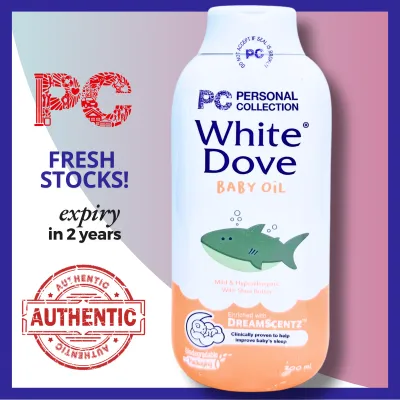
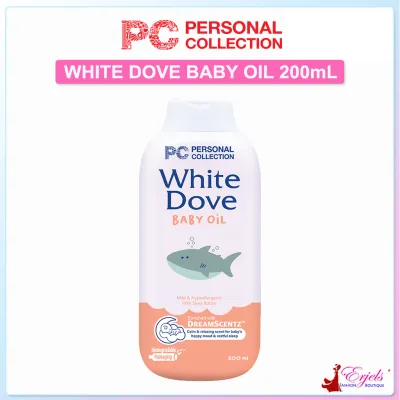
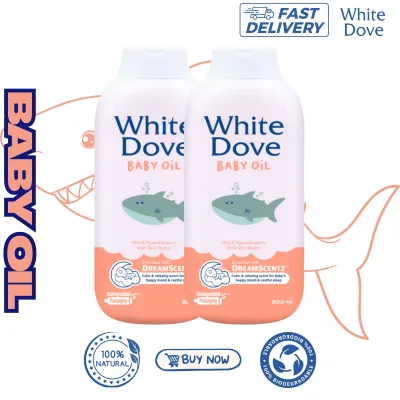
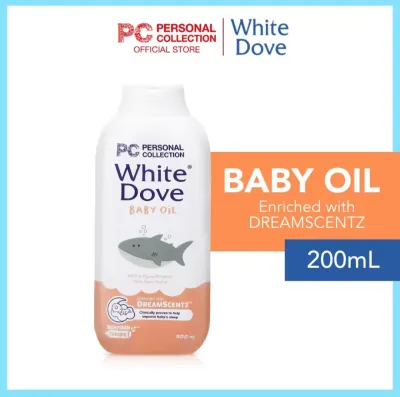

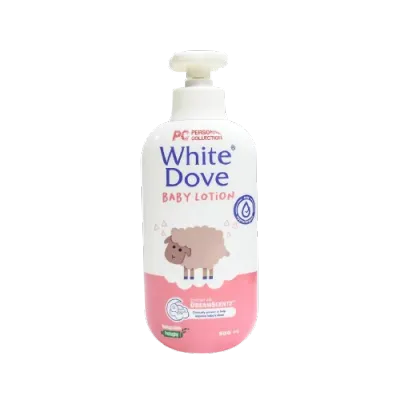
Prices are valid at publication and may change. Please refer to the product page for the latest price.

Mineral oil, which serves as the foundation for classic options like White Dove, is a highly refined, purified ingredient. It acts as an occlusive agent, meaning it forms a physical barrier on top of the skin’s surface. This barrier is exceptionally effective at locking in existing moisture and preventing transepidermal water loss. In air-conditioned nurseries or during cooler, dry months, this protective seal helps keep delicate skin from drying out. Because mineral oil is chemically inert, it is highly stable, does not oxidize easily, and rarely triggers allergic reactions, making it a reliable choice for general skin protection.
In contrast, plant-based baby oils utilize botanical sources such as sunflower seed oil, coconut oil, or sweet almond oil. These oils contain natural fatty acids that can penetrate the outer layers of the skin rather than simply sitting on the surface. Sunflower oil, for example, is rich in linoleic acid, which helps support the skin’s natural barrier. Coconut oil is highly moisturizing but can be heavier and occasionally comedogenic for certain skin types. Plant-based oils generally absorb more fully, leaving less of a slippery residue, but they have a shorter shelf life and can oxidize over time if not stored properly.
In the tropical climate of the Philippines, environmental factors play a significant role in how these bases perform. High humidity and heat mean babies sweat frequently. Applying a heavy layer of mineral oil can sometimes trap sweat and heat against the skin, potentially leading to prickly heat or “bungang araw.” Conversely, plant-based oils must be monitored to ensure they do not attract dust or cause irritation when mixed with sweat.
Before purchasing any baby oil, parents should perform a quick label check to verify the primary base:
- Identify the first ingredient: Look at the top of the ingredient list to see if it begins with mineral oil (often listed as Paraffinum Liquidum) or a botanical oil (such as Helianthus Annuus Seed Oil or Cocos Nucifera Oil).
- Check for blending agents: Note if the product combines mineral and plant oils, which is common in some commercial formulations.
- Verify antioxidant additives: Look for ingredients like Tocopherol (Vitamin E), which are often added to stabilize the oil and prevent rancidity, especially in plant-based options.
Key Label Checks for Sensitive or Newborn Skin
Delicate newborn skin is significantly thinner and more permeable than adult skin, making it highly susceptible to irritation from synthetic additives. When comparing White Dove to other brands, parents must look beyond attractive packaging and carefully analyze the ingredient list.
Fragrance is one of the most common sensitizers in baby skincare. Many classic baby oils, including White Dove, are known for their distinct, pleasant scents. While these fragrances are designed to be gentle, they can cause adverse reactions in infants with highly sensitive skin or conditions like atopic dermatitis. If your baby has reactive skin, searching for a fragrance-free formula is a safer approach. Additionally, check the label for parabens, phthalates, and artificial dyes. These additives serve as preservatives or aesthetic enhancers but are unnecessary for skin health and should ideally be avoided.
It is also important to distinguish between marketing claims and verified product testing. Terms like “hypoallergenic” or “gentle on skin” are frequently used on labels but are not globally standardized medical terms. Instead, look for specific indications such as “dermatologist-tested” or “pediatrician-approved.” These labels suggest the formulation has undergone controlled testing, though parents should still verify the specific testing standards or certifications on the manufacturer’s official documentation.
Regardless of the brand you choose, always perform a patch test before applying a new oil to your baby’s entire body. This simple step helps identify potential sensitivities in a controlled manner:
- Apply a dime-sized drop of the baby oil to a small, clean area of the baby's skin, such as the inner forearm or the side of the thigh.
- Leave the oil on the skin and monitor the area closely for 24 hours.
- Watch for any signs of irritation, including redness, swelling, tiny bumps, or itching.
- If any reaction occurs, wash the area immediately with mild soap and water, discontinue use of the product, and consult your pediatrician. If no reaction occurs after 24 hours, the product is generally considered suitable for wider application.
Evaluating Price, Size, and Accessibility
Practical considerations like budget, bottle size, and ease of purchase are essential for busy parents managing household expenses. Comparing the value of White Dove oil against alternative brands requires a systematic approach.
To determine the true cost-effectiveness of a product, calculate the cost per milliliter (₱/ml). Different brands package their oils in various sizes, ranging from small 50ml travel bottles to large 200ml family sizes. To find the unit price, use this simple formula: $$\text{Cost per Milliliter} = \frac{\text{Retail Price in ₱}}{\text{Volume in Milliliters}}$$ By comparing the resulting ₱/ml values, you can easily see which product offers better long-term value, regardless of packaging differences. Often, larger bottles of classic brands like White Dove provide a lower cost per milliliter, making them highly economical for daily use.
Accessibility is another critical factor. Classic, established brands are widely distributed across the Philippines. You can easily find them on the shelves of local supermarkets, department stores, neighborhood pharmacies, and convenience stores. This high availability means you can quickly restock your supply during a regular grocery run.
On the other hand, niche botanical oils, organic imports, or specialized sensitive-skin formulations are often harder to find. These products are typically restricted to specialty baby boutiques, organic lifestyle shops, or official brand stores on online marketplaces. Purchasing these options requires forward planning to account for shipping times and delivery fees, which can add to the overall cost. When buying online, always verify that you are purchasing from an authorized distributor to ensure product authenticity.
Before finalizing any purchase, inspect the physical packaging of the bottle:
- Verify the safety seal: Ensure the plastic seal around the cap is intact to prevent contamination.
- Check the expiration date: Look for the manufacturing and expiration dates, usually stamped on the bottom or back of the bottle, to ensure the oil is fresh.
- Inspect the bottle design: Choose bottles with secure, leak-proof caps, especially if you plan to carry the oil in a diaper bag where spills can cause significant mess.
Decision Framework: Matching the Oil to Your Baby's Needs
To help you decide between White Dove oil and other baby oils, use this conditional framework to match the product to your family’s specific priorities and your baby’s skin type.
Choose White Dove oil if:
- You prefer a traditional, highly accessible mineral-oil-based formula that is easy to find in local stores.
- You want an economical option with a low cost per milliliter for routine infant massage and general skin protection.
- Your baby has normal, non-reactive skin and tolerates classic, lightly fragranced formulas well.
- You require a stable, long-lasting moisture barrier that does not easily oxidize in warm, humid conditions.
Choose plant-based alternatives if:
- You prefer natural, botanical ingredients such as sunflower, coconut, or almond oil over petroleum-derived mineral oils.
- You want an oil that absorbs fully into the skin layers rather than leaving a persistent protective barrier on the surface.
- Your baby's skin reacts poorly to mineral oil bases or shows signs of clogged pores from occlusive products.
- You are willing to shop at specialty stores or online marketplaces and plan ahead for restocking.
Verify first with a professional if:
- Your baby has diagnosed skin conditions, such as eczema, severe cradle cap, or persistent rashes.
- Your infant exhibits immediate skin reactions during the 24-hour patch test.
- You are unsure about the safety of specific ingredients for a premature infant or a newborn under one month of age. In these cases, a pediatrician's personalized recommendation must always guide your choice.
Frequently Asked Questions (FAQ)
Can I use baby oil on my newborn's face?
It is generally recommended to avoid applying baby oil to your newborn’s face. The skin on an infant’s face is exceptionally delicate, and applying heavy oils can easily clog pores, potentially worsening conditions like newborn acne. More importantly, applying oil near the eyes, nose, and mouth poses a safety risk. Accidental inhalation of mineral oil can lead to serious respiratory issues, such as lipid pneumonia. For facial skincare, stick to mild, water-based moisturizers specifically formulated for infant faces, and always consult your pediatrician for safe newborn skincare routines.
Does baby oil help with cradle cap?
Baby oil can be used as a temporary measure to help soften the crusty, yellow scales associated with cradle cap (seborrheic dermatitis). To do this safely, apply a few drops of oil gently to the affected areas of the scalp and let it sit for a few minutes to loosen the scales. Afterward, use a soft-bristled baby brush to gently lift the softened flakes. Crucially, you must wash the oil out thoroughly with a mild baby shampoo immediately after brushing. Leaving residual oil on the scalp can trap moisture and heat, potentially worsening the condition or encouraging yeast growth. If the cradle cap persists, spreads, or shows signs of infection like redness and oozing, consult your doctor for targeted treatment.
Community discussion
Share your experience or ask a question. Comments are reviewed before publication.