
Choosing the right ref door lock for your kitchen depends entirely on your refrigerator’s door configuration, handle style, and surface material. Single-door refrigerators with flat fronts are highly compatible with simple adhesive latch locks, while multi-door setups like French door or side-by-side models usually require flexible strap locks to span the gap between panels. Magnetic locks offer a completely hidden aesthetic but require precise alignment and flat mounting surfaces. By evaluating your appliance’s physical layout and surface texture, you can select a secure baby-proofing solution that keeps curious toddlers safe without disrupting your daily kitchen routine.
As toddlers grow, their curiosity naturally leads them to explore every corner of the home, and the kitchen is often a primary target. A refrigerator contains heavy glass jars, raw ingredients, and potential choking hazards, making a secure lock a vital part of home baby-proofing. In tropical climates like the Philippines, where high humidity can affect adhesive strength, choosing the correct lock type and installing it properly is essential to prevent accidental openings and maintain food safety. No lock replaces active adult supervision, but a well-chosen safety latch provides an essential layer of protection.
Assessing Your Fridge Configuration and Surface
Before purchasing a ref door lock, you must carefully examine your refrigerator’s physical design. Refrigerator doors generally fall into three categories: single-door models, side-by-side units, and French door configurations. Single-door fridges have a clear 90-degree corner where the door meets the main cabinet frame, making them highly compatible with corner-mounted locks. In contrast, side-by-side and French door models feature two doors that meet in the center without a fixed frame between them, meaning any locking mechanism must bridge the gap between the two moving panels.
Products mentioned in this guide
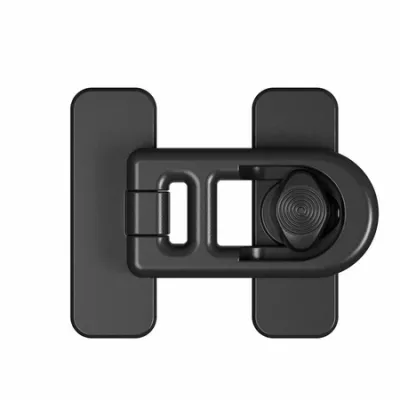
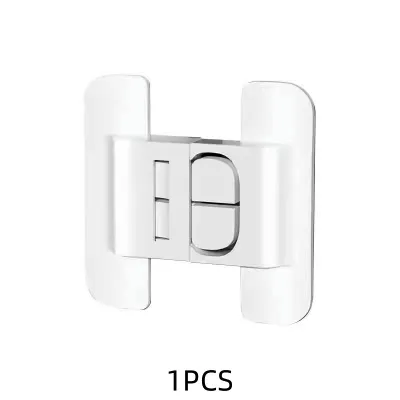
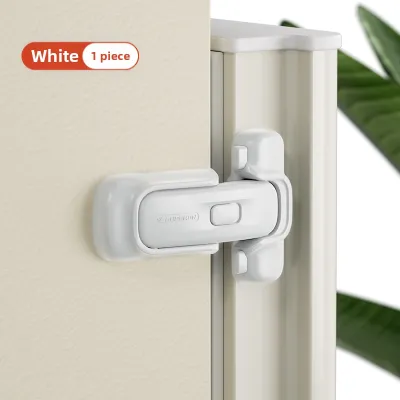
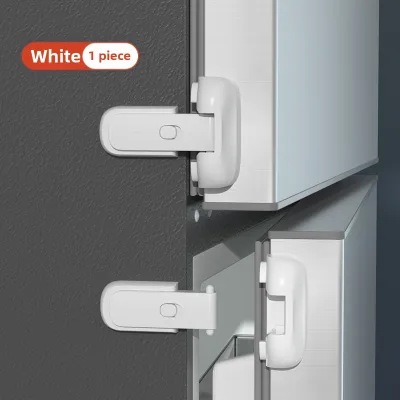
Prices are valid at publication and may change. Please refer to the product page for the latest price.
The surface material of your appliance also plays a critical role in lock compatibility. Modern refrigerators feature a variety of finishes, including smooth painted metal, brushed stainless steel, textured plastic, and tempered glass. In warm, humid environments, textured surfaces present a unique challenge for standard adhesives because moisture can seep into microscopic gaps, weakening the bond over time. You must also evaluate your fridge handles; protruding handles can block the path of a straight strap lock, while recessed grips leave the front surface completely flat, requiring careful measurement to ensure the lock does not interfere with your hand placement.
Finally, take precise measurements of the gaps and clearances on your appliance. Measure the distance between the two doors on a French door model, or the distance from the edge of the door to the side cabinet on a single-door unit. A gap that is too wide might exceed the reach of a standard strap lock, while a gap that is too narrow might not leave enough flat surface area for an adhesive pad to bond securely. Understanding these physical dimensions beforehand prevents the frustration of purchasing a lock that cannot be mounted properly.
Adhesive Locks: Best for Flat Surfaces and Single Doors
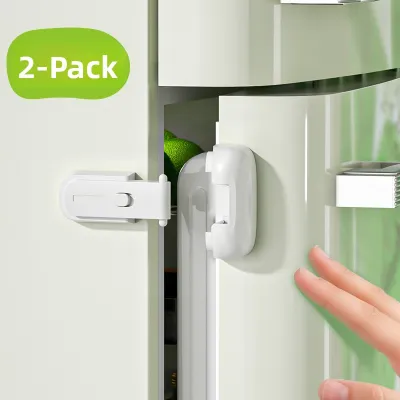
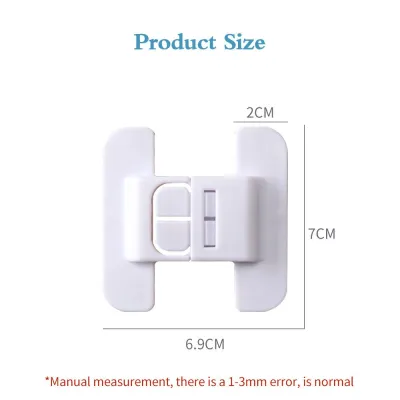
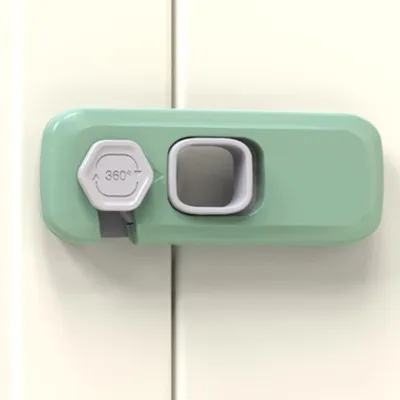
Adhesive latch locks are among the most common and straightforward baby-proofing solutions available. These locks typically consist of two plastic components bonded to the refrigerator’s exterior with heavy-duty double-sided tape. When the door is closed, a latch or button mechanism keeps the door firmly shut until an adult releases it. This design is exceptionally well-suited for single-door refrigerators or flat, smooth surfaces where the lock can be mounted across the corner of the door and the cabinet frame.

To ensure a reliable bond, especially in humid tropical climates, meticulous surface preparation is absolutely necessary. Begin by cleaning the mounting area with a mixture of water and mild dish soap to remove grease, fingerprints, and kitchen grime. Follow this by wiping the area with isopropyl alcohol to remove any remaining soap residue or oils, and allow the surface to air dry completely. Avoid using paper towels that might leave lint behind, as even tiny fibers can compromise the adhesive’s contact with the appliance.
Once the surface is clean and dry, apply the adhesive pads firmly, pressing down across the entire surface for at least thirty seconds to activate the pressure-sensitive bond. Most manufacturers recommend letting the adhesive cure for at least twenty-four hours before subjecting it to any pulling force. During this curing period, avoid testing the lock or allowing children near the appliance, as premature stress can cause the adhesive to fail later.
While adhesive locks are highly effective on smooth metal and plastic, they have distinct limitations. Textured stainless steel, patterned glass panels, or highly curved edges reduce the total surface area available for the adhesive to grip, which can cause the pads to peel off under the force of a determined toddler. If your refrigerator features a heavily textured finish, standard adhesive locks may not provide a secure hold, and you may need to look for alternative mechanical options or specialized high-strength adhesives recommended by the manufacturer.
Strap Locks: Securing French and Side-by-Side Doors
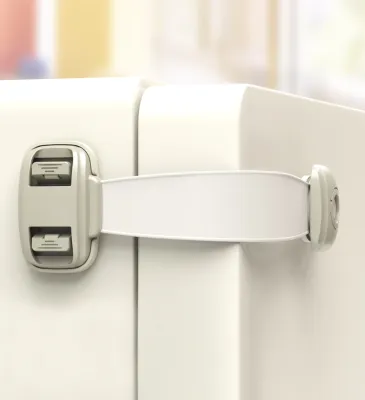
Strap locks offer a highly versatile and practical solution for securing multi-door refrigerators, such as French door and side-by-side configurations. These locks feature a flexible plastic, silicone, or fabric strap that connects two adhesive mounting bases. Because the strap can bend, stretch slightly, and wrap around corners, it can easily bridge the gap between two center-opening doors or secure a door to the side cabinet frame.
When installing strap locks on refrigerators with protruding handles, the flexible strap can be positioned above or below the handles to avoid any physical interference. For appliances with recessed grips, the strap can be mounted flat across the center seam of the doors. It is important to place the lock high enough on the appliance so that it remains completely out of reach of crawling babies and toddlers, while still remaining convenient for adults to operate during meal preparation.
The length of the strap and the design of the buckle mechanism are critical factors to consider. Look for strap locks that offer adjustable lengths, allowing you to pull the strap taut during installation. A loose strap can allow the refrigerator door to open slightly, which not only lets cold air escape but also creates a hazard where a child could pinch their fingers in the opening. The release mechanism should require a double-action movement, such as pressing two side buttons simultaneously while sliding a latch, which requires a level of manual dexterity that young children do not possess.
Silicone and plastic straps are generally preferred in busy kitchens because they are easy to wipe clean when splattered with food or grease. Fabric straps, while flexible, can absorb liquids and odors over time, requiring more frequent cleaning or replacement to maintain kitchen hygiene. Regularly inspect the strap for signs of wear, stretching, or cracking, especially near the connection points where the strap meets the adhesive bases.
Magnetic Locks: Hidden Security for Seamless Aesthetics
For parents who prefer to maintain a clean, modern kitchen aesthetic without visible plastic straps or latches, magnetic locks offer an excellent hidden alternative. These locks are installed entirely on the inside frame of the refrigerator door or cabinet-style integrated panels, keeping the exterior of your appliance completely free of baby-proofing clutter. The lock remains engaged until a specialized magnetic key is held against the outside of the door, releasing the internal latch.
Installing magnetic locks requires a high degree of precision. Because the lock components are hidden inside the door frame, aligning the latch on the door with the catch on the cabinet frame must be exact. Many manufacturers provide installation templates or alignment cradles to help parents position the pieces correctly. If the alignment is off by even a few millimeters, the lock may fail to engage, or it may prevent the refrigerator door from closing fully, compromising the appliance’s seal.
Before choosing a magnetic lock, you must verify the internal clearance of your refrigerator. There must be sufficient space between the door gasket and the internal shelving so that the lock mechanism does not obstruct the shelves or crush stored food items. Additionally, these locks are only compatible with non-magnetic door materials if the magnetic key is strong enough to penetrate the door’s thickness. Always check the manufacturer’s specifications regarding maximum door thickness to ensure the key can successfully disengage the latch.
The primary challenge of using magnetic locks is the management of the magnetic key. Because the lock cannot be opened without it, losing the key can prevent you from accessing your food. The key must be stored on a high metal surface, such as the side of a microwave or a high magnetic board, completely out of reach of children. It is highly recommended to purchase a system that includes multiple keys, keeping a spare key in a secure, designated drawer in case the primary key is misplaced.
Decision Guide: Matching Lock Types to Fridge Styles
To help you select the most effective baby-proofing solution for your kitchen, use the comparison table below to match different lock types with your specific refrigerator configuration and surface characteristics.
| Lock Type | Best Fridge Style | Surface Requirements | Handle Compatibility | Ease of Adult Use |
|---|---|---|---|---|
| Adhesive Latch | Single Door | Smooth, flat metal or plastic; not ideal for heavy textures | Works best with protruding or side-mounted handles | High; usually features a simple press-and-release button |
| Adjustable Strap | French Door, Side-by-Side | Versatile; can span gaps and wrap around curved corners | Highly compatible with both recessed and protruding handles | Moderate; requires releasing a buckle or sliding a latch |
| Magnetic Lock | Single Door, Cabinet-Integrated | Flat internal frame; requires precise alignment | Compatible with all handle types as it is mounted internally | Moderate; requires holding a magnetic key to the exterior |
When making your final decision, apply these conditional rules to ensure compatibility:
- Choose an Adjustable Strap Lock if you have a French door or side-by-side refrigerator with recessed handles, as the flexible strap can easily span the center gap without requiring a flat surface on the handles themselves.
- Choose an Adhesive Latch Lock if you have a standard single-door refrigerator with a flat, smooth front, as this provides the most direct and secure corner-mounting option.
- Choose a Magnetic Lock if you have a premium integrated cabinet-style refrigerator and want to preserve a seamless exterior aesthetic, provided you have sufficient internal clearance for the latch mechanism.
Installation Safety and Ongoing Maintenance Checks
When installing any ref door lock, your primary concern must be maintaining the integrity of the refrigerator’s door seal. The lock must not pull the door so tightly or unevenly that it warps or compresses the magnetic rubber gasket. A compromised gasket allows warm, humid air to enter the refrigerator, leading to rapid frost buildup, increased energy consumption, and potential food spoilage. After installation, perform a simple check by sliding a piece of paper between the gasket and the fridge frame; if the paper slides out easily, the seal is too loose, and the lock must be adjusted.
In tropical regions like the Philippines, high indoor humidity and temperature fluctuations can accelerate the degradation of adhesive backings. Establish a routine of performing weekly safety checks on all baby-proofing locks. Gently tug on the mounting bases to ensure they remain firmly bonded to the appliance, and inspect flexible straps for any signs of stretching, cracking, or wear. If you notice any play or lifting at the edges of the adhesive pads, replace them immediately to prevent a sudden failure when a child pulls on the door.
When a lock is damaged or when your child has outgrown the need for baby-proofing, you must remove the device safely to avoid damaging your appliance’s finish. Avoid using sharp metal scrapers, knives, or abrasive scrubbing pads, which can easily scratch stainless steel or paint. Instead, apply gentle heat from a hair dryer to soften the adhesive backing, then slowly peel the plastic base away from the surface. Clean up any remaining sticky residue by applying a small amount of cooking oil or a mild, manufacturer-approved adhesive remover, letting it sit for a few minutes before wiping it clean with a microfiber cloth and warm, soapy water.
Frequently Asked Questions (FAQ)
Can I use a ref door lock on a glass-front refrigerator?
Yes, adhesive-based locks can be used on glass-front refrigerators, as glass provides a very smooth and highly receptive surface for double-sided tape. However, you must exercise caution during installation and removal. Before applying the adhesive, check the refrigerator manufacturer’s manual for any specific warnings regarding glass surfaces. When it comes time to remove the lock, do not pry it off with force, as this can scratch or even shatter tempered glass panels. Instead, use a plastic scraper and a gentle adhesive solvent to safely dissolve the bond.
Will a fridge lock damage my stainless steel finish?
Standard adhesive locks generally do not damage high-quality stainless steel, but some finishes have specialized anti-fingerprint or protective coatings that can react with strong adhesives. To prevent permanent discoloration or damage, test a small, inconspicuous piece of adhesive tape on a hidden area of the refrigerator (such as the lower side panel) before mounting the lock on the front. When removing the lock, avoid abrasive scrubbing pads or harsh chemical solvents. Soften the adhesive with warm air from a hair dryer and gently wipe away residue with a microfiber cloth and a mild dish soap solution.
Community discussion
Share your experience or ask a question. Comments are reviewed before publication.