
Finding the right soothing tool for your baby requires balancing comfort, oral development, and feeding habits. If you are looking for a pigeon pacifier, the best choice for your little one depends on matching the specific size to their chronological age, aligning the nipple shape with their feeding method, and selecting a material that suits their sensory preferences and your cleaning routine. Selecting an inappropriate model can lead to latch issues, nipple confusion, or even safety hazards.
By understanding how to navigate specialized sizes, shapes, and materials, you can support your baby’s natural sucking reflex while protecting their developing palate and gums. Taking the time to evaluate these factors ensures a comfortable fit that adapts to your baby’s rapid growth during their first years of life.
How to Match Pigeon Pacifier Sizes to Your Baby's Age and Development
Choosing the correct size is the first and most critical step in selecting a pacifier. Using a pacifier that does not match your baby’s physical development can cause discomfort and present safety risks. Pigeon designs its pacifiers to support the natural growth of a baby’s oral cavity, categorizing them into distinct developmental stages.
Products mentioned in this guide
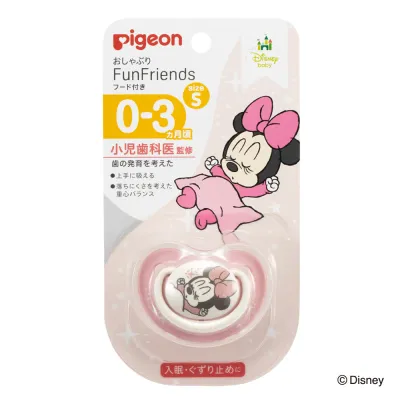
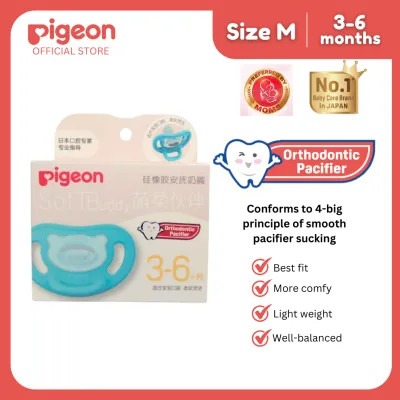
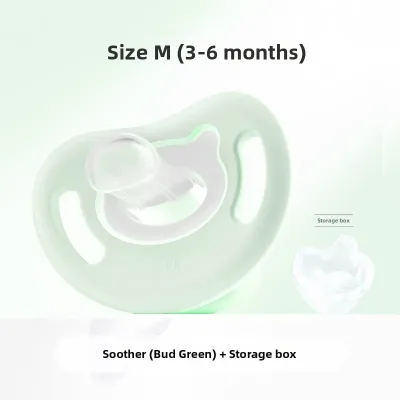
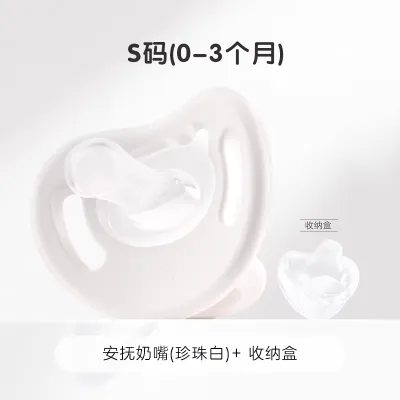
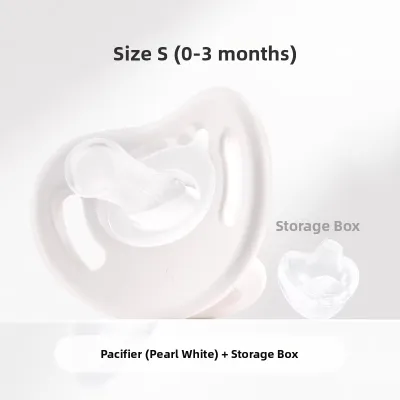
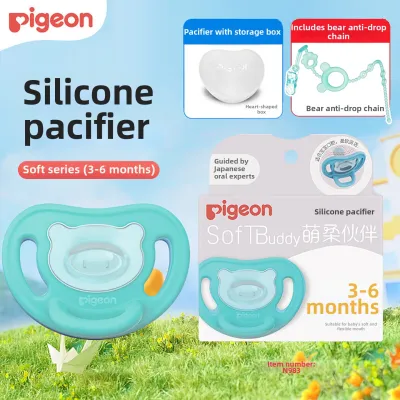
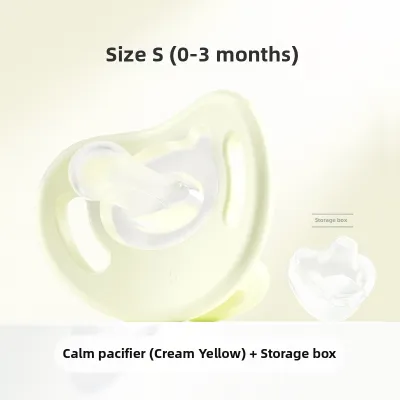
Prices are valid at publication and may change. Please refer to the product page for the latest price.
Understanding the Sizing Framework
Pigeon pacifiers are generally structured around three primary developmental stages:
- Size S (0 to 3 Months): Engineered specifically for the early reflexive sucking stage. The nipple is short, highly flexible, and designed to fit comfortably within the small oral cavity of a newborn without triggering the gag reflex.
- Size M (3 to 6 Months): Designed for the transitional stage as babies gain more voluntary control over their tongue and jaw. The nipple is slightly longer and firmer to support the changing shape of the palate and jaw.
- Size L (6+ Months): Built for older babies who have started solid foods or are beginning to teeth. The nipple is larger, thicker, and more robust to withstand stronger suction and early biting.
Why Chronological Age Is Only a Starting Point
While the age brackets printed on the packaging serve as a helpful baseline, every baby develops at a unique pace. A baby’s physical size, palate shape, and oral motor skills are the true indicators of a proper fit. For example, a premature baby or an infant with a smaller oral cavity may need to stay on a Size S pacifier slightly longer than three months to prevent gagging.
Conversely, a larger baby with advanced oral coordination might show signs of needing a Size M before reaching the three-month mark. Always prioritize your baby’s comfort and physical proportions over the age printed on the box. Carefully inspect the specific age and weight guidelines on the packaging of each product line, as dimensions can vary slightly between different design series.
Risks of Incorrect Sizing
Using an incorrectly sized pacifier introduces several developmental and safety concerns. If a pacifier is too small, your baby may pull the entire shield into their mouth, creating an immediate choking hazard. A small nipple can also cause the baby to suck too hard, leading to jaw fatigue and frustration.
If the pacifier is too large, the shield can press against your baby’s nose, restricting their breathing or causing skin irritation from trapped moisture. A nipple that is too long will frequently hit the back of the throat, triggering a gag reflex and causing the baby to reject the pacifier entirely. Ensuring a balanced fit protects your baby’s airway and supports healthy oral development.
Breastfed vs. Bottle-Fed: Choosing the Right Pacifier Shape
Your baby’s feeding method plays a significant role in how they interact with a pacifier. The physical mechanics of breastfeeding differ greatly from bottle-feeding, and selecting a shape that complements their feeding routine is essential for preventing latch issues.

Managing Nipple Confusion and Sucking Mechanics
During breastfeeding, a baby uses a wide, active latch and employs a wave-like tongue motion, known as peristaltic movement, to draw milk from the breast. Bottle-feeding, on the other hand, typically relies on a simpler compression and vacuum mechanism. Introducing a pacifier with an incompatible shape can disrupt these learned patterns, leading to nipple confusion.
Nipple confusion occurs when a baby struggles to transition back to the breast after sucking on a pacifier or bottle nipple. To minimize this risk, especially during the first few weeks of life, it is crucial to choose a pacifier shape that closely mimics the natural stretching and flexing of the breast during nursing.
Shapes for Breastfed Babies
For breastfed infants, pacifiers with a wide, breast-like base and a highly flexible, asymmetrical, or anatomical nipple are highly recommended. These designs encourage a wide-angle latch, allowing the baby’s lips to flange outward naturally. The flexible material allows the tongue to perform its natural peristaltic movement without restriction.
By replicating the physical sensation of nursing, these specialized shapes help preserve the baby’s natural latching habits. This makes it easier to transition between breast and pacifier without affecting the mother’s milk supply or causing latch discomfort.
Shapes for Bottle-Fed Babies
For bottle-fed babies or older infants who are already accustomed to standard bottle nipples, traditional round or symmetrical orthodontic shapes are often preferred. These shapes fit comfortably against the palate and are highly intuitive for babies who use a compression-based sucking style.
Symmetrical orthodontic pacifiers feature a flattened bottom and a rounded top. This design is engineered to accommodate the natural alignment of developing teeth and support the widening of the jaw, making it an excellent choice for babies transitioning into their teething phase.
Observing Acceptance Signals
Finding the right shape often requires observation. You can determine if a pacifier shape is suitable by watching your baby’s physical responses. A successful match is indicated by:
- A secure, steady latch where no air escapes from the corners of the mouth.
- A relaxed jaw and a calm facial expression during use.
- The baby's ability to keep the pacifier in their mouth easily without constant manual adjustment.
If your baby repeatedly spits the pacifier out, cries, or pushes it away with their tongue, the shape may not be matching their oral structure. In such cases, trying a different shape or material is often necessary to find a comfortable match.
Silicone vs. Natural Rubber: Which Pigeon Material Is Safest?
When choosing a pacifier, the material of the nipple is just as important as its size and shape. Pigeon offers pacifiers made from medical-grade silicone and natural rubber, each presenting distinct physical properties, maintenance requirements, and user experiences.
Medical-Grade Silicone
Medical-grade silicone is a highly durable, synthetic material that is widely used in infant care products. It is completely transparent, odorless, and tasteless, making it highly acceptable to sensitive newborns. Silicone retains its structural shape over long periods of use and does not easily degrade when exposed to heat, light, or moisture.
Because silicone is highly heat-resistant, it can withstand rigorous sterilization methods, including boiling, steam, and UV sterilization. However, silicone is firmer than natural rubber, which some newborns may initially find less comforting, though older teething babies often appreciate the firm resistance.
Natural Rubber (Latex)
Natural rubber, sourced from the sap of rubber trees, is characterized by its yellow-amber color and exceptional softness. It is highly flexible and warm to the touch, closely mimicking the natural texture and temperature of human skin. This lifelike feel makes natural rubber highly appealing to babies who reject firmer silicone pacifiers.
However, natural rubber is a porous material that degrades much faster than silicone. It is susceptible to structural breakdown when exposed to direct sunlight, body heat, and saliva. Additionally, because it is made from natural latex, it carries a potential allergy risk for babies with sensitive skin or a family history of latex allergies.
Material Comparison and Decision Matrix
To help you decide between these two materials, consider the following comparison of their practical characteristics:
- Durability: Silicone is highly durable and resistant to bite marks; natural rubber is softer and degrades quickly under daily wear.
- Texture: Silicone is firm and smooth; natural rubber is extremely soft, pliable, and skin-like.
- Sterilization: Silicone handles high heat easily; natural rubber requires gentle cleaning and can warp or melt under extreme temperatures.
- Lifespan: Silicone typically lasts longer before showing wear; natural rubber requires replacement every 4 to 6 weeks.
Choose silicone if you want a low-maintenance, long-lasting pacifier that is easy to sterilize and keep hygienic. Choose natural rubber if your baby is highly selective, rejects silicone, or prefers a very soft, flexible texture, and you are prepared to manage a strict replacement schedule.
Environmental and Care Considerations
In warm, humid climates, natural rubber pacifiers require extra attention. High ambient humidity can accelerate the breakdown of natural latex, causing it to become sticky, swollen, or brittle much faster than in dry climates. Always store natural rubber pacifiers in a cool, dry place away from direct sunlight.
Regardless of the material you choose, always check the product label for the exact material composition and any specific allergy warnings before the first use. If you notice any signs of skin irritation around your baby’s mouth, discontinue use immediately and consult a healthcare professional.
Which Pigeon Pacifier Series Fits Your Baby's Needs?
Pigeon offers several distinct pacifier lines designed to cater to different developmental stages, feeding methods, and sensory preferences. Understanding the unique design philosophy behind each series will help you narrow down the best option for your family.
SofTouch Series for Breastfed Babies
The SofTouch series is specifically engineered to support breastfed infants, focusing on maintaining a natural latch and reducing the risk of nipple confusion.
- Target Audience: Breastfed newborns and infants transitioning between breast and pacifier during their first few months.
- Key Features: This series features an ultra-soft silicone nipple with a wide, sloped base that encourages a wide-open latch. The nipple shape is designed to fit precisely into the sucking fossa—the small depression in the roof of a baby's mouth—allowing the tongue to move in its natural, wave-like motion.
- Limitations: The wide base and highly flexible nipple may not appeal to exclusively bottle-fed babies or older infants who prefer a firmer, more traditional round or orthodontic shape.
Natural Rubber Options for a Softer Feel
For babies who struggle to accept synthetic materials, Pigeon’s natural rubber options provide a softer, more pliable alternative.
- Target Audience: Babies who consistently reject silicone pacifiers, or those who prefer a highly malleable, skin-like texture.
- Key Features: Made from natural latex, these pacifiers offer exceptional softness that flexes easily with the baby's natural mouth movements. The material warms up quickly to body temperature, providing a comforting, familiar sensation.
- Limitations: This material requires strict adherence to replacement schedules, typically needing disposal every 4 to 6 weeks. The rubber will darken and soften over time, and it must be avoided entirely if there is any family history of latex allergies.
Standard and Orthodontic Shapes for Older Infants
As babies grow, their oral structures change, requiring shapes that support healthy jaw development and the arrival of primary teeth.
- Target Audience: Older infants (6+ months), bottle-fed babies, and toddlers.
- Key Features: These pacifiers feature symmetrical, round, or flattened orthodontic shapes designed to distribute sucking pressure evenly across the palate. This structural support helps prevent dental issues, such as open bites or crossbites, as early teeth begin to emerge. The shields are also designed with larger ventilation holes to prevent drool rash.
- Limitations: Shape preference is highly individual. Some babies who have grown accustomed to a round nipple shape may reject the flattened orthodontic design.
Essential Safety Checks, Cleaning, and Replacement Rules
Maintaining a clean and safe pacifier is vital for protecting your baby from infections and physical hazards. Because pacifiers are placed directly into your baby’s mouth, establishing a strict hygiene and inspection routine is a key responsibility for caregivers.
Sterilization and Temperature Limits
Before using a pacifier for the first time, it must be thoroughly sterilized. While boiling or steam sterilization are common and highly effective methods, you must always check the specific heat tolerance printed on the product packaging.
Silicone pacifiers can generally withstand high temperatures, but natural rubber components or specialized plastic shields can warp, melt, or release chemical odors if exposed to excessive heat. After sterilizing, always allow the pacifier to cool down completely, and gently squeeze the nipple to expel any trapped water before giving it to your baby.
Performing the Pull Test
To ensure the structural integrity of the pacifier, perform a “pull test” before every single use. Hold the plastic shield firmly in one hand and grasp the tip of the nipple with the other, then pull vigorously in all directions. Inspect the joint where the nipple meets the shield, as this is the most common point of wear.
Look closely for any tiny tears, cracks, or signs of peeling. If you detect any weakness or damage, discard the pacifier immediately. This test is especially important once your baby begins teething, as sharp primary teeth can easily puncture and tear both silicone and rubber.
Conditions for Immediate Disposal
Pacifiers do not last indefinitely. You must discard and replace a pacifier immediately if you observe any of the following conditions:
- Discoloration: The nipple turns dark, cloudy, or yellowed (beyond the natural shade of rubber).
- Changes in Texture: The material becomes sticky, gummy, soft, or brittle.
- Swelling: The nipple appears enlarged or misshapen compared to its original size.
- Physical Damage: Visible cracks, bite marks, tears, or holes are present.
Preventing Strangulation and Choking Hazards
Never tie a pacifier around your baby’s neck, hand, or crib post using strings, ribbons, or cords, as this poses an immediate strangulation risk. Instead, use a safety-certified pacifier clip that attaches securely to your baby’s clothing.
Ensure the clip’s strap is short and does not wrap around the neck. Additionally, never dip a pacifier in sweet substances like honey or syrup, as this can lead to severe tooth decay and exposes infants to the risk of infant botulism. Always supervise your baby while they are using a pacifier, and store clean pacifiers in a ventilated container to prevent mold growth in humid environments.
Frequently Asked Questions (FAQ)
Can I use a Pigeon pacifier if I am exclusively breastfeeding?
Yes, you can use a Pigeon pacifier if you are exclusively breastfeeding, but timing and shape selection are key. It is generally recommended to wait until breastfeeding is well-established—typically around 3 to 4 weeks after birth—before introducing any pacifier. This ensures your baby has mastered the correct nursing latch. When you do introduce a pacifier, choosing a breast-like shape, such as the SofTouch series, will help minimize the risk of nipple confusion and support a smooth transition.
How do I know if the pacifier size is too small or too large for my baby?
You can identify an incorrect fit by observing how the pacifier sits in your baby’s mouth. If the pacifier is too small, your baby may struggle to keep it in, suck on it with excessive force, or the entire shield might look small enough to fit inside their mouth, creating a choking hazard. If the pacifier is too large, your baby may gag, struggle to latch, or the plastic shield may press against their nose and restrict their breathing. Always prioritize matching the shield size and nipple length to your baby’s current facial structure over their chronological age.
Community discussion
Share your experience or ask a question. Comments are reviewed before publication.