
Quick Answer: Prioritizing High-Risk Doors
Protecting your child’s small hands starts with identifying where the heaviest risks lie. The absolute priority for any parent is the hinge side of a door, which acts as a powerful mechanical shear and serves as the primary crush zone. Heavy exterior doors, such as main entryways and kitchen exits, require immediate attention because their weight can cause severe injuries during a sudden close. Additionally, any doors leading directly to high-risk areas like bathrooms, laundry spaces, or staircases must be secured to prevent both painful pinches and unsupervised access.
Assessing the Hinge Side vs. the Handle Side
To baby-proof your home effectively, you must understand how different parts of a door behave when closing. The hinge side and the handle side present entirely different mechanical hazards, requiring distinct protective strategies.

The hinge gap is the most dangerous area on any door. As a door opens, the gap between the door frame and the door itself widens, inviting curious toddlers to insert their fingers. When the door swings shut, this gap narrows with immense leverage, acting like a nutcracker. Because the pivot point is so close, even a slowly moving door exerts concentrated force that can easily crush delicate bones. You can visually observe this by slowly closing a door and watching how the space on the hinge side disappears completely.
Products mentioned in this guide
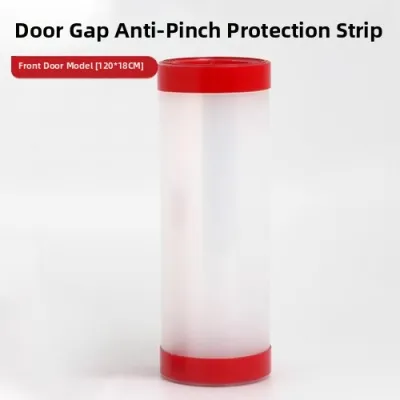
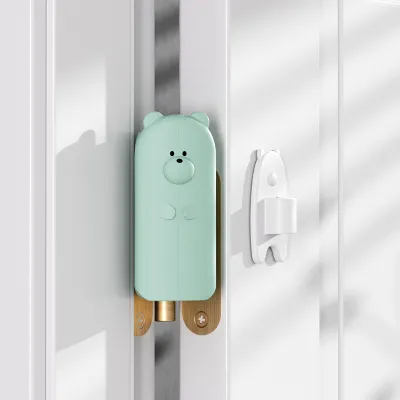

Prices are valid at publication and may change. Please refer to the product page for the latest price.
Conversely, the handle side of the door moves along a much wider arc. While a slam on this side can still pinch fingers painfully, the force is distributed differently, and the closing speed is easier to intercept. To measure your risks, walk through your home and check the clearance gaps. Any door that swings freely with minimal resistance or has a gap wide enough for a pinky finger when open needs a dedicated barrier.
Room-by-Room Risk Evaluation
Conducting a systematic walkthrough of your home is the most effective way to identify hidden door hazards. Different rooms present unique risks based on how they are used, who uses them, and the environmental factors affecting them.
High-Traffic and Heavy Doors
Your home’s main entryways and heavy interior doors are constant hazards due to their weight and frequency of use. In tropical climates like the Philippines, families often keep windows open to invite a cooling breeze. However, these cross-ventilation drafts can create sudden, powerful gusts of wind that slam heavy wooden or metal doors shut without warning.
Take time to inspect your front door, back door, and any heavy wooden doors separating living areas. If a door is equipped with a self-closing mechanism or heavy-duty spring hinges, the closing force is automatically higher, making a pinch guard absolutely essential. A sudden draft combined with a heavy door frame can easily overpower a toddler trying to hold onto the frame.
Utility and Storage Areas
Utility spaces, bathrooms, and laundry rooms present a double hazard: the risk of physical pinches and the danger of what lies inside. Toddlers are naturally curious and will often try to push or pull these doors open to explore. Because these doors are frequently left slightly ajar for ventilation, they are prime targets for wandering hands.
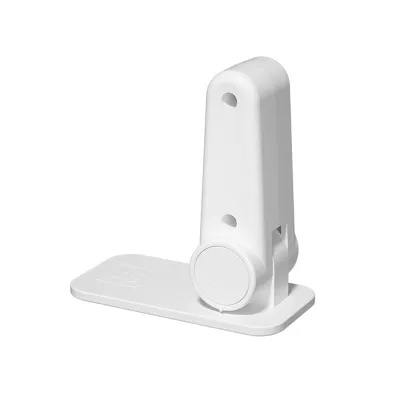
For these areas, a simple foam guard might not be enough if the goal is also to prevent entry. You should evaluate whether you need to combine a heavy-duty hinge guard with a childproof door handle lock. This dual approach ensures that the door remains securely shut against curious toddlers, while also protecting their fingers if the door is accidentally swung closed during daily household chores.
Bedrooms and Nurseries
Bedrooms and nurseries are spaces where children spend unsupervised time sleeping or playing, often alongside older siblings. Sibling play can quickly turn chaotic, and a brother or sister rushing to close a door during a game of hide-and-seek can easily trap a younger child’s fingers in the frame.
When evaluating these rooms, look closely at the bottom and side gaps of the doors. Toddlers playing on the floor often slide their fingers or toes under the door gap or into the side clearance. Because bedroom doors are often kept closed or partially open for air conditioning or fan circulation, installing a guard that maintains a safe, permanent gap is crucial for both ventilation and physical safety.
Observable Signs Your Current Setup Needs an Upgrade
Baby-proofing is not a one-time task; it must evolve as your child grows and your home changes. One of the clearest signs that you need to upgrade your door safety is your child’s physical development. Once your toddler can reach the door handle or has learned to push doors open independently, the risk profile of every room changes instantly.
Environmental factors also play a major role in how well your safety gear performs. In highly humid environments, the adhesive backing on stick-on hinge guards can degrade, peel, or slip out of alignment over time. Inspect your existing guards regularly for signs of wear, loose fittings, or torn foam.
Additionally, keep an eye on the doors themselves. Seasonal humidity changes can cause wooden doors to swell or warp, while natural house settling can alter the alignment of your door frames. If you notice that a door gap has widened or that a door now scrapes against the frame, your current pinch guards may no longer fit correctly and will need to be adjusted or replaced.
Matching the Guard Type to the Door Risk
Selecting the right door finger pinch guard requires matching the product’s design to the specific door’s material, weight, and usage frequency. Not all guards are built for heavy-duty performance, and using an under-rated guard on a heavy exterior door can lead to product failure.
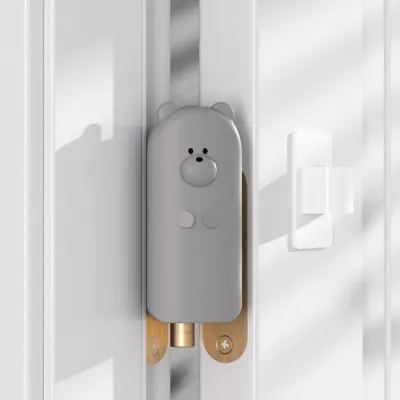
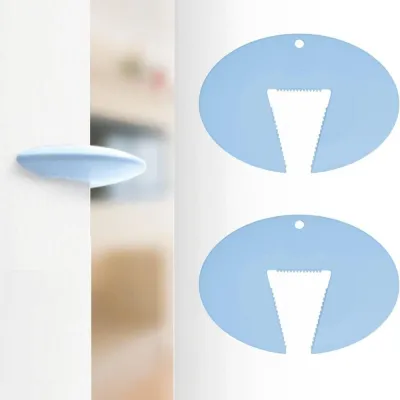
For heavy wooden or metal doors, look for durable, full-length hinge guards that physically block access to the entire vertical gap. These are typically screwed or securely adhered to the frame and door. For lighter interior doors, flexible C-shaped foam stoppers that slip over the edge of the door are highly convenient, but you must ensure they are placed high enough out of your child’s reach so they cannot be pulled off.
Always review the manufacturer’s packaging and documentation before purchasing. Pay close attention to recommended door thicknesses, surface compatibility (such as varnished wood versus painted metal), and any age limits. Once installed, establish a routine to check that the guards remain firmly attached and structurally sound, ensuring continuous protection for your little one.
Frequently Asked Questions (FAQ)
Do I need guards on both sides of the door?
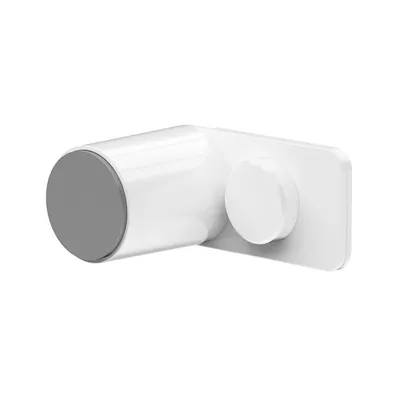
Yes, because the hinge side and the handle side present different hazards that require different solutions. The hinge side is a high-pressure crush zone that requires a physical barrier, such as a full-length hinge guard, to completely block fingers from entering the gap. The handle side, on the other hand, is best protected using a foam door stopper or a door wedge that prevents the door from closing fully. Always check the specific product instructions to ensure you are using the correct tool for each side of the door.
At what age can I remove door finger pinch guards?
There is no fixed age for removing pinch guards, as it depends entirely on your child’s developmental milestones and spatial awareness. Most children begin to understand the danger of slamming doors and learn how to handle them safely between the ages of three and five. Instead of relying on a specific age, monitor your child’s behavior and coordination. When you feel they are ready, transition gradually by removing guards from low-risk doors first while continuing to supervise their interactions.
Community discussion
Share your experience or ask a question. Comments are reviewed before publication.