
Protecting an active, crawling baby or toddler requires a strategic approach to your home’s layout. There is no single barrier that works safely across every area of a home. To keep your child safe, you must match the specific type of baby safety rails or rail guards to the unique structural demands of your stairs, beds, and doorways. For stairs, where fall prevention is the highest priority, robust hardware-mounted gates are mandatory. For beds, specialized mesh or convertible rail guards prevent falls during sleep without introducing entrapment hazards. For standard doorways and wide hallways, pressure-mounted or retractable gates offer flexible, non-damaging boundaries. Choosing the right barrier involves evaluating the mounting surface, your child’s developmental stage, and the specific physical forces the rail must withstand.
Quick Guide: Matching Baby Safety Rails to Your Home's Layout
When planning your home baby-proofing strategy, matching the right barrier to the specific location is critical for structural integrity and child safety. Different zones in your home present distinct hazards and physical demands, meaning a single type of gate or rail cannot fulfill every role.
- Stairs (Top and Bottom): Requires maximum stability. The top of the stairs strictly demands hardware-mounted gates screwed directly into studs or wooden posts to prevent catastrophic falls. The bottom of the stairs can accommodate pressure-mounted gates, provided there is a level floor and solid mounting surfaces.
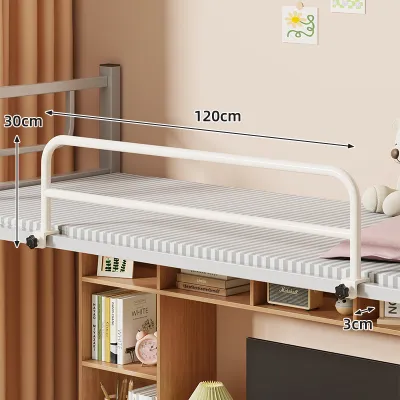
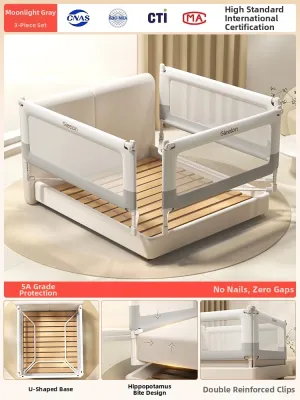
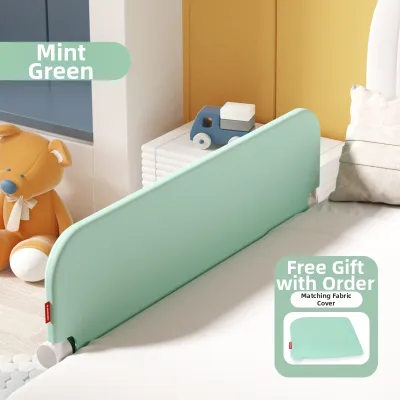
- Beds (Toddler and Adult): Requires specialized bed rails or rail guards designed to close the gap between the mattress and the frame, preventing falls during sleep. These are entirely different from doorway gates and must never be used interchangeably.
- Doorways and Hallways: Allows for flexible, renter-friendly options. Pressure-mounted gates work well in standard, sturdy door frames, while retractable mesh gates are excellent for wide, high-traffic, or irregular spaces.
Instead of searching for a universal product, a complete baby-proofing plan typically combines these different types. Prioritize safety standards, structural stability, and secure installation over aesthetic preferences or quick setup convenience.
Products mentioned in this guide
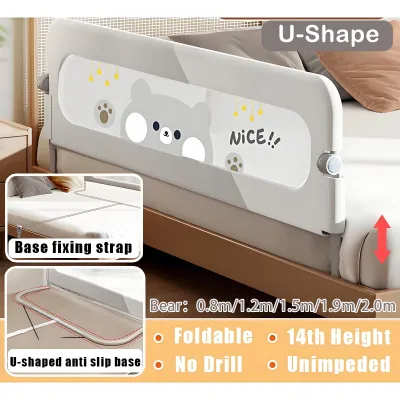
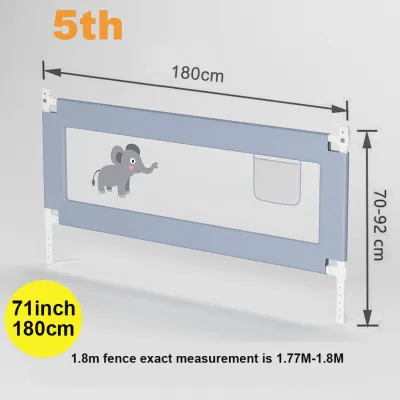

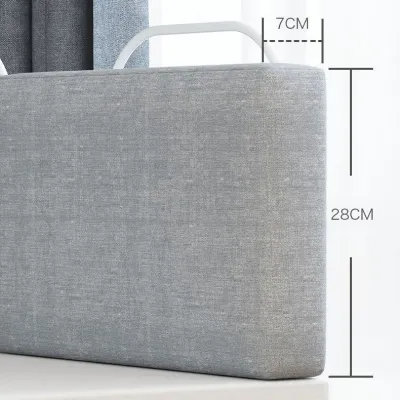
Prices are valid at publication and may change. Please refer to the product page for the latest price.
Stairs: Why Hardware-Mounted Rails Are Mandatory for Fall Prevention
The stairway is the most high-risk area in any multi-level home, making fall prevention the absolute priority. At the top of the stairs, you must install a hardware-mounted safety gate. Pressure-mounted (tension-based) gates are strictly unsafe for this location. If a toddler leans, pushes, or throws their weight against a pressure-mounted gate, the tension can fail, causing the entire unit to dislodge and slide down the stairs with the child.

When shopping for a top-of-stair gate, verify that it features auto-close hinges and a secure, double-locking mechanism. These locks should require two distinct actions to open—such as sliding a button while lifting the handle—demanding adult hand size and dexterity that toddlers cannot replicate. Additionally, top-of-stair gates must not have a bottom threshold bar. Walk-through pressure gates often feature a metal bar running along the floor; at the top of a staircase, this bar becomes a dangerous tripping hazard for caregivers carrying a child.
Installing a hardware-mounted gate requires drilling screws directly into your home’s structure. In the Philippines, where many homes feature solid concrete walls or plaster over masonry, you will need to use a masonry drill bit and plastic wall anchors to secure the mounting brackets. If you are mounting to wooden banisters, use specialized clamp-on banister adapters to avoid drilling permanent holes into polished hardwood posts. Always ensure the gate opens inward, away from the stairs, so that even if the latch fails, the gate cannot swing outward over the steps.
Caregivers must monitor their child’s developmental milestones to determine when to retire these barriers. Generally, when a child reaches approximately two years of age, climbs over the gate, or stands taller than 35 inches (about 89 centimeters), the gate should be removed. At this stage, the risk of a child falling while attempting to climb over the gate exceeds the protection the gate provides. Always refer to the manufacturer’s documentation for exact height and weight limits.
Beds: Selecting Mesh and Convertible Rails for Sleep Safety
Transitioning a child from a crib to a toddler bed, or preventing falls from an adult bed, requires a different class of protective barrier. Unlike doorway gates, bed rail guards are engineered specifically to prevent a sleeping child from rolling out of bed. They are not designed to withstand the full-force impact of a standing toddler running into them, so they must be selected and positioned with extreme care to avoid entrapment.
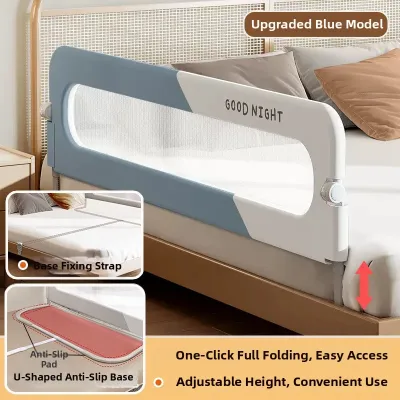
Mesh Bed Rails for Adult and Toddler Beds
Portable, fold-down mesh bed rails are highly effective for standard mattresses. The primary safety hazard with these rails is the potential for “entrapment gaps”—spaces that form between the rail and the side of the mattress where a child’s head or body can become wedged. To prevent this, select a rail guard that features an under-mattress anchor strap system. These straps wrap around the opposite side of the bed frame, pulling the rail tight against the mattress side to eliminate any gaps.
Look for models with a convenient fold-down mechanism, which allows caregivers to fold the rail downward out of the way for easy sheet changes and bedtime stories. When purchasing, verify the manufacturer’s specified mattress compatibility. Most mesh rails require a traditional mattress and box spring or a recessed bed frame to sit securely; they are generally unsafe for use on inflatable mattresses, waterbeds, or light foam mattresses without a solid base. Additionally, check the manufacturer’s age and weight limits, as most bed rails are intended only for children who can get in and out of bed unassisted (typically starting around two years of age). In high-humidity tropical climates like the Philippines, ensure the fabric mesh is highly breathable and easy to wash to prevent mildew and dust mite accumulation.
Convertible Crib Rails and Floor Bed Guards
When converting a crib into a toddler bed, the safest option is to use the original manufacturer’s conversion kit. These kits are specifically designed and safety-tested for that exact crib frame, ensuring there are no dangerous structural gaps.
For families utilizing a Montessori-style floor bed, low-profile wooden or foam bumper guards are popular alternatives. Because floor beds sit directly on the ground, the risk of a severe fall is eliminated, but a barrier still helps define the sleeping space. If you use a foam bumper or a low-profile guard, keep the sleeping environment free of soft bedding, heavy blankets, and oversized pillows. Excessive soft bedding near any rail structure increases the risk of suffocation if a sleeping infant or toddler rolls face-first against the barrier.
Doorways and Hallways: Using Pressure-Mounted and Retractable Guards
For flat, level thresholds that separate rooms or block off hazardous areas like kitchens and bathrooms, you have more flexibility. Because these areas do not carry the catastrophic fall risks associated with staircases, renter-friendly, non-damaging installation methods are ideal.
Pressure-Mounted Gates for Standard Doorways
Pressure-mounted gates rely on wall tension to stay in place, making them highly popular for standard door frames and hallways. They require no drilling, preventing damage to paint or wood trim. Look for models featuring a convenient walk-through door with an auto-close latch, allowing you to pass through easily while carrying groceries or baby supplies.
Before installing a pressure gate, verify the structural integrity of your walls. Avoid mounting tension gates against fragile drywall or hollow-core door frames without aligning the pressure pads directly with wall studs. In high-humidity tropical climates, wooden door frames can expand and contract slightly with seasonal moisture changes. This movement can cause the tension of the gate to loosen over time. Caregivers must regularly inspect the pressure indicators or physically shake the gate to ensure it remains firmly wedged.
Retractable Mesh Gates for Wide or Awkward Spaces
For wide hallways, open-plan living rooms, or angled entryways where a swinging metal gate is impractical, retractable mesh gates offer an elegant solution. These gates feature a flexible, durable mesh screen that rolls up into a compact wall-mounted casing when not in use, keeping walkways clear.
When using a retractable gate, ensure the mesh material is pulled completely taut and locked securely into place. If the mesh is slack, a determined toddler can push their head underneath the bottom edge, creating a dangerous trap. Always verify that the locking mechanism is mounted high enough on the wall casing to remain completely out of a toddler’s reach. Because retractable gates require mounting brackets to be screwed into the wall, they provide a highly stable barrier while maintaining a low visual profile when open.
Cross-Scenario Compatibility: Can One Baby Gate Work Everywhere?
It is common for parents to wonder if they can purchase a single, “universal” baby gate model to use throughout their entire home to save money and simplify installation. While hardware-mounted gates are highly versatile and can technically be installed in any doorway or hallway, using them everywhere is rarely practical. Doing so requires drilling permanent holes into every wall, which is unnecessary for simple, low-risk thresholds.
Conversely, pressure-mounted gates are strictly prohibited at the top of stairs, meaning they can never serve as a whole-house solution. Furthermore, bed rails are entirely different products engineered specifically for horizontal mattress surfaces; they rely on the weight of the mattress and anchor straps to stay secure, making them physically impossible and highly dangerous to adapt for vertical doorway or stairway use.
To build a cost-effective and highly secure baby-proofing kit, parents should plan a targeted, multi-product approach. For a typical multi-story home, a practical configuration includes:
- One high-quality, hardware-mounted gate secured at the top of the stairs (approximate price range: ₱2,500 to ₱5,000).
- One pressure-mounted gate at the bottom of the stairs, ensuring no trip hazard is present (approximate price range: ₱1,200 to ₱2,500).
- Two pressure-mounted or retractable gates to block off high-risk rooms like the kitchen or home office (approximate price range: ₱1,500 to ₱4,000).
- Appropriate mesh bed rails or manufacturer-approved crib conversion kits for the sleeping areas (approximate price range: ₱1,000 to ₱3,000 per rail).
By allocating your budget to high-security hardware gates where they are critical, and using more affordable, flexible options in low-risk zones, you can create a highly secure environment without overspending.
Frequently Asked Questions (FAQ)
At what age should I stop using baby safety rails?
Most manufacturers recommend removing safety gates and bed rails when your child reaches approximately two years of age, or when they stand 35 inches (89 centimeters) tall. At this developmental milestone, many children gain the physical coordination to climb over the barrier, which presents a significant fall hazard. Always defer to the specific maximum height and weight limits detailed in your product’s instruction manual, and transition to teaching safe stair navigation under direct supervision.
Are pressure-mounted gates safe for the bottom of the stairs?
Yes, pressure-mounted gates are generally safe for use at the bottom of the stairs because the risk of a severe downward fall is minimal. However, you must ensure the mounting surface is completely solid and the floor is level. Avoid models with high bottom threshold bars if they create a tripping hazard for adults carrying a child up or down the steps. Regularly check the tension pads to ensure they have not slipped or loosened on the wall.
Community discussion
Share your experience or ask a question. Comments are reviewed before publication.