
Transitioning your child from a secure crib to an open bed is a major milestone in their early years. During this phase, parents often wonder how to protect their little ones from rolling off the mattress during the night. Introducing a bed rail guard for baby is a common step in home baby-proofing, but determining the exact time to install one requires careful evaluation of your child’s physical development, sleep patterns, and your specific home environment.
While these protective barriers can offer peace of mind, they are not a universal solution for every infant or toddler. Safety must always come first, meaning you must assess whether your child has reached the appropriate age and developmental stage before making this addition to their sleep space. By understanding the physical signs of readiness and evaluating your current bed setup, you can create a secure sleep environment that supports your child’s independence while preventing accidental falls.
Developmental and Behavioral Signs Your Baby Needs a Bed Rail Guard
Identifying when your child is physically ready for a bed rail involves closely observing their daytime motor skills and nighttime behaviors. Children develop at highly individualized rates, meaning chronological age is often less reliable than observable physical milestones. When a child begins to master complex movements, their relationship with their sleeping surface changes, making an open, elevated bed a potential hazard.
Products mentioned in this guide
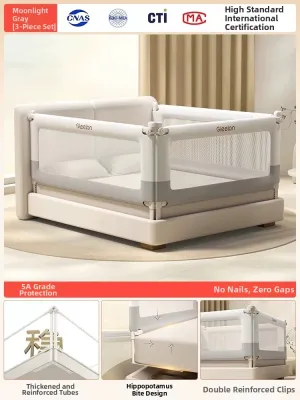

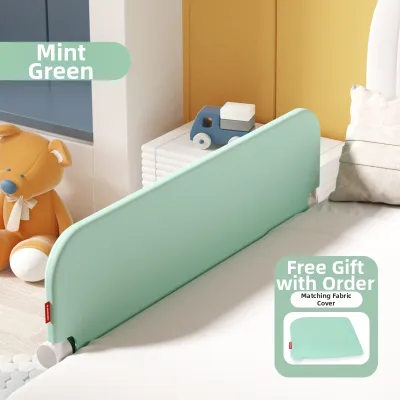

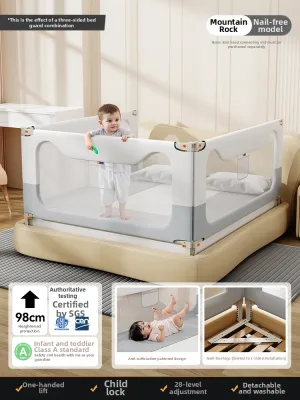
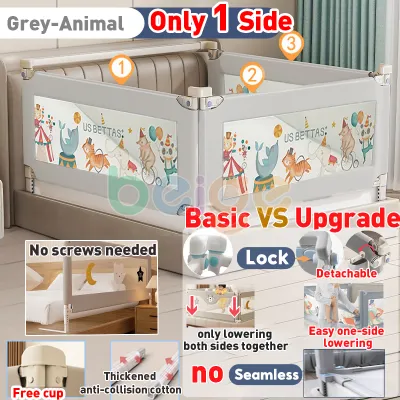

Prices are valid at publication and may change. Please refer to the product page for the latest price.
Physical Milestones
Observable motor skills are the primary indicators that your child’s sleep environment needs an upgrade. Once your baby can consistently roll over in both directions, sit up independently, or pull themselves to a standing position, they possess the physical strength to navigate their bed’s edges. If they are actively attempting to climb over low barriers during the day, they will likely try similar movements when waking up in their bed. These advanced motor skills increase the risk of a fall from an elevated mattress, signaling that a standard open bed is no longer safe without some form of protective boundary.
Sleep Movement Patterns
Every child has a unique sleep style, ranging from peaceful stillness to active movement. Some children travel across the entire surface of the mattress throughout the night, tossing, turning, and rotating 180 degrees. If your child frequently migrates to the very edge of the bed or wakes up with their limbs hanging over the side, they are highly susceptible to rolling off. Monitoring these nighttime movement patterns over several weeks will help you determine if a physical barrier is necessary to keep them safely centered on the mattress.
Cognitive Curiosity
As cognitive skills mature, a child’s curiosity about their surroundings grows exponentially. Upon waking up from sleep, a mobile child may not wait patiently for a caregiver; instead, their immediate instinct is often to explore. In an open bed environment, this sudden urge to investigate can lead to an accidental step or roll off the mattress edge. If your child lacks the spatial awareness to recognize where the mattress ends and the floor begins, they require a physical boundary to keep them secure until you can attend to them.
Actionable Observation Checklist
To help you decide if it is time to install a protective barrier, monitor your child’s behavior over the course of one week and check for the following indicators:
- Your child consistently rolls, crawls, or scoots to the edge of the sleeping surface during naptime or nighttime sleep.
- They have successfully climbed out of their crib or are actively attempting to scale the crib bars.
- They wake up and immediately try to slide off the bed without assessing the height or looking for a safe way down.
- They show a high level of nighttime movement, frequently changing positions and waking up perpendicular to how they fell asleep.
If your child exhibits two or more of these behaviors, it is time to evaluate your transition plans and consider appropriate fall protection options.
Crib to Bed Transition: Evaluating the Need for Fall Protection
The transition from a crib to a toddler or standard bed is a pivotal moment that requires careful timing. Introducing a bed rail too early can introduce unnecessary safety risks, while waiting too long can lead to preventable falls. Evaluating your child’s readiness for this transition is the first step in determining if and when a bed rail is required.

Outgrowing the Crib
A crib is designed to keep an infant safely contained, but it loses its safety utility once a child outgrows its physical limits. You should plan to transition your child out of their crib when they reach the manufacturer’s maximum height or weight limits, or when the height of the side rail is less than three-quarters of their height. Additionally, if your child can climb out of the crib even when the mattress is at its lowest setting, the crib is no longer a safe environment. At this point, keeping them in the crib poses a severe fall hazard, necessitating a move to a bed where fall protection must be reassessed.
Toddler Beds vs. Standard Beds
When moving away from a crib, parents generally choose between a dedicated toddler bed and a standard single or double bed. Toddler beds are constructed low to the ground and often feature built-in, low-profile safety panels designed to prevent rolls. If you opt for a toddler bed with integrated rails, an aftermarket guard is usually redundant. However, many families in the Philippines choose to transition their children directly to a standard single or double bed to save on long-term furniture costs. Because these standard adult beds sit much higher off the ground and lack protective sides, an external bed rail guard becomes a crucial addition to prevent significant falls.
Sleep Maturity Assessment
Before installing a bed rail, assess your child’s overall sleep maturity and spatial awareness. Can your child understand the physical boundaries of a bed? Do they know how to safely slide off the bed feet-first and backward? If your child still lacks this spatial understanding or tends to roll unconsciously during deep sleep, a physical rail provides a reassuring boundary. Conversely, if they are mature enough to navigate the bed edges safely and need to get up independently during the night to use the bathroom, a full-length rail might block their path and encourage them to climb over it, creating a more dangerous situation.
Sleep Environments Where a Bed Rail Guard Is Not Necessary
While bed rails are popular baby-proofing tools, they are not required in every home setup. In some sleep environments, installing an aftermarket rail is completely unnecessary and can even introduce new safety hazards. Understanding these scenarios can save you money and help you design a simpler, safer sleeping space.
Floor Beds (Montessori Approach)
The Montessori floor bed approach involves placing a mattress directly on the floor, completely eliminating the risk of a dangerous fall from an elevated frame. If a child rolls off a floor bed, they merely slide a few inches onto the floor, which can be cushioned with a soft rug or play mat. In humid, tropical climates like the Philippines, it is essential to place the floor mattress on a low-profile slatted wooden base or a breathable woven mat to maintain proper airflow and prevent mold or moisture buildup underneath. In this setup, a bed rail guard is entirely redundant and unnecessary.
Safe Crib Usage
If your child is still sleeping comfortably in their standard crib, shows no interest in climbing out, and remains well within the manufacturer’s height and weight specifications, there is no reason to modify their sleep environment. The crib remains the safest place for an infant or young toddler. Do not attempt to add aftermarket bed rails to a standard crib, as cribs are structurally designed to function without external attachments, and adding them can create dangerous entrapment zones.
Built-in Guardrails
Many convertible cribs and dedicated toddler beds come equipped with integrated, structurally tested side rails. These built-in features are engineered specifically for that bed model to ensure there are no hazardous gaps. If your child’s bed already has these integrated panels, do not install an aftermarket bed rail guard. Combining different rail systems can interfere with the bed’s structural integrity and create irregular spaces where a child’s limbs, head, or neck could become trapped.
Safety Checklist for Selecting and Installing a Bed Rail Guard
If you have evaluated your child’s development and sleep environment and decided that a bed rail is necessary, safety must guide your selection and installation process. Incorrectly chosen or poorly installed bed rails pose severe risks, including entrapment and suffocation. Always prioritize products that come with clear manufacturer documentation and safety certifications.
Entrapment and Gap Risks
The most critical danger associated with bed rails is the creation of gaps between the mattress and the rail itself. If a rail is loose or incompatible with the mattress, a child can slip into the gap and become trapped, which can lead to serious injury or suffocation. When shopping, you must verify that the rail is designed to fit your specific mattress thickness and bed frame type. Never use a standard bed rail on a waterbed, an inflatable mattress, a bunk bed, or a thin futon unless the manufacturer’s instructions explicitly state it is safe to do so. The rail must press firmly and snugly against the side of the mattress with zero play.
Age and Weight Verification
Before purchasing any bed rail, check the manufacturer’s product label for age, weight, and developmental limits. Many safety standards advise that bed rails are not safe for infants under two years of age. Younger infants lack the physical strength and coordination to extricate themselves if they roll into the mesh or become wedged against the rail. For children under two, a standard crib, a co-sleeper designed to safety specifications, or a floor bed remain the only recommended options. Always stop using the rail once your child reaches the manufacturer’s maximum weight limit or begins trying to climb over the rail itself.
Material and Structural Integrity
Bed rails are generally constructed from mesh, wood, or plastic, each offering distinct characteristics:
- Mesh Rails: These are highly popular in warm, tropical environments because the breathable fabric allows for excellent airflow, keeping the sleeping area cool. The transparent mesh also makes it easy for caregivers to monitor the child from a distance, and the soft fabric cushions any accidental impacts.
- Wooden and Plastic Rails: These materials offer excellent structural rigidity and durability. However, they can block airflow on warm nights and present a harder surface if a child bumps into them during sleep.
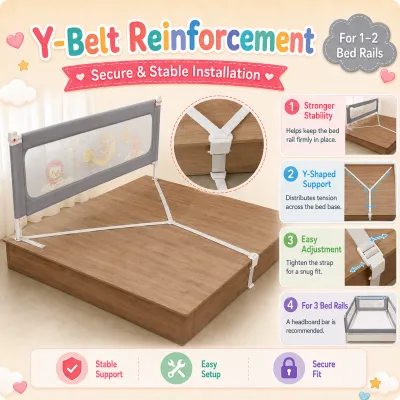
Regardless of the material, look for a rail with a robust, double-action locking mechanism that prevents curious toddlers from accidentally releasing the rail. The anchoring system should feature sturdy straps or brackets that secure the rail to the opposite side of the bed frame, ensuring it cannot slide outward under pressure.
Installation and Maintenance
Proper installation is just as important as choosing the right product. Always read the manufacturer’s manual step-by-step and avoid shortcuts. Secure the anchor straps tightly under the mattress, verifying that the rail is pulled flush against the mattress side. Once installed, perform a physical shake-test by pulling firmly on the rail; there should be no visible gaps or movement.
Establish a regular maintenance routine to inspect the setup weekly. Check that the fabric or mesh is free of tears, the locking mechanisms function smoothly, and the anchor straps have not loosened due to daily bed-making or the child’s movements. If you notice any wear, damage, or persistent gaps, stop using the rail immediately and consult the manufacturer for replacement parts or professional guidance.
Frequently Asked Questions (FAQ)
At what age should I stop using a bed rail guard?
Most children no longer require a bed rail guard by the time they reach approximately five years of age, as they typically develop the physical coordination and spatial awareness to sense the bed’s edges even while asleep. However, you should immediately remove the rail if your child attempts to climb over it, as this behavior creates a much more dangerous fall hazard than sleeping without a rail. Always verify the manufacturer’s documentation, as many models have specific height and weight limits that your child might outgrow before reaching age five.
Can I use a bed rail guard on a bunk bed or a toddler bed?
You should never install aftermarket bed rail guards on bunk beds, top bunks, or elevated loft beds. These elevated sleep setups require specific, built-in safety guardrails that are structurally integrated into the bed frame; aftermarket options can slip or fail under pressure, leading to severe fall risks. For toddler beds, check the manufacturer’s instructions. If the toddler bed already features built-in side panels, adding an external rail is generally unapproved and unsafe due to the high risk of creating dangerous entrapment gaps.
Are mesh bed rails safer than wooden ones?
Mesh bed rails are often preferred for their breathability and soft surface, which reduces the risk of minor bumps and allows for optimal airflow in warm climates. However, a rail’s safety does not depend solely on its material. Both mesh and wooden rails can be unsafe if installed incorrectly. The most critical safety factors are a tight, gap-free fit against the mattress, secure anchoring to the bed frame, and strict adherence to the manufacturer’s age and weight recommendations.
Community discussion
Share your experience or ask a question. Comments are reviewed before publication.