
Preparing your home for a new baby often leads to a living room crowded with specialized gear. Among the most common purchases is a chair for baby, but many parents quickly realize that one seat cannot fulfill every daily need. Choosing between a high chair, a bouncer, a rocker, or an activity seat depends entirely on your baby’s developmental stage, your daily pain points, and the physical space available in your home.
To make a smart, budget-conscious decision, you must first identify the primary challenge you need to solve. Buying multiple chairs too early can lead to unnecessary clutter and unused gear, especially in smaller living spaces. By understanding the distinct purpose of each baby seat, you can invest only in what is truly useful for your family’s routine.
Step 1: Identify Your Core Need — Feeding, Soothing, or Playing?
Before browsing online marketplaces or visiting local baby boutiques, take a few days to observe your daily routine and identify where you need the most support. Are mealtimes becoming a messy struggle because you lack a secure place for your baby to sit? Is your baby fussy during the late afternoon, requiring constant rocking that leaves your arms exhausted? Or do you simply need a safe, secure spot to place your baby for a few minutes while you prepare meals or fold laundry nearby?
Products mentioned in this guide
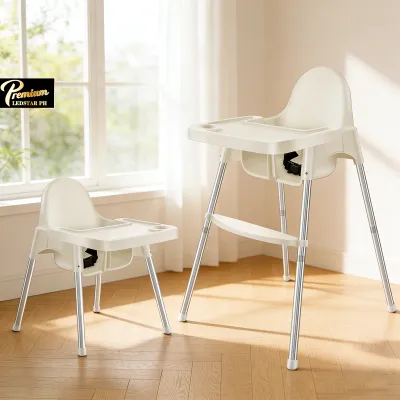
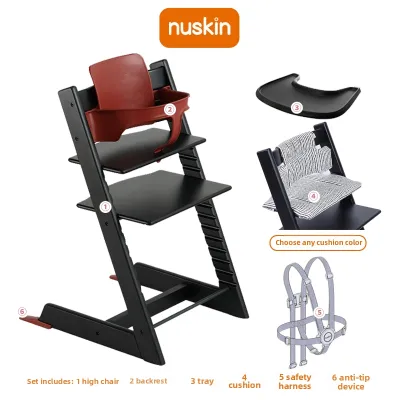
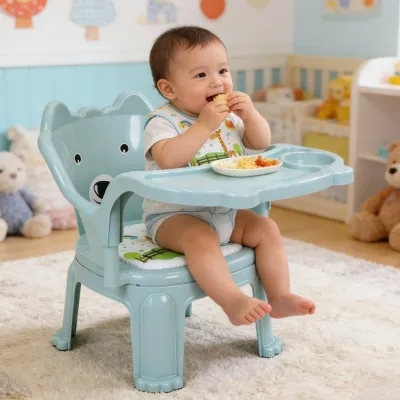
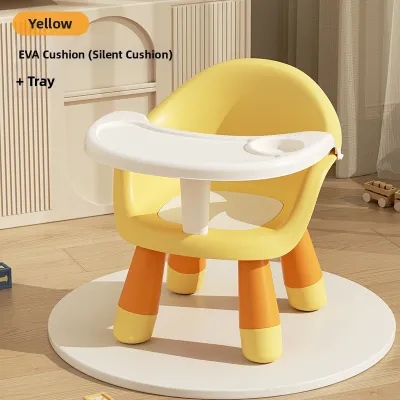
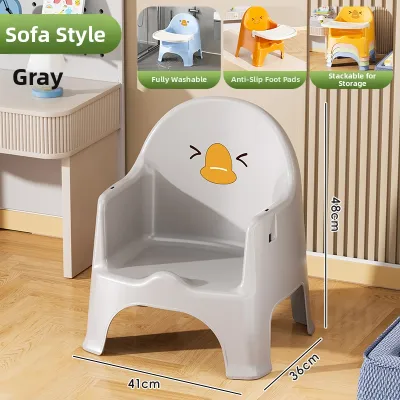
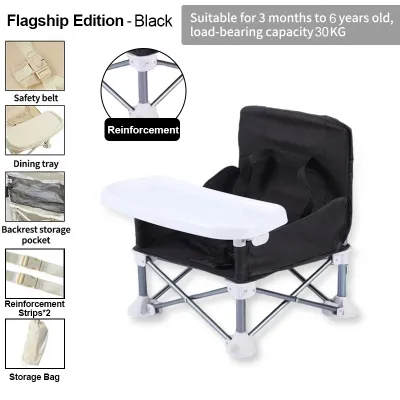
Prices are valid at publication and may change. Please refer to the product page for the latest price.
Baby chairs generally fall into three functional categories designed to address these specific scenarios. High chairs are built for safe, upright feeding and containing the inevitable messes of solid foods. Bouncers and rockers focus on soothing and resting, using gentle motion to calm a fussy infant. Activity seats are designed for engagement, keeping an alert baby entertained with built-in toys during their awake windows.
Your baby’s physical development must dictate which chair you use, as age ranges provided by manufacturers are only general guidelines. Critical milestones, such as head and neck control or the ability to sit upright without support, determine whether a seat is safe to use. Introducing a baby to a chair before they have the physical strength to support themselves can compromise their airway or strain their developing spine.
High Chairs: The Essential Chair for Baby Feeding
When your baby is ready to transition to solid foods, a high chair becomes an indispensable tool in your home. This milestone typically occurs around six months of age, but you must look for specific physical signs of readiness before placing your baby in one. Your baby must have strong head and neck control and be able to sit upright with minimal assistance to ensure they can swallow safely.

Unlike bouncers or rockers, high chairs are engineered specifically for safe, ergonomic feeding. They hold your baby in an upright, 90-degree position, which minimizes the risk of choking while they learn to manage textures. Because mealtimes are inherently messy, these chairs feature wipeable materials, removable trays, and minimal crevices to make cleaning up purees and finger foods manageable.
Your living space and lifestyle will determine which high chair design fits your home best. If you have a dedicated dining area, a classic full-size high chair offers excellent stability and a large tray surface. For compact homes or apartments, a foldable model can be tucked away behind a door or in a closet between meals. Families who travel frequently or dine out often may prefer a lightweight clip-on table seat or a compact booster that straps securely onto a standard dining chair.
Safety must always remain your top priority when using a high chair. Always secure your baby with the built-in five-point harness during every use, regardless of how brief the meal is or how stable the chair seems. Never leave your baby unattended in a high chair, and always place the chair on a level surface away from walls or counters that your baby could push against to tip themselves over.
Baby Bouncers: For Quick Calming and Hands-Free Breaks
Baby bouncers are lightweight, low-profile seats designed to respond directly to your baby’s physical movements. When your baby kicks their legs or wiggles, the frame flexes to create a gentle, self-regulated bouncing motion. This responsive movement is highly effective for soothing alert infants, giving parents a hands-free break to complete quick household tasks while keeping the baby nearby.
The developmental window for a traditional bouncer begins at birth and typically ends when your baby attempts to sit up unassisted or reaches the manufacturer’s maximum weight limit. Because bouncers sit low to the ground and are highly portable, they are easy to move from room to room. In warm, humid tropical climates, look for models featuring breathable mesh fabrics to help keep your baby cool and prevent sweat rashes.
While bouncers are excellent for supervised awake time, they are not safe for unsupervised sleep. The reclined angle of a bouncer can cause a sleeping baby’s head to tilt forward, potentially obstructing their airway—a condition known as positional asphyxiation. If your baby falls asleep in a bouncer, immediately transfer them to a firm, flat sleep surface, such as a crib or bassinet, to ensure safe sleep.
To support healthy physical development, limit your baby’s continuous time in a bouncer. Prolonged periods in any semi-reclined container can contribute to flat spots on the back of the head and restrict the movement needed to build core strength. Balance bouncer time with plenty of unrestricted floor time, such as supervised tummy time, which is essential for motor skill progression. Always check the product label for exact weight and height restrictions before use.
Rockers and Gliders: For Deep Soothing and Sleep Routines
Rockers and gliders differ from bouncers primarily in their motion and construction. While bouncers rely on the baby’s own movements, rockers and gliders use a smooth, rhythmic swaying motion that is either generated manually by a parent or powered by an electric motor. These seats are generally heavier and have a larger physical footprint, making them ideal stationary fixtures for a nursery or living room.
The continuous, predictable motion of a rocker mimics the feeling of being held and swayed, making it a powerful tool for calming a fussy baby or winding down before bedtime. Motorized models often feature adjustable speeds, built-in white noise, or gentle vibrations to help customize the soothing experience. Because these units require a power source, you will need to position them near an electrical outlet or factor in the ongoing cost of replacement batteries.
Just like bouncers, rockers and motorized swings are strictly for supervised soothing and are never approved for overnight or unsupervised sleep. The risk of airway obstruction remains high if a baby is left to sleep in a semi-upright position. Caregivers must remain in the room and monitor the baby closely while the rocker is in motion, turning it off once the baby is calm.
You must retire a rocker as soon as your baby shows signs of developmental progression that make the seat unsafe. If your baby attempts to roll over, sit up, or pull themselves up by the sides of the frame, the shift in weight can cause the rocker to tip over. Regularly inspect the frame for wear and tear, and stop using the seat immediately if your baby approaches the manufacturer’s maximum weight limit.
Activity Seats: For Early Play and Developmental Engagement
Activity seats are designed specifically for alert, awake play rather than soothing or resting. These upright seats often feature a surrounding tray packed with age-appropriate toys, tactile elements, lights, and music. They are built to keep your baby engaged and upright, allowing them to explore their surroundings from a new vertical perspective.
From a developmental standpoint, these seats encourage hand-eye coordination, visual tracking, and fine motor skills as your baby reaches for, spins, and grasps the attached toys. They provide excellent mental stimulation during your baby’s active windows, giving them a dedicated space to play safely while staying contained.
However, activity seats should only be used once your baby has achieved sufficient trunk and neck strength to hold their head upright steadily without assistance. Limit play sessions in an activity seat to short intervals of 15 to 20 minutes per day. Overusing upright play containers can place stress on a baby’s developing hips and spine, so it is vital to balance this time with active floor play where they can freely roll, stretch, and crawl.
How to Choose: Matching the Chair to Your Baby’s Stage and Home
To avoid overspending on gear your baby might quickly outgrow, plan your purchases around your baby’s current developmental stage and your household budget. You do not need to buy every type of chair at once. Instead, acquire them sequentially as your baby’s physical abilities and daily needs evolve.
- Newborn to 4 Months: Focus your resources on a high-quality bouncer or rocker. During this early stage, your primary challenge is soothing a fussy infant and finding a safe, portable spot to rest your baby while you recover and manage daily tasks. A high chair is not yet necessary.
- 4 to 6 Months (Pre-Solids): As your baby becomes more alert and gains head control, an activity seat can be introduced for brief play sessions. This is also the ideal window to start researching and purchasing a high chair so you are prepared for the transition to solids.
- 6 Months and Beyond (Starting Solids): At this stage, a high chair becomes your absolute priority and a daily necessity. Conversely, your baby will likely begin outgrowing their bouncer or rocker, as their increasing mobility makes them prefer floor play over being strapped into a seat.
When budgeting, prioritize investing in a durable, easy-to-clean high chair, as this piece of furniture will be used multiple times a day for several years. For short-term gear like bouncers and rockers, which are only used for a few months, consider budget-friendly local brands or safe, pre-loved options from trusted friends. In the Philippines, high-quality, basic high chairs generally range from ₱1,500 to ₱3,500, while premium, multi-functional convertible models can range from ₱5,000 to over ₱10,000.
Frequently Asked Questions (FAQ)
Can I use a bouncer or rocker instead of a high chair for feeding?
No, you should never use a bouncer or rocker to feed your baby solid foods. These seats are designed with a reclined angle that makes swallowing difficult and significantly increases the risk of choking. High chairs are specifically engineered to support your baby in a fully upright, 90-degree position, which keeps their airway clear and allows them to safely manage and swallow solid foods.
When is my baby too big or old for a bouncer?
Your baby has outgrown their bouncer when they reach the maximum weight or height limit specified on the manufacturer’s product label. Developmentally, you must stop using a bouncer as soon as your baby can sit up unassisted, roll over, or attempt to grasp the sides of the frame to climb out. Continuing to use a bouncer past these milestones poses a serious tipping hazard.
Is it safe for my baby to sleep in a bouncer or rocker?
No, bouncers, rockers, and swings are not approved for safe, unsupervised sleep. The reclined position of these seats can cause your baby’s head to slump forward, potentially blocking their airway and leading to positional asphyxiation. If your baby falls asleep while in a bouncer or rocker, always transfer them immediately to a firm, flat sleep surface like a crib or bassinet.
Community discussion
Share your experience or ask a question. Comments are reviewed before publication.