
Finding the perfect baby sleeping bed swing requires balancing comfort, convenience, and, above all, safety. For many parents in the Philippines, a reliable swing is a highly valued nursery addition, offering a gentle, rhythmic motion that mimics the soothing sensation of being held. However, because these devices are designed to cradle your most precious cargo, choosing one is not as simple as picking the most aesthetically pleasing design or the model with the most high-tech features.
To make an informed decision, you must look beyond marketing claims and carefully evaluate the physical construction, safety certifications, and mechanical specifications of each model. This guide provides a comprehensive breakdown of what to look for, helping you navigate the selection process with confidence and build a safe, reliable shortlist for your nursery.
Prioritize Safety Standards and Weight Limits
When evaluating any baby sleeping bed swing, safety must always be your absolute, non-negotiable priority. Before looking at color schemes or entertainment features, turn your attention to the product’s structural integrity and safety credentials. Look for recognized international safety certification marks on the product packaging, the frame itself, or within the user manual. Because safety standards are dynamic and vary by region, do not rely solely on a printed logo; instead, treat these marks as items you must actively verify against official manufacturer documentation or safety databases.
Products mentioned in this guide
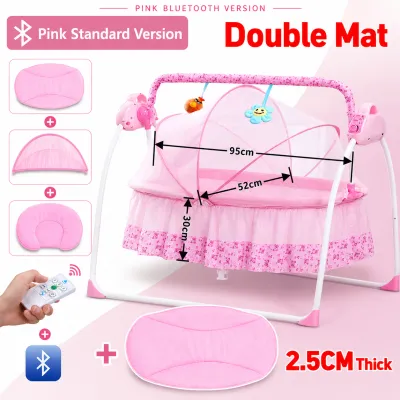
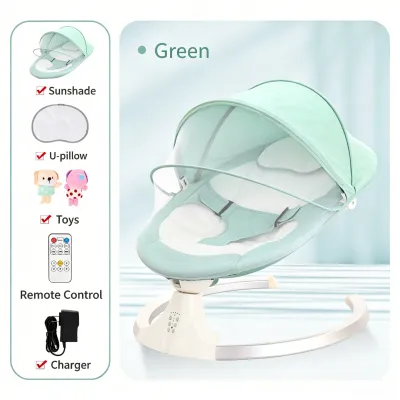
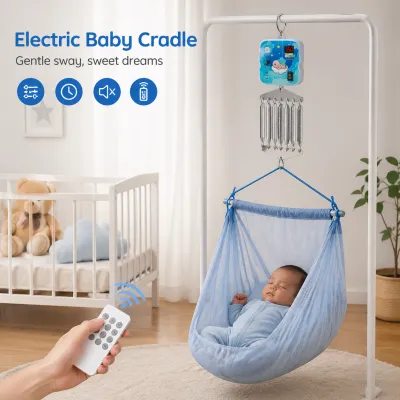
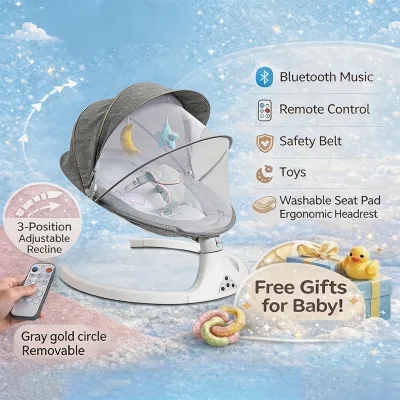
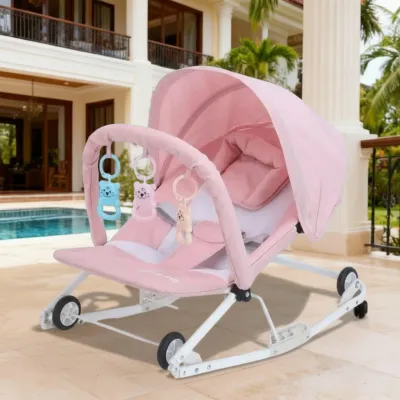
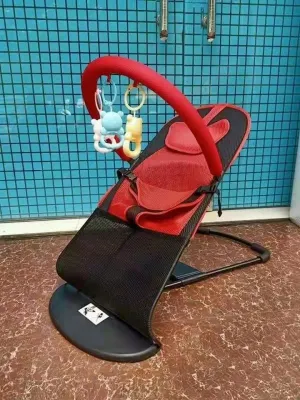
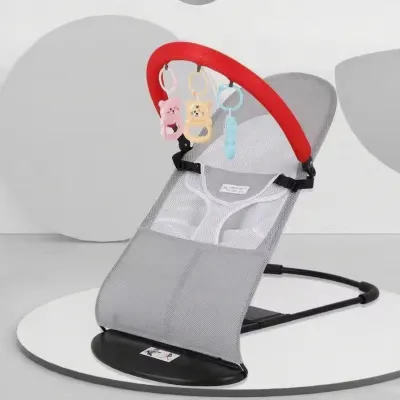
Prices are valid at publication and may change. Please refer to the product page for the latest price.
Every swing is engineered with strict physical boundaries that dictate its safe operation. You must locate and verify the manufacturer’s specified maximum weight and age limits before placing your baby in the seat. Exceeding these limits can strain the motor, compromise the structural integrity of the frame, or cause the unit to tip over. Remember that these limits are not mere suggestions; they are critical safety thresholds designed to prevent mechanical failure and physical injury.
The harness system is your primary defense against accidental falls or escapes. A secure 5-point harness, which secures the baby at the shoulders, hips, and crotch, is highly recommended over a basic 3-point system. When inspecting a swing, test the buckle mechanism yourself. It should require enough force to prevent an older, curious infant from releasing it, yet remain straightforward for a caregiver to operate quickly in an emergency. Ensure the straps are fully adjustable to accommodate your baby’s growth and can be tightened snugly against their body without causing discomfort.
Finally, examine the physical stability of the base frame. A high-quality swing should feature a wide, low-profile base that resists tipping, even when the swing is operating at its highest speed setting. Look for robust construction materials and the presence of non-slip rubber feet. In tropical households where smooth tiled, polished marble, or slick wooden floors are common, these non-slip feet are essential. They prevent the entire frame from “walking” or gradually shifting across the room due to the continuous vibration of the motor, keeping your baby exactly where you placed them.
Evaluate Swing Motion, Speed, and Noise Levels
The mechanical performance of a baby swing directly influences how effective it will be at soothing your infant. Babies are individuals with unique preferences; a motion that calms one infant might agitate another. Therefore, look for a swing that offers versatile motion paths. Some models provide a traditional front-to-back swing, while others mimic a gentle side-to-side sway or a complex, multi-directional glide. Having a model with adjustable motion paths allows you to experiment and find the exact movement that resonates with your baby’s natural comfort triggers.

Alongside the motion path, the range of speed settings is a crucial factor to consider. A quality swing should offer multiple speed levels, allowing you to customize the intensity of the movement. More importantly, pay close attention to how smoothly the motor transitions between these speeds. Abrupt jerks, sudden accelerations, or jerky stops can startle a sleeping baby, potentially causing them to cry or putting unnecessary strain on their delicate neck muscles. The transition should be seamless, gradual, and barely perceptible.
Motor noise is another critical element that can make or break your experience, particularly during quiet afternoon naps or late-night soothing sessions. While a soft, consistent hum can act as a soothing white noise, loud clicking, grinding, or buzzing sounds from a struggling motor will likely disrupt your baby’s rest. If possible, test the swing in a quiet environment before purchasing, or read detailed user feedback regarding the motor’s noise levels over extended periods of use.
To prevent overuse and conserve energy, look for swings equipped with an automatic shut-off timer. These timers typically allow you to set the swing to run for specific intervals, such as 15, 30, or 45 minutes, before automatically powering down. This feature is highly beneficial; it ensures your baby is not subjected to continuous motion for hours on end, which can lead to overstimulation, while also preserving battery life or reducing electricity consumption in your household.
Check Comfort, Padding, and Sleep Positioning
Creating a supportive and safe resting environment is essential for your baby’s physical development and overall well-being. When assessing the comfort of a baby sleeping bed swing, start by examining the seat recline options. The swing must support a safe, semi-upright position that aligns with pediatric posture guidelines. Ensure that the recline angle is adjustable and does not cause your baby’s head to slump forward onto their chest. This slumping posture can restrict their airway, presenting a severe risk of positional asphyxiation.
In the warm and humid climate of the Philippines, fabric selection is a major consideration for infant comfort. Babies can easily overheat, leading to discomfort, restlessness, and painful heat rashes. Look for seat covers and padding made from highly breathable, hypoallergenic, and moisture-wicking fabrics. Mesh panels and lightweight cotton blends are excellent choices as they promote optimal airflow around your baby’s body. Avoid heavy, synthetic polyester fabrics that trap heat and sweat.
Because spills, spit-up, and diaper blowouts are an inevitable part of early parenthood, the ease of cleaning the swing’s fabric is a practical necessity. Verify that the seat cover, canopy, and any infant inserts are fully removable and machine-washable. Check the manufacturer’s care instructions to ensure the fabric can withstand frequent laundering without shrinking, warping, or losing its soft texture. A fabric that is difficult to remove or requires hand-washing will quickly become a source of frustration.
Proper head and neck support is vital for newborns who have not yet developed the muscle strength to hold their heads upright. Look for swings that include a contoured, removable head support pillow designed specifically for infants. However, you must exercise caution: never add aftermarket pillows, rolled-up blankets, or unapproved plush inserts to the swing. These unauthorized additions can compromise the harness fit and introduce dangerous suffocation hazards into the sleeping environment. Always adhere strictly to the manufacturer’s warnings regarding proper positioning and supervised use.
Consider Portability, Power Source, and Space Requirements
Before finalizing your purchase, you must consider how the baby swing will fit into your physical living space and your daily routine. Baby swings can have a surprisingly large footprint, often requiring a significant amount of floor space to operate safely. Measure the designated area in your nursery or living room and compare it against the swing’s fully assembled dimensions. Remember to account for the clearance zone required for the swing’s maximum motion path, ensuring it will not collide with walls, furniture, or high-traffic walking paths.
The power source of the swing is another practical consideration that affects both convenience and long-term operating costs. Swings generally operate using an AC wall adapter, batteries, or a hybrid power system. A plug-in AC adapter is highly economical for daily, stationary use inside the home, as it eliminates the ongoing expense and environmental waste of disposable batteries. On the other hand, battery-operated models offer excellent portability, allowing you to use the swing outdoors on a breezy veranda or in rooms without accessible wall outlets. In areas prone to temporary power interruptions, a hybrid model that transitions seamlessly to battery power during an outage is incredibly valuable.
If you anticipate moving the swing frequently between different rooms—such as from the bedroom to the kitchen so you can keep an eye on your baby while preparing meals—portability features are essential. Look for a lightweight frame equipped with integrated carrying handles. Some models are designed to fold flat, making them much easier to slide under a bed, store in a closet, or pack into the trunk of a car for family trips to visit relatives.
Finally, evaluate the ease of assembly and disassembly. Some swings feature complex frames that require specialized tools and hours of frustrating setup, while others utilize intuitive, tool-free click-and-lock mechanisms. A swing that is easy to assemble not only saves you time initially but also simplifies the process of dismantling the unit for deep cleaning, transport, or seasonal storage once your baby outgrows it.
Smart Features and Extras: What Is Actually Useful?
Modern baby swings often come packed with a variety of high-tech features and extra accessories designed to entice parents. While some of these additions offer genuine utility, others may simply inflate the price tag without adding real value. Built-in sound machines, for instance, are highly practical. Look for models that offer a selection of calming white noise, gentle nature sounds, or soft lullabies. If the swing features Bluetooth connectivity, you can play custom playlists directly from your smartphone, but ensure the speaker quality is clear and the volume can be capped at a safe, low decibel level to protect your baby’s sensitive hearing.
Overhead toy mobiles are another common accessory designed to provide visual stimulation and entertainment when your baby is awake. When evaluating a mobile, ensure that it is securely attached to the frame and positioned completely out of your baby’s reach. Check that there are no loose parts, long dangling cords, or small detachable pieces that could pose a choking or strangulation hazard. The mobile should be easy to swing out of the way or remove entirely when you are placing your baby into or lifting them out of the seat.
Some premium swings offer smartphone app integration or physical remote controls, allowing you to adjust the swing’s speed, motion, timer, or music from across the room. This can be incredibly convenient, as it allows you to soothe a drifting baby without physically approaching the swing and risking waking them up. However, ask yourself if these smart features are truly necessary for your lifestyle, or if a basic, reliable model with manual controls on the base would serve you just as well while keeping your budget intact.
Ultimately, you should weigh the cost premium of these smart features against the fundamental quality of the swing. A basic, robustly constructed swing with a reliable motor, excellent safety ratings, and breathable fabrics is always a far better investment than a feature-heavy, smart-enabled model with a flimsy frame or a noisy motor. Prioritize structural safety and infant comfort over high-tech novelties.
Building Your Shortlist: A Pre-Purchase Checklist
To help you compare different models on ecommerce platforms or in physical baby boutiques, use this structured checklist to evaluate each option. This systematic approach ensures you do not overlook critical safety or comfort details before making your final decision.
- Verify Safety Certifications: Look for physical certification labels (such as ASTM, EN, or JPMA) on the product or packaging, and verify them against official manufacturer documentation.
- Check Weight and Age Limits: Confirm the maximum weight capacity and developmental milestones specified in the user manual match your baby's current size and growth trajectory.
- Inspect the Harness: Ensure the swing features a secure, fully adjustable 5-point harness with a buckle that is easy for you to operate but secure against infant tampering.
- Assess Base Stability: Verify the frame has a wide, sturdy base equipped with non-slip rubber feet to prevent sliding on smooth floors.
- Evaluate Fabric and Comfort: Choose breathable, moisture-wicking fabrics that are fully removable and machine-washable to handle tropical humidity and inevitable spills.
- Test Motion and Noise: Listen to the motor during operation to ensure it runs quietly, and verify that speed transitions are smooth and gradual.
- Confirm Power Options: Decide if an AC adapter, battery power, or a hybrid system best suits your home layout and power reliability.
- Review Warranty and Recalls: Read the manufacturer's warranty terms regarding motor and electrical defects, and search official safety databases for any active product recalls using the exact model number.
Frequently Asked Questions (FAQ)
Can a baby sleep in a swing all night?
No, a baby should not sleep in a swing overnight or for unsupervised, prolonged periods. Pediatric health organizations and safe sleep guidelines emphasize that infants must always sleep on a flat, firm, and level surface, such as a crib, bassinet, or playard, to minimize the risk of positional asphyxiation. If your baby falls asleep in the swing, gently transfer them to their dedicated sleep space as soon as possible.
At what age or weight should a baby stop using a swing?
You must stop using the swing as soon as your baby reaches the manufacturer’s specified maximum weight limit, or when they reach key developmental milestones—whichever comes first. Specifically, discontinue use immediately if your baby can roll over, sit up unassisted, or attempts to climb out of the seat, as these actions can cause the swing to tip over or lead to dangerous falls.
Community discussion
Share your experience or ask a question. Comments are reviewed before publication.