
Finding the right mattress for your baby’s playpen is a critical decision that directly impacts their comfort and physical support. When selecting a playpen foam mattress, a highly recommended choice is a high-density, firm foam that provides robust support without contouring to your baby’s face. In tropical climates like the Philippines, where high humidity and warm temperatures are constant, the foam must also promote adequate airflow and resist moisture buildup. Rather than relying on vague marketing terms, parents must carefully inspect product labels, verify third-party safety certifications, and test the physical firmness of the mattress before use.
Understanding Common Foam Types for Playpen Mattresses
Polyurethane foam, commonly known as PU foam, is one of the most widely available materials for playpen mattresses. It is lightweight, affordable, and easy to move around, making it a popular choice for portable play yards. However, because PU foam comes in various densities, you must actively verify its firmness rather than assuming all PU mattresses are safe for infants. Low-density PU foam can sag easily, creating a soft surface that poses a suffocation hazard. When shopping, look for high-density options and check the product label to ensure it specifies low volatile organic compound (VOC) emissions to protect your baby’s developing respiratory system.
Memory foam is highly popular for adult bedding due to its pressure-relieving, contouring properties, but these exact characteristics make it generally unsuitable and unsafe for infants. When a baby lies on memory foam, the material conforms to their body and head, which can restrict their airway if they roll onto their stomach. For young infants who lack the neck strength to turn their heads, this contouring effect presents a severe safety risk. Always check the manufacturer’s age and weight recommendations, and avoid using memory foam mattresses for infants unless the manufacturer explicitly certifies a specialized, ultra-firm infant-safe specification.
Products mentioned in this guide
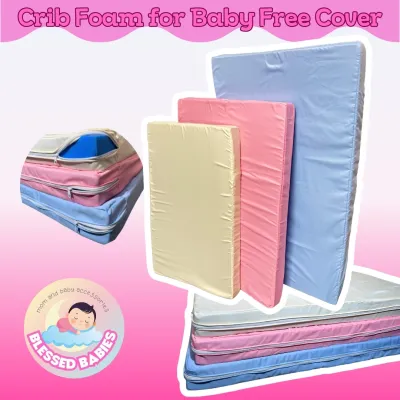
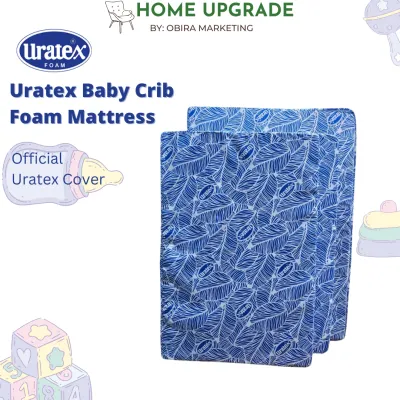
![Uratex Baby Crib and Playpen Foam Special Cut [Customized for Crib and Playpen] Made to Order (22x36 22x39 31x51 32x40 24x32 26x38 24x47 etc.)](https://img.lazcdn.com/g/p/9a192a4e0d06330d0d9d484d7aba2738.png_400x400q80.png_.webp)
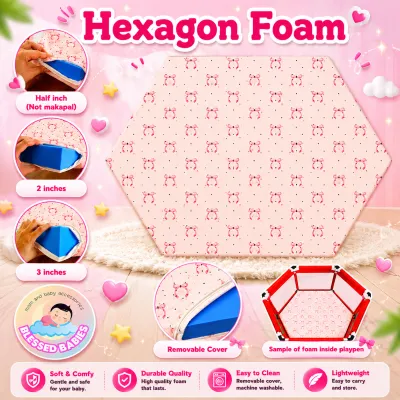
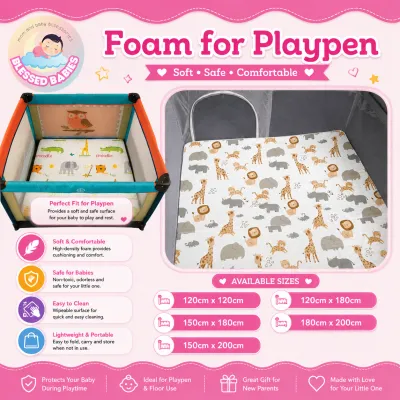
![Uratex Baby Playpen Foam Big Sizes [Customized for Infant Playpen] ( 120x120 60x120 120x180 150x180 130x130 180x200cm etc.) Made to Order](https://img.lazcdn.com/g/p/4e7f185954746914159b3fa0ced0968c.png_400x400q80.png_.webp)
Prices are valid at publication and may change. Please refer to the product page for the latest price.
Latex foam is often sought after by parents looking for natural materials, as it is derived from the sap of rubber trees. It is naturally resilient, highly breathable, and offers excellent firm support, which is beneficial in warm, humid environments. However, you must exercise caution and read the product specifications carefully, as many commercial latex mattresses are synthetic blends rather than pure natural latex. Additionally, because latex can trigger allergic reactions in sensitive individuals, you should check for allergy warnings and verify that the product has specific infant safety ratings on the packaging before introducing it to your baby’s play area.
How to Verify Safety Certifications and Material Labels
When browsing online marketplaces or local baby boutiques, you will encounter many products labeled with vague terms like ‘eco-friendly,’ ‘natural,’ or ‘non-toxic.’ These marketing claims are often unverified and do not guarantee safety. To verify the safety of the playpen foam, you must look for recognized third-party certifications on the product packaging or law label. Certifications such as CertiPUR-US or OEKO-TEX Standard 100 indicate that the foam has been independently tested for low chemical emissions and off-gassing. These labels provide objective verification that the mattress has been tested to meet low VOC emission standards.

Flame retardants are historically common in foam products to meet fire safety regulations, but some older chemical retardants have been linked to health concerns. When choosing a playpen mattress, check the physical law label attached to the product. This label details the materials used and indicates whether the mattress meets local fire safety standards without the addition of chemical flame retardants. Many modern manufacturers achieve fire compliance using physical barriers, such as inherently flame-resistant fabric covers, rather than treating the foam with chemical additives.
Infants explore their environment by touching and mouthing surfaces, making it essential that their playpen mattress is free from heavy metals like lead, mercury, and harmful plasticizers like phthalates. Do not take a brand’s safety claims at face value. Instead, read the material safety data sheets, product tags, or manufacturer website for explicit ‘free-from’ claims that reference recognized testing standards. Verifying these details helps ensure that the foam and its protective cover do not contain substances that could leach out during daily use or play.
Essential Design and Fit Features for Playpen Safety
A firm sleeping and playing surface is a critical factor in supporting infant airway safety. Unlike adult mattresses, which prioritize plush comfort, an infant mattress must feel exceptionally firm to the touch. You can perform a simple hand-press test to evaluate this: press your hand firmly into the center of the mattress and release it. The foam should spring back immediately to its original shape without leaving any temporary handprint or indentation. If the mattress feels soft or takes more than a second to recover, it does not provide the necessary support for an infant.
A safe foam mattress must fit snugly inside the playpen with absolutely no gaps along the sides. Gaps between the mattress edge and the playpen’s mesh or fabric walls create a dangerous entrapment hazard where a baby’s head or body could become wedged. To check the fit, use the standard two-finger gap test: if you can fit more than two fingers between the edge of the mattress and the side of the playpen, the mattress is too small and should not be used. Always measure the interior dimensions of your playpen and compare them directly with the mattress specifications before purchasing.
In the tropical climate of the Philippines, high humidity and warm temperatures can cause babies to sweat during play or sleep. This moisture, combined with accidental spills or diaper leaks, can easily seep into the foam, creating a breeding ground for mold, mildew, and bacteria. To prevent this, choose a mattress with a waterproof or water-resistant cover that is also breathable enough to allow heat to dissipate. Ensure the cover features secure, hidden zippers that are completely out of your baby’s reach to prevent scratching, pinching, or choking hazards.
Inspecting and Maintaining Your Foam Mattress
When you first unbox a new foam mattress, it may emit a distinct chemical odor, commonly referred to as off-gassing. While certified low-VOC foams have minimal emissions, it is still best practice to air out the mattress in a well-ventilated room or a shaded outdoor area before use. Check the manufacturer’s instructions for the recommended waiting period, which typically ranges from 24 to 72 hours, to allow the foam to fully expand and any residual odors to dissipate completely.
Maintaining hygiene is crucial for your baby’s health, especially in humid environments where mold grows rapidly. Clean the mattress cover regularly according to the manufacturer’s instructions, usually by machine washing on a gentle cycle. Never soak the inner foam core in water, as foam acts like a sponge and is extremely difficult to dry completely. Trapped moisture inside the foam will lead to internal mold growth. Instead, spot-clean the foam with a damp cloth and a mild, baby-safe detergent, and allow it to air dry completely in a well-ventilated space before putting the cover back on.
Foam mattresses do not last indefinitely, and their structural integrity will degrade over time with regular use. Inspect the playpen mattress weekly for visible signs of wear. If you notice permanent indentations, sagging in the center, physical tearing of the foam, or a noticeable loss of firmness, it is time to replace the mattress. Using a degraded foam mattress can compromise support and safety, as it no longer provides the flat, firm surface required to keep their airways clear.
Frequently Asked Questions (FAQ)
Is memory foam safe for infants in a playpen?
Generally, standard memory foam is not safe for infants due to its soft, contouring nature, which poses a high risk of suffocation if the baby rolls over. You must check the manufacturer’s explicit age, weight, and developmental stage guidelines before using any memory foam product. For infants, a firm, non-conforming surface is always recommended. If you are unsure about the firmness or safety of a specific mattress, stop use immediately and consult a qualified pediatrician or pediatric safety specialist.
How thick should a playpen foam mattress be?
A playpen mattress should generally be thin—often between 1 to 2 inches thick—to prevent safety hazards. A mattress that is too thick can raise the baby too high, reducing the effective height of the playpen walls and increasing the risk of the baby climbing or falling out. Additionally, thick mattresses can create deeper entrapment gaps along the flexible mesh sides of a play yard. Always follow the playpen manufacturer’s maximum thickness specifications strictly to ensure the mattress remains safe within the structural design of your specific playpen model.
Community discussion
Share your experience or ask a question. Comments are reviewed before publication.