
Watching your baby grow and explore their surroundings is one of the most exciting parts of early parenthood. As your little one becomes more active, you might find yourself looking at colorful baby gear designed to keep them entertained and moving. A baby jumper is a favorite choice for many Filipino households, offering a vibrant space filled with toys, lights, and a spring-loaded seat that lets your baby bounce safely in place. However, introducing this gear too early can pose safety risks and strain your baby’s developing body.
Determining the right time to introduce a jumper is not just about reaching a specific age on the calendar. While many manufacturers suggest a starting point around four to six months of age, your baby’s physical development is the only true guide. Before placing your little one in a bouncing seat, you must evaluate their muscle strength, coordination, and size against the specific requirements of your product. This guide will help you assess your baby’s readiness, configure the equipment safely for your home, and recognize the signs that indicate it is best to wait a little longer.
Key Developmental Milestones to Check First
Before your baby can safely enjoy the bouncing motion of a jumper, their skeletal structure and muscles must be strong enough to handle the impact. The most critical milestone to verify is complete head and neck control. Your baby must be able to hold their head upright steadily without any support, even when their body experiences sudden movements or shifts. Because bouncing creates continuous vertical motion, a baby without sufficient neck strength risks hyperextension or sudden head drops, which can compromise their airway.
Products mentioned in this guide
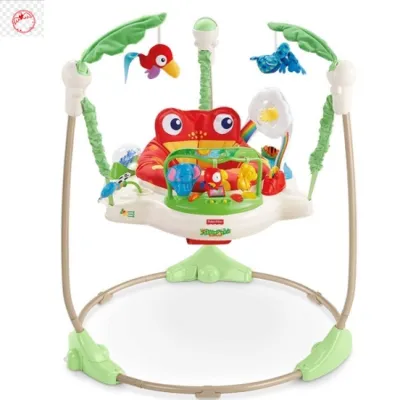
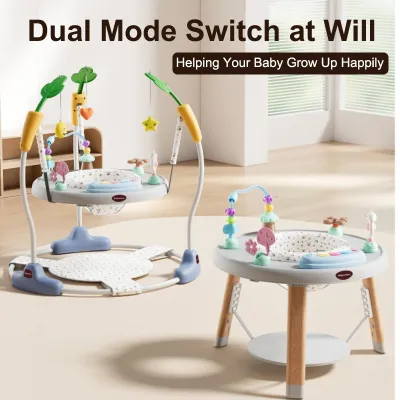
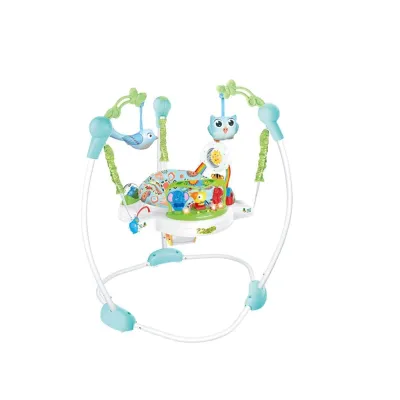


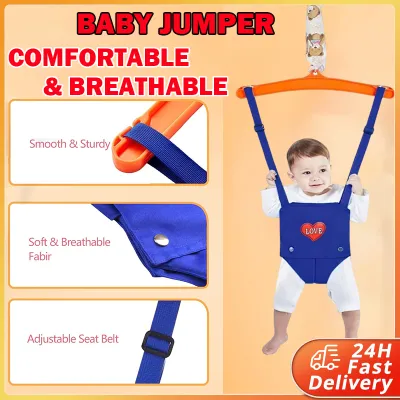
Prices are valid at publication and may change. Please refer to the product page for the latest price.
In addition to neck control, you must evaluate your baby’s trunk stability. Observe how your baby sits when supported by your hands or a nursing pillow. They should be able to hold their torso upright and resist slumping forward or to the side. While the jumper’s seat provides a fabric barrier, it does not replace the core strength required to maintain an upright posture during active play. If your baby’s lower back and abdominal muscles cannot support their weight, the bouncing motion will place undue stress on their spine.
Finally, look for signs of leg readiness. When you hold your baby upright under their arms with their feet touching a firm surface, they should naturally attempt to bear weight on their legs. You want to see them pushing down against your hands or the floor rather than letting their legs fold or dangle limply. This natural weight-bearing reflex indicates that their hips, knees, and ankles are beginning to prepare for upright activities, making them physically ready to interact with the jumper’s footplate or the floor.
Verifying Physical Size and Weight Limits
Every baby jumper comes with specific physical boundaries designed by the manufacturer to prevent structural failure or tipping. Before assembling or using the gear, locate the product label or instruction manual to verify the minimum and maximum weight limits. Never assume a product is safe based solely on your baby’s age. A baby who is exceptionally light may not have the mass required to safely compress the springs, while a baby who exceeds the maximum weight limit risks bottoming out or damaging the frame.

Proper height adjustment is equally vital for protecting your baby’s joints. When you place your baby in the seat, adjust the height settings so that their feet touch the floor flatly. This positioning allows them to push off using their entire foot, distributing the impact evenly across their legs and hips. If the seat is adjusted too high, your baby will be forced to push off on their tiptoes, which can strain their calf muscles and Achilles tendons over time. Conversely, if the seat is too low, their knees will bend excessively, leading to poor posture and joint strain.
Take a close look at how your baby’s legs fit through the seat openings. Their thighs should have plenty of clearance, and their legs should not be forced into an unnatural or cramped angle. If you notice the fabric pinching their skin or if their legs are squeezed tightly against the plastic frame, stop using the device. In the warm and humid climate of the Philippines, tight leg openings can also trap sweat and cause painful chafing or heat rashes, making a proper, comfortable fit even more critical for your baby’s daily comfort.
Setting Up a Safe Environment and Usage Rules
Creating a secure physical space for the jumper is essential to prevent accidents in your home. Always place the equipment on a completely flat, level surface. In many Filipino homes, tiled or polished wood floors are common; ensure the rubber grips on the base of the jumper are clean and making full contact with the floor to prevent sliding. Keep the setup far away from potential hazards such as stairs, steps between rooms, swimming pools, balcony doors, household heaters, and dangling electrical cords from appliances like wall fans or chargers.
Direct and constant adult supervision is non-negotiable whenever your baby is in the jumper. Even though the device is stationary, a baby’s movements can be unpredictable. Never leave the room or turn your back to attend to household chores while your baby is bouncing. It is easy to view baby gear as a temporary babysitter, but your active presence ensures you can react immediately if your baby becomes fatigued, slips in the seat, or experiences any discomfort.
Knowing when to retire the jumper is just as important as knowing when to start. You must stop using the product immediately if your baby reaches the manufacturer’s maximum height or weight limit, or if they show signs of being able to climb out of the seat. Additionally, if your baby figures out how to walk or slide the entire device across the floor, it is time to pack it away. At this stage, their physical capabilities have outgrown the stationary design, and continued use poses a serious risk of tipping or collision.
Red Flags: When to Wait and Try Again Later
Even if your baby has reached the recommended age range, their body might tell you they are not quite ready for a jumper. One of the most prominent red flags is head flopping. If you place your baby in the seat and notice their head tilting forward toward their chest or rolling to the side, remove them immediately. This lack of control can restrict their airway and indicates that their neck muscles are not yet strong enough to support the weight of their head during movement.
Another clear warning sign is poor posture within the seat. If your baby slumps down, slides to one side, or looks like they are hanging from the crotch strap rather than sitting upright, their core strength is insufficient. A baby who cannot maintain a centered, upright position will experience discomfort and unnecessary pressure on their hips and spine. If you observe this slumping, it is best to wait a few weeks and focus on floor play and tummy time to help them build their core muscles.
Pay close attention to your baby’s behavioral cues and emotional responses. If they become fussy, start crying, or show a complete lack of interest in the toys and bouncing motion, do not force them to stay in the seat. Bouncing should be an enjoyable, stimulating activity. A negative reaction often means they feel insecure, tired, or overwhelmed by the upright position. Respect their cues, store the jumper out of sight, and try introducing it again when they are more physically mature and curious.
Frequently Asked Questions (FAQ)
Can using a jumperoo delay walking or affect hip development?
Using a baby jumper in moderation is generally fine, but excessive use can impact physical development. To prevent overexertion and muscle fatigue, limit your baby’s continuous sessions to short intervals, such as 10 to 15 minutes at a time, and no more than twice a day. Ensure the seat is adjusted correctly so their hips are supported without forcing their legs too far apart or keeping them on their tiptoes. Spending too much time in a jumper can limit the floor play, crawling, and pulling-up practice that are essential for natural walking development. If you have concerns about your baby’s hip alignment or motor milestones, consult a pediatrician or physical therapist.
How is a jumperoo different from a traditional baby walker?
The primary difference lies in mobility and safety. A traditional baby walker has wheels on the base, allowing a baby to roll across the room and access dangerous areas like stairs, kitchens, or electrical outlets. Because of these mobility hazards, many pediatric organizations advise against using wheeled walkers. In contrast, a jumper is a stationary activity center. It does not have wheels, meaning your baby remains in one secure spot while bouncing and playing. While a jumper is significantly safer regarding mobility risks, it still requires active adult supervision and proper physical readiness to ensure your baby’s safety.
Community discussion
Share your experience or ask a question. Comments are reviewed before publication.