
Caring for a congested or fussy infant can be stressful for parents, especially during seasonal transitions or rainy months when sudden temperature shifts occur. When looking for ways to soothe a restless baby, many caregivers instinctively reach for familiar household brands. However, if you are wondering whether Vicks Baby Balm is safe for newborns, the direct answer is no. Standard baby balms, including non-medicated aromatic rubs, are not formulated or approved for newborns under three months of age. A newborn’s skin is exceptionally thin, highly permeable, and their respiratory pathways are still developing, making them highly sensitive to topical ingredients and strong scents. Before introducing any soothing rub to your baby’s routine, it is vital to understand the strict age limits, read packaging labels with precision, and learn how to apply these products safely to avoid adverse reactions.
In tropical regions like the Philippines, where high humidity and heat can already challenge an infant’s delicate skin barrier, applying heavy topical products requires extra caution. Thick balms can trap sweat and heat, potentially leading to skin irritation or heat rash if used incorrectly. Understanding the distinction between general soothing products and medicated treatments is the first step in keeping your little one safe and comfortable.
Distinguishing Between Vicks Baby Formulations and Medicated Rubs
It is easy for tired parents to confuse different products on the pharmacy shelf, but using an adult or standard medicated rub on an infant can lead to severe health complications. To protect your baby, you must be able to distinguish clearly between non-medicated baby balms and traditional medicated vapor rubs. The packaging for these products can look remarkably similar, often sharing the same signature blue jars and branding, but their chemical compositions are entirely different.
Products mentioned in this guide
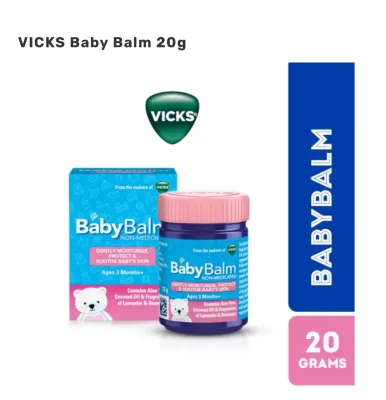
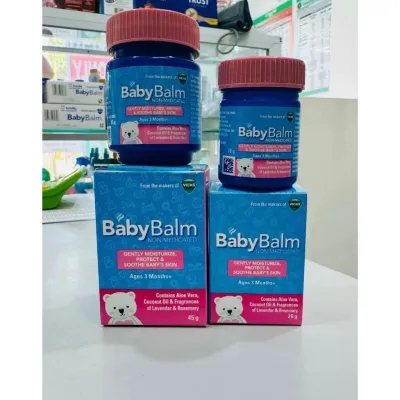
Prices are valid at publication and may change. Please refer to the product page for the latest price.
Traditional medicated rubs are formulated for adults and older children. They contain active ingredients such as camphor, menthol, and eucalyptus oil. These ingredients act as cough suppressants and topical analgesics by stimulating sensory receptors in the nasal passages and skin. While this provides a cooling sensation that helps adults feel as though they are breathing easier, these exact substances are highly toxic to infants. Camphor and menthol can cause severe respiratory distress, increased mucus production, and even chemical burns on the delicate skin of a newborn or young infant. If accidentally ingested or absorbed in high quantities through thin infant skin, camphor can be life-threatening.
In contrast, specially formulated baby balms are entirely non-medicated. Instead of harsh active chemicals, they typically rely on a base of petrolatum, coconut oil, or aloe vera, combined with mild, diluted aromatic oils like lavender, rosemary, and low concentrations of eucalyptus. These ingredients are selected to provide a gentle, calming scent to help soothe a restless baby rather than to treat medical symptoms or clear blocked airways.
To ensure you are purchasing the correct product, always use a strict visual and textual checklist before buying from any local pharmacy or online marketplace:
- Look for the word "Baby" prominently displayed on the front label, often accompanied by pastel colors or illustrations of infants.
- Check the active ingredients list on the back of the packaging; it must not contain camphor or menthol.
- Verify that the label explicitly states "non-medicated" or "soothing ointment."
- Avoid any jar that lists "cough suppressant" or "nasal decongestant" as its primary purpose, as these are indicators of medicated adult formulas.
Verifying Age Guidelines and Safety Warnings on the Product Label
Once you have confirmed that you have a non-medicated baby balm, the next crucial step is to verify the manufacturer’s specific age guidelines. Even though these products are formulated to be much gentler than adult versions, they are still not intended for newborns. Most reputable baby balms carry a strict warning stating they are only suitable for babies aged three months and older.

A newborn’s skin barrier is not fully matured until several months after birth. During the first twelve weeks of life, an infant’s skin absorbs topical substances much more rapidly than older babies or adults. This high absorption rate increases the risk of systemic exposure to the essential oils and fragrance compounds present in the balm. Furthermore, a newborn’s nasal passages are incredibly narrow. Strong aromatic scents, even those derived from natural plants like lavender or rosemary, can overwhelm their sensory systems and trigger airway irritation or bronchospasms. Always locate the minimum age requirement printed on the outer box or the back of the jar before application. If your baby is under three months old, do not use the product under any circumstances without direct guidance from your pediatrician.
In addition to age restrictions, you must carefully read the standard warning statements printed on the product insert or label. Manufacturers explicitly warn against applying the balm to broken, irritated, or sensitive skin. If your baby is dealing with eczema, diaper rash, or minor scratches, applying a fragranced balm can cause intense stinging and worsen the inflammation.
Before applying the balm for the first time, it is highly recommended to perform a patch test to check for potential allergic reactions or skin sensitivities:
- Apply a tiny, pea-sized amount of the balm to a small, clear patch of skin on your baby's leg or arm.
- Monitor the area closely for twenty-four hours.
- Look for any signs of redness, tiny bumps, swelling, or dry patches.
- If the skin remains clear, you can proceed with normal application according to the age guidelines; if any reaction occurs, wash the area immediately and discontinue use.
Safe Application Methods and Restricted Body Areas
When your baby reaches the appropriate age of three months or older, applying the balm correctly is essential to maximize comfort and minimize safety risks. A common mistake is applying too much product or placing it too close to the baby’s airways. Because these balms are aromatic, a very small amount goes a long way. Use no more than a pea-sized portion for a single application, gently warming it between your own fingertips before touching your baby’s skin.
There are strict physical boundaries on an infant’s body where baby balm must never be applied. Never apply the balm directly to the baby’s face, under or around the nose, near the eyes, or on the mouth. Placing aromatic ointments near the nose or mouth allows the baby to inhale concentrated vapors directly, which can severely irritate their delicate respiratory tract and lead to breathing difficulties. Additionally, avoid applying the balm to your baby’s hands or fingers. Infants frequently rub their eyes and put their hands in their mouths; if they have balm on their fingers, they can easily transfer the product to their eyes, causing painful irritation, or ingest it accidentally.
The safest and most effective areas for application are the chest and the upper back. Gently massage the small amount of balm onto these areas, allowing the natural warmth of your baby’s body to release the mild, soothing scents of lavender or rosemary. Ensure that the baby is dressed in comfortable, breathable clothing, such as a light cotton onesie, which is especially important in warm, tropical climates like the Philippines to prevent overheating and sweat retention.
Continuous caregiver supervision is necessary after applying any topical product. Keep a close eye on your baby to ensure they do not rub their chest and then touch their face. Finally, always wash your hands thoroughly with soap and water immediately after applying the balm. This simple step prevents you from accidentally transferring the ointment to your own eyes, your baby’s face, or feeding bottles and toys during subsequent caregiving tasks.
Recognizing Adverse Reactions and When to Consult a Pediatrician
Even when you follow all age guidelines and application instructions perfectly, there is always a possibility that your baby may experience an adverse reaction. As a caregiver, you must remain vigilant and know how to recognize the early signs of skin irritation or respiratory distress.
Skin reactions are typically the easiest to spot. If your baby develops localized redness, a raised rash, hives, swelling, or dry, flaky patches at the application site, their skin is likely reacting negatively to one of the ingredients. If you notice any of these signs, or if your baby begins to scratch the area or show signs of discomfort when the skin is touched, you must act quickly. Gently wipe the balm off the skin using a soft, clean cloth dampened with warm water and a mild, fragrance-free baby soap. Avoid scrubbing, as this can further irritate the compromised skin barrier.
More serious reactions involve the respiratory system or sudden behavioral shifts. Because infants have highly sensitive airways, inhaling aromatic compounds can occasionally trigger a reflexive narrowing of the breathing passages. Watch for physical signs of respiratory distress, which include:
- Rapid, shallow breathing or a sudden change in their breathing rhythm.
- Flaring of the nostrils as they inhale.
- Visible pulling in of the skin around the ribs or collarbone (retractions) during breathing.
- Grunting sounds or wheezing.
- Unusual fussiness, persistent crying, or extreme lethargy that is out of character for your baby.
If you observe any of these respiratory changes or behavioral shifts, remove the balm immediately and seek emergency medical care. Do not wait to see if the symptoms improve on their own. Always consult your pediatrician if you are unsure about a skin rash or if your baby’s cold symptoms, such as a persistent cough or fever, continue to worsen despite using soothing home care measures.
Frequently Asked Questions (FAQ)
Can I use Vicks baby balm on my baby's chest if they have a cold?
You can use a non-medicated baby balm on your baby’s chest to help soothe and comfort them, provided they are at least three months old. However, it is crucial to understand that these balms are not medical treatments and will not cure a cold, reduce a fever, or clear nasal congestion. They are designed solely to provide a calming sensory experience through gentle massage and mild aromas. If your baby is showing signs of illness, such as a persistent cough, runny nose, fever, or difficulty feeding, you should always consult your pediatrician before applying any topical products. A healthcare professional can provide an accurate diagnosis and recommend safe, clinically proven treatments to help your baby recover comfortably.
Is it safe to put Vicks baby balm in a humidifier or diffuser?
No, you should never put Vicks Baby Balm, or any other topical ointment, into a humidifier, vaporizer, or diffuser. These products are formulated strictly for external, topical application on the skin. Humidifiers and diffusers are designed to aerosolize water or specific, highly diluted water-soluble liquids. Attempting to heat or vaporize a thick, petrolatum-based balm can damage your device and, more importantly, create heavy, concentrated airborne particles. Inhaling these vaporized lipid particles can cause severe irritation to an infant’s sensitive lungs and may lead to serious respiratory conditions, such as lipoid pneumonia. To keep your baby’s room humidified safely, use a clean, cool-mist humidifier filled only with clean water, strictly following the manufacturer’s instructions.
Community discussion
Share your experience or ask a question. Comments are reviewed before publication.