
To determine the exact materials used in Lily and Tucker baby mattresses and bedding sets, parents must look at the physical law labels, sewn-in tags, and official product documentation. While infant bedding typically utilizes materials like cotton, polyester, or polyurethane foam to balance comfort and support, the specific composition varies by product model. Verifying these components and their safety certifications is essential to ensure a safe, supportive, and breathable sleep environment for your baby in a tropical climate.
Because manufacturers frequently update their product lines, relying on general brand assumptions is not enough. Taking a systematic approach to verifying what goes into your child’s crib will help you make an informed decision based on physical evidence and verified safety standards.
Identifying Materials in Lily and Tucker Mattresses and Bedding
Every piece of infant bedding sold by reputable brands is required to carry specific labeling that details its construction. To find the exact material breakdown of a Lily and Tucker mattress or bedding accessory, start by locating the physical law label. These labels are typically sewn into the bottom seams of mattresses or the inner hems of sheets and bumper guards. By law, they must list the exact percentages of the filling materials and the outer fabric cover, separating the shell composition from the inner core.
Products mentioned in this guide
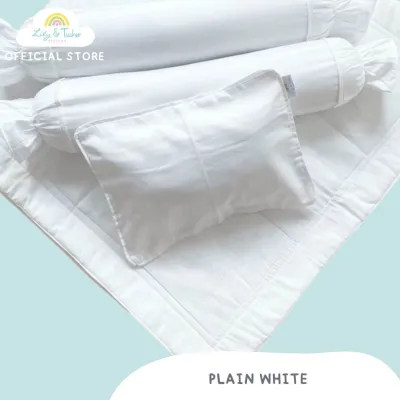
Prices are valid at publication and may change. Please refer to the product page for the latest price.
If you are shopping online or no longer have the physical tags, you can navigate official brand websites or authorized retailer listings. Look for the “specifications” or “materials” tab on the product page. Reliable listings will break down the components of each layer, such as whether the mattress core uses high-density polyurethane foam, polyester fiber coils, or a coconut coir blend, and whether the outer cover is made of cotton knit, bamboo-derived fabric, or a polyester blend.
Understanding common material terminology is crucial when evaluating these specifications. For instance, “polyurethane foam” is a common cushioning material that provides structured support, but its density determines its firmness. “Polyester fiberfill” is lightweight and highly resilient, often used in comforters and pillows, while “cotton” is highly prized for its natural softness. In warm, humid climates like the Philippines, knowing these terms helps you anticipate how a fabric will feel against your baby’s skin and how well it will hold up to daily use.
Key Safety Certifications to Verify in Baby Bedding
When choosing bedding for an infant, material safety goes beyond physical comfort. Babies spend up to 16 hours a day on their sleep surfaces, making them highly sensitive to chemical emissions and synthetic additives. To protect your child, you should look for widely recognized, independent third-party safety certifications on the product packaging or manufacturer website.

For foam-based mattresses, look for the CertiPUR-US certification, which guarantees the foam is made without ozone depleters, heavy metals, or harmful flame retardants, and has low volatile organic compound (VOC) emissions. For fabric covers and bedding sets, the OEKO-TEX Standard 100 certification is the global benchmark, ensuring that every thread, button, and accessory has been tested for harmful levels of toxic substances. Another valuable standard is Greenguard Gold, which tests the entire finished product for thousands of chemical emissions to ensure it does not compromise indoor air quality.
Never rely solely on a logo printed on a box or a claim made in a product description. You can easily check the validity of these safety claims by visiting the official database of the certification body, such as the OEKO-TEX or CertiPUR-US online registries. Enter the unique license or certificate number provided on the product’s tag or packaging to confirm that the certification is active, valid, and actually registered to the manufacturer or its suppliers.
It is also important to distinguish between unverified marketing terms and verified, third-party tested safety standards. Terms like “hypoallergenic,” “organic,” “natural,” or “eco-friendly” are often used loosely by marketing departments and are not legally binding or standardized. A truly safe product will back up these claims with a verifiable certificate number from an independent testing authority, giving you peace of mind that the materials are genuinely safe for infant use.
Evaluating Material Suitability for Infant Sleep Safety
Once you have identified the materials and verified their certifications, you must evaluate how those materials perform in a real-world sleep environment. The most critical factor in infant sleep safety is surface firmness. Pediatric guidelines emphasize that babies must sleep on a firm surface to reduce the risk of suffocation. You can verify mattress firmness by performing a simple physical press test: press your hand firmly into the center and edges of the mattress. When you release your hand, the surface should snap back immediately without leaving an indentation or conforming to the shape of your hand.
Next, evaluate the physical fit of the mattress and bedding within your specific crib frame. There should be no gaps wider than two fingers between the edge of the mattress and the crib rails. A mattress that is too small creates dangerous gaps where a baby’s limbs or head could become trapped. Similarly, fitted sheets must wrap tightly around the mattress corners without bunching or slipping, as loose fabric poses a serious entanglement and suffocation hazard.
In tropical environments, thermal regulation and breathability are vital for preventing overheating, which is a known risk factor for Sudden Infant Death Syndrome (SIDS). Evaluate the breathability of the bedding materials based on their physical structure rather than marketing claims. Hold the mattress cover or sheet up to the light to check the tightness of the weave; open, porous weaves and breathable mesh panels allow air to circulate much more freely than dense, tightly woven synthetic fabrics. Natural fibers like cotton are generally more effective at absorbing moisture and allowing the skin to breathe in humid weather.
Confirming Care Instructions and Maintenance Requirements
Keeping baby bedding clean is essential for preventing the buildup of allergens, mold, and bacteria. Before purchasing or washing any bedding set, read the manufacturer’s care labels carefully. These labels provide specific instructions on washing temperatures, detergent restrictions, and drying methods. For example, some mattress covers can be machine-washed on a gentle cycle, while others must be spot-cleaned only to avoid damaging the internal waterproof lining.
In humid climates, proper drying is critical. If bedding is not dried thoroughly, residual moisture can quickly lead to mold and mildew growth inside the mattress core or fabric layers. Always follow the recommended drying instructions, whether that involves low-heat tumble drying or air-drying in a well-ventilated area. Avoid using harsh chemical bleaches or fabric softeners, as these can degrade the flame-resistant properties of the materials and irritate your baby’s sensitive skin.
Regularly inspect the bedding for signs of material degradation. Over time, frequent washing can cause pilling, tearing, thinning of the fabric, or the cracking of waterproof backings. If you notice any loose threads, exposed foam, or a loss of structural integrity, it is time to replace the item. If you ever find that the care instructions on a product are missing, unreadable, or conflicting, stop using the product immediately and contact the manufacturer’s customer service for clarification to ensure you do not accidentally compromise the safety of the sleep surface.
Frequently Asked Questions (FAQ)
How can I confirm if a Lily and Tucker mattress is waterproof?
To confirm if a specific Lily and Tucker mattress has waterproof features, start by checking the product packaging, user manual, or the official specifications on the authorized retailer’s page. Do not rely on assumptions; look for explicit mentions of a waterproof barrier, polyurethane laminate (PUL) backing, or a water-resistant coating. You can also physically inspect the mattress cover by zipped opening to look for a shiny, rubberized, or laminated inner lining, and check if the seams are sealed or heat-welded to prevent liquid penetration.
What should I do if the material or care tag is missing?
If your bedding or mattress is missing its physical material and care tags, do not guess the washing instructions or material composition. Contact Lily and Tucker customer support directly, providing them with the product’s model number, batch number, or your original purchase receipt. You can also check the authorized online marketplace or retailer where you purchased the item, as they often host digital copies of the product manual, material specifications, and care guides on the product listing page.
Community discussion
Share your experience or ask a question. Comments are reviewed before publication.