
Finding a comfortable sleeping position becomes a primary challenge as your pregnancy progresses. The ideal pregnancy pillow shape depends on your sleeping style, how far along you are in your pregnancy, and the size of your bed. While some expectant mothers require full-body support to prevent tossing and turning, others only need targeted cushioning to relieve pressure on the lower back or belly. Selecting the right shape can significantly improve your sleep quality and help you maintain comfortable side-sleeping positions throughout your second and third trimesters.
During pregnancy, especially from the second trimester onward, healthcare professionals generally recommend sleeping on your side rather than your back or stomach. Side sleeping, particularly on the left side, helps optimize blood flow and nutrient delivery to the placenta while keeping the weight of the growing uterus off major blood vessels. However, maintaining this position for hours can strain your hips, pelvis, and lower back. Specialized maternity pillows are designed to support these specific pressure points, helping you stay comfortably aligned on your side without constantly waking up to readjust.
When choosing between a U-shaped, C-shaped, or wedge pillow, you must balance your physical support needs with practical household factors. A massive pillow might offer excellent comfort but can crowd a smaller bed, leaving little room for your partner. Additionally, in tropical climates like the Philippines, where nighttime humidity can be high, the size and material of the pillow play a major role in heat retention. Evaluating these factors before making a purchase ensures you select a shape that fits both your body and your sleeping environment.
Products mentioned in this guide
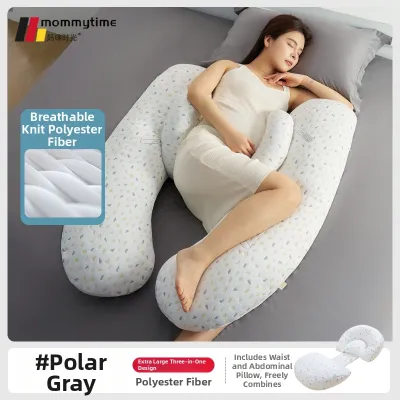

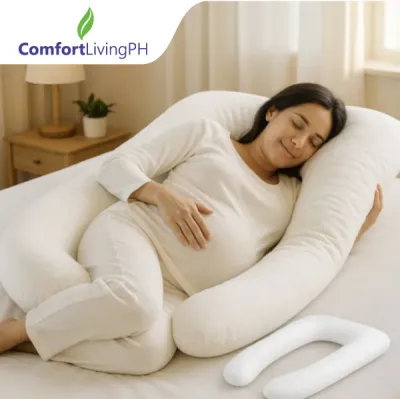
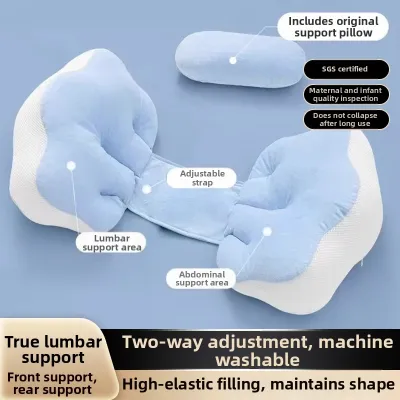
Prices are valid at publication and may change. Please refer to the product page for the latest price.
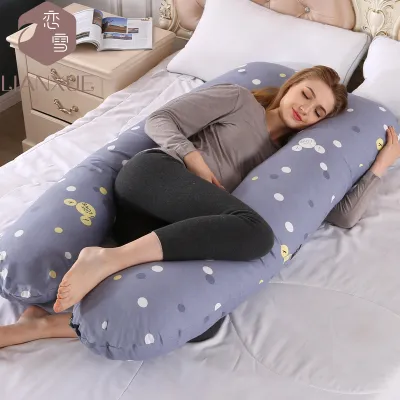
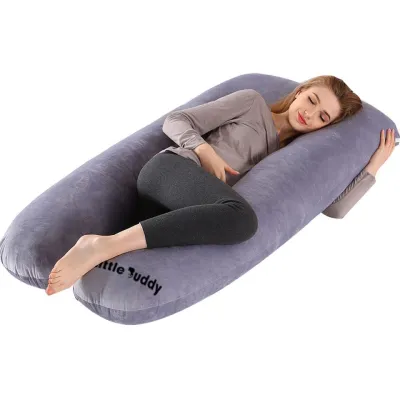
U-Shaped Pregnancy Pillows: Full-Body Enclosure
U-shaped pregnancy pillows offer symmetrical, front-to-back support that cradles your entire body. This design features two long parallel arms connected at the top, allowing you to rest your head on the curved arch while tucking one arm between your knees and resting your back against the other. Because the support is identical on both sides, this shape is highly beneficial for sleepers who frequently turn from left to right during the night. You can simply rotate within the center of the pillow without having to drag or reposition a heavy cushion with you.
This complete enclosure provides simultaneous support to your head, neck, belly, back, and knees. By placing one side of the pillow between your knees, you help keep your hips and spine aligned, which can alleviate pelvic girdle pain and lower back strain. The back support arm acts as a gentle physical barrier, preventing you from accidentally rolling onto your back in your sleep. For individuals experiencing multi-zone discomfort, this comprehensive support can make a noticeable difference in daily rest.
However, the extensive coverage of a U-shaped pillow comes with a substantial physical footprint. These pillows are exceptionally large and require a significant amount of bed space. If you sleep on a standard double or queen-sized mattress, a U-shaped pillow may take up more than half of the sleeping surface, potentially crowding your partner. It is highly recommended to measure your mattress dimensions and compare them with the product specifications before purchasing to ensure your bed can accommodate its bulk.
Another consideration for tropical living is heat retention. The wrap-around design of a U-shaped pillow naturally traps body heat, which can lead to sleeping hot during warm, humid nights. To mitigate this, look for options that feature breathable outer covers made of natural fibers like cotton or bamboo rayon. Some fills also allow better airflow than dense memory foam, helping you stay cool while enjoying full-body support.
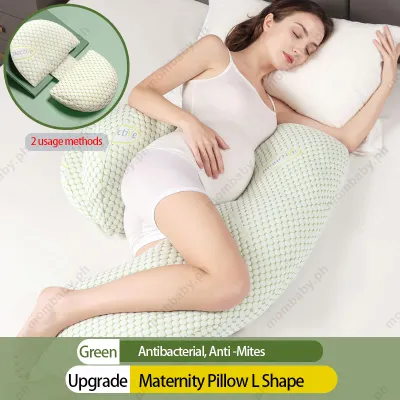
C-Shaped Pregnancy Pillows: Contoured Versatility
C-shaped pregnancy pillows utilize a single, continuous curve designed to hug the natural contours of your body. Unlike the symmetrical U-shape, the C-shape is asymmetrical, featuring a curved top for your head, a long middle section to support either your back or your belly, and a curved bottom that tucks between your thighs. This design provides comprehensive head-to-toe support while utilizing a more streamlined, space-efficient footprint.

This shape is highly versatile because you can position the main curve according to your specific discomfort. If you require firm back support to prevent rolling over, you can place the spine of the “C” behind you. Alternatively, if your primary concern is the weight of your growing belly pulling on your lower back, you can turn the pillow around and nestle your abdomen directly into the center curve. Tucking the lower end between your knees helps open up the pelvic joints, reducing hip pressure.
While the C-shape is more compact than a U-shape, it does have limitations if you tend to toss and turn. Because the support is one-sided, switching from your left side to your right side means you must physically flip the pillow over or accept that your back and belly support zones will be reversed. If you wake up frequently to change positions, this manual adjustment can disrupt your sleep cycle.
For those with limited bed space, the C-shape strikes an excellent balance between full-body cushioning and practical sizing. It fits comfortably on most standard mattresses without completely isolating you from your partner. It is an ideal choice for side sleepers who want integrated head, belly, and knee support without the overwhelming bulk of a double-sided enclosure.
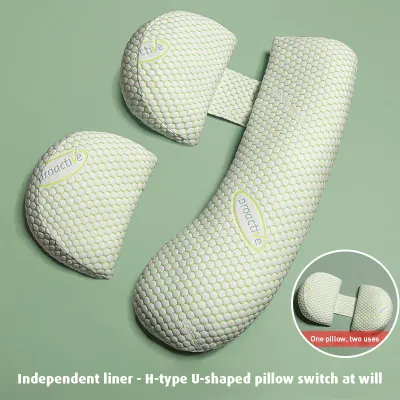
Wedge Pregnancy Pillows: Targeted and Portable Relief
Wedge pregnancy pillows are compact, firm cushions shaped like a triangle or a gentle slope. Instead of attempting to support your entire body, the wedge focuses on providing firm, localized relief to one specific area at a time. This minimalist approach makes it an incredibly practical option for mothers who prefer to keep using their standard, familiar head pillows rather than adapting to a massive maternity cushion.
The versatility of a wedge pillow lies in its multiple configuration options. You can slide the thin edge of the wedge directly under your belly while side-sleeping to gently lift the abdomen and prevent it from pulling on your lower back muscles. Alternatively, you can place it behind your lower back to act as a firm bolster that keeps you from rolling onto your spine. Placing a wedge between your knees is another effective way to align your hips and relieve joint tension without adding bulk to the rest of the bed.
One of the greatest advantages of the wedge pillow is its portability and affordability. Because it is small and lightweight, you can easily pack it into a suitcase for travel, move it to the living room sofa for daytime back support, or store it away when not in use. It is also generally much more affordable than full-body alternatives, making it a budget-friendly entry point for mothers who want to test physical support options without spending a large amount of ₱.
However, the primary limitation of a wedge pillow is its lack of integrated support. It does not provide head, neck, or leg cushioning, meaning you will still need to rely on your existing household pillows to support those areas. If you suffer from widespread aches across multiple joints simultaneously, a wedge alone may not offer enough comprehensive relief to keep you comfortable throughout the night.
Shape Comparison and Decision Matrix
To help you visualize how these three common shapes compare, the table below outlines their primary support zones, space requirements, and suitability for different sleeping styles.
| Pillow Shape | Primary Support Zones | Bed Space Required | Best Sleep Positions |
|---|---|---|---|
| U-Shaped | Head, neck, back, belly, hips, and knees simultaneously | High (requires queen or king bed) | Side sleepers who switch sides frequently |
| C-Shaped | Head, neck, knees, and either back or belly | Medium (fits most double/queen beds) | Side sleepers wanting a contoured hug |
| Wedge | Targeted belly lift, back bolster, or knee alignment | Low (highly compact and portable) | Sleepers who prefer their own head pillow |
Decision Framework
- Choose a U-Shaped Pillow if: You are a side sleeper who frequently tosses and turns, you require simultaneous back and belly support, and you have a spacious mattress (queen-sized or larger) that can accommodate a large footprint.
- Choose a C-Shaped Pillow if: You want full-body support but have limited bed space, you prefer a contoured design that hugs your body, and you do not mind occasionally flipping the pillow when you change sides.
- Choose a Wedge Pillow if: You want targeted support for your belly or back, you prefer to continue using your favorite head pillow, you travel frequently, or you are looking for a highly affordable and compact option.
- Verify first if: You have specific orthopedic concerns or medical conditions. Always consult your obstetrician or physical therapist for personalized advice on sleep positioning and body alignment during pregnancy.
Material and Cover Checks
Regardless of the shape you choose, always verify the product specifications on the manufacturer’s label before purchasing. In warm and humid climates, look for breathable outer fabrics such as 100% cotton, bamboo, or linen to prevent overheating. Ensure the pillow features a removable, machine-washable cover with a durable zipper, as keeping the pillow clean and hygienic is essential throughout your pregnancy and postpartum journey. Additionally, check that the inner filling is hypoallergenic and resilient enough to maintain its shape under pressure.
Frequently Asked Questions (FAQ)
Can I use a regular pillow instead of a maternity pillow?
Yes, you can use standard household pillows to support your body during pregnancy, especially during the early trimesters when physical changes are minimal. Placing a regular pillow between your knees and tucking another behind your back can provide basic alignment. However, standard pillows tend to shift, slide, and flatten easily during the night. Specialized maternity pillows are ergonomically contoured to stay in place and match the specific curves of a pregnant body, offering more reliable, continuous support as your belly grows.
When should I start using a pregnancy pillow?
There is no single correct time to start using a pregnancy pillow, as every pregnancy develops differently. Many women begin using one around the start of the second trimester (between weeks 13 and 16), which is when the abdomen begins to expand and side-sleeping becomes more highly recommended. If you begin experiencing lower back aches, hip pressure, or difficulty finding a comfortable sleeping position, it is a good indicator that you could benefit from additional support. Consult your healthcare provider if you have persistent discomfort or questions about safe sleep positioning.
How do I clean and maintain my pregnancy pillow?
To keep your pregnancy pillow clean and hygienic, always check the manufacturer’s care label for specific washing instructions. Most high-quality maternity pillows come with a removable outer cover that can be machine-washed in cold or warm water. For the inner filling, spot cleaning with a damp cloth and mild detergent is generally recommended, as fully submerging large pillows can damage the fill or lead to clumping. Ensure the pillow and cover are completely dry before reassembling them to prevent the growth of mold or mildew, which can develop quickly in humid environments.
Community discussion
Share your experience or ask a question. Comments are reviewed before publication.