
Quick Answer: Which Pregnancy Pillow Shape Should You Choose?
Finding the right pregnant women pillow is a deeply personal decision that directly impacts your rest and physical well-being. There is no single “best” shape that works for every expectant mother; the ideal choice depends on your mattress size, preferred sleeping positions, and specific physical support needs.
To make an immediate decision, you can match your primary sleep habits to these core use cases:
- Choose a U-shaped pillow if you are a restless sleeper who frequently tosses and turns, as it provides simultaneous front and back support without requiring you to reposition the cushion.
- Choose a C-shaped pillow if you are a dedicated side sleeper who wants full-body contouring from head to toe but needs to preserve horizontal bed space.
- Choose a wedge pillow if you prefer a compact, budget-friendly, and highly portable option that targets only your growing belly or lower back without crowding the bed.
In the Philippines, where tropical heat and high humidity are constant factors, the physical footprint of your bedding also affects how warm you feel at night. Evaluating your sleep environment, room temperature, and bed-sharing arrangements is a crucial first step before purchasing a maternity cushion.
Products mentioned in this guide

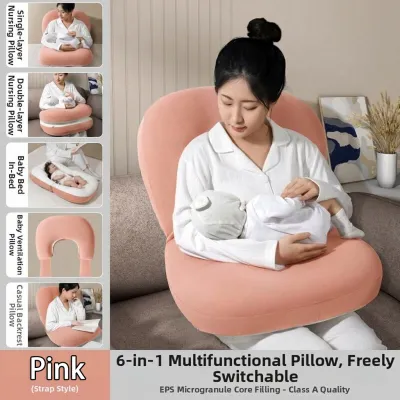

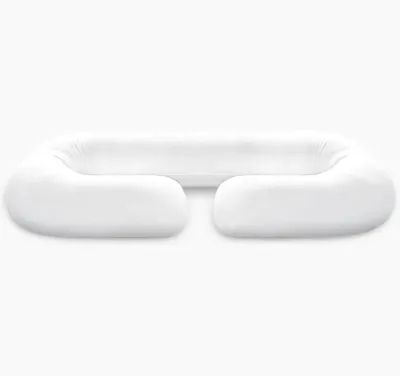

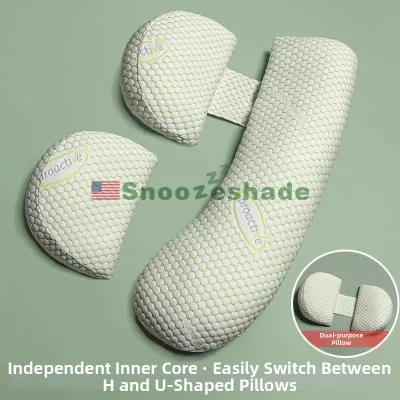

Prices are valid at publication and may change. Please refer to the product page for the latest price.
Design and Support: Choosing the Right Pregnant Women Pillow Shape
During pregnancy, your body undergoes rapid anatomical changes to accommodate your growing baby. The hormone relaxin loosens your ligaments, while your shifting center of gravity places immense strain on your lower back, pelvis, and hips. Standard bed pillows often shift during the night, failing to provide the continuous, structured support required to maintain proper spinal alignment. This is where a dedicated pregnant women pillow becomes essential.

These specialized cushions are engineered to distribute weight evenly, reduce pressure points, and promote safe side-sleeping positions. By understanding how U-shaped, C-shaped, and wedge pillows interact with your body, you can choose a design that directly targets your discomfort and fits your lifestyle.
U-Shaped Pregnancy Pillows
U-shaped pregnancy pillows feature a symmetrical, full-length design that completely wraps around your body. When using this pillow, your head rests at the curved top of the “U,” while the two long legs run down your front and back. This allows you to hug one side of the pillow with your arms and legs while the other side firmly supports your spine, preventing you from rolling onto your back.
The primary benefit of this design is its simultaneous, 360-degree support. If you are a restless sleeper who frequently switches from your left to your right side during the night, you do not need to drag or reposition a bulky pillow. You simply turn within the center of the “U” and instantly find the same level of support on the opposite side. This makes it highly effective for relieving hip strain, lower back pain, and pelvic pressure.
However, this comprehensive support comes with a significant spatial drawback. U-shaped pillows have a massive footprint. In typical Filipino bedrooms where double or queen-sized beds are common, a U-shaped pillow can easily occupy more than half the mattress. This can crowd your partner and restrict airflow, making the bed feel warmer in high-humidity climates.
C-Shaped Pregnancy Pillows
C-shaped pregnancy pillows offer an asymmetrical, contoured design that cradles your body along a single curve. The top of the “C” supports your head and neck, the middle section nestles under your belly or supports your back, and the bottom curve tucks between your knees to keep your pelvis and hips aligned.
The main advantage of the C-shape is its ability to provide full-body support while occupying significantly less horizontal bed space than a U-shaped pillow. It allows you to maintain a close, supportive connection with a single cushion that aligns your entire spine. This makes it a highly practical option for couples sharing a standard double or queen bed, as it leaves ample room for a partner.
The primary limitation of the C-shape is its asymmetry. If you prefer to switch from sleeping on your left side to your right side during the night, you must physically flip the entire pillow to maintain belly support, or turn away from it and lose the front-facing cradle. This manual adjustment can disrupt your sleep cycle, particularly in the later trimesters when moving in bed becomes more physically demanding.
Wedge Pregnancy Pillows
Wedge pregnancy pillows are compact, triangular or crescent-shaped cushions made of firm foam or plush filling. Unlike full-body pillows, wedges are designed for targeted support. You can slide the tapered edge directly under your growing belly to relieve ligament strain, or place it behind your lower back to prevent yourself from rolling onto your spine.
The benefits of a wedge pillow are its high affordability, minimal footprint, and exceptional portability. In the Philippines, where full-sized maternity pillows can represent a significant investment, a high-quality wedge is a highly budget-friendly alternative. It takes up virtually no space in bed, making it perfect for smaller mattresses or warm nights where you want minimal fabric contact. Furthermore, its compact size makes it easy to pack for travel, use in a car, or prop behind your back while sitting on an office chair or sofa.
The obvious trade-off is that a wedge pillow does not provide comprehensive support. It does not cushion your head, neck, knees, or hips simultaneously. If you choose a wedge, you will need to pair it with your existing standard pillows to achieve proper full-body alignment.
Comparing Space, Support, and Sleep Positions
To help you weigh these options objectively, let’s compare how each shape performs across critical decision-making dimensions.
| Pillow Shape | Best Sleep Position | Bed Space Required | Primary Support Areas | Portability | Average Price Band |
|---|---|---|---|---|---|
| U-Shaped | Back-to-side transitions | Large (Queen or King) | Head, neck, back, belly, hips, knees | Low (Bulky and heavy) | Mid to High (₱1,200 – ₱3,500+) |
| C-Shaped | Consistent side sleeping | Moderate (Double or Queen) | Head, neck, belly or back, knees | Moderate (Can be folded) | Mid (₱1,000 – ₱2,500) |
| Wedge | Side sleeping, propped sitting | Minimal (Fits any bed size) | Targeted belly or lower back | High (Travel-friendly) | Low (₱300 – ₱800) |
The Bed Space vs. Support Trade-off
Sharing a bed with a partner heavily influences whether a full-body pillow is practical. Many households in the Philippines use standard double (54″ x 75″) or queen (60″ x 75″) mattresses. Placing a large U-shaped pillow on a double bed can leave your partner with very little room, and the dense filling can trap body heat, leading to uncomfortable night sweats. Choosing a C-shaped pillow or a wedge allows you to maintain personal space and keep the bed cool while still receiving necessary orthopedic support.
Sleep Positions and Spinal Alignment
Medical professionals generally recommend side sleeping, particularly on the left side, during the second and third trimesters. This position optimizes blood flow to the placenta and kidneys while keeping the heavy uterus from compressing the vena cava (the main vein carrying blood back to the heart).
A U-shaped or C-shaped pillow makes side sleeping much more comfortable by keeping your spine straight and preventing your top knee from dropping forward, which twists the pelvis. The wedge pillow achieves a similar goal but requires you to use your regular head and knee pillows to complete the alignment.
Trimester Transitions
Your physical support needs change drastically as your pregnancy progresses. During the first trimester, sleep disruptions are often caused by nausea or fatigue, and a standard pillow setup is usually sufficient. By the second trimester, as the belly expands and ligament pain begins, a C-shaped or U-shaped pillow helps manage the shifting weight. In the third trimester, when physical discomfort peaks, the combination of a full-body pillow and a wedge for extra belly lift is often necessary to achieve restful sleep.
Decision Guide: Matching Your Sleep Habits to the Right Shape
Choosing the right pillow shape requires analyzing your personal lifestyle, sleep patterns, and physical symptoms. Use this structured framework to guide your final decision.
Choose a U-Shaped Pillow If:
- You are a restless sleeper: You change sides multiple times a night and want to avoid dragging a heavy pillow across the bed with you.
- You experience back and hip pain simultaneously: You require firm support behind your spine to prevent rolling backward, along with a thick cushion between your knees to align your hips.
- You have a spacious bed: You sleep on a Queen or King-sized mattress and your partner does not mind a physical barrier in bed.
Choose a C-Shaped Pillow If:
- You are a dedicated side sleeper: You naturally prefer sleeping on one side and do not mind occasionally flipping the pillow if you do switch sides.
- You want full-body support in a smaller bed: You want your head, neck, belly, and knees supported by a single, continuous cushion but need to preserve mattress space.
- You enjoy a cradled sensation: You prefer feeling cocooned and tucked in, which helps reduce anxiety and promotes relaxation.
Choose a Wedge Pillow If:
- You have a highly customized sleep setup: You already own a favorite orthopedic head pillow and knee cushion and only need to relieve the downward pull on your belly.
- You are budget-conscious or minimalist: You want a low-profile solution that does not clutter your bedroom aesthetic or represent a major financial investment.
- You travel or move around frequently: You need a lightweight cushion that you can easily take to the office, use in the car, or pack for weekend trips.
Verify First If:
If you are experiencing severe, sharp pain in your pelvic joint (Pelvic Girdle Pain), debilitating sciatica, or other specific medical conditions, do not rely solely on a commercial pillow. Consult your obstetrician-gynecologist (OB-GYN) or a licensed physical therapist. They can evaluate your condition, recommend targeted exercises, or advise you on specialized orthopedic positioning that a standard consumer pillow cannot replace.
Positioning and Care Tips for Maximum Comfort
To get the most out of your pregnancy pillow, proper alignment is key. When side sleeping with a U-shaped or C-shaped pillow, ensure the head section keeps your neck neutral—not bent too high or sinking too low. Place the lower portion of the pillow between your knees and ankles. This keeps your hips stacked horizontally, preventing the pelvic rotation that causes morning lower back pain. If using a wedge, slide the tapered edge gently under the side of your belly just enough to take the downward pull off your lower back, without lifting your torso off the mattress.
Because the tropical climate in the Philippines causes frequent night sweats—especially during pregnancy when hormonal shifts raise your basal body temperature—hygiene is a top priority. Always check the manufacturer’s care label before washing any part of the pillow. Choose pillows with removable, machine-washable covers made from breathable, natural fibers like organic cotton or bamboo. Regularly washing the cover prevents the buildup of sweat, oils, and allergens, keeping your sleep environment hygienic. If the pillow core itself is not washable, airing it out in a well-ventilated room out of direct sunlight can help keep it fresh.
Remember that a pregnancy pillow is designed for comfort, not medical treatment. Stop using the pillow immediately and consult a healthcare professional if you experience new or worsening pain, numbness in your limbs, restricted breathing, or if the pillow forces your body into an uncomfortable, unnatural alignment. Always prioritize your body’s signals over generic placement guides.
Frequently Asked Questions (FAQ)
When should I start using a pregnancy pillow?
There is no strict medical timeline or set week to start using a pregnancy pillow. Most women begin using one around the start of the second trimester (around 13 to 16 weeks), as this is when the belly begins to noticeably expand and sleeping flat on your back or stomach becomes uncomfortable. However, you should listen to your body. If you experience lower back strain, hip soreness, or difficulty falling asleep during the first trimester, start using a pillow whenever you feel the need for extra comfort.
Can I use a regular body pillow instead of a maternity pillow?
Yes, you can use a regular straight body pillow, but it has distinct limitations. While a standard rectangular body pillow provides basic support for your arms and knees, it lacks the specialized curves designed to cradle a growing belly or support the lower back simultaneously. Maternity pillows are specifically engineered to accommodate the unique curves of a pregnant body, offering targeted relief to the abdomen and pelvis. If you find a straight body pillow is not relieving your hip or back strain, upgrading to a contoured C-shaped or U-shaped pillow can make a significant difference.
Community discussion
Share your experience or ask a question. Comments are reviewed before publication.