
Quick Answer: Which Crib Fits Your Family Best?
The choice between a travel crib and a regular crib depends on your nursery space, travel frequency, and long-term furniture plans. Regular cribs are ideal for dedicated nursery spaces and long-term daily use, while travel cribs are better suited for compact living areas, frequent family trips, or as a secondary sleep spot.
In the Philippines, urban living often means navigating compact condominium layouts or sharing bedrooms with extended family. Balancing the desire for a beautiful, permanent nursery with the practical need for portable baby gear is a common challenge for new parents. Rather than searching for a single winner, look at how each option fits into your daily routine, your home’s layout, and your budget.
By evaluating your specific household layout and lifestyle, you can make a practical investment that keeps your baby safe and comfortable. Let’s look closely at the structural differences, space requirements, and safety guidelines to help you decide which option fits your family best.
Products mentioned in this guide

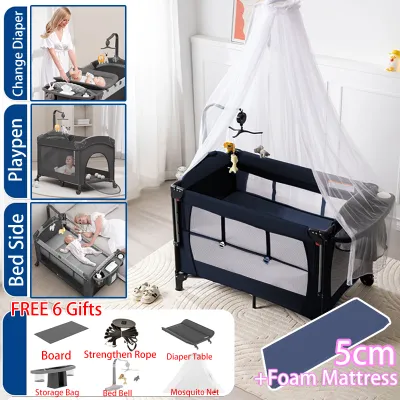
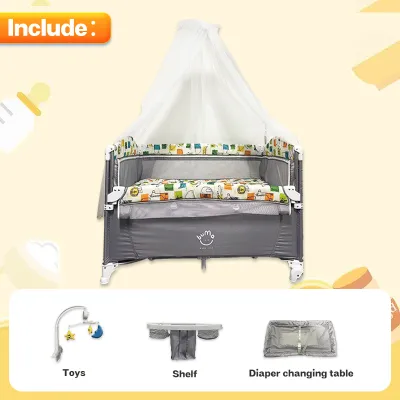
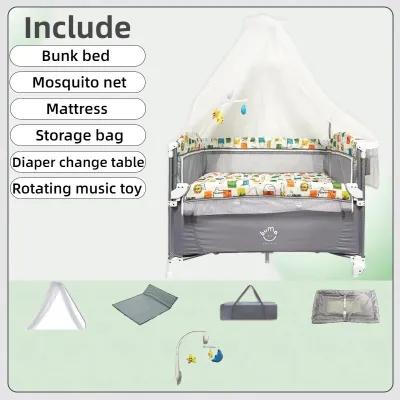
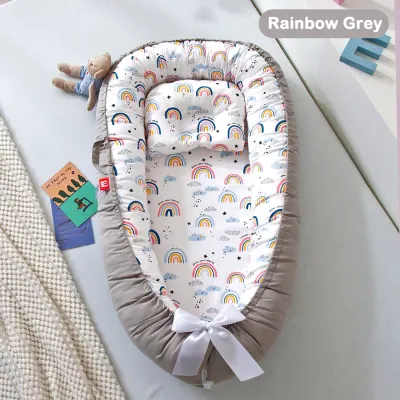
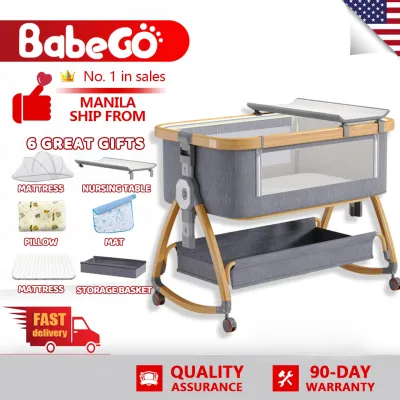
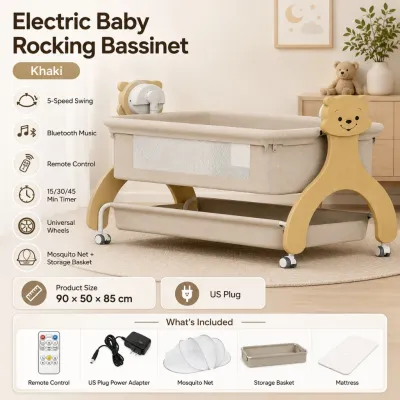
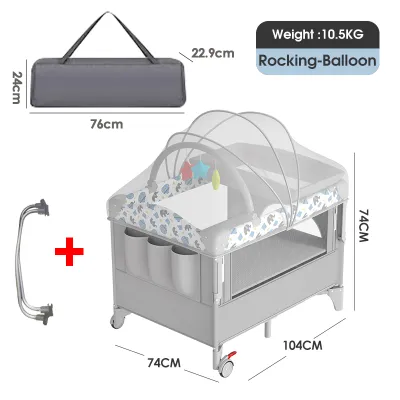
Prices are valid at publication and may change. Please refer to the product page for the latest price.
Key Differences at a Glance: Travel Crib vs Regular Crib
Regular cribs are typically constructed from solid wood, engineered wood, or heavy-duty metal. They are designed to remain stationary as a permanent fixture in your home, offering a heavy, stable structure that can withstand years of use.

In contrast, travel cribs utilize lightweight frames, often made of aluminum or reinforced plastic, wrapped in durable, breathable mesh fabrics. These materials prioritize foldability and lightweight design, allowing the entire structure to pack down into a compact carrying bag in a matter of minutes.
Another major difference lies in the mattress construction. Regular cribs accommodate thick, supportive mattresses (often 4 to 6 inches deep) that provide firm, consistent support for a developing infant’s spine. Travel cribs rely on thin, foldable mattress pads (usually 1 to 1.5 inches thick) designed to pack tightly into a travel bag, which still meet safety standards for firmness but offer less cushioning.
| Feature | Travel Crib | Regular Crib |
|---|---|---|
| Primary Materials | Lightweight aluminum, polyester mesh, plastic joints | Solid wood, engineered wood, metal hardware |
| Portability | Highly portable; folds into a compact carry bag | Stationary; heavy and difficult to move once assembled |
| Mattress Type | Thin, foldable, firm mattress pad (approx. 1–1.5 inches) | Thick, standard-size inner-spring or foam mattress (approx. 4–6 inches) |
| Assembly Time | 1 to 5 minutes; tool-free setup | 30 to 90 minutes; requires tools and hardware |
| Average Lifespan | Typically up to 2–3 years (or weight limit of 15 kg) | Long-term; often converts to toddler, day, or full bed |
| Average Price Range | ₱3,500 to ₱15,000 | ₱8,000 to ₱35,000+ |
| Floor Space Required | Small to moderate; easily folded away when not in use | Large; requires a permanent, dedicated floor footprint |
Before making a final decision, always check the manufacturer’s specified weight and height limits for both types of cribs. These limits vary significantly between brands and models, and exceeding them can compromise the safety and stability of the sleep environment.
Evaluating Your Space and Nursery Setup
Filipino homes vary widely, from spacious suburban houses in provinces to compact high-rise condominiums in Metro Manila. If you live in a smaller apartment or share a bedroom with your baby (room-sharing), a regular wooden crib can quickly overwhelm the space, leaving little room for walking or other furniture.
In homes where rooms serve multiple functions, the ability to reclaim floor space during the day is invaluable. A travel crib can be set up for naptime and quickly packed away into a closet or corner afterward, allowing you to use the room for work, play, or family gatherings.
If you have a dedicated nursery room and plan to invest in a complete furniture set, a regular wooden crib is the natural centerpiece. It can be visually coordinated with changing tables, dressers, and wardrobes to create a cohesive, beautiful space that feels permanent and organized.
To avoid buying a crib that does not fit, measure your available floor space carefully before making a purchase. Use masking tape to outline the crib’s dimensions on the floor, ensuring there is at least a two-foot clearance on all sides to allow proper airflow and easy movement around the room.
In the warm and humid climate of the Philippines, proper air circulation is essential to keep your baby cool and prevent the buildup of mold or mildew. A regular wooden crib with open slats on all sides allows excellent airflow, while a travel crib must feature full-mesh walls to ensure your baby does not overheat during warm afternoons.
Assessing Your Travel and Mobility Needs
Consider how often your family leaves the house or travels. Do you plan to take weekend trips to beach resorts, visit grandparents (Lolo and Lola) in the province, or split time between different households? If your lifestyle involves frequent relocation, a stationary wooden crib will not meet your needs.
Travel cribs are designed specifically for mobility, featuring lightweight frames, compact folding mechanisms, and dedicated carry bags. Many models are light enough to carry with one hand, making them easy to load into a car trunk or transport through transit hubs.
Mobility is also useful inside the house. If you want your baby to sleep near you in the living room while you work, and then move them to your bedroom at night, a travel crib is highly practical. Some portable models even feature built-in wheels, allowing you to roll them gently from room to room without disassembly.
For families who travel by air, verify airline baggage allowances and potential fees for oversized items before packing a travel crib. Ensure the packed dimensions of the crib fit comfortably within your car’s trunk alongside your other luggage, strollers, and diaper bags.
Many travel cribs double as safe play spaces (often called playpens or playards) where your baby can play independently under supervision. This dual functionality is highly beneficial in Filipino households, providing a secure spot for the baby while parents or helpers attend to daily chores.
Safety, Comfort, and Longevity Checks
Do not assume a crib is safe just because it is sold in a reputable store or online marketplace. Instruct readers to verify current safety certifications, such as ASTM (American Society for Testing and Materials) or EN (European Standards), which should be clearly printed on the product packaging or manual.
Inspect the physical build of the crib before use. For regular wooden cribs, check that all screws are tight, the slats are spaced no more than 6 centimeters apart to prevent trapping, and there are no sharp edges or splinters. For travel cribs, ensure the locking joints click securely into place and the frame does not wobble or lean when light pressure is applied.
A safe sleep surface must be firm and flat to reduce the risk of Sudden Infant Death Syndrome (SIDS). Never add extra mattresses, pillows, or soft blankets to a travel crib, as the thin mattress pad is specifically designed to prevent suffocation. Check that there are no gaps wider than two fingers between the mattress and the crib walls where a baby’s head could become trapped.
Regular wooden cribs offer superior longevity, with many models featuring 3-in-1 or 4-in-1 convertible designs that transition into toddler beds, daybeds, and even full-sized headboards. A travel crib has a shorter functional lifespan, as children typically outgrow them by age two or three, or once they reach the manufacturer’s weight limit (usually around 15 kilograms).
Caregivers must remain vigilant as their child grows. Stop using any crib immediately if the child reaches the manufacturer’s maximum weight or height limit, or if they learn to pull themselves up to a standing position and attempt to climb out. Always prioritize active supervision and refer to the specific product documentation for safety guidelines.
The Final Decision Framework
To finalize your choice, evaluate your family’s daily routine, living environment, and long-term plans. The right crib should simplify your life while providing a secure, comfortable sleep space for your little one.
Choose a Regular Crib if:
- You have a dedicated nursery room with ample space for permanent furniture.
- You want a long-term, convertible sleep solution that grows with your child into their toddler years.
- You rarely travel or need to transport the baby's sleep space outside the home.
- You prefer a sturdy, traditional aesthetic that coordinates with other nursery furniture pieces.
Choose a Travel Crib if:
- You live in a compact apartment, condominium, or share a bedroom where space is limited.
- You travel frequently, visit relatives often, or need a highly portable sleep spot for daytime naps.
- You want a secondary, multi-functional piece of gear that can double as a playpen.
- You need a budget-friendly option that can be easily folded and stored away when not in use.
Verify first if:
- You are considering a second-hand or handed-down crib. Thoroughly inspect the unit for missing hardware, worn locking mechanisms, structural cracks, and recalled model numbers. Never use a second-hand crib if you cannot verify its history or if it lacks the original manufacturer's instruction manual.
Frequently Asked Questions (FAQ)
Can a travel crib be used as a regular crib every night?
While some travel cribs are marketed as suitable for daily use, parents must strictly check the manufacturer’s guidelines regarding mattress firmness, weight limits, and long-term durability. The thinner mattresses typical of travel cribs may not provide the same level of long-term support as a standard, high-density crib mattress. If you choose to use a travel crib daily, ensure it is set up on a flat, stable floor and inspect the locking joints regularly for wear and tear.
At what age should a baby stop using a travel crib?
There is no universal age limit for transitioning out of a travel crib, as children grow at different rates. Parents must follow the specific product’s maximum height and weight restrictions, which are typically found on the product label or in the user manual. Stop using the travel crib immediately if your child learns to pull themselves up, begins attempting to climb over the sides, or exceeds the manufacturer’s stated physical limits.
Community discussion
Share your experience or ask a question. Comments are reviewed before publication.