
Choosing how to support your baby’s first steps is a major milestone in early parenthood. As your little one begins to show an interest in exploring their surroundings upright, you will likely find yourself comparing traditional sit-in baby walkers and modern push walkers. Both of these popular baby gear options are designed to encourage mobility, but they approach physical development, safety, and spatial navigation from completely different angles. Deciding which type is better for your baby requires looking closely at their current physical milestones, your home’s layout, and how you plan to manage daily supervision.
A traditional baby walker features a suspended fabric seat inside a rigid frame, allowing a baby to sit and glide across the floor using their feet. A push walker, on the other hand, is a walk-behind toy with a handle that requires your baby to stand independently and push the device forward. By understanding the structural designs, muscle engagement patterns, and safety considerations of each style, you can make an informed choice that supports your baby’s natural physical progression while keeping them secure in your living space.
Key Design and Functional Differences
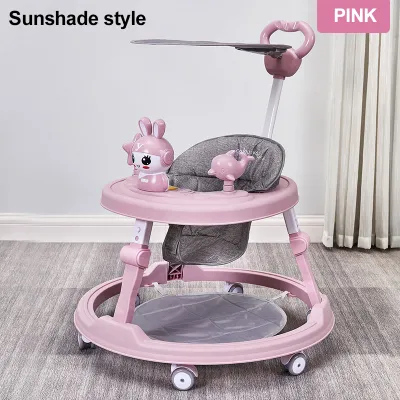
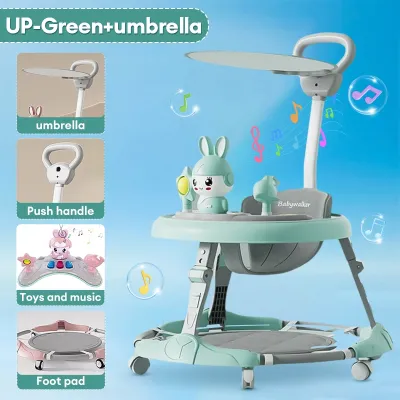
To choose the right gear, it is essential to understand how each walker is built and how it interacts with your baby’s body. Traditional baby walkers, often referred to as sit-in walkers, consist of a fabric seat suspended in the center of a wide plastic or metal frame. This frame is supported by a series of small, multi-directional wheels at the base. When placed inside, the baby’s weight is supported by the seat, and their feet dangle to touch the floor. This design allows even very young infants who cannot yet stand on their own to move rapidly across flat surfaces by pushing off with their toes.
Products mentioned in this guide
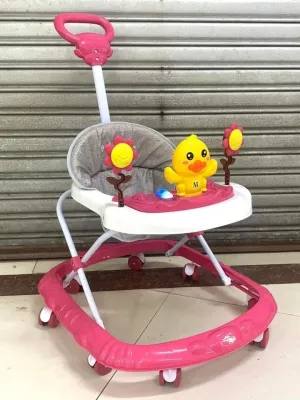
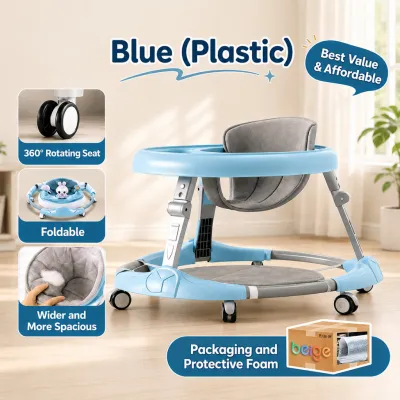
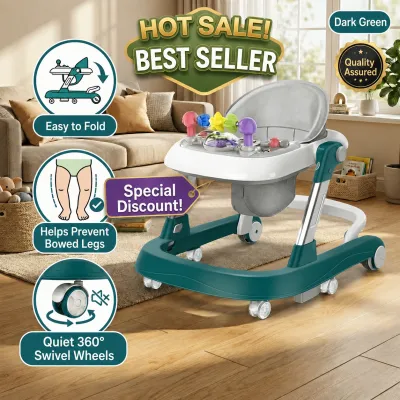
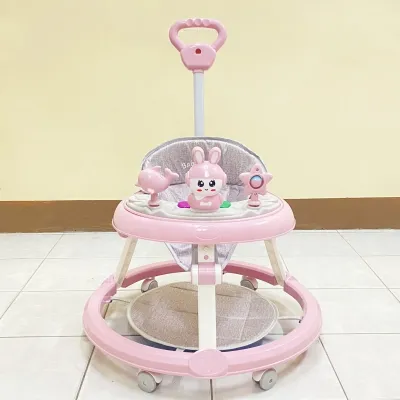
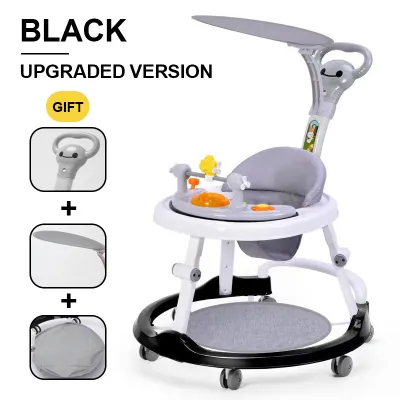
![[Easy To Walke] Bobbi Baby Walker walker for baby boy baby walker for girl SuitableFor 6-18 Months Infant Foldable walker for baby with Wheel Toddler Walk Learning Anti Rollove walker baby girl walker for baby With Music and Handle](https://img.lazcdn.com/g/p/e556e95d1e84b3034168d74ed603b3ce.jpg_400x400q80.jpg_.webp)
Prices are valid at publication and may change. Please refer to the product page for the latest price.
In contrast, a push walker is a walk-behind toy designed for babies who are already transitioning to standing. It features a sturdy handle attached to a weighted frame with wheels, often decorated with interactive toys, buttons, or activity panels on the front. There is no seat to support the baby’s weight; instead, the baby must stand upright behind the device, grip the handle, and use their own leg strength and balance to push the walker forward. The wheels on a push walker typically roll in a straight line or have limited steering to help the baby maintain a forward trajectory.
The physical posture and muscle engagement required for these two styles differ significantly. In a traditional sit-in walker, the baby’s pelvis is supported, which can lead to an unnatural posture where they lean forward and propel themselves using only their toes. This toe-walking motion primarily engages the calf muscles while bypassing the deeper core, hip, and thigh muscles needed for independent walking. Conversely, a push walker forces the baby to bear their full body weight through their feet, ankles, and legs. This active weight-bearing engages the quadriceps, hamstrings, glutes, and core muscles, promoting the natural heel-to-toe walking pattern and helping to develop the balance and coordination required to walk without assistance.
Safety and Developmental Checkpoints to Verify
Before introducing any mobile baby gear into your home, you must verify several critical safety and developmental factors with the manufacturer’s guidelines and pediatric recommendations. Traditional sit-in walkers carry specific safety warnings that parents must carefully review. Because these devices allow babies to move at surprisingly high speeds, they present a significant risk of tipping over if they hit an uneven surface, such as a rug edge or a door threshold. Furthermore, they can lead to severe accidents if a baby gains access to staircases or steps. You must also monitor your baby’s posture inside a sit-in walker; prolonged use can encourage persistent toe-walking, which may tighten the Achilles tendons and temporarily affect natural gait development.

When evaluating push walkers, the primary safety checkpoints revolve around stability and speed control. Because a baby relies on the push walker for balance, you must verify that the base is sufficiently weighted to prevent the toy from flipping backward when the baby pulls themselves up using the handle. Additionally, check the wheel resistance. If the wheels spin too freely, the walker can quickly roll away from the baby, leading to forward falls. Many high-quality push walkers feature adjustable tension screws or rubber friction strips on the wheels to slow down the rolling speed, which is a crucial feature to verify before purchase.
Regardless of which style you choose, active adult supervision is an absolute necessity. No baby walker is a substitute for a safe playpen or direct parental oversight. You must also establish clear criteria for when to stop using these devices. For traditional walkers, use should be discontinued as soon as the baby can stand or walk independently, or when they reach the manufacturer’s maximum weight or height limits—typically when their feet can rest flat on the floor with bent knees while seated. For push walkers, you should transition away from the device once your baby can walk confidently without relying on the handle for balance, ensuring they do not develop a habit of leaning forward while walking.
Assessing Your Home Environment for Safe Use
Your living space plays a decisive role in determining which walker is practical and safe for your family. In tropical climates like the Philippines, residential flooring often consists of smooth ceramic tiles, polished concrete, or hardwood. You must check how the walker’s wheels interact with these surfaces. Small, plastic wheels on traditional walkers can slide unpredictably on slick tiles or scratch delicate hardwood floors. Look for wheels with rubberized treads that offer better traction and quieter movement. If your home has carpeted areas, verify that the wheels are large enough to roll smoothly without getting stuck, which can frustrate your baby or cause the walker to tip.
The layout and space of your home are equally important. Traditional walkers require a wide, open floor plan with clear pathways free of clutter, loose cords, and low-lying obstacles. Because these walkers have a wide base, they can easily get wedged in narrow hallways or doorways. You must also ensure that all staircases, split-level steps, and outdoor patios are strictly blocked off with secure, hardware-mounted safety gates. Push walkers also require clear paths, but because they are steered manually by the baby, they need enough turning space so your little one does not constantly bump into walls or furniture.
Finally, consider the storage footprint of each device. Traditional sit-in walkers often feature a folding mechanism that allows the frame to collapse flat, making them easier to slide under a bed or store behind a door when not in use. However, their wide base still occupies a significant amount of floor space when set up. Push walkers are generally more compact and have a smaller overall footprint, but many models do not fold down. You will need to designate a permanent corner in your living area or nursery to park the push walker when playtime is over.
Decision Framework: Which Walker Fits Your Baby?
To finalize your decision, you can use a condition-based framework that matches your baby’s physical readiness with your home environment. This structured approach ensures you select the gear that best supports your baby’s current developmental stage.
Choose a push walker if your baby can pull themselves up to a standing position independently and support their own weight while holding onto furniture. This option is ideal if you want to encourage natural walking mechanics, active balance, and the development of core and leg strength. It also works best if your home has flat, open flooring where your baby can push the toy forward without encountering frequent obstacles or tight corners. Many push walkers also include interactive activity panels that keep babies engaged even when they are sitting.
Choose a traditional walker if your baby has strong head and neck control and can sit upright unassisted, but is not yet standing or pulling up. This choice requires your home to be completely on a single level with absolutely no stairs, or to have highly secure, hardware-mounted gates blocking all drop-offs. You must also be able to guarantee constant, direct, arm’s-reach supervision during every moment of use. This setup is suitable if you are looking for a temporary way to keep your baby upright and mobile in a highly controlled, thoroughly baby-proofed environment.
Verify first if you have any concerns about your baby’s hip development, muscle tone, or physical milestones. In these cases, consult your pediatrician or a pediatric physical therapist before using any walker. You should also hesitate if your home layout has uneven thresholds, loose rugs, or slick tile floors that could cause a wheeled device to slide or tip unexpectedly. If you cannot fully secure your living space against rolling hazards, alternative activity centers like stationary jumpers or playmats may be a safer choice.
Frequently Asked Questions (FAQ)
At what age or developmental stage should a baby start using a walker?
Readiness for a baby walker is determined by physical milestones and manufacturer specifications rather than a specific age. For a traditional sit-in walker, you must check the product manual for the minimum age, weight, and height requirements. Generally, a baby should not use a sit-in walker until they can sit upright completely unassisted and demonstrate strong, steady head and neck control. For a push walker, the baby should show the physical readiness to pull themselves up to a standing position and bear weight on their legs, which typically occurs in the later months of their first year. Always verify that your baby falls within the manufacturer’s recommended weight and height limits before allowing them to use either device.
How do I clean and maintain the wheels and seat fabrics?
Keeping your baby walker clean and functional is essential for hygiene and safety. For traditional walkers, check the product manual to see if the fabric seat cover is removable and machine-washable; most manufacturers recommend washing on a gentle cycle with mild baby detergent and air-drying to prevent shrinkage. For the plastic frame, tray, and toys, wipe them down regularly with a damp cloth and a baby-safe, non-toxic disinfectant. Pay close attention to the wheels of both traditional and push walkers. Hair, dust, and carpet fibers can easily wrap around the wheel axles over time, impeding smooth rolling or causing the wheels to lock up. Regularly inspect the wheels, clear out any trapped debris, and wipe them clean to ensure the walker rolls safely and smoothly.
Community discussion
Share your experience or ask a question. Comments are reviewed before publication.