
The safety of Tiny Buds lotion for a specific newborn depends on its exact ingredient profile and the baby’s individual skin tolerance, as no single topical product can be guaranteed universally safe for all highly reactive skin types. While many parents seek out gentle formulations to address dryness, a newborn’s skin barrier is highly delicate and requires careful evaluation. Determining whether a specific lotion is appropriate involves understanding the unique structure of infant skin, reading the complete ingredient list on the physical packaging, and performing a systematic patch test.
Newborn skin is structurally distinct from adult skin, making it far more vulnerable to external irritants. The outermost layer of the skin, known as the stratum corneum, is significantly thinner in infants. This thinness results in a highly permeable barrier, meaning that topical substances are absorbed much more rapidly and deeply. Consequently, chemicals that might be harmless on adult skin can easily penetrate a newborn’s skin barrier, potentially causing irritation or contact dermatitis.
A newborn’s skin also has a higher surface-area-to-body-weight ratio, amplifying the impact of topically applied products. The skin’s natural acid mantle—a thin, slightly acidic film protecting against bacteria—is still developing during the first few weeks. Because this barrier is incomplete, newborns are highly susceptible to transepidermal water loss, leading to dry patches and increased sensitivity.
Products mentioned in this guide
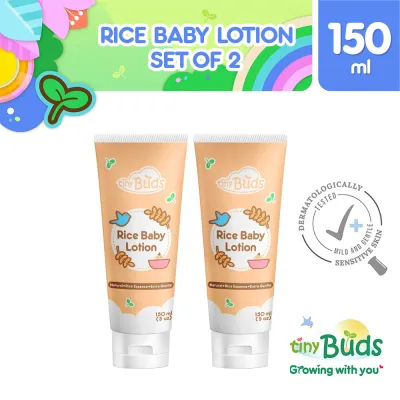
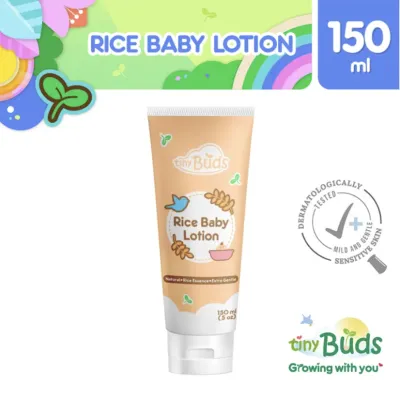
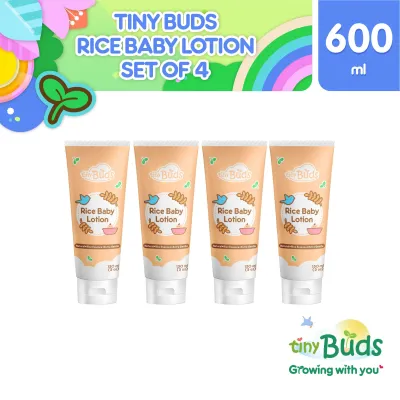
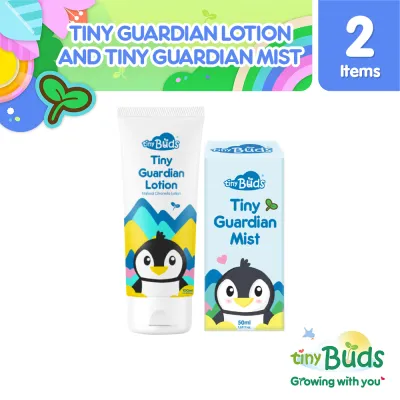
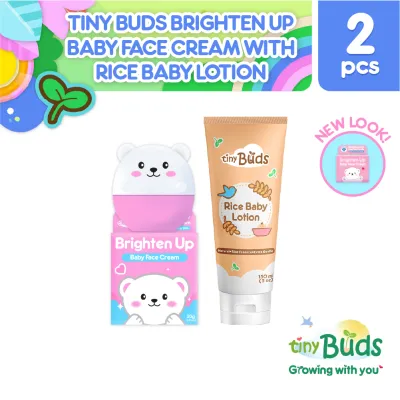
Prices are valid at publication and may change. Please refer to the product page for the latest price.
Pediatric dermatology standards emphasize pH-balanced formulations that support the skin’s developing acid mantle. Ideal products match the slightly acidic pH of healthy skin, typically between 4.5 and 5.5. Furthermore, clinical guidelines strongly recommend fragrance-free options for newborns, especially those with highly reactive skin, as even natural fragrances can act as potent sensitizers.
In tropical climates like the Philippines, high humidity and ambient warmth add another layer of complexity to newborn skincare. Excessively heavy or occlusive lotions can trap sweat and heat against the skin, leading to clogged sweat ducts and conditions like miliaria, commonly known as heat rash or bungang-araw. Therefore, a suitable newborn lotion must not only be chemically gentle but also lightweight enough to allow the skin to breathe naturally.
How to Evaluate Tiny Buds Lotion Ingredients for Sensitive Skin
To determine if a specific bottle of Tiny Buds lotion is safe for your newborn, you must locate and read the full ingredient list printed on the physical product packaging or verified official brand channels. Front-label marketing claims such as “natural” or “gentle” are helpful indicators, but they do not provide a complete picture of what is inside the bottle. Manufacturers often use these terms to describe the primary active ingredients, but the formulation may still contain secondary ingredients, preservatives, or stabilizers that could trigger a reaction.
When examining the ingredient list, parents should systematically check for common harsh chemicals and potential irritants that are best avoided in early infancy. Parabens, which are commonly used as preservatives, and sulfates, often used as emulsifiers, should be cross-referenced. Additionally, look closely for synthetic fragrances, artificial colorants, and essential oils like lavender or citrus oils. While essential oils are natural, they contain complex organic compounds that can be highly irritating to a newborn’s undeveloped skin barrier.
Preservatives are necessary in water-based lotions to prevent the growth of harmful bacteria and mold, but some preservatives are more prone to causing skin sensitization than others. Parents should verify the presence of specific strong preservatives, such as phenoxyethanol or methylisothiazolinone, on the label. If you encounter unfamiliar chemical names while reading the packaging, you can cross-reference them with reputable online cosmetic safety databases or consult your pediatrician to clarify their safety profiles.
Marketing terms like “natural” or “plant-based” do not automatically guarantee safety for highly sensitive or compromised skin barriers. Natural plant extracts can still cause allergic contact dermatitis in babies with a genetic predisposition to allergies. If your newborn has broken skin, severe dryness, or signs of eczema, even mild botanical ingredients can penetrate the compromised barrier and cause discomfort.
Ultimately, the most reliable way to evaluate any baby lotion is to treat the ingredient list as a factual blueprint. By understanding what each component does and verifying that the formulation excludes known high-risk allergens, you can make an informed decision. If the product label lacks a complete, transparent list of ingredients, it is safest to defer use until you can verify the formulation directly with the manufacturer or a qualified healthcare professional.
Safe Application Practices and Patch Testing for Newborns
Before applying any new lotion to your newborn’s entire body, performing a patch test is an essential precautionary step to identify potential sensitivities. Apply a very small, pea-sized amount of the lotion to a clean, discreet area of the baby’s skin, such as the inner forearm or behind the ear. These areas are easily observable and less likely to be rubbed clean by the baby’s movements.

Once the lotion is applied, leave the area uncovered and observe it closely over a period of 24 to 48 hours for any signs of a reaction. Look for localized redness, tiny bumps, swelling, warmth, or dryness in the exact spot where the product was applied. If the skin remains clear, smooth, and free of irritation after 48 hours, the lotion is generally considered safe for broader application on your baby’s intact skin.
When applying lotion, timing and skin condition are key to maximizing hydration while minimizing irritation. The ideal time to apply moisturizer is immediately after a bath, while the skin is still slightly damp. Gently pat the baby’s skin with a soft towel, leaving a trace of moisture on the surface, and then smooth a thin layer of lotion over the limbs and torso.
During application, there are several highly sensitive areas that you must strictly avoid to prevent irritation or accidental ingestion. Never apply lotion to your newborn’s hands, as infants frequently put their fingers and fists into their mouths, which could lead to the ingestion of cosmetic ingredients. Additionally, keep the product far away from the eyes, nose, mouth, and genital areas. Avoid applying lotion to broken skin, open scratches, or severe diaper rash.
In warm tropical environments, pay close attention to the skin folds, such as the neck, armpits, and groin. These areas are prone to moisture accumulation from sweat, and applying heavy layers of lotion in these creases can trap heat and moisture, leading to chafing or heat rash. Keep application in these areas extremely light, or avoid moisturizing them altogether if the skin there is already naturally moist.
When to Stop Using the Lotion and Seek Professional Help
Even if a product passes an initial patch test, cumulative exposure or changes in your baby’s skin barrier can trigger a delayed adverse reaction. Parents must remain vigilant and monitor their newborn’s skin after every application for observable signs of irritation. If you notice persistent redness, hives, raised red bumps, swelling, sudden dry patches, or if your baby becomes unusually fussy after application, you should discontinue use immediately.
If an adverse reaction occurs, the immediate first-aid step is to remove the product as gently as possible. Take a clean, soft washcloth dampened with lukewarm water and gently wipe away any remaining lotion without rubbing or scrubbing the skin. Avoid using soaps or other cleansers during this process, as they can further irritate the inflamed barrier. Once clean, stop using all new skincare products.
Most mild contact reactions will resolve on their own within a few days once the offending product is completely removed from the baby’s routine. During this recovery period, keep the baby’s skin clean, dry, and dressed in loose, breathable cotton clothing to prevent friction and overheating. Do not apply over-the-counter hydrocortisone creams or anti-itch lotions to a newborn’s skin unless specifically instructed to do so by a qualified healthcare professional.
There are specific clinical signs that indicate a skin reaction has progressed beyond simple irritation and requires prompt medical evaluation. You must stop home care and consult a pediatrician or a pediatric dermatologist immediately if you observe blistering, weeping fluid, yellow crusting, or if the rash is accompanied by a fever. A rapidly spreading rash that covers a large portion of the baby’s body, or any reaction that causes significant distress, also warrants immediate professional medical attention.
Frequently Asked Questions (FAQ)
Can I use Tiny Buds lotion on a newborn's face?
Facial skin is significantly thinner, more delicate, and more reactive than the skin on a newborn’s body, making it highly susceptible to irritation. Before applying any lotion to your baby’s face, you must carefully check the physical product packaging to verify if the manufacturer has explicitly cleared the formulation for facial use. If the label does not specify that it is safe for the face, it is best to restrict its use to the body. If you do apply a verified, face-safe lotion, use an extremely small amount and completely avoid the immediate eye area, the eyelids, and the area directly around the mouth to prevent accidental ingestion or eye irritation.
Is it safe to mix Tiny Buds lotion with other baby oils or creams?
Mixing different skincare products together before application is not recommended, as it can alter the chemical stability, preservative systems, and pH balance of the individual formulations. Cosmetic products are carefully formulated with specific ratios of water, oils, and emulsifiers to remain stable and resist bacterial growth. When you mix two different products, you risk neutralizing the preservatives, which can allow harmful bacteria to multiply rapidly within the mixture. To keep your newborn’s skin safe, always apply products individually and allow one to absorb completely before applying another. Introduce only one new product at a time over a week-long period to easily identify the source of any reaction.
How often should I apply lotion to a newborn with sensitive skin?
The frequency of lotion application should be guided by the observable condition of your newborn’s skin rather than a rigid, daily schedule. Healthy newborn skin often does not require daily moisturizing, as the body naturally regulates its own moisture levels over time. If your baby’s skin appears smooth, soft, and hydrated, applying lotion once or twice a week after bath time is typically sufficient. If your newborn has dry, flaking, or rough patches, you may need to apply a thin layer of lotion more frequently, such as once a day, focusing only on the dry areas. In warm and humid climates, over-moisturizing can trap sweat, leading to heat rash.

Community discussion
Share your experience or ask a question. Comments are reviewed before publication.