
Tiki-Tiki drops are a widely recognized multivitamin supplement in the Philippines, often trusted by generations of parents to support a child’s growth. However, when it comes to newborns and infants under six months of age, determining whether these drops are safe and appropriate requires careful evaluation. A baby’s digestive system, liver, and kidneys are still highly immature during the first few months of life, making them exceptionally sensitive to concentrated nutrients and additives. Parents must never assume that a vitamin supplement is safe for a newborn simply because it is a household name or marketed for pediatric use. Instead, verifying the manufacturer’s specific age indications on the packaging and obtaining direct clearance from a pediatrician are non-negotiable steps before introducing any drops to an infant under six months.
Do Babies Under 6 Months Actually Need Vitamin Drops?
For the first six months of life, the nutritional needs of a healthy, full-term infant are remarkably straightforward. Global and local health organizations agree that exclusive breastfeeding or feeding with standard infant formula provides almost all the essential vitamins, minerals, and fluids a baby needs to thrive. Breast milk is uniquely tailored to support infant development, containing highly bioavailable nutrients alongside protective antibodies. Consequently, routine multivitamin supplementation is rarely necessary for healthy, full-term infants during this initial stage of life.
There are, however, specific clinical scenarios where a pediatrician might recommend targeted vitamin supplementation. The most common example is Vitamin D. Because breast milk naturally contains low levels of Vitamin D, and direct sun exposure is often limited to protect a newborn’s delicate skin from ultraviolet rays, exclusively breastfed infants may require a daily Vitamin D supplement. However, this is typically administered as a single-vitamin drop rather than a broad multivitamin. Pediatricians assess each baby’s unique circumstances—such as maternal vitamin levels and daily sun exposure—before deciding if a targeted supplement is warranted.
Products mentioned in this guide
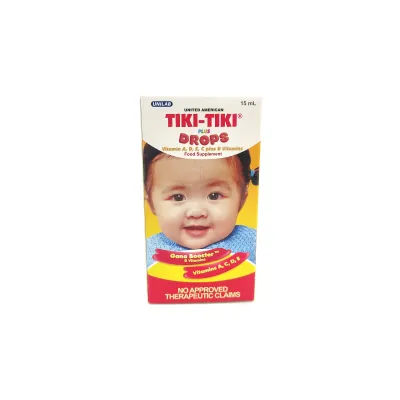

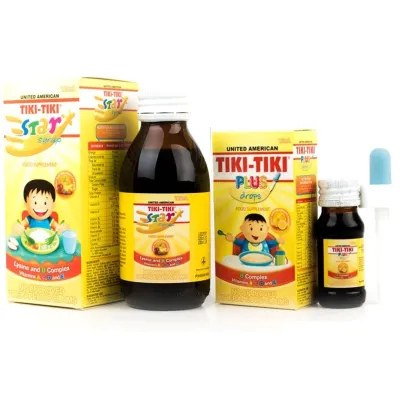

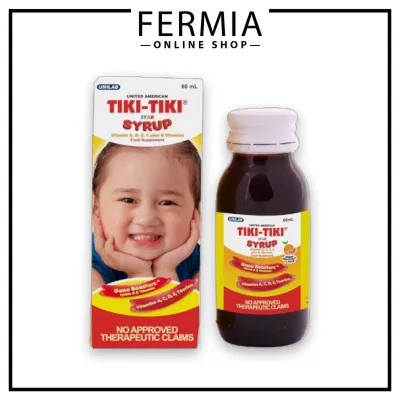
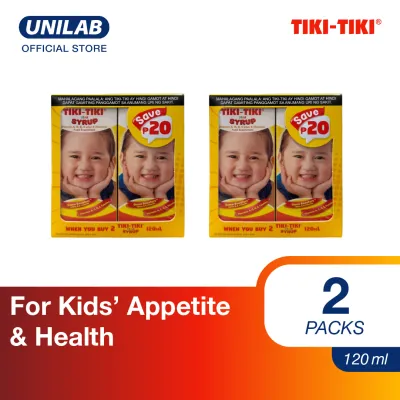
Prices are valid at publication and may change. Please refer to the product page for the latest price.
Introducing a comprehensive multivitamin like Tiki-Tiki drops without a clear medical recommendation carries distinct risks, particularly regarding fat-soluble vitamins. Unlike water-soluble vitamins (such as Vitamin C and B-complex) which are easily excreted in urine when consumed in excess, fat-soluble vitamins (specifically Vitamins A and D) accumulate in the body’s fatty tissues and liver. In young infants, whose metabolic and excretory pathways are still developing, an excess of these fat-soluble vitamins can quickly lead to toxicity. Over-supplementation can strain the baby’s immature kidneys and liver, potentially causing serious health complications. Therefore, unless a qualified healthcare professional identifies a specific nutritional deficiency, a healthy baby under six months generally does not require a multivitamin.
How to Check If Tiki-Tiki Drops Are Safe for Your Infant
If you are considering Tiki-Tiki drops for your baby, you must perform a rigorous check of the product packaging and formulation. The brand offers different product lines, including drops designed for infants and syrups formulated for older children. Giving a syrup intended for toddlers to a newborn can result in a dangerous overdose of active ingredients and expose their sensitive digestive tract to inappropriate excipients, flavorings, or preservatives. Always locate the minimum age and weight restrictions printed on the outer carton and the bottle label. If the packaging does not explicitly state that the product is formulated for infants aged 0 to 6 months, do not administer it.

Next, carefully examine the active ingredients list and their corresponding concentrations. Compare these values against the standard daily nutritional requirements for infants in your region. A newborn’s daily requirement for vitamins is very small, and their tolerance thresholds are narrow. You must verify that the dosage recommended on the packaging does not exceed the upper limits established for infants under six months. Always read the current label of the specific bottle you have purchased.
Physical product safety is equally critical. Before opening the bottle, inspect the tamper-evident seal to ensure it is completely intact. In the tropical climate of the Philippines, high heat and humidity can accelerate the degradation of liquid vitamins, potentially reducing their potency or causing the liquid to spoil. Check the expiration date clearly stamped on the box and bottle. When purchasing the drops, compare prices at reputable pharmacies, where a standard bottle typically retails for a modest amount in ₱, but prioritize the safety seal over any discount. Once opened, store the drops strictly according to the manufacturer’s instructions—usually in a cool, dry place below 30°C, away from direct sunlight. If the liquid appears cloudy, has changed color, or emits an unusual odor, discard it immediately.
Side Effects and Signs of Intolerance to Watch For
Even when a vitamin drop is deemed age-appropriate and approved by a doctor, a newborn’s highly sensitive gastrointestinal tract may react poorly to the introduction of concentrated nutrients. Caregivers must closely monitor the baby for any signs of physical discomfort or digestive changes after administering the drops. Mild gastrointestinal responses are relatively common and may include a sudden change in stool consistency or color, a slight increase in spitting up, or mild abdominal gas that makes the baby fussy.
More concerning are the red-flag signs of an allergic reaction or systemic intolerance. Because a newborn’s immune system is still developing, they can react to the active vitamins or the inactive ingredients, such as flavorings, colorants, or preservatives used in the liquid formulation. Watch for the sudden appearance of hives, unexplained skin rashes, or redness around the mouth and face. Swelling of the eyelids, lips, tongue, or throat is a medical emergency, as is any sign of respiratory distress, such as rapid breathing, wheezing, grunting, or chest retractions.
If you observe any severe allergic reactions or if your baby experiences persistent, projectile vomiting or extreme lethargy after taking the drops, you must stop using the supplement immediately. Do not attempt to wait out the symptoms or reduce the dosage on your own. Seek immediate medical attention at the nearest clinic or hospital. For milder symptoms, such as increased fussiness or mild diarrhea, temporarily discontinue the drops and schedule a consultation with your pediatrician to determine if the supplement is the direct cause of the distress.
When to Consult a Pediatrician Before Giving Supplements
Consulting a pediatrician is not merely a helpful suggestion; it is a mandatory safety protocol before giving any dietary supplement to an infant under six months. This rule is absolute for babies who fall into high-risk categories, such as those born prematurely or with a low birth weight. Premature infants have highly specialized nutritional requirements and exceptionally fragile organ systems. Their bodies process vitamins and minerals differently than full-term babies, and standard over-the-counter dosages can easily overwhelm their systems. Similarly, infants with underlying health conditions, particularly renal, hepatic, or metabolic disorders, require strict medical supervision for any dietary additions.
A professional consultation is also vital to prevent dangerous nutrient interactions. If your baby is already taking prescribed medications, or if they are consuming a specialized, nutrient-fortified infant formula designed for specific digestive or medical needs, adding a multivitamin drop can lead to accidental double-dosing of certain vitamins. Your pediatrician will review all current sources of nutrition and medication to ensure that the cumulative intake of vitamins remains within a safe, therapeutic range.
During your consultation, the pediatrician will provide you with the exact dosage tailored to your baby’s current weight, which is a far more accurate measure than the general age brackets listed on retail packaging. They will also instruct you on the correct administration technique. Administering liquid drops to a tiny infant requires precision; aiming the dropper toward the inside of the baby’s cheek rather than the back of the throat prevents the liquid from entering their airway, ensuring a safe and stress-free experience for both caregiver and child.
Frequently Asked Questions (FAQ)
Can I mix vitamin drops with breast milk or formula?
While it might seem convenient to mix vitamin drops directly into your baby’s bottle of breast milk or formula to mask the taste, pediatricians generally advise against this practice. If you mix the drops into a full bottle and your baby does not finish the entire feed, they will not receive the complete, intended dose of the vitamin. Additionally, some vitamins can slightly alter the taste or smell of the milk, which might cause a sensitive infant to reject the bottle entirely, disrupting their primary source of nutrition. The safest and most effective method is to administer the drops directly into the baby’s mouth, aiming toward the inner cheek. If mixing is necessary, blend the prescribed dose with a very small, measured amount of expressed breast milk or formula (about 5 to 10 milliliters) in a syringe or on a small spoon, ensuring the baby consumes the entire amount before proceeding with their regular feed.
What should I do if I accidentally give my baby too much?
If you accidentally administer more than the recommended dose of vitamin drops, your immediate response should depend on the type of vitamins involved and the amount consumed. Water-soluble vitamins, such as Vitamin C and B-complex, are generally processed quickly by the body, with excess amounts excreted in the baby’s urine, though they can still cause temporary stomach upset. However, fat-soluble vitamins like Vitamin A and D pose a much higher risk because they accumulate in the body. If you suspect a significant overdose, stop giving the supplement immediately and monitor your baby closely for symptoms such as unusual vomiting, extreme sleepiness, irritability, or a bulging soft spot (fontanelle) on their head. Contact your pediatrician or a local poison control center immediately for guidance. Keep the product packaging nearby so you can report the exact ingredients and estimated amount consumed to the medical professional.
Are there alternative vitamin brands for newborns?
If your pediatrician determines that a specific multivitamin drop is not suitable for your newborn, there are several alternative options available on the market. When evaluating alternatives, look for formulations that align precisely with your doctor’s recommendations, such as single-vitamin drops (like pure Vitamin D3) rather than broad multivitamins. Many parents prefer dye-free, preservative-free, or unflavored options to minimize the risk of allergic reactions or digestive upset in highly sensitive infants. However, you should never choose an alternative brand based solely on marketing claims, online reviews, or recommendations from parenting groups. A pediatrician’s clinical assessment of your baby’s growth, diet, and health status must always be the deciding factor in selecting the right brand and formulation for your infant.
Community discussion
Share your experience or ask a question. Comments are reviewed before publication.