
Starting the weaning journey is an exciting milestone in your child’s life, but walking down the baby care aisle can quickly feel overwhelming. With shelves packed with spout cups, straw cups, and 360 cups—each claiming to be the absolute best choice for your little one—it is easy to feel stuck in decision paralysis. The quick answer is that there is no single “best” cup; the ideal choice depends entirely on your toddler’s current age, physical coordination, and oral motor development.
To help you navigate this transition, you can generally map these cup designs to your child’s weaning phases. Spout cups serve as a familiar starter option for early weaning, typically around 6 to 9 months of age. Straw cups are excellent for mid-weaning, usually between 9 and 12 months, as they help build advanced tongue and lip coordination. Finally, 360 cups are ideal for late weaning and active toddlerhood, from 12 months onward, because they closely mimic the rim of a regular open cup.
Ultimately, the right choice for your family will balance your child’s developmental readiness with your daily lifestyle needs, such as ease of cleaning and leak-proof portability. It is also helpful to keep the big picture in mind: all of these sippy cup designs are temporary transitional tools. They are not permanent fixtures of childhood, but rather physical bridges designed to help your child safely transition from a bottle or breast to a standard open cup.
Products mentioned in this guide
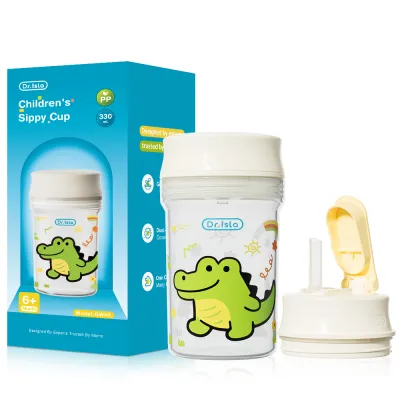
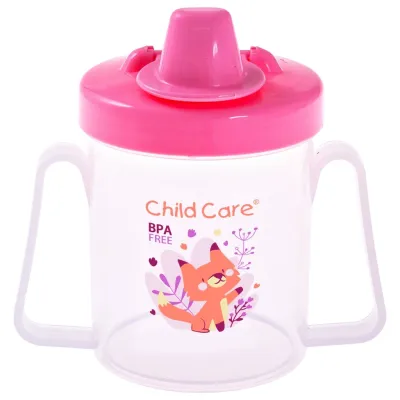
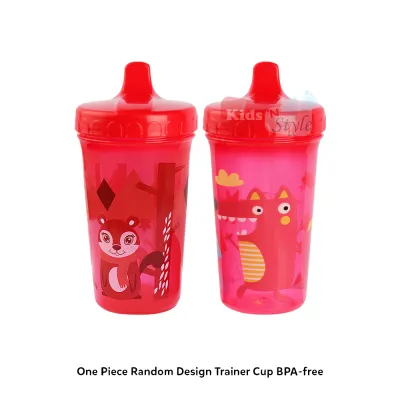
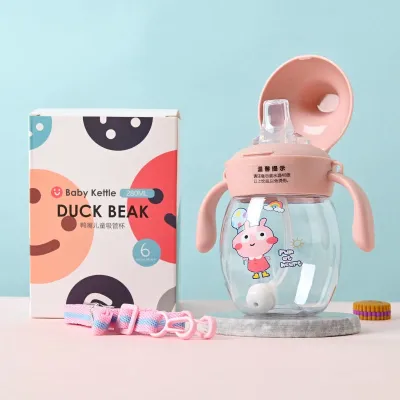
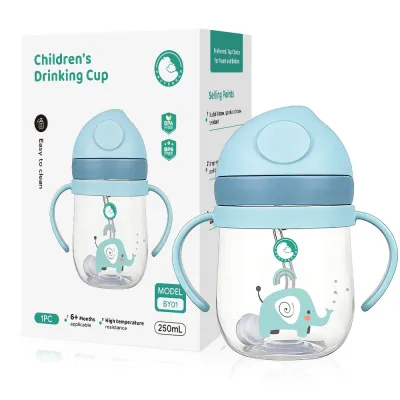
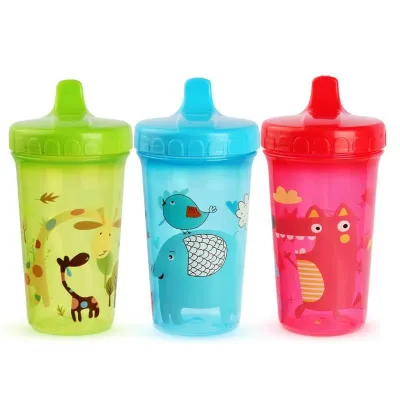
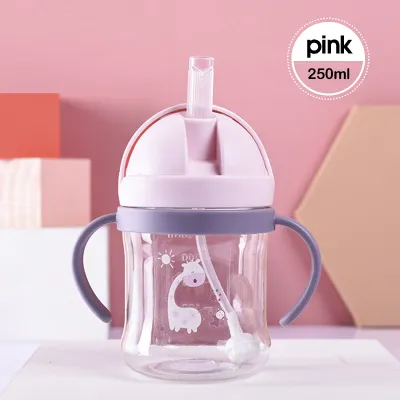
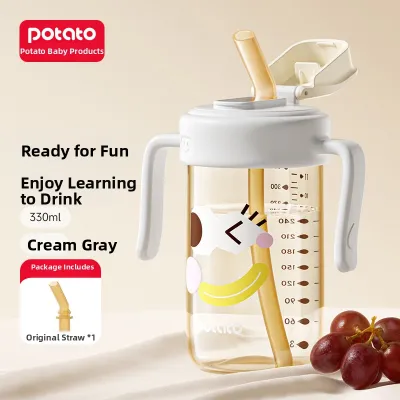
Prices are valid at publication and may change. Please refer to the product page for the latest price.
Breaking Down the 3 Sippy Cup Designs
Understanding the physical mechanics of how your child drinks from each cup design is the first step in making an informed purchase. Every cup shape requires a different set of facial muscles and oral movements, which directly impacts how your child learns to swallow and control liquids.
Spout Cups: The Early Weaning Transition
Spout cups are the traditional first step for babies moving away from bottles. These cups feature a raised, shaped spout that fits easily into a baby’s mouth, and they are generally categorized by the material of the spout itself. Soft silicone spouts are highly recommended for beginners because they feel familiar to a baby used to a bottle nipple or breast, and they are exceptionally gentle on tender, teething gums. Hard plastic spouts are much more durable and can withstand the biting of older babies, though they offer less sensory comfort.
To drink from a spout cup, your baby must tilt the cup upward and suck on the spout, a physical motion that closely mimics bottle feeding. This makes the spout cup an incredibly easy and intuitive transition for infants who are just starting to explore liquids other than milk. Parents also appreciate that basic spout cups usually have very few parts, making them simple to assemble and quick to wash during busy days.
However, spout cups do have notable drawbacks. Because they rely on the same basic sucking and tilting mechanism as a bottle, they do not teach your child the new oral motor skills needed for open-cup drinking. Additionally, pediatric dentists caution that prolonged use of hard plastic spouts can place unnatural pressure on a child’s developing palate and front teeth. For this reason, spout cups are best used as a short-term stepping stone rather than a long-term drinking solution.
Straw Cups: Building Advanced Oral Motor Skills
Straw cups represent a significant step forward in your child’s physical development. Unlike a spout cup, a straw cup requires your toddler to keep the cup upright while sealing their lips tightly around the straw, retracting their tongue, and pulling liquid upward using coordinated cheek and jaw muscles. This multi-step process introduces a completely new way of swallowing that is highly beneficial for your child’s growing mouth.
From a developmental perspective, straw cups are highly praised by speech therapists and pediatric dentists alike. Drinking from a straw promotes mature oral motor skills, strengthens the muscles used for speech, and keeps the liquid focused toward the back of the mouth, away from the sensitive front teeth. Many modern straw cups also feature weighted straws, which allow the straw to move with the liquid so your toddler can drink from almost any angle, whether they are sitting up at a highchair or lounging on a play mat.
Despite these benefits, straw cups come with a learning curve. Some toddlers find the physical coordination required to draw liquid up a straw frustrating at first, requiring a bit of parental patience and practice. Additionally, the narrow, flexible tubes and weighted bases can be notoriously difficult to clean thoroughly. Without diligent care, these small pathways can easily trap moisture and residue, making them a common spot for mold to grow.
360 Cups: Simulating the Open Cup Experience
The 360 cup, also known as a rim cup, is a modern innovation designed to look and feel like a regular open cup while remaining completely spill-resistant. These cups feature a circular lid with a flexible silicone valve that seals the entire top edge. When your toddler places their lips anywhere along the rim and applies gentle pressure while sucking, the valve opens slightly to let a controlled stream of liquid flow into their mouth. As soon as they stop drinking, the valve seals shut automatically.
This unique design offers several distinct advantages. It is exceptionally good for dental health because it allows your child to practice natural, open-cup swallowing patterns without resting a hard spout or straw against their teeth or palate. It also teaches them how to tilt a cup to drink without the risk of a massive spill, building excellent hand-eye coordination. Furthermore, because the valve seals instantly when pressure is released, 360 cups are highly leak-resistant when dropped from highchairs or tossed onto the floor.
On the other hand, the bite-and-suck mechanism of a 360 cup can be physically confusing for some younger toddlers, who may simply bite the silicone without realizing they need to suck to release the liquid. The multi-part lid, which typically consists of a plastic collar, a silicone membrane, and the cup body, also requires complete disassembly during cleaning. If any moisture remains trapped beneath the silicone seal, mold can quickly develop, requiring parents to be highly meticulous with daily washing.
Key Comparison Dimensions for Weaning Parents
When choosing a sippy cup for toddler use, looking at the individual designs is only half the battle. To find the right fit for your home, you must evaluate how these cups perform across the practical and developmental metrics that impact your daily routine.

Oral Development and Dental Health
Your child’s oral cavity is developing rapidly during the weaning stage, and the tools they use to drink can play a subtle role in shaping their jaw, palate, and teeth. Prolonged use of traditional spout cups—especially those with rigid, hard plastic spouts—can occasionally lead to issues with tooth alignment or palate shape if used continuously past the recommended weaning window. This is because the spout rests directly between the front teeth, mimicking the prolonged sucking habit of a pacifier or bottle.
In contrast, pediatric dentists and speech-language pathologists generally prefer straw cups and 360 cups for older toddlers. These designs encourage the tongue to retract to the back of the mouth during a swallow, which supports the natural development of the jaw and facial muscles. Furthermore, because both straw and 360 cups deliver liquid further back in the mouth, they minimize the amount of time sugary liquids or milk pool around the front teeth, helping to protect your child’s early dental enamel. If you ever have specific concerns about your child’s speech development, swallowing patterns, or dental alignment, always consult your pediatrician or a pediatric dentist for personalized professional guidance.
Leak Resistance and On-the-Go Portability
For many parents, a cup’s ability to survive a bumpy stroller ride or a messy fall from a highchair is its most critical feature. The sealing mechanisms across these three designs vary significantly. Most 360 cups and valve-equipped straw cups offer outstanding leak protection, making them the preferred choice to throw into a diaper bag. Even when inverted or dropped onto a hard floor, their specialized valves prevent liquid from escaping, saving you from constant cleanups.
Standard spout cups, however, can be more prone to leaking. If the internal valve becomes loose, or if your toddler learns to press the spout against their highchair tray, liquid can easily dribble out. Additionally, parents should be aware of a common trade-off: the more “leak-proof” a cup claims to be, the stronger the internal valve usually is. If a valve requires excessive suction force to operate, it can quickly frustrate a younger toddler who does not yet have the physical strength to draw liquid through it. When selecting a cup, try to find a balance between robust leak resistance and a flow rate that matches your child’s current sucking ability.
Cleaning and Daily Maintenance
Keeping your toddler’s drinking cups clean and hygienic is a daily chore that can quickly become frustrating if the cup’s design is overly complex. Basic spout cups are generally the easiest to maintain, as they typically feature wide-mouthed openings and simple, solid lids with few hidden crevices. This straightforward design makes them easy to scrub clean with a standard sponge or bottle brush in just a few seconds.
Straw cups and 360 cups, by comparison, require significantly more effort. Weighted straws, sliding lid covers, and multi-layered silicone valves contain numerous tiny, hard-to-reach spaces where milk residue and moisture can hide. In warm, humid environments, such as during the tropical summers of the Philippines, this trapped moisture creates the perfect breeding ground for black mold. To prevent this, parents must use specialized, ultra-thin wire brushes to scrub inside the straws and carefully pry open every crevice of the silicone valves.
Before purchasing any cup, always check the manufacturer’s care instructions to verify if the parts are dishwasher-safe. Even if a cup is labeled as top-rack dishwasher safe, hand-washing the small silicone valves and straw components is often the most reliable way to ensure they are completely clean, free of soap residue, and fully functional. Regular inspection of these soft silicone parts is also essential, as worn or torn valves can become choking hazards or cause the cup to leak.
Side-by-Side Sippy Cup Comparison
| Cup Type | Ideal Weaning Stage | Drinking Mechanism | Dental Friendliness | Leak Resistance | Cleaning Difficulty |
|---|---|---|---|---|---|
| Spout Cup | Early Weaning (6-9 months) | Tilting the head back and sucking | Low to Moderate | Moderate | Easy |
| Straw Cup | Mid-Weaning (9-12 months) | Sucking upright with lip seal | High | High | Hard |
| 360 Cup | Late Weaning (12+ months) | Biting and sucking on the rim | High | High | Moderate to Hard |
How to Choose: A Decision Framework for Your Toddler
To simplify your shopping experience, you can use this practical, condition-based decision framework to select the most appropriate cup for your toddler’s current needs:
- Choose a Spout Cup if: Your baby is just starting their weaning journey (around 6 months), needs a familiar bottle-like transition to feel comfortable, and you prioritize a simple design with minimal parts to wash after every meal.
- Choose a Straw Cup if: Your toddler is 9 months or older, has developed the hand-eye coordination to hold a cup steady, and you want to actively encourage advanced oral motor skills while keeping liquids away from their front teeth.
- Choose a 360 Cup if: Your toddler is 12 months or older, is showing a strong interest in drinking from adult open cups, and you need a highly leak-resistant option for active play, travel, or car rides.
- Verify first if: Your child has any specific oral motor delays, speech concerns, or dental issues. If so, always consult a pediatric feeding specialist, speech therapist, or pediatric dentist before selecting a cup design, as they can recommend a specific tool tailored to your child's therapy goals.
As you navigate this process, keep in mind that you do not have to stick to just one cup type. Many parents find success by cycling through different designs depending on the situation and the child’s growth. For example, you might use a 360 cup at the family dinner table to practice open-cup mechanics, but rely on a spill-proof straw cup in the stroller or diaper bag when you are out running errands.
When budgeting for these essentials, you will find a wide variety of options available in the Philippines. Prices typically range from around ₱200 for basic plastic spout cups to ₱800 or more for premium, weighted, or insulated stainless steel straw and 360 cups. Investing in a couple of different styles can help you discover which design your child naturally prefers without breaking the bank.
Planning the Final Transition to an Open Cup
While finding the perfect sippy cup for toddler weaning is incredibly helpful, it is important to remember that these cups are not the final destination. The ultimate goal of the weaning process is to teach your child to drink confidently from a regular, lidless open cup. Keeping this end goal in mind will help you view sippy cups as temporary stepping stones rather than long-term habits.
To determine when your toddler is ready to start practicing with a real open cup, look for key physical signs of readiness. These include stable sitting posture, the ability to grasp and lift objects with both hands smoothly, and a clear curiosity about the cups you use. Most toddlers begin showing these signs of physical coordination between 12 and 18 months of age.
To make the transition smooth and stress-free, try introducing a small, handle-less open cup during highly supervised, seated mealtimes. Using a very small cup—about the size of a small espresso cup or a specialized silicone training cup—limits the amount of liquid that can spill if a mishap occurs. Start by filling it with just a tablespoon of water, guiding your child’s hands to their mouth to show them how to tilt and sip. During active play, travel, or bedtime, you can continue to use your trusted straw or 360 cups filled strictly with plain water to keep them hydrated safely and cleanly.
Frequently Asked Questions (FAQ)
When should I completely stop using a sippy cup?
Most pediatric and dental health guidelines suggest transitioning your child away from all transitional sippy cups, including straw and 360 cups, by the age of 2 to 3 years. Prolonged reliance on these cups beyond this developmental window can potentially interfere with the natural alignment of their teeth, impact palate shape, and affect the development of mature swallowing patterns. Rather than focusing strictly on a specific calendar date, observe your child’s physical coordination and confidence with open cups during meals, gradually phasing out transitional cups as their skills improve.
Can I put milk or juice in a sippy cup?
Plain water is always the safest and healthiest choice for all-day sipping in any transitional cup. If you choose to offer milk in a sippy cup, it is best to limit it strictly to seated mealtimes rather than letting your toddler carry the cup around to sip on throughout the day. This prevents the natural sugars in milk from constantly coating their teeth. You should strongly avoid putting fruit juice, soda, or other sugary drinks in sippy cups; the continuous, slow sipping action bathes their developing teeth in sugar and acid, which significantly increases the risk of early childhood tooth decay. Always consult your pediatrician for specific dietary and hydration guidelines tailored to your child’s health needs.
Community discussion
Share your experience or ask a question. Comments are reviewed before publication.