
Choosing the right water bottle for baby is a milestone that directly supports your child’s transition to independent drinking. The ideal cup design depends entirely on your baby’s age, motor skills, and oral development rather than a single, universal standard. Generally, spout cups serve as brief transitional tools starting around 6 months, while straw cups are excellent for building oral muscle strength from 6 to 9 months. Open cups remain the ultimate developmental goal, which caregivers can introduce with assistance as early as 6 months and expect babies to master independently between 12 and 18 months.
Matching the cup’s mechanics to your baby’s developmental stage ensures a smooth, safe, and frustration-free weaning journey. Choosing the wrong style or using transitional cups for too long can inadvertently delay natural swallowing patterns.
Decoding Cup Types: Spout, Straw, and Open Designs
Understanding the basic design categories is the first step in selecting the right water bottle for baby. Spout cups, often called sippy cups, feature a raised mouthpiece that allows easy sipping. Straw cups utilize a built-in straw that requires active suction to draw liquid upward. Open cups are traditional rimmed vessels without lids, representing the standard way adults drink.
Products mentioned in this guide
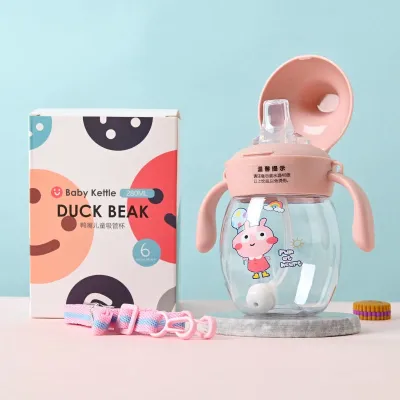

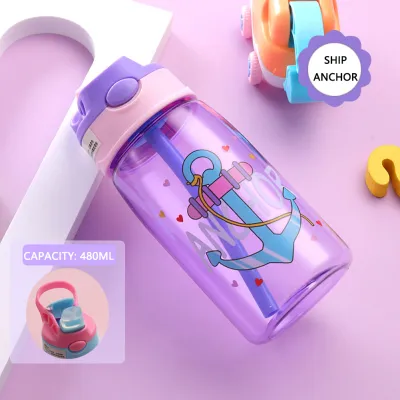
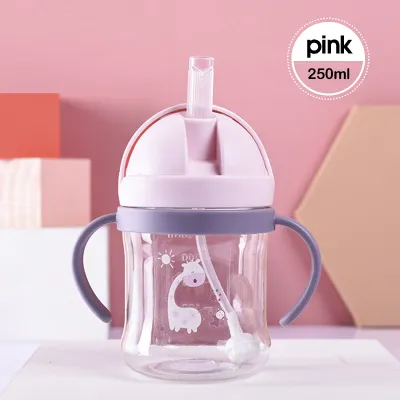
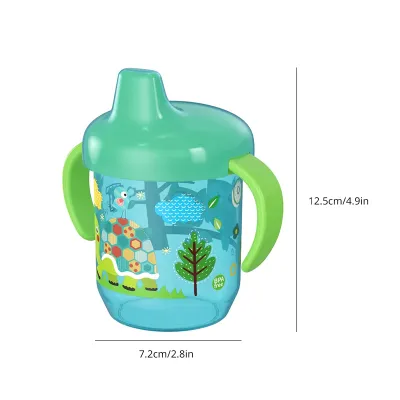
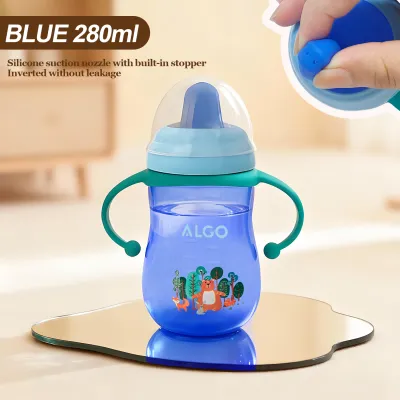
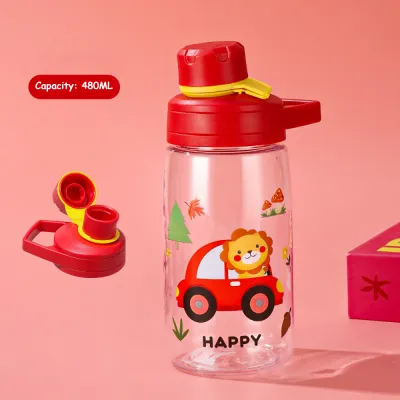
Prices are valid at publication and may change. Please refer to the product page for the latest price.
The “best” choice is not a fixed product but a shifting specification that aligns with your baby’s current weaning stage and motor abilities. Caregivers must evaluate their baby’s readiness rather than relying solely on age labels printed on packaging.
To appreciate this progression, contrast training designs with traditional infant bottles. Drinking from a standard baby bottle relies on an infantile sucking reflex, where the tongue thrusts forward. Training cups encourage mature swallowing patterns that require the tongue to retract and the lips to seal actively.
Spout Bottles: Best for Early Weaning and Basic Sipping
Spout bottles are traditionally the first alternative to a bottle that parents introduce, typically around 6 months of age when starting solid foods. The familiar shape of a spout cup helps bridge the gap between bottle-feeding and cup-drinking, making it an easy concept for young infants to grasp.

The drinking mechanism of a spout cup closely mimics that of a traditional bottle, requiring the baby to tilt their head back to let gravity assist the liquid flow. Soft silicone spouts are gentler on emerging teeth and tender gums, making them highly suitable for teething infants. Hard plastic spouts are more durable and resistant to biting, but lack the flexibility needed to protect sensitive oral tissues. Always check the manufacturer’s age recommendations on the packaging to ensure the material is appropriate for your child’s stage.
Despite convenience, spout cups carry developmental limitations. Prolonged use of hard spouts, especially with heavy spill-proof valves, can interfere with palate development and speech by preventing the tongue from elevating during swallowing. Pediatric dentists suggest treating spout cups as temporary transitional tools. If you notice persistent tongue thrusting or speech concerns, consult a pediatric specialist.
Straw Bottles: Ideal for Developing Oral Motor Skills
Straw bottles are highly recommended by pediatric experts and speech-language pathologists for their exceptional developmental benefits. Caregivers can typically introduce a straw cup between 6 to 9 months, once the baby can sit upright steadily without assistance.
Drinking from a straw requires a mature oral motor pattern involving lip sealing, cheek muscle engagement, and tongue retraction. To draw liquid up, the baby must seal their lips tightly around the straw and create vacuum pressure. This action strengthens facial muscles and promotes a mature swallow, supporting clear speech development and proper jaw alignment.
Another benefit of straw bottles is the drinking posture they promote. Unlike spout cups, straw designs allow the baby to drink while keeping their head in a neutral, upright position. This alignment is safer for swallowing and prevents unnecessary strain on the baby’s neck and spine, especially when seated in a high chair.
However, straw cups have practical limitations. Straw mechanisms are difficult to clean and require a dedicated, thin brush. In the warm, humid climate of the Philippines, moisture trapped inside a straw can rapidly lead to mold growth. It is critical to disassemble the cup completely after each use, wash it thoroughly, and let it dry in a well-ventilated area. Caregivers should always supervise babies during use to prevent injuries from falling while holding a straw cup.
Open Cups: The Final Step for Proper Swallowing and Speech
The open cup is the gold standard for oral development and represents the ultimate goal of the weaning process. While many parents wait until toddlerhood, assisted open-cup drinking can begin as early as 6 months. Independent use typically develops between 12 to 18 months.
Using an open cup demands advanced physical coordination. The baby must integrate lip control, jaw stability, and hand-eye coordination to bring the cup to their mouth without spilling. From a health perspective, open cups offer unmatched benefits. They pose zero risk to dental alignment or palate development because no object enters the mouth to alter the natural position of the tongue. Furthermore, open cups are incredibly hygienic and easy to clean thoroughly, eliminating the risk of hidden mold buildup.
The primary drawback of open cups is the high likelihood of spills during learning. Teaching a baby to use an open cup requires constant adult supervision and patience. To make the process manageable, caregivers must supervise every session closely and only fill the cup with a few sips of water at a time.
For parents seeking a middle ground, “360-degree” rim cups serve as an excellent alternative. These cups feature a circular valve that mimics the rim of an open cup, allowing the baby to sip from any edge. Liquid only flows when applying lip pressure to the silicone seal, reducing spills while still encouraging the lip-sealing motion required for a true open cup.
Transitioning Your Baby: When and How to Switch Cups
Successfully transitioning your baby between cup types relies on observing developmental readiness signals rather than strictly adhering to a calendar. Forcing a cup before a baby is physically ready can lead to frustration, refusal, and a negative association with hydration.
Before introducing a straw cup, look for these specific readiness signals:
- The baby can sit upright steadily in a high chair.
- They show active interest in adult cups and reach for your drinks.
- They can close their lips firmly around a spoon when eating solid foods.
To transition to an open cup, look for these advanced indicators:
- The baby demonstrates strong hand-eye coordination and a steady, two-handed grip.
- They have successfully mastered drinking from a straw cup without choking.
When introducing a new cup, choose relaxed, low-stress moments, such as the start of a midday meal, rather than when your baby is tired or cranky. Start with a very small amount of water—just a tablespoon or two—to keep spills manageable. If your baby struggles, chokes, or shows intense frustration, stop the session immediately. Never force the transition; instead, revert to a familiar cup and try again in a few weeks. Always supervise your baby closely during these practice sessions to ensure safety. If you notice persistent swallowing difficulties, stop use and consult a healthcare professional.
Essential Specs to Check Before Buying a Baby Water Bottle
When shopping for a water bottle for baby, several secondary specifications deserve close attention to ensure the product fits your daily routine and local environment.
- Valve Tension and Flow Rate: Leak-proof cups often use tight silicone valves that require intense suction. This heavy resistance can frustrate young babies and counteract oral motor practice. Opt for free-flow designs or cups with light, flexible valves that release liquid easily.
- Material and Insulation: In the tropical Philippine climate, keeping drinks fresh is a challenge. Insulated stainless steel bottles keep water cool during warm afternoons, but they are heavier and harder for a 6-month-old to lift. Lightweight, BPA-free plastic or food-grade silicone bottles are much easier for tiny hands to manage. Always verify that the material is certified food-safe and free from harmful chemicals.
- Handles and Grip: Removable handles are beneficial for babies aged 6 to 12 months to build grip strength. As your baby transitions into a toddler, look for bottles with contoured grips or handle-less designs that fit easily into stroller cup holders.
- Cleaning and Maintenance: High humidity increases the risk of mold growth. Prioritize water bottles that can be fully disassembled, leaving no crevices. Verify the manufacturer's sterilization instructions before buying; some plastics cannot tolerate boiling water or steam sterilizers, while food-grade silicone and stainless steel are generally heat-resistant.
Frequently Asked Questions (FAQ)
When should I completely transition away from spout cups?
Pediatric dentists generally recommend phasing out hard spout cups by 12 to 15 months. Prolonged reliance can negatively alter palate development, affect teeth alignment, and reinforce infantile swallowing. Transition to straw or open cups as soon as your baby displays the necessary motor skills.
Is it safe to leave a baby water bottle in the crib?
No, leaving any water bottle or training cup in the crib poses a serious choking hazard, especially if the baby drinks while lying flat. Furthermore, if the cup contains milk, formula, or juice, it can lead to rapid tooth decay as liquid pools around their teeth during sleep. Always offer water during supervised awake times and remove cups before bedtime.
Community discussion
Share your experience or ask a question. Comments are reviewed before publication.