
Starting the weaning process is a significant milestone for both you and your child. As your little one transitions from breast or bottle to solid foods during family mealtimes, finding the right sippy cup for toddler use becomes a primary task. The “best” cup is not a single, universal choice; rather, it depends entirely on your toddler’s current weaning progress, their developing oral motor skills, and your daily parenting priorities—such as whether you value absolute spill prevention or rapid developmental progress at this stage.
Spout cups, particularly those with soft silicone spouts, serve as familiar transitional tools during early weaning because they closely mimic the feel of a bottle nipple. Straw cups are highly recommended for building oral motor strength and speech-related muscle groups once your child understands how to draw liquid upward. Meanwhile, 360-degree cups are designed to teach the mechanics of open-cup drinking while keeping spills to an absolute minimum. Because every child’s physical development is unique, caregivers should always consult a pediatrician, pediatric dentist, or speech-language pathologist if their child experiences feeding delays, swallowing difficulties, or specific dental concerns before settling on a cup type.
How Spout, Straw, and 360 Cups Actually Work
To make an informed choice, it helps to understand the physical design and drinking mechanics of each cup type. Each design requires different muscle movements and coordination, which directly affects how your child learns to swallow and control liquid.
Products mentioned in this guide
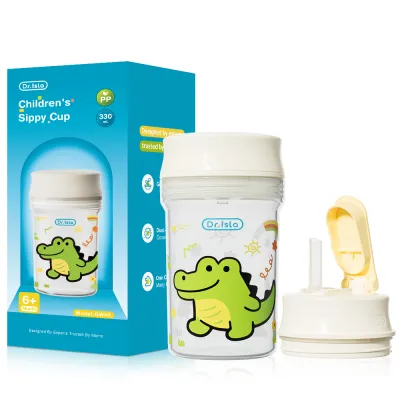
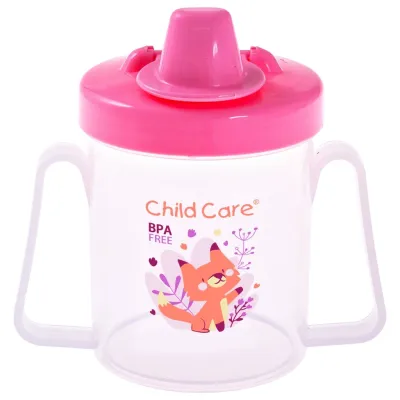
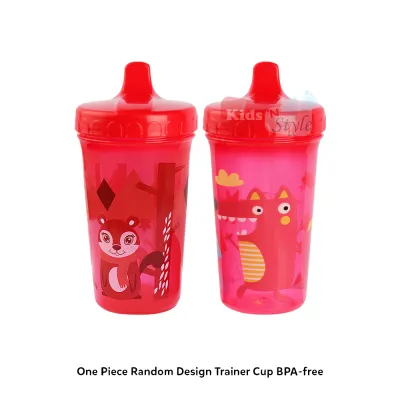
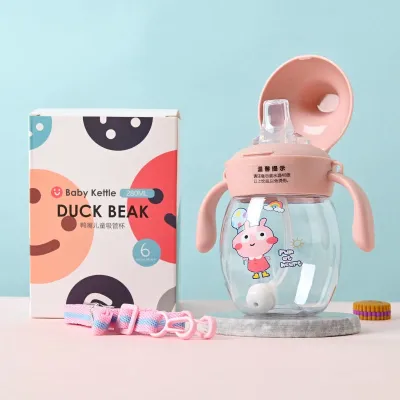
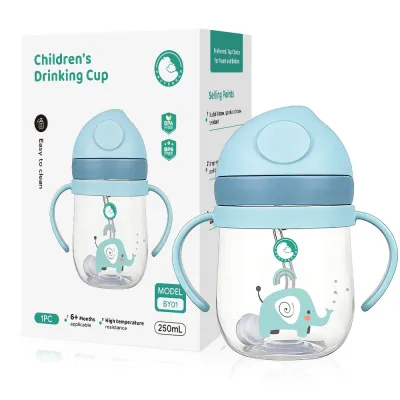
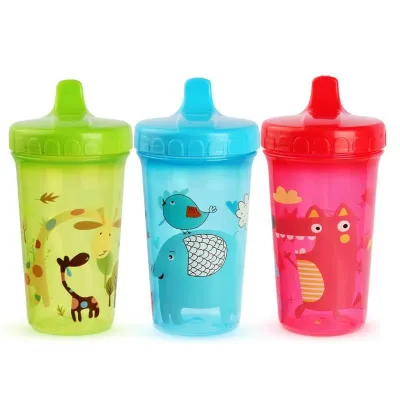
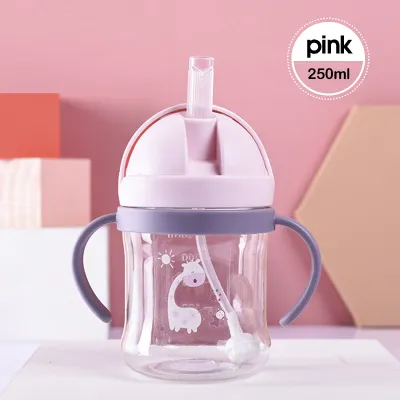
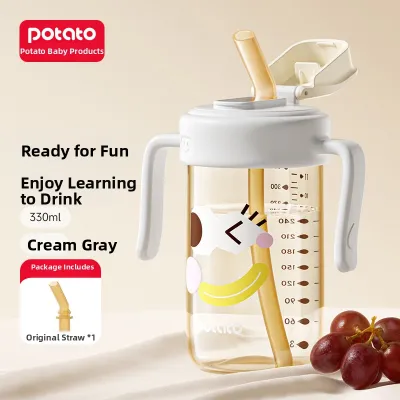
Prices are valid at publication and may change. Please refer to the product page for the latest price.
Spout Cups (Soft and Hard)
Spout cups feature a lid with a protruding, elevated spout that requires the child to tilt the cup backward to drink. This tilting action is highly intuitive for babies because it mirrors the exact angle and motion they use when drinking from a standard baby bottle.
These cups generally fall into two categories based on the spout material:
- Soft spouts: Typically made of flexible silicone, these are gentle on sensitive, teething gums and offer a familiar texture that helps ease the initial transition away from a bottle nipple.
- Hard spouts: Made of rigid plastic, these are highly durable and designed to withstand the biting and chewing of older toddlers who have already developed front teeth.
Regardless of the material, spout cups rely on a combination of tilting and sucking. While simple to use, they do not require the child to learn a new way of swallowing, as the liquid is delivered directly to the middle of the mouth, much like a bottle.
Straw Cups
Straw cups utilize a built-in straw—usually made of soft, flexible silicone—that extends to the bottom of the cup. Many modern models feature a weighted base at the end of the straw, which allows the straw to move with gravity so the child can drink from any angle, even while lying down or tilting the cup.
Unlike spout cups, straw cups require the child to keep the cup upright and draw liquid upward using active suction. This action demands a higher level of oral coordination, requiring the child to form a tight seal with their lips, retract their tongue, and use their cheek muscles to create vacuum pressure. It completely eliminates the need to tilt the head back, encouraging a more mature upright posture during mealtimes.
360-Degree Cups
A 360-degree cup features a flat, circular lid sealed with a silicone valve, completely eliminating the need for a protruding spout or straw. The child can place their lips anywhere along the rim of the cup, just like they would with a standard open glass.
To drink, the child must tilt the cup and apply gentle lip pressure to the silicone valve while sipping. This pressure temporarily breaks the seal, allowing a controlled flow of liquid to escape. As soon as the child releases their lips from the rim, the valve automatically reseals, preventing spills. This unique mechanism acts as a bridge, teaching toddlers the exact lip positioning and tilting control required for open cups without the mess of accidental spills.
Comparing the Cups: Oral Development, Spills, and Cleaning
When choosing between these three options, you must balance your child’s developmental needs with the practical realities of daily parenting, such as cleanup time and spill management.

Oral Motor Development and Dental Health
How your child drinks affects the development of their jaw, tongue, and palate. Pediatric specialists often look at how different cup designs impact these oral structures over time.
- Spout Cups: While excellent for short-term transitions, prolonged use of hard spout cups can keep the tongue resting forward in an immature "suckling" position. If used continuously throughout the day, this forward tongue placement can potentially interfere with proper palate development and the alignment of emerging teeth.
- Straw Cups: Speech-language pathologists highly favor straw cups because they actively promote lip closure, tongue retraction, and jaw stability. These oral motor skills are foundational for speech development and help your child transition to a mature swallowing pattern.
- 360 Cups: Pediatric dentists frequently recommend 360 cups because they encourage normal lip and tongue movements. Because there is no spout or straw to bite down on, the child's tongue remains in a natural position, supporting healthy dental alignment and jaw growth.
Always consult a pediatric dentist or speech therapist for individualized advice if you notice your child struggling with swallowing or showing signs of dental misalignment.
Spill Resistance and Toddler Independence
Toddlers love to test gravity, which means their cups will inevitably be dropped, tossed, or knocked off high chairs. Assessing how each cup handles active daily use is crucial.
- Spout Cups: These are generally highly leak-proof when the valve is properly inserted and closed. However, if your toddler drops the cup from a high chair or bites down hard on the spout valve, liquid can occasionally splatter or drip from the opening.
- Straw Cups: Many straw cups feature cross-cut valves inside the straw that prevent major leaks when tipped upside down. However, pressure changes—especially in the warm, tropical climate of the Philippines—can cause liquid to expand inside the cup and shoot or dribble out of the top of the straw when the lid is opened.
- 360 Cups: These offer some of the highest spill resistance available for active toddlers. Because the valve only opens under direct lip pressure, dropping, shaking, or throwing the cup typically results in zero or minimal spills, making them ideal for car rides, play areas, and active play.
Cleaning Effort and Hygiene
In warm, humid environments, mold and bacteria can develop rapidly in tiny, damp crevices. Maintaining strict hygiene is essential for your child’s health.
- Spout Cups: These are relatively straightforward to clean, but you must pay close attention to the small valve mechanism inside the lid. Milk or juice residue can easily hide in these areas, requiring a small detail brush to scrub clean.
- Straw Cups: These require the most cleaning effort. You must use a dedicated, thin straw brush to clean the entire length of the tube daily. The small valves at the base of the straw must be disassembled regularly to check for hidden mold.
- 360 Cups: While many 360 cups are top-rack dishwasher safe, they consist of multiple interlocking parts, including the collar, the silicone valve, and the plastic lid. To prevent mold growth, you must completely disassemble these parts after every use, wash them thoroughly, and allow them to dry completely in a well-ventilated space.
The Decision Framework: Match the Cup to Your Child's Progress
To choose the right cup, evaluate your child’s current development, age, and your specific household needs. You can use this framework to guide your purchase decision.
Choose a Soft Spout Cup if:
- Your baby is just starting the weaning process (usually around 6 months of age, alongside the introduction of solid foods).
- Your child is highly attached to their bottle and needs a gentle, familiar texture to accept a new drinking vessel.
- You want an easy, low-stress transition tool for the first few weeks of weaning.
Choose a Straw Cup if:
- Your toddler has mastered basic hand-to-mouth coordination and can hold a cup independently.
- You want to actively support oral motor and speech development by training their lip and tongue muscles.
- Your child is capable of understanding the suction mechanic (you can teach this early by using the "pipette" method with a standard straw, releasing water into their mouth until they learn to suck).
Choose a 360 Cup if:
- Your toddler is showing interest in drinking from your open glass and is ready to learn open-cup mechanics.
- You need maximum spill protection for travel, car seats, or carpeted areas.
- You want to completely discourage the infant suckling pattern and promote healthy dental alignment.
Choose a Hard Spout Cup if:
- Your toddler aggressively bites, chews, and destroys soft silicone spouts or straws.
- You need a highly durable, break-resistant transitional option before moving directly to an open cup.
Verify First if:
- Your child has a history of feeding difficulties, swallowing delays, or specific dental concerns. In these cases, pause your selection and consult a pediatric occupational therapist, speech-language pathologist, or pediatric dentist for a tailored recommendation.
- Always check the manufacturer's packaging for specific age ratings, weight ranges, and safety warnings before introducing any new cup to your child.
How to Transition From Bottles to Open Cups
Transitioning away from the bottle is a gradual process that requires patience. You do not have to make the switch overnight; instead, view it as a step-by-step journey.
A logical progression for most children looks like this:
- Bottle
- Soft Spout or Weighted Straw Cup (to introduce new drinking angles and suction)
- 360 Cup (to practice rim-drinking mechanics without the mess)
- Small, Unsealed Open Cup (with close caregiver supervision)
To make the transition smoother, try offering the new cup during relaxed times of the day, such as afternoon merienda or playtime, when your child is not overly hungry, tired, or cranky. Fill the cup with a small amount of breast milk, formula, or water to encourage them to explore the new vessel without getting frustrated.
To protect your child’s emerging teeth, limit the use of any sippy cup to mealtimes and water only. Allowing a toddler to walk around sipping milk, juice, or sweetened drinks throughout the day keeps their teeth constantly coated in sugars, which can lead to rapid tooth decay. Remember that all sippy, straw, and 360 cups are temporary training tools; the ultimate goal is to help your child drink confidently from a regular open cup.
Frequently Asked Questions (FAQ)
When should I introduce a sippy cup?
You can generally introduce a training cup around six months of age, which typically coincides with the introduction of solid foods. At this stage, your baby should be able to sit up independently with good head and neck control. Look for developmental readiness cues, such as your baby reaching for your cup during meals or showing curiosity about your drinking routines. Always check your specific product’s manufacturer guidelines to ensure the cup is safety-rated for your child’s age, and ensure all cup use is conducted under active caregiver supervision.
Are sippy cups bad for toddlers' teeth?
Sippy cups themselves are not inherently bad for your toddler’s teeth, but how they are used can contribute to dental issues. Prolonged, continuous use of hard spouts can impact palate shape and tooth alignment over time. Furthermore, allowing your toddler to constantly carry a cup filled with milk or juice throughout the day exposes their teeth to continuous sugars, increasing the risk of cavities. To protect their dental health, limit cup use to scheduled mealtimes, fill them primarily with water between meals, avoid letting your child take any cup to bed, and transition to an open cup as soon as their motor skills allow.
Community discussion
Share your experience or ask a question. Comments are reviewed before publication.