
Finding the right lock for refrigerator safety in your home is not about finding a universally “perfect” product, but rather about matching a locking mechanism to your specific appliance design and your child’s physical capabilities. In busy households, the kitchen is a central hub where curious toddlers quickly learn that the refrigerator contains interesting items, colorful packaging, and potential hazards. Securing this appliance is a critical step in baby-proofing, but a lock that works flawlessly on a flat, textured single-door unit might fail completely on a stainless steel French-door model or a unit with recessed handles.
To make an informed decision, you must evaluate three primary lock categories: flexible strap locks, hidden magnetic locks, and rigid mechanical latch locks. Each type utilizes a distinct physical barrier to prevent unauthorized access. By analyzing your refrigerator’s exterior material, the configuration of its doors, and the developmental stage of your child, you can select a security solution that keeps your kitchen safe while maintaining reasonable convenience for adult household members.
How Strap, Magnetic, and Latch Locks Work
Understanding the physical operation of each lock type helps you visualize how it will fit onto your appliance and how your family will interact with it daily.
Products mentioned in this guide
Prices are valid at publication and may change. Please refer to the product page for the latest price.
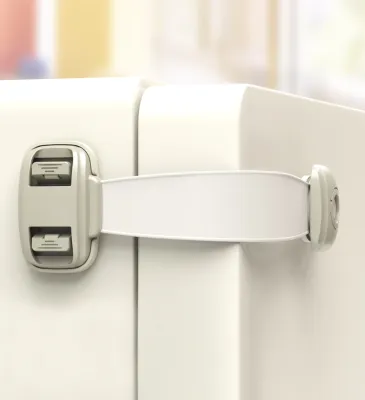
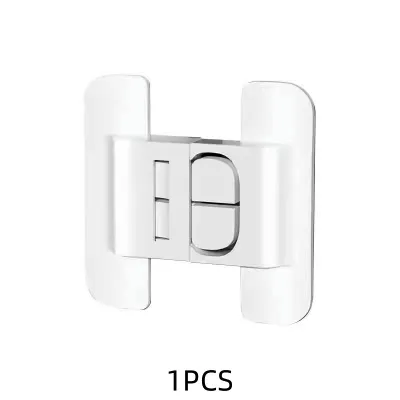
Strap locks consist of two plastic anchor points connected by a flexible, heavy-duty plastic or silicone band. The anchors are backed with industrial-strength adhesive, allowing you to mount one anchor on the side of the refrigerator cabinet and the other on the front of the door. The flexible strap stretches across the seam or corner of the appliance, holding the door firmly closed. To open the refrigerator, an adult must press a release button or slide a catch on one of the anchor plates, which detaches the strap from that anchor.
Magnetic locks operate on a completely different principle, prioritizing a discreet appearance and keeping the locking mechanism entirely out of a child’s sight. These systems typically feature an internal catch plate or latch that is mounted inside the door seam or along the top edge of the appliance, paired with an external magnetic key. When the door is closed, the internal latch automatically engages, keeping the door sealed. To open it, you must place the specialized magnetic key against a specific spot on the exterior of the refrigerator door, which pulls the internal spring-loaded mechanism open.
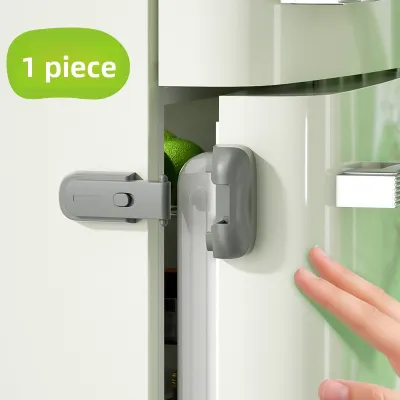
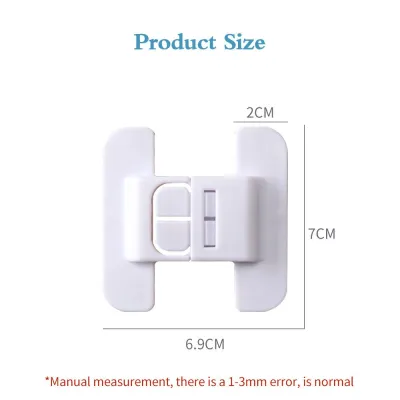
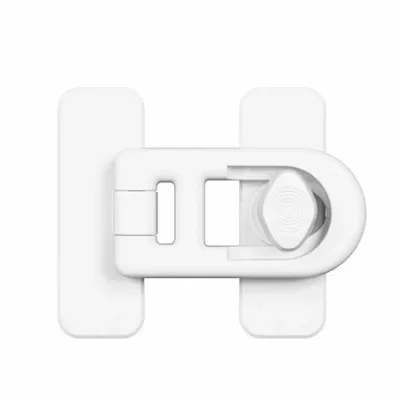
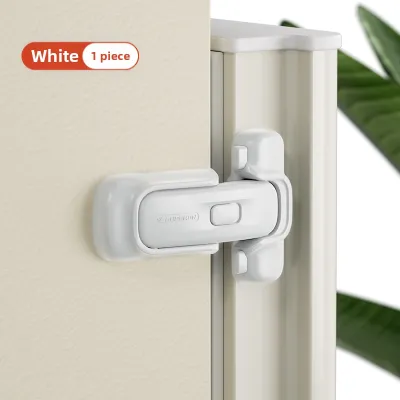
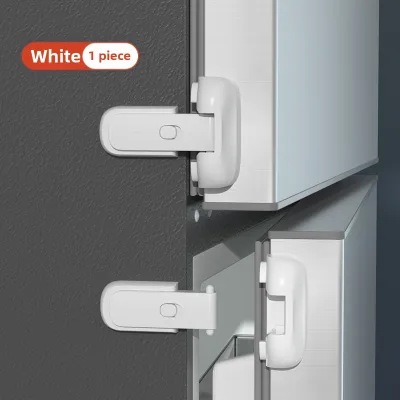
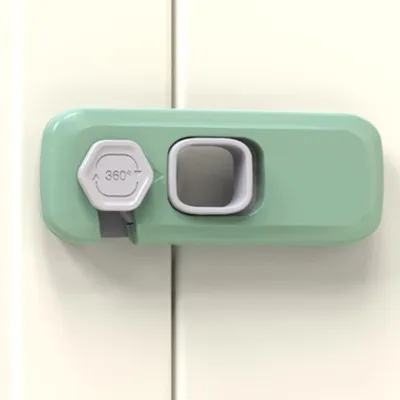
Latch locks rely on rigid, mechanical barriers to prevent the doors from swinging open. These locks do not use flexible straps; instead, they employ hard plastic or metal arms, sliding bolts, or pivoting hooks. Some latch locks are designed to loop around adjacent door handles, while others mount directly to the front of the appliance using heavy-duty adhesives. When engaged, the rigid arm or hook physically blocks the door from moving away from the frame. Releasing a latch lock usually requires a multi-step physical action, such as squeezing two release points simultaneously or sliding a safety button while lifting the latch arm.
Assessing Your Fridge and Household Needs
Before purchasing any lock for refrigerator safety, you must conduct a thorough assessment of your appliance’s physical characteristics and your child’s current developmental stage.

First, evaluate the door surface material of your refrigerator. Modern appliances come in a wide variety of finishes, including smooth stainless steel, textured matte plastic, powder-coated metal, and even tempered glass. Adhesives behave differently on each of these surfaces. For instance, smooth, non-porous surfaces like stainless steel and glass generally provide excellent initial adhesion, but they are also highly sensitive to scratches and chemical damage during lock removal. Textured surfaces, on the other hand, have microscopic valleys that can prevent some adhesives from forming a complete, airtight bond, potentially reducing the lock’s overall holding strength.
Next, identify the handle style of your refrigerator. Many contemporary models feature recessed handles—grooves molded into the top, bottom, or sides of the doors—which leave the front surface completely flat. Other models have prominent vertical or horizontal bar handles that protrude several inches from the door face. The presence of protruding handles can interfere with the placement of flexible strap locks, but it also opens up the possibility of using specialized latch locks that wrap around or block the handles directly. If your refrigerator has French doors or a side-by-side configuration, you must also consider the gap between the doors and whether the lock needs to secure two doors simultaneously or just one.
Finally, consider your child’s developmental stage and physical strength. A young toddler who is just beginning to pull themselves up to a standing position exerts a simple, downward or outward pulling force. For this stage, a basic physical barrier that resists direct tension is usually sufficient. However, older toddlers and preschool-aged children possess significant cognitive problem-solving skills and fine motor coordination. They will closely observe how adults operate the lock and may quickly learn to mimic the pressing, sliding, or squeezing motions required to release simple mechanisms. For these older children, you will need a lock that requires greater hand strength, a two-step release process, or a completely hidden mechanism like a magnetic lock.
When to Choose Strap Locks
Flexible strap locks are highly recommended for households seeking a versatile, easy-to-install solution that can adapt to unusual appliance shapes and configurations.
Choose strap locks if your refrigerator has a curved front, non-standard door alignments, or if you need to secure a freezer drawer located at the bottom of the unit. Because the connecting band is flexible, it can easily bend around 90-degree corners, allowing you to anchor one side to the flat side panel of the refrigerator and the other to the front door. This makes strap locks exceptionally useful for single-door refrigerators, compact mini-fridges, and chest freezers where the door and the main cabinet do not sit on the same flat plane.
However, you must verify the surface texture and environmental conditions before relying on strap locks. In tropical environments with high ambient humidity, standard adhesives can take significantly longer to cure, and moisture in the air can degrade the bond over time if the surface was not perfectly prepped. If your refrigerator has a heavily textured or embossed plastic finish, the adhesive anchors may not achieve full contact, leading to premature failure when a child pulls on the door.
Additionally, strap locks have distinct physical limitations. If your child is exceptionally strong or has reached a developmental stage where they can apply their full body weight to the door, the flexible strap can stretch or the adhesive anchors can peel away under sudden, high-tension impacts. If you observe the strap beginning to fray, show signs of stress discoloration, or if the adhesive edges start to lift, the lock must be replaced immediately to prevent sudden failure.
When to Choose Magnetic Locks
Magnetic locks are the ideal choice for parents who want to maintain the clean, uninterrupted aesthetic of their kitchen appliances while keeping the locking mechanism completely out of their child’s line of sight.
Choose magnetic locks if you prefer a discreet safety solution that does not alter the exterior appearance of your kitchen. Because the primary latching mechanism is installed on the interior frame or along the inner seam of the door, there are no visible straps, plastic brackets, or mechanical arms on the front of your refrigerator. This hidden design is highly effective against curious toddlers, as they cannot see a mechanism to study, pull at, or attempt to mimic. Without a visible target, children are far less likely to focus their attention on trying to bypass the lock.
Before choosing this option, you must verify that your refrigerator’s interior lining and door clearance can accommodate the internal catch plate. The catch plate must be mounted securely inside the unit, which requires a flat, stable surface along the inner frame. You must also ensure that the adhesive used inside the refrigerator can withstand cold temperatures and potential exposure to moisture or condensation without losing its grip.
The primary trade-off of magnetic locks is the operational reliance on an external magnetic key. You must keep the key stored in a secure, high location that is completely out of reach of children but easily accessible to adults. If the key is misplaced, opening the refrigerator becomes extremely difficult, which can be a significant inconvenience during meal preparation. Additionally, exceptionally thick door insulation or heavy magnetic shielding on high-end refrigerator models can sometimes interfere with the magnetic field, preventing the key from successfully releasing the internal latch.
When to Choose Latch Locks
Mechanical latch locks are best suited for heavy-duty applications where a robust, rigid physical barrier is required to withstand significant force.
Choose latch locks if your refrigerator has prominent, protruding handles or if you are dealing with a highly determined child who has already bypassed or broken flexible strap locks. Latch locks that loop around or clamp onto vertical bar handles leverage the structural strength of the handles themselves, completely bypassing the need to rely on adhesives mounted directly to the appliance’s finish. These handle-based latches are incredibly secure because they distribute the pulling force across the metal or heavy plastic handles, making it virtually impossible for a toddler to force the doors open.
Before purchasing a latch lock that requires adhesive mounting, you must verify if your appliance manufacturer has specific guidelines or restrictions regarding the application of heavy-duty adhesives or mechanical fasteners to the exterior finish. Some high-end finishes, such as fingerprint-resistant stainless steel or specialized matte coatings, can be permanently discolored or stripped if an incompatible adhesive or solvent is applied. Drilling into the refrigerator cabinet or door to mount a mechanical latch is highly discouraged and should be avoided, as it can puncture cooling lines, damage vacuum insulation panels, and void your manufacturer’s warranty.
The main trade-off of mechanical latch locks is their impact on adult convenience. Because these locks are designed to be highly rigid and secure, they often require a complex, two-handed operation to open, or they may require a significant amount of finger strength to squeeze the release tabs. This can make accessing the refrigerator challenging when your hands are full of groceries or cooking ingredients.
Comparison Matrix: Matching Locks to Fridge Features
To help you quickly identify the most compatible locking system for your kitchen, use the comparison matrix below to match lock types with your specific appliance characteristics and household requirements.
| Lock Type | Ideal Door Material | Handle Requirement | Installation Effort | Adult Convenience |
|---|---|---|---|---|
| Strap Locks | Smooth metal, plastic, or glass; handles corners well | Works with recessed or flat doors; bypasses handles | Low; requires surface cleaning and adhesive curing | Moderate; simple one-handed slide or press release |
| Magnetic Locks | Smooth metal or plastic; requires flat interior frame | Works with any handle style; completely hidden | Medium; requires precise alignment of internal parts | Low to Moderate; requires retrieving and placing the magnetic key |
| Latch Locks | Heavy-duty metal or plastic; best for flat surfaces | Ideal for prominent vertical or horizontal bar handles | Low to Medium; depends on handle-loop or adhesive style | Low; often requires two hands or high finger strength to release |
Note: Before installing any adhesive-based or mechanical lock, verify first with your refrigerator’s user manual or manufacturer warranty guidelines to ensure the installation method will not damage the exterior finish or void your coverage.
Safe Installation and Appliance Care
Proper installation is critical to ensuring that your chosen refrigerator lock performs reliably under tension while protecting the appliance’s finish from long-term damage.
To begin, prepare the mounting surface thoroughly. Clean the exact areas where the adhesive pads will sit using a mild cleaning solution or isopropyl alcohol, depending on what is approved by your refrigerator manufacturer. In tropical environments, high humidity and airborne grease from cooking can leave a thin, invisible residue on appliances. This residue must be completely removed to allow the adhesive to make direct contact with the surface. Ensure the area is entirely dry before proceeding; even a tiny amount of trapped moisture can prevent the adhesive from bonding correctly.
Once the surface is clean and dry, peel the protective backing from the adhesive pads and press the lock components firmly onto the designated spots. Apply steady, heavy pressure for at least 30 seconds to ensure the adhesive conforms to the surface. After application, it is absolutely vital to respect the manufacturer-specified curing time before subjecting the lock to any tension. Most high-quality adhesives require a full 24 hours to cure and reach their maximum holding strength. Attempting to test the lock or allowing a child to pull on the door before this curing period is complete will significantly weaken the bond, often causing the lock to fail prematurely.
When testing the lock’s hold after the curing period, do so gently. Apply a gradual pulling force to simulate a toddler’s strength, rather than jerking the door open with full adult force, which could damage the lock or the appliance door. If you find that the lock does not hold securely or if your appliance’s unique design makes adhesive mounting impractical, do not attempt to drill screws into the refrigerator cabinet. Instead, stop and consult the appliance manufacturer or a professional baby-proofing specialist to explore alternative, non-invasive safety solutions.
Frequently Asked Questions (FAQ)
Can I use a refrigerator lock on a glass-door fridge?
Yes, you can use a refrigerator lock on a glass-door unit, but you must select and install it with extreme care. Adhesive-backed strap locks are generally the safest option for glass surfaces, as they do not require mechanical fastening. However, you must verify that the adhesive is rated for use on glass and that the glass surface is completely clean and free of fingerprints or oil before application. Avoid placing locks in a way that creates high, concentrated leverage points on the glass pane itself; instead, try to mount the adhesive anchors on the metal or plastic frame surrounding the glass to minimize the risk of stress fractures.
Will adhesive locks damage my stainless steel fridge finish?
Adhesive locks generally do not damage high-quality stainless steel, but they can leave behind a stubborn, unsightly residue when removed, and some specialized coatings can be sensitive to harsh chemicals. To prevent damage, always test any adhesive remover or cleaning solvent on a small, inconspicuous area of the refrigerator—such as the lower back or side panel—before applying it to the front door. When it is time to remove the lock, use a plastic scraper, a piece of dental floss slid behind the adhesive pad, or a hair dryer on a low, warm setting to gently soften the adhesive before peeling it away. Never use metal blades, steel wool, or abrasive scrubbing pads, as these will permanently scratch the stainless steel finish.
At what age can children typically figure out how to open these locks?
Many children begin to understand the basic cause-and-effect relationship of mechanical locks between the ages of 18 months and 2 years. By observing adults, a toddler may quickly learn that pressing a specific button or sliding a latch releases the door. However, even if they understand the concept, they may lack the physical hand strength or bilateral coordination required to operate the release mechanism until they are closer to 3 years old. If you notice your child actively studying the lock, attempting to manipulate the buttons, or successfully bypassing a simple strap lock, it is time to upgrade to a more complex system, such as a two-step mechanical latch or a hidden magnetic lock that keeps the mechanism entirely out of sight.
Community discussion
Share your experience or ask a question. Comments are reviewed before publication.