
Choosing the right seating for your baby’s mealtime journey is a major decision that impacts your daily routine for years. When looking at a Chicco high chair, you will primarily choose between two distinct designs: standard and convertible models. Standard models focus on delivering a dedicated, highly adjustable, and comfortable feeding station for infancy and early toddlerhood. Convertible models, on the other hand, are designed to evolve alongside your child, transforming from a traditional high chair into a booster seat, toddler chair, or even a youth stool.
To make the right choice for your household, you must weigh factors like your available dining space, your long-term budget, and how long you expect the furniture to remain in active use. In the Philippines, where dining spaces can range from compact urban condominiums to spacious family homes, the physical footprint and storage capabilities of these chairs are highly practical considerations. High humidity and warm tropical weather also mean that ease of cleaning and material breathability are key to maintaining a hygienic feeding environment. By comparing these two categories across key design dimensions, you can select the configuration that best supports your baby’s developmental milestones and fits seamlessly into your home.
Understanding Standard and Convertible Chicco High Chairs
Standard high chairs are engineered as dedicated, single-purpose feeding stations. These models typically feature robust frames with multiple height adjustments, allowing you to align the baby’s tray with your dining table. They often include multi-position reclines to accommodate infants who are just starting on purees but still require slightly tilted support. While they are highly specialized for the early stages of eating, their primary function remains focused on the high chair configuration, meaning they do not transition into other types of furniture once your child outgrows the main seat.
Products mentioned in this guide
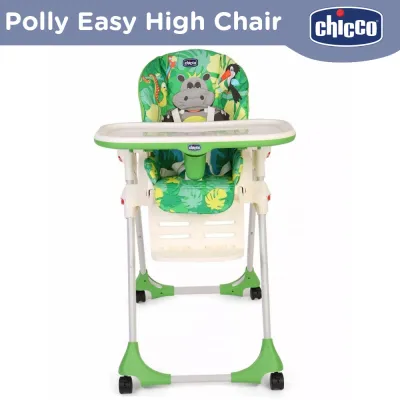
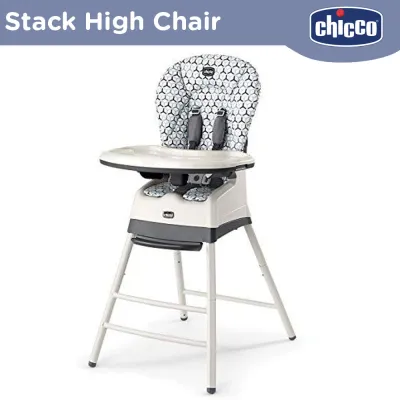
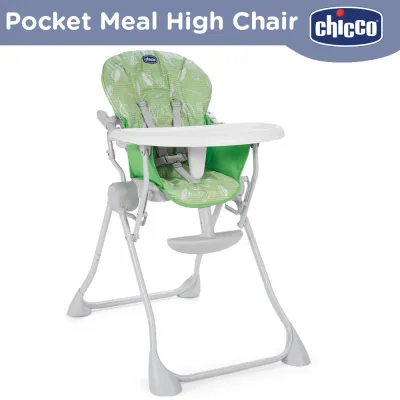
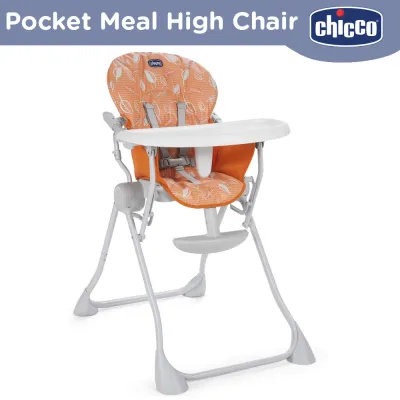
Prices are valid at publication and may change. Please refer to the product page for the latest price.
Convertible high chairs are designed with a multi-stage lifecycle in mind. These versatile units can be disassembled, reconfigured, or stacked to serve different purposes as your child grows. A typical convertible model might start as a standard infant high chair, transition into an on-the-chair booster seat for family meals, and eventually convert into a low toddler chair or a sturdy youth stool. This adaptability allows a single purchase to serve your child from their first spoonful of solid food well into their preschool years, reducing the need to buy separate seating solutions later on.
Because these two categories serve different developmental stages, it is essential to check the manufacturer’s age, weight, and developmental recommendations on the product label for each specific configuration. A convertible model may have different weight limits depending on whether it is used as a high chair, a booster, or a youth stool. Never assume that a child who fits safely in one mode is automatically ready for the next transition. Always verify that your baby meets the minimum physical milestones, such as independent sitting and head control, before adjusting the chair’s setup.
Key Dimensions to Compare for Long-Term Value
Evaluating the long-term value of a Chicco high chair requires looking closely at the manufacturer’s specifications rather than assuming performance based on appearance. The most critical factor in determining the actual lifespan of the furniture is the weight and height limits set by the manufacturer. Standard high chairs often have a fixed maximum weight capacity that aligns with late toddlerhood, usually around 15 kilograms. In contrast, convertible models often support higher weight limits in their youth stool or booster configurations, sometimes accommodating children up to 25 kilograms or more. Checking these limits helps you calculate the cost-per-use over several years.

Recline and posture support are equally vital for your baby’s comfort and safety during meals. Early weaning requires a supportive seat that keeps the baby’s hips at a safe 90-degree angle, with adjustable footrests to prevent dangling legs, which can cause fatigue and restlessness. Standard models frequently offer highly adjustable recline positions and multi-position footrests to accommodate growing limbs. Convertible models also provide these adjustments in their initial high chair stages, but as they transition into booster or youth modes, the built-in support structures change. You must verify how easily the footrest and backrest adjust in each configuration to ensure your child maintains proper posture at every age.
Harness systems are the primary safety feature of any high chair, and their configuration changes significantly between models and stages. Standard high chairs almost universally employ a 5-point harness to keep younger infants securely positioned and prevent them from sliding out. Convertible models also start with a 5-point harness but typically transition to a 3-point harness or rely on the dining chair’s own structure when converted into a booster seat. It is crucial to strictly follow the manual’s transition rules for safety, ensuring you do not remove the shoulder straps or crotch post prematurely before your child has developed the trunk control and discipline to sit safely without them.
Space, Maintenance, and Daily Usability
The physical footprint of a high chair can dramatically affect your daily comfort, especially in busy household spaces. Standard high chairs often feature wider bases to ensure stability, which can take up considerable floor space in your dining area. However, many standard models are designed with compact folding mechanisms, allowing them to stand independently when folded so you can tuck them away between meals. Convertible models, while highly versatile, sometimes feature bulkier bases that do not fold as compactly, or they may require you to store unused conversion parts, such as booster bases or extra legs, elsewhere in your home.
Cleaning complexity is another daily reality that can make or break your experience with a high chair. In tropical climates like the Philippines, food crumbs and spilled liquids can quickly lead to mold or attract pests if not thoroughly cleaned. When comparing models, evaluate the removability and washability of the seat pads. Look for wipeable, water-resistant fabrics that do not trap sweat or moisture, and check if the seat pad can be completely removed for deep cleaning. Additionally, inspect the tray and frame design; seamless, crevice-free frames and dishwasher-safe tray liners make it much easier to manage daily mealtime messes without spending hours scrubbing hard-to-reach corners.
Mobility is a key feature if you frequently move the chair between the kitchen, dining room, or living area. Many standard and convertible models include wheels on the base to facilitate easy movement across tiled or wooden floors. When assessing mobility, check the wheel placements and ensure the locking mechanisms are robust and easy to engage. The wheels must remain securely locked whenever your child is in the chair to prevent accidental rolling or tipping during active feeding sessions.
Decision Framework: Which Type Suits Your Family?
To determine which Chicco high chair type is the right fit for your home, it helps to evaluate your specific household constraints and long-term feeding goals. A standard model is often the ideal choice if you prefer a dedicated, straightforward feeding seat that requires minimal assembly and configuration changes. If you have ample dining space or a designated dining area where the chair can remain unfolded, a standard model provides a highly adjustable, comfortable, and reliable station. This option is also excellent for families who plan to use the high chair for a single child’s infancy and do not mind purchasing separate toddler seating later on.
Conversely, a convertible model is highly suitable if you want a single piece of furniture to last from infancy through the toddler years and into early childhood. If you live in a compact home or apartment where space is at a premium, a convertible model eliminates the need to store multiple chairs as your child grows, since the high chair eventually becomes a booster that straps directly to your existing dining chairs. However, you should be prepared to manage slightly more complex cleaning routines, as the joints and attachment points of convertible models can trap crumbs, and you must be willing to follow assembly instructions carefully during transitions.
Before making your final decision, always verify the specific model’s instruction manual for weight thresholds, structural limits, and safety warnings. Ensure that the chair’s dimensions align with your dining table height and that the materials are suitable for your cleaning preferences. Taking the time to cross-check these details ensures that whichever model you choose will provide a safe, comfortable, and practical dining experience for your growing baby.
Frequently Asked Questions (FAQ)
When should I transition my baby from a high chair to a toddler chair?
You should rely on the manufacturer’s specified weight and height limits rather than age alone when deciding to transition your baby to a toddler chair. Every child develops at a different rate, and physical size is the most reliable indicator of safety. In addition to meeting the physical limits, your child must demonstrate the developmental ability to sit unassisted for extended periods, climb in and out of the chair safely without tipping it, and follow basic instructions to remain seated during meals. If your child frequently tries to wriggle out of the harness or shows discomfort in the confined high chair seat, it may be time to check the manual for transition guidelines.
Are convertible high chairs as stable as standard ones?
Yes, convertible high chairs are designed to be highly stable, but their stability depends on the base design, weight distribution, and locking mechanisms specific to each configuration mode. When used in the standard high chair mode, they feature wide footprints similar to traditional models to prevent tipping. When converted into a booster seat or youth stool, their stability relies on proper installation, such as securely fastening the straps to a sturdy adult dining chair. To ensure safety, always verify compliance with relevant safety standards and check for anti-tip features on the product label or manual before using any new configuration.
Community discussion
Share your experience or ask a question. Comments are reviewed before publication.