
To optimize a small nursery in the Philippines, the most effective toy organizer storage rack is a vertical, tiered unit with a narrow footprint or a multi-functional storage piece that adapts to your child’s developmental stages. Because floor space is often limited in typical urban condos and townhouses, utilizing vertical height while maintaining strict stability is key to keeping the room organized and safe.
Assessing Your Nursery Space and Storage Needs
Before purchasing any storage furniture, you must carefully measure your nursery’s physical layout. Start by mapping out the available floor space, leaving at least 60 to 90 centimeters of clear walkway width so you can navigate the room safely while carrying your baby. Account for the swing radius of doors, wardrobe panels, and the crib’s position to prevent collisions. It is also essential to keep the area around windows and wall-mounted air conditioning units clear to maintain proper ventilation and prevent climbing hazards.
Next, estimate the volume and types of toys your baby currently uses. Infants typically start with lightweight plush toys and rattles, but as they grow into toddlers, they accumulate heavier wooden blocks, books, and interactive toys. Knowing the weight and size of these items helps you determine the necessary bin sizes and weight capacities of your future storage rack. Always check the manufacturer’s guidelines for weight limits and age suitability to ensure the rack can safely support your child’s toy collection.
Products mentioned in this guide
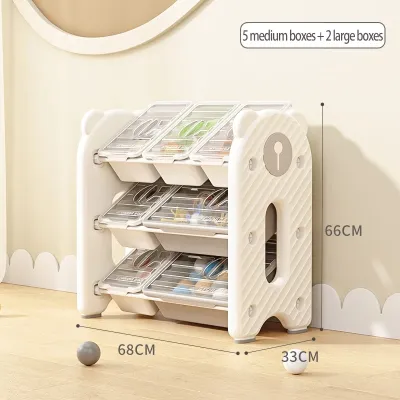
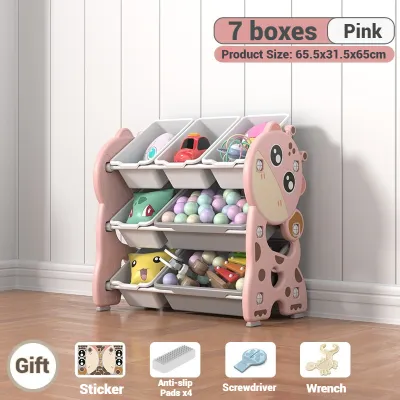
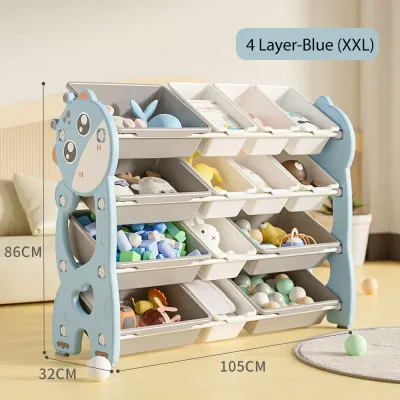
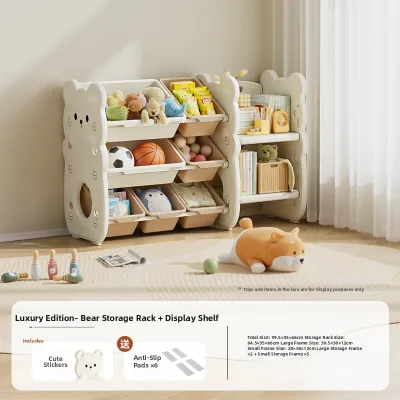
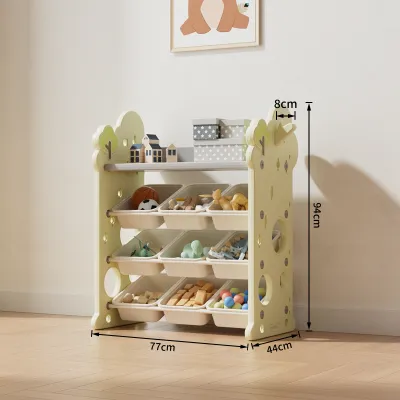
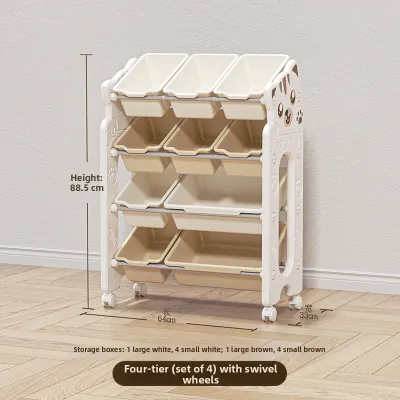
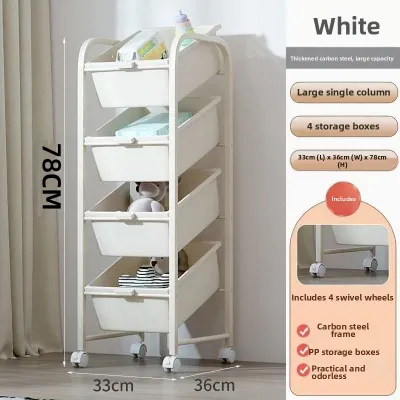
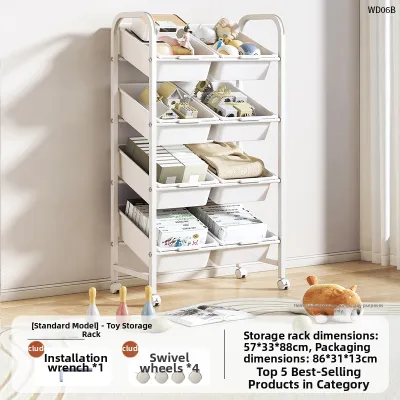
Prices are valid at publication and may change. Please refer to the product page for the latest price.
Space-Saving Toy Organizer Storage Rack Options
Choosing the right toy organizer storage rack involves understanding how different designs utilize space. In a compact nursery, you can choose between vertical tiered racks, wall-mounted shelves, or multi-functional furniture. Each option addresses specific spatial constraints, allowing you to maximize storage without overcrowding the room.

Vertical and Tiered Racks
Vertical and tiered racks stack storage bins upward rather than outward, making them excellent for narrow corners. However, as a rack grows taller, its center of gravity rises, which increases the risk of tipping if a child pulls on it. When selecting a tall unit, always check your ceiling height and ensure there is ample clearance from ceiling fans or light fixtures. These racks are highly suitable for sorting toys by category, but you must place heavier items like wooden blocks on the bottom tiers and reserve the upper shelves for lightweight plush items. This simple loading strategy keeps the unit’s base heavy and reduces the risk of accidental tipping.
Wall-Mounted and Door-Hung Organizers
Wall-mounted shelves and over-the-door organizers utilize empty vertical surfaces, keeping the floor completely clear. In many Philippine homes, walls are constructed from concrete or hollow blocks, which require masonry drill bits and heavy-duty wall plugs to mount shelves securely. If you opt for over-the-door units, check that your door frame has enough clearance so the door can close fully without damaging the hinges or latch. Ensure that any wall-mounted installation is positioned away from the crib, changing table, or play area so that falling objects cannot injure your baby. Additionally, avoid mounting organizers where they might block windows, ventilation grates, or emergency exit routes.
Multi-Functional and Foldable Units
Multi-functional furniture combines toy storage with other essential nursery functions to save valuable floor space. Examples include changing tables with integrated lower cubbies, storage benches that double as seating, or toy chests with flat tops that serve as play surfaces. When evaluating these units, verify that any foldable parts or moving drawers feature reliable safety locking mechanisms to prevent pinched fingers. Consider the ergonomic height of the storage; caregivers should be able to reach daily essentials without straining, while lower bins should be easily accessible to toddlers under close supervision. As your child grows, these adaptable units can transition from diapering stations to independent play zones.
Essential Safety and Stability Checks
Safety must be your top priority when introducing any furniture into a baby’s room. Tall or top-heavy toy organizer storage racks must be secured to the wall using anti-tip kits, wall anchors, or heavy-duty tether straps. Never rely solely on the weight of the toys to keep a rack stable, as toddlers frequently use shelves as ladders to reach items on higher tiers. Inspect the physical construction of the rack before assembly, ensuring it has rounded edges, smooth surfaces, and secure hardware with no exposed sharp points.
Verify that the materials used, including paints and finishes, are non-toxic and lead-free by checking the manufacturer’s product documentation. Position the storage rack far away from windows, blind cords, and electrical outlets to eliminate strangulation and electrical hazards. If you notice any wobbling, loose screws, or structural wear over time, stop using the rack immediately and tighten the hardware or consult a professional installer.
Building Your Final Shortlist
To build a practical shortlist, compare materials based on durability, maintenance, and the local climate. In the humid tropical climate of the Philippines, solid wood must be properly treated to resist warping and mold, while low-grade engineered wood like MDF can swell and degrade when exposed to moisture. High-quality, BPA-free plastic bins are highly durable, easy to sanitize, and completely resistant to mold, making them a practical choice for busy parents.
Establish a realistic budget, which typically ranges from ₱1,500 for basic plastic tiered organizers to ₱5,000 or more for sturdy, multi-functional wooden units. Prioritize structural integrity, safety certifications, and wall-anchoring hardware over aesthetic appeal or low prices. Finally, review the assembly requirements and ensure you have the necessary tools, such as a drill and level, to complete the installation securely.
Frequently Asked Questions (FAQ)
How do I prevent a tall toy storage rack from tipping over?
To prevent a tall toy storage rack from tipping, you must anchor it securely to the wall using heavy-duty anti-tip straps or metal L-brackets. For concrete or hollow-block walls common in the Philippines, use a masonry drill bit to create pilot holes, insert plastic wall plugs, and drive robust screws through the bracket into the wall. If you are mounting to drywall, use a stud finder to locate the wooden studs, or use heavy-duty toggle bolts if no stud is available. Always place the heaviest toys in the bottom bins to keep the center of gravity as low as possible.
Are fabric toy bins better than plastic ones for small nurseries?
Fabric toy bins are lightweight, collapsible, and soft, making them safe for young babies who might bump into them. However, in humid tropical climates, fabric can trap dust mites and mold if the room is not well-ventilated, requiring regular washing. Plastic bins are highly durable, easy to wipe clean with a damp cloth, and can hold heavier toys like wooden blocks without sagging. For a small nursery, a combination of both works well: use plastic bins for heavy toys on lower shelves and fabric bins for lightweight plush toys on upper tiers.
Community discussion
Share your experience or ask a question. Comments are reviewed before publication.