
Choosing the right gear to support your baby’s transition from crawling to taking their first steps is a major milestone for any parent. As you browse online marketplaces or local baby boutiques, you will primarily encounter two distinct designs: sit-in baby walkers and push-style (or walk-behind) baby walkers. A sit-in walker features a suspended fabric seat surrounded by a plastic frame with wheels, allowing a baby who cannot yet stand on their own to sit and scoot around. In contrast, a push-style walker is a wheeled toy with a handle that a standing baby pushes from behind, relying on their own balance and leg strength to move forward.
The direct answer to which type is right for your child depends on their current physical milestones, your home’s layout, and how you plan to supervise their play. Generally, push-style walkers align more naturally with independent walking milestones because they encourage active balance, weight-bearing, and natural foot positioning. Sit-in walkers, on the other hand, function primarily as stationary or limited-mobility entertainment centers for pre-walkers who can sit up but cannot yet support their own weight. However, sit-in models come with strict safety boundaries and spatial limitations that require constant, active adult supervision. Ultimately, the right choice is not about finding a universal winner, but about matching the specific design to your child’s immediate physical readiness and your household environment.
Sit-In Walkers: Developmental Fit and Safety Boundaries
Before placing your baby in a sit-in walker, you must evaluate their physical readiness rather than relying solely on age guidelines printed on the box. A baby is typically ready to sit in this type of gear only when they can hold their head up completely steadily and sit upright with minimal to no support. If a baby slumps forward or to the side when placed in the seat, their trunk muscles are not yet strong enough, and you should delay using the walker. It is highly recommended to consult a pediatrician or a pediatric physical therapist if you are unsure whether your baby’s posture and muscle tone are ready for a suspended seat.
Products mentioned in this guide
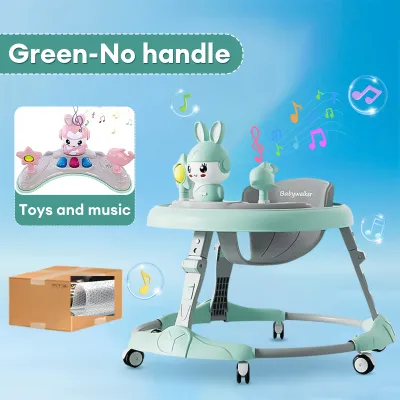
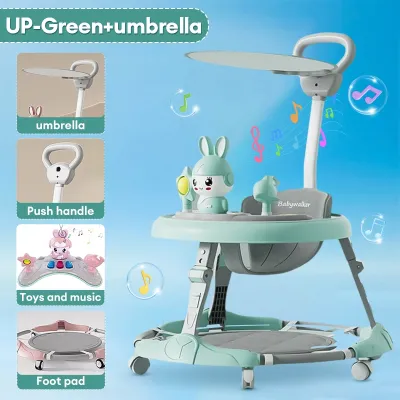
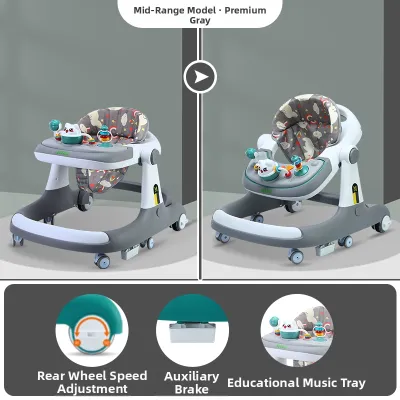
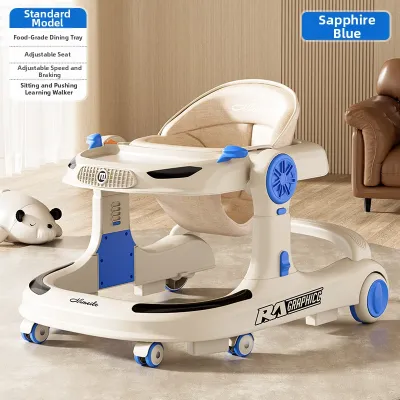
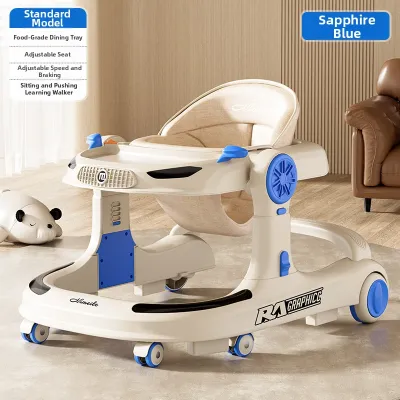
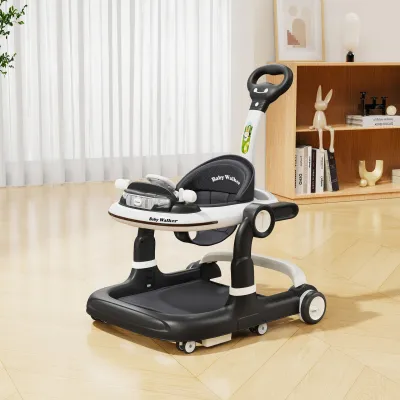
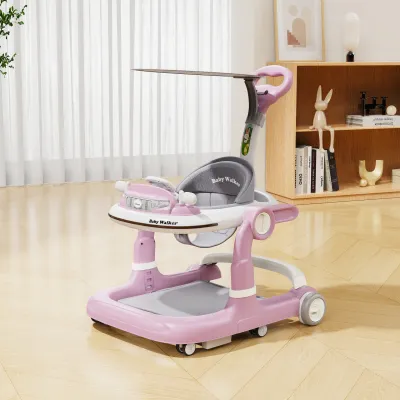
Prices are valid at publication and may change. Please refer to the product page for the latest price.
Mobility risks increase significantly once a baby is placed in a wheeled sit-in frame. Because these devices allow rapid, effortless movement, a baby can quickly travel across a room and reach hazards that would otherwise be out of reach. Common household dangers include access to staircases, uneven floor transitions, and low tables holding hot liquids or dangling electrical cords. Because of these rapid movement risks, a caregiver must maintain constant, active supervision, keeping the baby within arm’s reach at all times. A sit-in walker should never be used as a substitute for a playpen or as a safe zone while the caregiver is distracted in another room.
When shopping for a sit-in walker, you must carefully inspect the product label and packaging for specific safety features. Look for models that explicitly list built-in braking mechanisms or friction strips designed to grip the floor and stop the walker if a wheel drops over an edge. Verify that the wheel locks function correctly and that the base is significantly wider than the top frame to prevent tipping. Always check the manufacturer’s documentation to confirm the exact weight and height limits, as a baby who is too tall or too heavy can easily tip the unit over or climb out.
Push-Style Walkers: Developmental Fit and Safety Boundaries
Push-style walkers serve a completely different developmental stage and are strictly intended for babies who are already showing signs of walking readiness. Your child should be able to pull themselves up to a standing position independently and maintain their balance while holding onto furniture before you introduce a walk-behind toy. If a baby cannot stand on their own, a push walker will simply roll away from them, leading to sudden falls and potential injuries. This type of gear is designed to assist with active walking practice, helping babies learn to coordinate their steps while supporting their own body weight.

One of the most critical features to evaluate on a push walker is the speed control mechanism. Because smooth floors offer very little traction, a lightweight push walker can easily roll forward faster than a baby can step, causing them to face-plant or slip. Look for models that feature adjustable wheel resistance, speed dials, or tension screws that allow you to stiffen the wheels for early walkers. This resistance ensures the toy moves at a slow, controlled pace, giving your baby time to find their footing and build confidence.
In addition to speed control, the physical structure of the push walker must be highly stable. A quality push walker should feature a broad, low-slung base and a handle that is positioned directly between or slightly behind the wheels to distribute weight evenly. When a baby leans heavily on the handle to pull themselves up, a lightweight or narrow walker can easily tip backward. You can verify the stability by checking if the base is weighted or by physically testing how much downward pressure is required to tilt the toy.
Matching the Walker to Your Home Environment
Your household layout plays a decisive role in determining which walker type is practical and safe for daily use. In many tropical climates, such as in the Philippines, homes often feature polished tiled or smooth hardwood floors to keep the living space cool. While these smooth surfaces make it easy for a sit-in walker to glide, they also increase the speed of a push walker, making adjustable wheel friction essential. If your home has thick carpets or rugs, a sit-in walker may become frustratingly difficult for a baby to move, whereas a sturdy push walker might find better traction.
Spatial hazards must be meticulously mapped out before introducing any wheeled baby gear into your living area. Multi-story homes, townhouses, or apartments with step-down living rooms present extreme risks for stair-fall injuries, which are among the most common accidents associated with sit-in walkers. You must ensure that all stairways are securely blocked by certified safety gates and that uneven thresholds are smoothed out or blocked off. Additionally, low coffee tables, kitchen entryways, and areas with dangling appliance cords must be completely restricted to prevent your baby from pulling dangerous objects down onto themselves.
Finally, consider the physical footprint and storage requirements of the walker within your daily living space. Sit-in walkers tend to have a large, rigid footprint that can easily clutter smaller living rooms or narrow hallways. If you have limited space, look for sit-in models that offer a flat-folding mechanism for easy storage under furniture or in closets when not in use. Push walkers are generally more compact and can double as stationary activity boards or toy storage carts, making them easier to tuck into a corner of the room.
Final Decision Framework: Which Type Suits Your Child?
To make the final decision for your family, evaluate your child’s current physical milestones and your home setup against these clear, conditional guidelines.
Choose a push-style walker if your child can already pull themselves up to stand independently, is actively trying to take assisted steps, and has the core strength to support their own weight. This option is ideal if you have open, flat floor spaces where your baby can practice walking at their own pace, and if you want a toy that supports natural foot development and active balance.
Choose a sit-in walker if your child can sit upright completely unsupported with strong head control, but is not yet ready to stand or bear weight on their feet. This choice is suitable only if you have a single-level, hazard-free floor plan with no access to stairs, and if you can commit to constant, undivided supervision during every minute of use.
Regardless of the style you choose, the most critical step is to verify first. Always read the specific manufacturer’s product packaging and instruction manual to check the exact age, weight, and height limits before placing your child in or behind the walker. Stop using any walker immediately if your child exceeds these limits, or if they show signs of discomfort, unusual posture, or developmental fatigue.
Frequently Asked Questions (FAQ)
When is a baby physically ready for a sit-in walker?
A baby is physically ready for a sit-in walker only when they have achieved complete head and neck control and can sit upright steadily without slumping or leaning for support. This milestone typically indicates that their spine and core muscles can handle the upright posture of a suspended seat. Always cross-reference your baby’s physical measurements with the manufacturer’s minimum height and weight requirements on the product label to ensure a safe fit.
Are push walkers safer for hardwood or tiled floors?
Push walkers can be used safely on smooth surfaces like hardwood or tiled floors, but they require specific features to prevent slipping and excessive speed. On polished floors, look for push walkers equipped with rubberized traction strips on the wheels and adjustable speed dials or wheel resistance screws. These features prevent the walker from rolling away too quickly under your baby’s weight, reducing the risk of sudden slips and falls.
Community discussion
Share your experience or ask a question. Comments are reviewed before publication.