
Choosing the right corner guard depends on your specific furniture, your baby’s developmental stage, and your home’s aesthetic needs. There is no single universally safest material; instead, silicone, foam, and plastic each offer distinct trade-offs in impact absorption, durability, and visual integration. This guide breaks down the physical properties of each material and provides a conditional framework to help you match the right corner guard to your tables, shelves, and edges.
While corner guards reduce the risk of minor bumps, they do not replace active caregiver supervision. As babies transition from crawling to pulling themselves up, their interaction with furniture changes. Understanding how these materials perform under daily wear and environmental conditions—such as high tropical humidity—will help you create a more secure environment for your growing child.
Material Basics: Silicone, Foam, and Plastic Profiles
Silicone corner guards are characterized by their dense, rubber-like flexibility. Typically semi-transparent or clear, they blend easily with various furniture finishes. This material is highly resilient, resisting tearing and degradation when exposed to moisture, household cleaners, or teething babies. Its dense structure provides a firm, springy barrier that does not easily compress to the touch.
Products mentioned in this guide
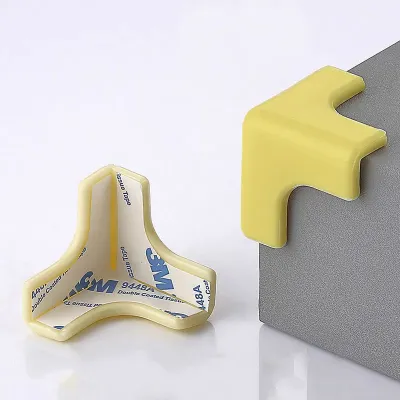
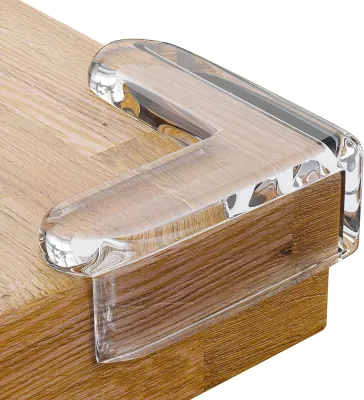
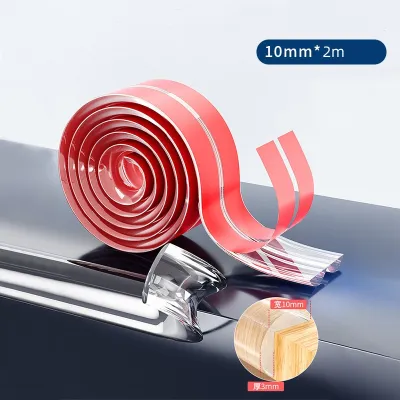
Prices are valid at publication and may change. Please refer to the product page for the latest price.
Foam corner guards, usually made from Nitrile Butadiene Rubber (NBR) or Ethylene-Vinyl Acetate (EVA), are thick, lightweight, and highly compressible. They feature a porous, air-filled structure that feels soft and spongy. This thickness makes them highly visible, but it also allows them to absorb significant impact forces. However, the porous nature of foam makes it susceptible to tearing and moisture absorption over time.
Plastic corner guards, often constructed from polyvinyl chloride (PVC) or acrylic, are rigid or semi-rigid. Unlike silicone or foam, they do not compress under pressure. Instead, they provide a hard, smooth, and often completely transparent shield that rounds off sharp 90-degree angles. They maintain their shape under heavy use but offer no soft cushioning.
Safety and Impact Absorption: How Each Material Protects
When evaluating safety, impact absorption is a primary consideration. Foam guards excel at cushioning low-velocity impacts. Because the material is thick and compressible, it slows down the force of a collision, reducing the likelihood of bruising when a toddler bumps into a table edge. This makes foam highly suitable for low-lying coffee tables where toddlers frequently lose their balance.

Silicone provides a different style of protection. It does not compress as deeply as foam, but its high density prevents a child’s head or body from bottoming out against the hard furniture corner beneath. It acts as a springy rebound barrier, absorbing and dispersing energy quickly. This density is useful for heavier impacts where a softer foam might compress completely, leaving the child exposed to the hard surface underneath.
Plastic guards do not absorb impact energy; instead, they redistribute it. By covering a sharp, pointed corner with a smooth, rounded plastic cap, they prevent puncture-style lacerations. While a child may still experience a bump or bruise from hitting a rigid plastic guard, the risk of a serious cut is significantly reduced.
Beyond impact absorption, caregivers must consider choking and ingestion risks. Teething babies often chew on accessible furniture edges. Foam guards can be bitten into small pieces, which poses a serious choking hazard. Caregivers should regularly inspect foam guards for bite marks and replace them immediately if damaged. Silicone is highly tear-resistant and difficult to bite through, making it a safer option for active chewers. Rigid plastic is too hard to chew, but low-quality plastics can crack under heavy impact, creating sharp shards that require immediate removal.
Durability and Daily Wear: Adhesion and Bite Resistance
The effectiveness of any corner guard relies heavily on its adhesive bond. In warm, humid tropical climates, standard double-sided tapes can lose their grip over time. Foam guards are lightweight, putting minimal gravitational strain on the adhesive. However, their porous backing can absorb ambient moisture and oils from cleaning products, which may eventually weaken the bond.
Silicone is heavier than foam and requires a high-bond acrylic adhesive to remain secure, especially on wood or glass surfaces. Because silicone is flexible, toddlers often try to peel it off. If the guard’s edges do not sit completely flush with the furniture surface, a child can easily get a finger underneath and pull it away.
Plastic guards offer excellent adhesive compatibility because of their smooth, non-porous backing. Clear acrylic adhesives bond exceptionally well to rigid plastic and glass, creating a secure hold that is difficult for a toddler to pry loose. However, if the furniture surface is uneven or dusty during installation, the rigid plastic will not conform to the shape, leading to premature adhesive failure.
Maintenance also affects long-term durability. Foam’s porous structure easily traps dust, spilled liquids, and skin oils, making it difficult to sanitize thoroughly. Over time, frequent scrubbing can cause the foam to crumble. Silicone and plastic are non-porous and can be wiped clean easily with mild soap and water, making them more hygienic choices for busy households.
Aesthetics and Furniture Compatibility
A home’s visual environment plays a role in how long corner guards remain installed. Highly visible safety gear can attract a toddler’s attention, prompting them to pull, bite, or play with the guards. Clear silicone corner guards offer excellent visual discretion. When applied to glass coffee tables or modern minimalist wood furniture, they remain nearly invisible, preserving the home’s aesthetic while keeping the sharp edges covered.
Foam guards are bulky and opaque, making them highly visible. They are available in various solid colors, such as brown, black, grey, and cream. While they can be color-matched to wooden furniture, they still alter the profile of the piece. Foam is often best reserved for dedicated playrooms, nurseries, or low-traffic areas where maximum cushioning is prioritized over interior design.
Rigid plastic guards are available in both clear and solid color options. Clear acrylic corner guards are highly effective on sharp metal shelving, glass desks, or clean-lined modern furniture. Because they maintain a low profile and do not yellow as quickly as some low-grade silicone options, they provide a long-term aesthetic solution for common living areas.
Decision Guide: Matching Materials to Your Furniture
To choose the right corner guard, match the material’s properties to your specific household furniture and your child’s developmental stage.
Choose silicone if you have glass tables, modern wooden furniture, or a teething toddler who tends to chew on household objects. Silicone offers a balanced combination of durability, aesthetic discretion, and dense impact protection. It is highly resistant to peeling and biting, making it a reliable choice for long-term use in main living areas.
Choose foam if you have heavy solid wood tables, low-lying shelves in high-traffic play zones, or need to cover long, irregular edges on a budget. Foam provides the softest barrier for infants who are just learning to stand and walk, offering maximum cushioning against accidental falls.
Choose plastic if you need to protect long, straight edges of metal shelves, filing cabinets, or hard plastic surfaces where a low-profile, rigid barrier is sufficient to round off sharp corners. Plastic is highly durable and works well in utility areas or home offices.
Before purchasing any corner guard, perform the following checks:
- Verify the manufacturer's age recommendations and material safety labels to ensure the product is free from harmful chemicals like BPA, phthalates, and heavy metals.
- Measure the thickness of your table edges to ensure the guard's inner dimensions match perfectly.
- Check the adhesive type included; high-bond acrylic tapes are generally recommended for humid environments.
- Inspect the product packaging for any manufacturer warnings regarding specific furniture finishes, as some adhesives can damage delicate wood veneers or painted surfaces.
Safe Installation and Damage-Free Removal
Proper installation is critical to ensure the corner guard remains secure and performs as intended. Begin by cleaning the furniture surface thoroughly with rubbing alcohol or mild soap and water to remove dust, oils, and furniture polish. Any remaining residue will prevent the adhesive from bonding correctly, especially in humid conditions. Allow the surface to dry completely before proceeding.
Apply the adhesive tape to the inner surfaces of the corner guard, then press the guard firmly onto the furniture corner. Hold it in place with steady pressure for at least 30 seconds to activate the pressure-sensitive adhesive. Once installed, allow the adhesive to cure fully. Most high-quality adhesives require 24 hours to reach maximum bond strength. Keep your baby away from the protected area during this curing period to prevent them from pulling the guard loose before the bond is secure.
When your child outgrows the need for corner guards, removing them safely requires patience to avoid damaging your furniture’s finish. Use a hair dryer on a low or medium heat setting to gently warm the corner guard and soften the adhesive backing. Once the adhesive is warm, slowly peel the guard away from the surface, pulling parallel to the furniture rather than straight up.
If any adhesive residue remains on the furniture, apply a small amount of vegetable oil, baby oil, or a dedicated adhesive remover to a soft cloth. Gently rub the residue until it lifts, then clean the area with mild soap and water. Always test any adhesive remover on an inconspicuous area of the furniture first to ensure it does not damage the paint, varnish, or wood veneer.
Frequently Asked Questions (FAQ)
Are clear silicone corner guards completely invisible on glass tables?
While clear silicone is highly discreet, it is not completely invisible. The double-sided adhesive tape underneath can create a slightly opaque or textured appearance through the glass. Additionally, exposure to sunlight and humidity over time may cause some silicone materials or adhesives to yellow slightly, making them more noticeable.
How often should I check the adhesion of installed corner guards?
You should inspect all corner guards weekly. Check for loose edges, peeling tape, or signs of wear, especially on foam guards that may have been chewed or pulled. In humid tropical climates, adhesives can degrade faster, requiring more frequent checks to ensure they remain securely attached. If a guard becomes loose, remove it immediately to prevent it from becoming a choking hazard.
Can I reuse foam or silicone corner guards on different furniture?
The guards themselves can often be reused if they are undamaged, but you must replace the adhesive backing entirely. Clean off all old adhesive residue from the guard, apply fresh, high-quality double-sided mounting tape, and prepare the new furniture surface thoroughly before reinstallation. Never attempt to reuse old, worn adhesive, as it will not provide a secure bond.
Community discussion
Share your experience or ask a question. Comments are reviewed before publication.