
Quick Answer: Which Diaper Brand Should You Choose?
Finding the right diaper in the Philippines involves balancing reliability, comfort, and cost, especially under the demands of a humid tropical climate. The choice between Rascals, a modern, ultra-thin boutique brand, and established mass-market giants like Pampers, Huggies, and Equator, is rarely about finding a single absolute winner. Instead, the ideal diaper depends on your baby’s unique body shape, skin sensitivity, and your household’s daily diapering routine.
To simplify your decision, consider this conditional framework based on your primary parenting priorities:
- Choose Rascals if you prioritize a sleek, ultra-thin design, minimalist aesthetics, and have a flexible budget for premium care that looks great under lightweight clothing.
- Choose Pampers if you need reliable, widely available everyday absorbency with a long-standing reputation for keeping the diaper surface dry against your baby's skin.
- Choose Huggies if your baby is highly active, crawling, or walking, and requires a highly secure, stretchy waistband and leg cuffs to prevent gaps during movement.
- Choose Equator if you are looking for a highly cost-effective option for frequent daytime changes, allowing you to maintain hygiene without a high financial burden.
Verify first if your baby has known skin sensitivities; always check the specific product line’s material and ingredient labels before committing to a bulk purchase.
Products mentioned in this guide
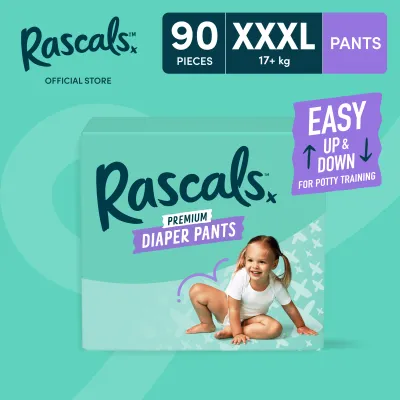
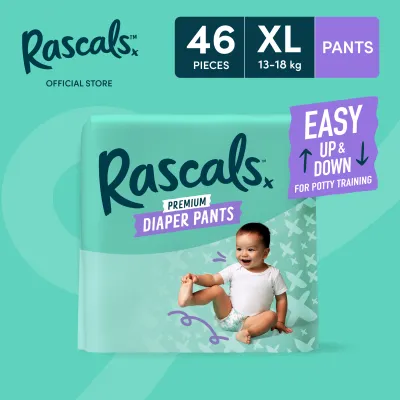
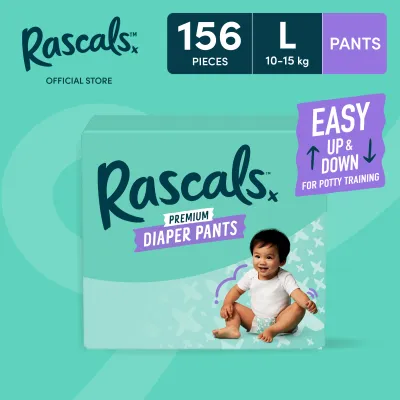
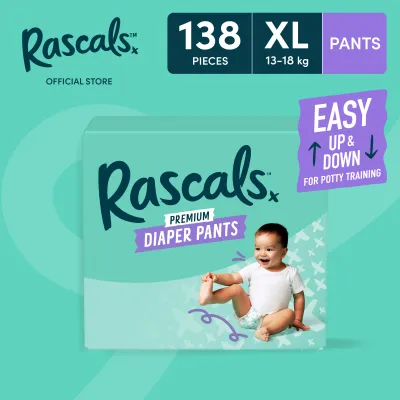
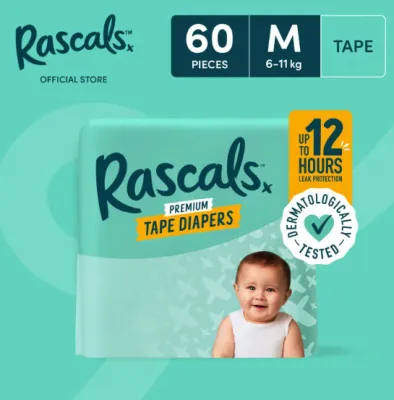
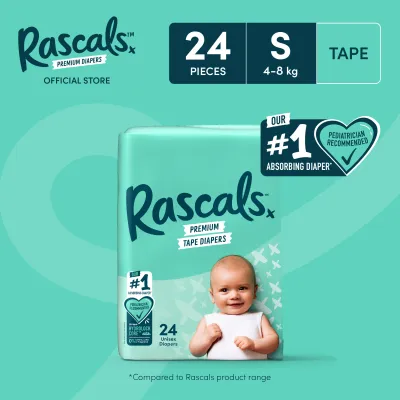
Prices are valid at publication and may change. Please refer to the product page for the latest price.
Absorbency and Leak Protection: How Do They Compare?
Diaper brands employ vastly different engineering strategies to manage liquid distribution and retention. Traditional mass-market brands often rely on thicker, multi-layered pulp cores combined with superabsorbent polymers (SAP) to lock away moisture. In contrast, premium boutique brands like Rascals focus on high-efficiency, ultra-thin core technologies designed to distribute liquid evenly across the diaper surface rather than letting it pool in one spot. While these thin designs reduce bulkiness and prevent the diaper from sagging heavily under light summer clothes, they require careful monitoring. A thinner core can distribute wetness rapidly, but it may reach its physical capacity sooner during heavy wetting episodes, making timely diaper changes essential.

When comparing the mass-market giants, Pampers and Huggies offer distinct product tiers tailored to different performance needs. Pampers Baby Dry and Premium Care lines utilize specialized channels to guide wetness away from the skin, focusing heavily on surface dryness to prevent irritation. Huggies Dry and Platinum lines emphasize robust double-leak guards and deep pocketed waistbands designed specifically to contain runny stools and prevent back blowouts. Both brands are engineered to withstand extended wear, making their premium lines popular options for overnight use.
Equator occupies the value segment, utilizing a more traditional, straightforward absorbent core. While it handles standard daytime wetness effectively, it does not feature the advanced liquid-channeling technology or high concentrations of SAP found in premium lines. Consequently, Equator is best suited for daytime routines where caregivers change the baby frequently, or for toddlers who are already well on their way to potty training.
Regardless of the brand you select, absorbency failure is often a sign of sizing or fit issues rather than a product defect. Parents should watch for key indicators of capacity failure, such as heavy sagging between the legs, a damp outer cover, or frequent leaks around the thighs during naps. If you observe these signs consistently, it is generally time to size up to a larger diaper rather than assuming the brand itself is ineffective, as a larger size provides a greater total absorbent surface area.
Fit, Comfort, and Skin Sensitivity
A diaper’s fit directly influences both leak prevention and skin health, particularly in the warm and humid climate of the Philippines. Babies have diverse body shapes, ranging from long and lean to rounder profiles with chunky thighs. Huggies is widely recognized for its highly elastic waistbands and stretchy tabs, which conform closely to active babies who are constantly moving, rolling, or crawling. Pampers offers a more contoured, streamlined fit designed to hug the baby’s natural curves without adding unnecessary bulk. Rascals focuses on a wide, high-waist design with a flat, non-bulky profile that sits comfortably under lightweight tropical clothing, reducing friction against the skin.
Skin sensitivity is a paramount concern for parents managing diaper routines in high humidity, where sweat and trapped moisture can easily trigger heat rash or diaper dermatitis. When evaluating diaper packaging, look for specific, verifiable claims such as fragrance-free, chlorine-free, or lotion-free formulations. It is vital to remember that marketing terms like “hypoallergenic” or “dermatologically tested” are not universally regulated medical standards. Parents must remain vigilant and monitor their baby’s skin daily, as even the most premium materials can cause reactions if moisture is allowed to sit against the skin for too long.
Breathability is the primary defense against tropical diaper rash. Diapers featuring micro-porous backsheets allow heat and moisture vapor to escape while keeping liquid contained. Ultra-thin cores, such as those found in Rascals, naturally promote better airflow simply by reducing the physical mass wrapped around the baby’s waist. Thicker, bulkier diapers can trap heat, increasing local skin temperature and making the diaper area more susceptible to fungal infections.
To ensure your baby is comfortable, watch for physical signs of a poor fit. Deep red marks or indentations around the thighs or waist indicate that the diaper is too tight or that the elastic is too restrictive. Conversely, gaps between the diaper and the baby’s skin around the leg cuffs are a clear sign that the diaper is too loose, which will inevitably lead to leaks. When fastening any diaper, ensure you can easily slip two fingers under the waistband, and always run your fingers around the leg cuffs to flare the protective gussets outward.
Evaluating Overall Value and Cost per Diaper
Navigating the financial aspect of diapering requires looking past the initial price tag on the shelf. Diaper brands are positioned across distinct market segments, each offering a different balance of features and cost. Rascals sits in the premium, boutique category, appealing to parents willing to pay a higher price for minimalist design, ultra-thin profiles, and specialized materials. Pampers and Huggies occupy the mid-to-premium mass-market segment, offering a wide range of product tiers and sizes that fit most household budgets. Equator is firmly positioned as a budget-friendly value option, focusing on basic utility and high volume.
To determine the true value of any diaper brand, parents should calculate the cost per individual diaper rather than comparing the total price of a pack. This is done by dividing the total retail price of the package by the exact number of diapers inside. Because diaper counts vary significantly between brands, sizes, and packaging types (such as jumbo packs versus travel packs), this calculation provides the only objective basis for comparison. Keep in mind that as your baby grows and moves into larger sizes, the number of diapers per pack decreases, which naturally increases the cost per unit.
Smart purchasing strategies can significantly reduce your overall diapering expenses. Buying in bulk or purchasing during promotional events on official brand stores within major e-commerce platforms often yields substantial savings. Many local supermarkets and baby specialty stores also offer loyalty programs, subscription discounts, or bundle deals that lower the unit cost of premium brands like Rascals, Pampers, or Huggies.
Many experienced parents adopt a highly effective hybrid diapering strategy to balance performance and budget. This approach involves using a highly cost-effective diaper like Equator for daytime hours when changes are naturally more frequent due to active feeding and play. Parents then transition to a high-absorbency, premium option such as Rascals, Pampers, or Huggies for nighttime sleep or long outings, ensuring the baby remains dry and comfortable when diaper changes are less practical.
How to Transition and Test Diapers Safely
Introducing a new diaper brand to your baby’s routine requires a cautious, systematic approach to protect their delicate skin and avoid unnecessary financial waste. The most practical rule of thumb is to always sample first. Avoid purchasing large bulk boxes or multi-pack bundles of a new brand until you have successfully tested a small travel pack or obtained individual samples. This minimizes the risk of being left with dozens of unusable diapers if the fit is incorrect or if your baby’s skin reacts poorly to the materials.
When testing a new brand, monitor your baby’s skin closely over the first seventy-two hours of use. Look for early signs of irritation, such as localized redness, small bumps, or dry patches along the waistband, hips, and leg cuffs. If you observe persistent redness, blistering, or a severe, spreading rash, stop using the diaper immediately, clean the area gently with warm water, and consult a pediatrician or qualified healthcare professional for guidance.
It is also important to recognize that diaper sizing is not standardized across different manufacturers. The weight ranges printed on diaper packaging are general guidelines, and a baby’s unique body proportions—such as a round tummy or chunky thighs—will heavily influence how a specific brand fits. Rascals may fit differently than traditional mass-market brands like Pampers or Huggies even within the same designated size. If your baby is approaching the upper limit of a brand’s recommended weight range, or if you notice frequent leaks and red marks, it is usually safer to transition to the next size up to ensure adequate coverage and absorbency.
Frequently Asked Questions (FAQ)
Can I use Rascals for overnight sleep?
Rascals diapers feature an efficient, ultra-thin core that distributes wetness evenly, making them highly comfortable for daytime wear. However, because of their slim profile, they may reach capacity faster than bulkier, dedicated overnight diapers when used for uninterrupted sleep cycles of ten to twelve hours. If you choose to use Rascals overnight, monitor your baby’s morning dryness closely. If you experience frequent leaks or dampness, consider sizing up for nighttime use, pairing the diaper with a compatible booster pad, or switching to a dedicated high-capacity overnight diaper from a mass-market brand.
Are Equator diapers safe for newborns?
Equator diapers can be used safely for newborns, provided you verify that the specific product line offers a designated newborn size that accommodates your baby’s weight. For very young infants, it is highly recommended to look for diapers that feature an umbilical cord cutout to prevent friction and irritation around the healing navel area. Because a newborn’s skin barrier is exceptionally delicate and thin, caregivers must monitor the diaper area carefully after every change for any signs of redness, chafing, or contact dermatitis, regardless of the brand’s price point or marketing claims.
How do I know if my baby is allergic to a specific diaper brand?
Differentiating between standard diaper rash and an allergic reaction involves observing where the irritation occurs. Common diaper rash, often caused by trapped moisture and friction, typically appears in the warm folds and creases of the skin. An allergic reaction or contact dermatitis, however, is usually triggered by specific materials, fragrances, or dyes, and often presents as a distinct red pattern directly tracing where the diaper touches the skin, such as the waistband, adhesive tabs, or elastic leg cuffs. If you suspect your baby is experiencing an allergic reaction, discontinue use of the brand immediately and consult a qualified healthcare professional for an accurate diagnosis and treatment plan.
Community discussion
Share your experience or ask a question. Comments are reviewed before publication.