
Hardware-mounted safety fences are the only safe option for the top of a staircase. Pressure-mounted gates rely entirely on outward tension to stay in place, which can easily fail under the concentrated force of a determined toddler pushing, pulling, or shaking the barrier. Furthermore, pressure-mounted gates feature a solid bottom threshold bar that remains in place even when the gate is open, creating a dangerous trip hazard right at the edge of a steep drop-off.
To ensure your child’s safety, it is essential to understand the structural differences between these two mounting styles. This guide breaks down the mechanics of both systems, outlines what features to look for in a reliable hardware-mounted gate, and explains how to safely integrate pressure-mounted gates in other areas of your home.
The Critical Safety Rule for the Top of the Stairs
To understand why hardware-mounted gates are mandatory at the top of a staircase, you must look at how pressure-mounted gates function. Pressure gates operate by pushing outward against two parallel surfaces, using rubber pads and tension screws to create friction. While this friction is often enough to block a doorway on flat ground, it is not designed to withstand dynamic, sudden impacts. A toddler who has learned to stand will often shake, lean on, or throw their body weight against a gate, which can cause the tension pads to slip along painted walls or polished wooden banisters.
Products mentioned in this guide
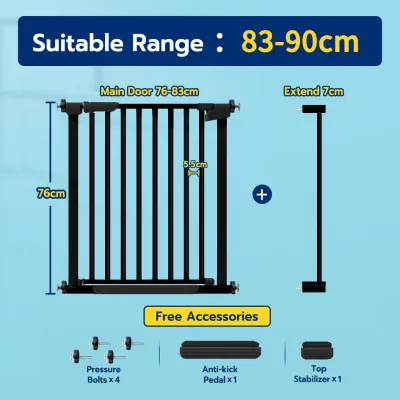

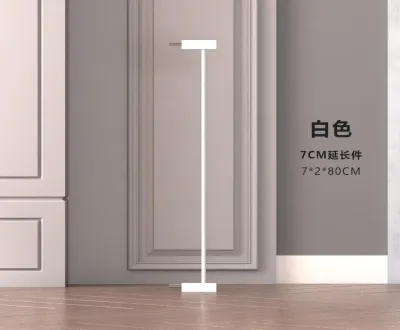
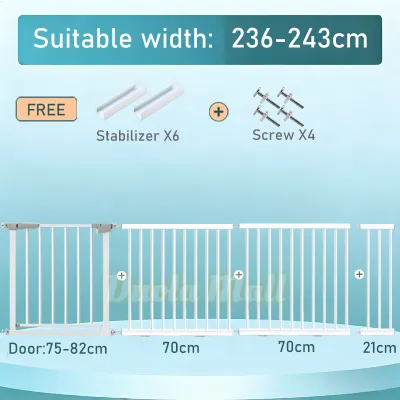
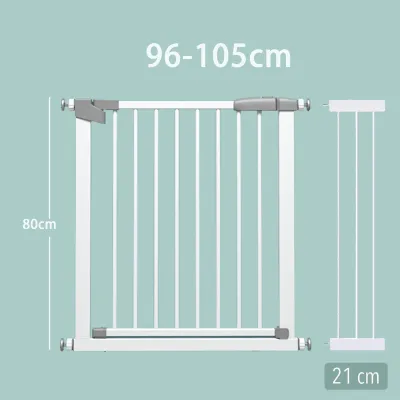
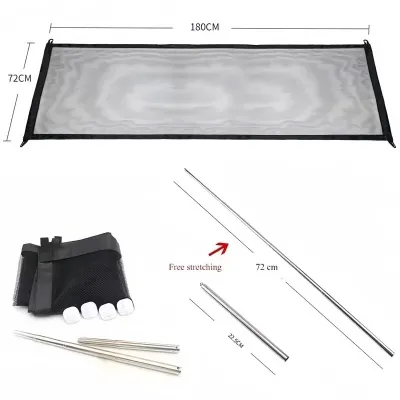

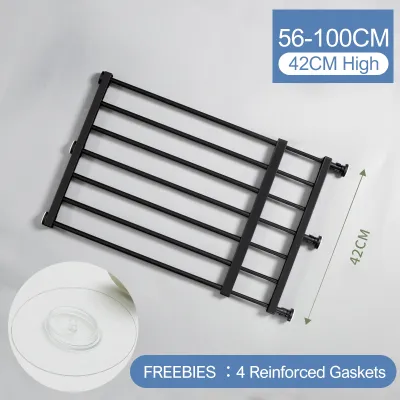
Prices are valid at publication and may change. Please refer to the product page for the latest price.
Another major hazard of pressure-mounted gates is the bottom tension bar. Because these gates rely on continuous outward pressure to maintain their shape, they require a metal or plastic bar that runs along the floor. When installed at the top of a staircase, this bar sits directly at the edge of the first step. An adult carrying a baby, a basket of laundry, or walking in dim light can easily catch their foot on this threshold, leading to a highly dangerous fall down the stairs.
In contrast, a hardware-mounted stairs safety fence is physically anchored into the structural framing of your home. By screwing the mounting brackets directly into wall studs or solid wood banisters, the gate becomes a permanent extension of your home’s architecture. This mechanical connection easily absorbs the force of a child pushing or pulling on the gate. Best of all, hardware-mounted gates swing completely open from wall to wall, leaving the floor entirely clear of any threshold bars or trip hazards.
In tropical climates like the Philippines, environmental factors also play a role in gate safety. High humidity levels can cause wooden doorframes, drywall, and banisters to expand and contract subtly throughout the year. This natural shifting can gradually loosen the tension of a pressure-mounted gate without any visible warning signs. Hardware-mounted gates, secured with deep screws, remain stable and unaffected by these minor seasonal changes in your home’s woodwork.
What to Look for in a Hardware-Mounted Stairs Safety Fence
When shopping for a hardware-mounted stairs safety fence, the latching mechanism is one of the most important features to evaluate. You need a gate that offers a dual-action locking system, which requires two distinct, sequential movements to open—such as sliding a safety button with your thumb while lifting the gate panel. This design ensures that while an adult can easily operate the gate with one hand, a curious toddler will lack the hand size, coordination, and strength to bypass the lock.

Slat orientation is another critical design element for preventing accidents. Always choose a gate with smooth, vertical slats rather than horizontal bars or decorative mesh patterns. Horizontal bars can act as ladder rungs, tempting an adventurous child to climb up and potentially tumble over the top of the barrier. Ensure that the spacing between the vertical slats is narrow enough to prevent your child’s head, limbs, or body from becoming trapped, and verify these dimensions against the manufacturer’s safety guidelines.
Before purchasing, you must carefully measure the width of your stairway opening. Staircases in many homes are not perfectly uniform, and the distance between the walls at the floor level may differ slightly from the distance at the top of the gate. Look for a hardware-mounted gate that offers adjustable width panels or includes extension pieces designed specifically for hardware mounting. Additionally, check the manufacturer’s specifications for the minimum height requirement to ensure the gate is tall enough to prevent your child from leaning over the top as they grow.
Finally, consider your wall compatibility and the type of mounting hardware required. Standard wood screws are usually included in the box, which are perfect for securing the gate directly into wooden wall studs or solid banisters. However, if your stairway walls are made of concrete, hollow drywall, or plaster, you will need to purchase specialized heavy-duty anchors or masonry plugs. Always verify that the mounting brackets can be securely attached to your specific wall material before beginning the installation process.
Where to Safely Use Pressure-Mounted Fences
While pressure-mounted gates are unsafe for the top of the stairs, they remain highly useful and versatile safety tools when deployed in the correct locations. The ideal spot for a pressure-mounted gate is on flat, level ground where there is no risk of a fall if the gate fails. They are excellent for blocking off doorways between rooms, separating a kitchen from a living area, or creating a temporary, safe play zone in a hallway.
Because pressure-mounted gates do not require drilling holes into your walls, they are highly portable and convenient. This makes them an excellent option for families living in rental properties where drilling is restricted, or for taking along when traveling to visit relatives. They can be set up and taken down in minutes, providing a quick barrier to keep your crawling baby away from pet bowls, home offices, or other non-hazardous areas.
However, parents must remain vigilant about the weight and developmental limits of their children when using pressure-mounted gates. As babies grow into toddlers, their physical strength and weight increase significantly. Once a child is heavy enough or active enough to shake a pressure gate loose, or if they attempt to climb it, the gate has outlived its usefulness in that location. Always consult the manufacturer’s documentation to understand the specific developmental milestones at which you should stop using a pressure-mounted barrier.
Installation and Maintenance Checklist for Stair Gates
Proper installation is just as important as choosing the right gate. To begin, use a reliable stud finder to locate the solid wood studs behind your drywall at the top of the stairs. Screwing a safety gate directly into hollow drywall using standard plastic anchors is highly discouraged; the constant daily pulling, swinging, and occasional slamming of the gate will eventually pull the anchors out of the wall. If a wall stud does not align perfectly with your stairway opening, you can mount a solid wood header board to the studs first, and then securely screw the gate’s mounting hardware into that header board.
When mounting the gate, pay close attention to the swing direction. Most hardware-mounted gates come with a physical swing stop or directional bracket. Configure this bracket so that the gate can only swing inward toward the landing or hallway, and never outward over the stairs. If the gate is allowed to swing out over the steps, a parent stepping through could easily lose their footing, or a child pushing against an unlatched gate could fall forward down the staircase.
Once installed, your safety gate requires regular maintenance to ensure it remains secure over time. Establish a routine check every few weeks to inspect the hardware. Tighten any screws that may have vibrated loose from daily use, and test the latch mechanism to ensure it still clicks shut smoothly and automatically. In humid tropical environments, keep an eye out for any signs of rust on metal hinges or warping in wooden gates, as these issues can prevent the locking mechanism from aligning correctly.
Lastly, know when it is time to stop using or replace your safety gate. If you notice that the latch no longer aligns perfectly without manual lifting, if the frame has become bent, or if your child has reached the maximum height or weight limit specified by the manufacturer, the gate must be retired. Regularly reviewing the manufacturer’s safety guidelines will help you determine when your child has outgrown the barrier and is ready to transition to navigating the stairs under direct supervision.
Frequently Asked Questions (FAQ)
Can I use a pressure-mounted gate at the bottom of the stairs?
Using a pressure-mounted gate at the bottom of the stairs is a common practice, but it still requires careful consideration. While a failure at the bottom of the stairs is less dangerous than a fall from the top, the bottom threshold bar still presents a significant trip hazard on the flat landing. If you choose to use a pressure gate here, ensure it is installed on the floor landing rather than on the first step, and always check the manufacturer’s warnings to verify if the specific model is approved for bottom-of-stairs use.
What if my walls are made of glass, stone, or fragile material?
If your stairway features glass panels, decorative stone, or delicate wooden banisters where drilling is not possible, you should not attempt to use a standard pressure gate as a shortcut. Instead, look for specialized banister-mounting kits. These kits use heavy-duty straps or padded clamps to secure a wooden mounting strip to your banister without drilling any holes, allowing you to safely screw the hardware-mounted gate into the strip. For extremely complex layouts, consulting a professional child-proofing installer is highly recommended.
At what age or height can I remove the stairs safety fence?
Most safety gates are designed for children between the ages of 6 months and 24 months. However, developmental milestones are far more important than chronological age. You should plan to remove the gate once your child’s chin is level with the top of the gate, or when they demonstrate the ability to climb over it. Before removing the barrier entirely, ensure your child can reliably navigate the stairs while holding the handrail and under your close supervision.
Community discussion
Share your experience or ask a question. Comments are reviewed before publication.