
Selecting bedding for your infant requires a careful balance of comfort and strict safety standards. When shopping for a portable baby nest, your primary focus must be on features that support safe breathing, proper physical alignment, and reliable structural integrity. These popular, cocoon-like loungers are designed to provide a cozy spot for supervised daytime relaxation, but they also carry inherent risks if chosen or used incorrectly. In a warm, tropical climate like the Philippines, where high humidity and elevated temperatures are daily realities, evaluating these products requires extra attention to material breathability and moisture management. By understanding what to look for, you can make an informed decision that keeps your little one comfortable and secure.
Understand the Safety Risks of Baby Nests
To make an informed purchase, you must first understand the specific safety concerns associated with portable baby nests. The primary risk linked to these products is suffocation or positional asphyxiation. This occurs when an infant’s nose or mouth becomes blocked by soft, plush surfaces, or when their head chin-tucks toward their chest due to an uneven or overly cushioned base, restricting their airway. Because infants lack the neck strength to lift or turn their heads when trapped against soft fabric, any plush material near their face poses an immediate hazard.
Pediatric health organizations consistently recommend that infants sleep on a firm, flat, and completely bare surface. This means no pillows, blankets, bumper pads, or soft toys should be in their sleep environment. Portable baby nests, with their raised, padded sides and cushioned bottoms, do not meet these strict criteria for safe, unsupervised sleep.
Products mentioned in this guide
![[Clearance discount+Ready Stock]Baby Nest Multifunctional Travel Crib Cartoon Printing Newborn Mattress Bionic Bed Detachable Washable Portable Baby Upgrade Bed](https://img.lazcdn.com/g/p/5d709e023306cfaa1e73861b797e605e.jpg_400x400q80.jpg_.webp)
![[Free Shipping+Ready Stock]Baby Nest Multifunctional Travel Crib Cartoon Printing Newborn Mattress Bionic Bed Detachable Washable Portable Baby Upgrade Bed](https://img.lazcdn.com/g/p/c5e7e952015332cfc2505b928b750d0f.png_400x400q80.png_.webp)
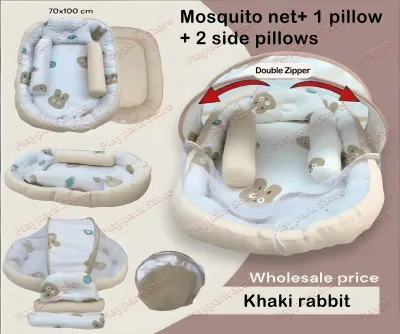
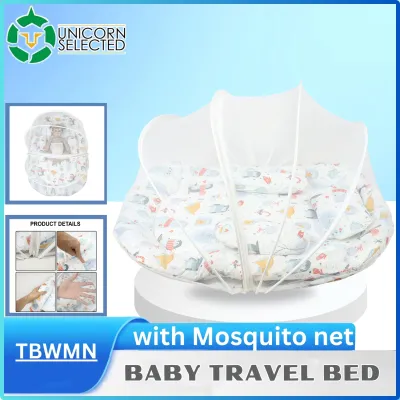
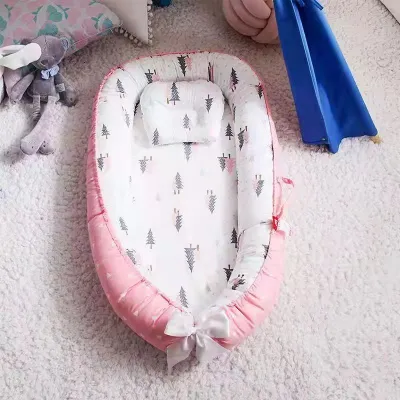
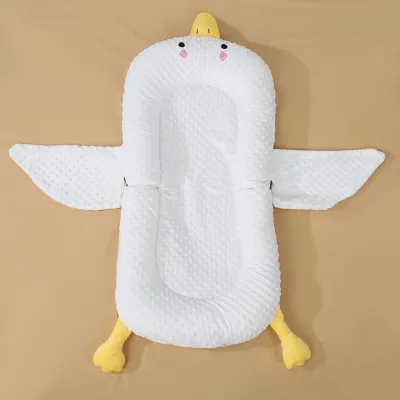
Prices are valid at publication and may change. Please refer to the product page for the latest price.
Therefore, you must maintain a clear distinction between supervised daytime lounging and unsupervised sleep. A portable baby nest is a convenient tool for keeping your awake baby nearby while you fold laundry or sit on the floor, but it is never a safe substitute for a crib, cot, or bassinet. Recognizing this distinction is the foundation of choosing and using a nest safely.
Inspect the Structural Design and Firmness
When evaluating a portable baby nest in a store or checking its specifications online, the firmness of the mattress pad is your first line of defense. A safe mattress pad must feel exceptionally firm to the touch. You can physically test this by pressing your hand firmly into the center of the pad; it should offer immediate resistance and spring back to its original shape without leaving a lasting handprint or indentation. If the surface feels pillowy, squishy, or allows your hand to sink deeply, it is too soft for an infant and should be avoided.

Next, closely examine the design of the surrounding edges and bumpers. The side walls should be low-profile and constructed from firm, dense materials rather than loose, fluffy fiberfill. Look for models that incorporate breathable mesh panels along the inner lining of the bumpers. This structural feature ensures that if your baby happens to roll or press their face against the side, air can still circulate freely, significantly reducing the risk of suffocation.
Base stability is another critical structural element to verify. When you place the baby nest on a flat surface, the entire bottom must lie completely flat without any bunching, folding, or warping. A base that buckles or creates gaps under the baby’s weight can cause the infant to roll unexpectedly or slide into a dangerous position. Ensure the outer fabric cover fits tightly over the mattress pad and bumpers, leaving no loose fabric that could gather or fold over the baby’s face.
Verify Material Breathability and Chemical Safety
In the Philippines, where tropical heat and high humidity are constant factors, material selection is directly tied to safety. A baby nest made from non-breathable synthetic fabrics can quickly trap body heat, leading to rapid overheating, excessive sweating, and uncomfortable heat rashes. Overheating is also a known risk factor associated with infant sleep safety. Prioritize natural, highly breathable fabrics such as organic cotton, bamboo-derived textiles, or specialized 3D spacer mesh that actively promotes airflow and wicks away moisture.
Beyond breathability, you must verify the chemical safety of the materials used in both the cover and the inner filling. Because your baby’s skin and respiratory system are highly sensitive, avoid products treated with harsh flame retardants, formaldehyde, heavy metals, or volatile organic compounds (VOCs). Rather than relying on vague marketing claims like “eco-friendly” or “all-natural,” look for verified third-party certifications on the product tags or packaging. Certifications such as OEKO-TEX Standard 100 or CertiPUR-US indicate that the components have been tested for harmful substances.
Finally, conduct a meticulous physical inspection of all zippers, seams, and attachments. Ensure that any zippers are heavy-duty, securely stitched, and feature recessed pulls or fabric guards to prevent them from scratching the baby or becoming a choking hazard. Check the entire product for loose threads, decorative ribbons, or adjustable drawstrings. Drawstrings used to tighten the bumpers are particularly hazardous, as they can easily wrap around an infant’s neck or limbs; look for designs that completely enclose or eliminate these cords.
Read the Labels and Manufacturer Warnings
Before finalizing your purchase, take the time to read the product labels, instruction manuals, and manufacturer warnings thoroughly. A reputable manufacturer will clearly state the intended age, weight, and developmental milestones for the product. For example, many nests are designed only for infants from birth up to four or six months of age, or until the baby begins to show signs of rolling over. Never assume a nest is suitable for your baby based solely on its physical size; always verify the official limits set by the manufacturer.
Look for explicit, prominent warning labels printed directly on the product fabric or included in the packaging. These warnings should clearly state that the nest is not intended for unsupervised sleep, co-sleeping in an adult bed, or use inside a crib, bassinet, or playpen. Additionally, the manufacturer should explicitly warn against placing the nest on elevated surfaces such as sofas, beds, tables, or countertops, where a shifting baby could cause the nest to slide off the edge.
You should also check for clear, comprehensive care and washing instructions. In a humid climate, baby gear requires frequent washing to prevent the buildup of sweat, spit-up, and mold. Verify that the outer cover is easily removable and machine washable. Ensure the care label explains how to clean the inner mattress and bumpers without compromising their structural integrity, as some fillings may clump or lose their firmness when washed incorrectly.
Set Safe Usage Boundaries and Know When to Stop
Owning a portable baby nest comes with the responsibility of enforcing strict usage boundaries in your home. The absolute golden rule of baby nest safety is constant, active adult supervision. The nest must never be used as a convenient place to leave your baby while you sleep, shower, or step into another room. Keep the nest on a firm, flat floor surface at all times, away from stairs, pets, and potential hazards like electrical cords or low-hanging curtains.
Knowing when to stop using the nest is just as important as knowing how to use it safely. You must transition your baby out of the nest immediately at the first sign of developmental milestones such as rolling over, pushing up on their hands and knees, or attempting to wiggle or climb out of the bumpers. Continuing to use the nest past this stage increases the risk of the baby rolling out onto a hard surface or trapping their face against the outer edge.
Lastly, perform regular safety audits of the nest as you use it over time. Check for signs of wear and tear, such as thinning or sagging in the center of the mattress pad, compressed bumpers that no longer hold their shape, or loose seams that expose the inner filling. If you notice any degradation in the product’s structural firmness or fabric integrity, discontinue use immediately to protect your baby.
Frequently Asked Questions (FAQ)
Can a portable baby nest be used for overnight sleep?
No, a portable baby nest should never be used for overnight or unsupervised sleep. Pediatric guidelines emphasize that the safest sleep environment for an infant is a firm, flat, and bare surface, such as a crib or bassinet, without any soft bedding, pillows, or bumpers. Because baby nests have raised, cushioned sides and soft bases, they present a high risk of suffocation and positional asphyxiation if the baby rolls or if their airway becomes restricted while unsupervised.
How do I clean a baby nest without ruining its safety features?
To maintain both hygiene and safety, always follow the manufacturer’s specific washing instructions on the care label. Most high-quality nests feature a removable outer cover that can be machine washed on a gentle cycle with mild, baby-safe detergent. Avoid using fabric softeners, as they can leave a residue that reduces the breathability of the fabric. Ensure that the inner mattress pad and bumpers are completely dry before reassembling the nest; in humid tropical climates, any trapped moisture can quickly lead to mold and mildew growth, which poses respiratory risks to your baby.
Community discussion
Share your experience or ask a question. Comments are reviewed before publication.