
Selecting the right feeding bottle is one of the most critical decisions you will make during your baby’s first year. In the Philippines, where hot and humid conditions make daily hygiene a top priority, parents need bottles that are easy to clean, sterilize, and maintain. Pigeon has long been a trusted brand among Filipino families, offering a variety of bottle materials designed to cater to different stages of infant development. However, deciding between glass, Polyphenylsulfone (PPSU), and Polypropylene (PP) plastic can be confusing when trying to balance safety, durability, and cost. Each material serves a distinct purpose, and understanding their unique physical properties, lifespan, and care requirements will help you make the best choice for your baby’s feeding journey.
Quick Answer: Which Pigeon Bottle Material Is Right for You?
There is no single “best” material; the right choice depends on your baby’s age, your lifestyle, and your budget. For newborns and primary home use, glass is highly recommended due to its unmatched chemical purity and resistance to scratches and odors. If you are frequently on the go, travel often, or have an older baby learning to hold their own bottle, PPSU offers a lightweight, shatterproof, and highly durable alternative that can withstand rigorous heat sterilization. For parents on a tight budget or those looking for short-term transitional bottles, standard Polypropylene (PP) plastic provides an ultra-lightweight and affordable option.
When shopping, always verify that the bottles feature BPA-free and BPS-free labels to ensure chemical safety. It is also essential to check the manufacturer’s age and flow-rate recommendations on the packaging. To avoid counterfeit products that may not meet safety standards, always purchase your Pigeon bottles from authorized department stores, official brand outlets, or verified online flagship stores in the Philippines.
Products mentioned in this guide
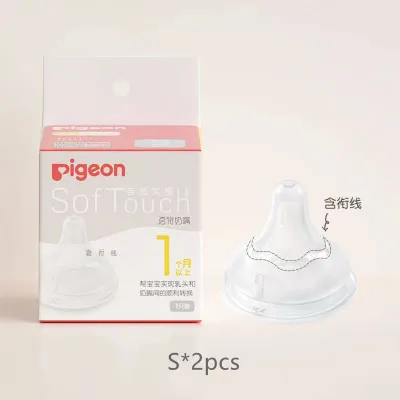
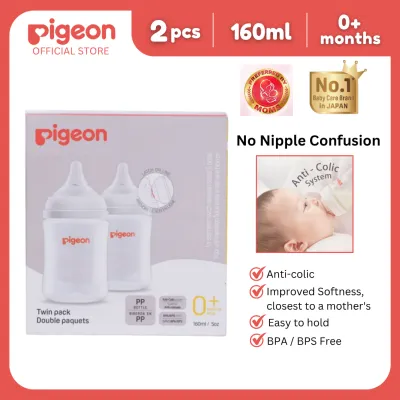
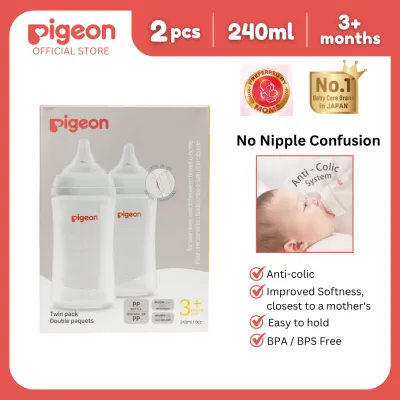
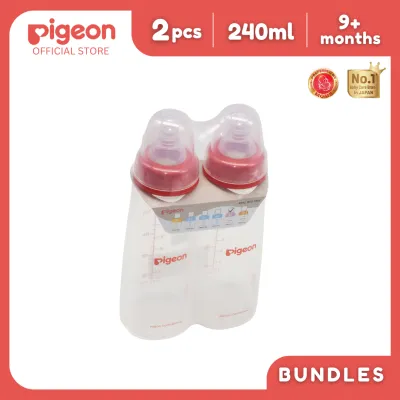
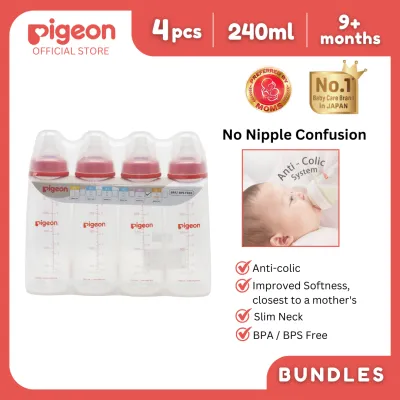
Prices are valid at publication and may change. Please refer to the product page for the latest price.
Pigeon Glass Bottles: Purity and Easy Cleaning
Pigeon glass bottles are highly favored by parents who prioritize absolute purity and hygiene. Glass is a non-porous material, meaning it does not absorb milk fats, odors, or colors over time. This makes glass bottles exceptionally easy to clean, as breast milk or formula residue washes away smoothly without leaving a greasy film. Because glass is highly resistant to scratching, there are no micro-scratches where bacteria or mold can hide, ensuring a consistently hygienic feeding environment.

Despite these advantages, glass bottles have notable physical limitations, primarily their weight and fragility. Glass is significantly heavier than plastic, making it difficult for young infants to hold. Because of the risk of dropping and shattering, glass bottles are not suitable for older babies transitioning to self-feeding. Caregiver supervision is absolutely mandatory during every feed to prevent accidents, and these bottles are generally less practical for travel or busy daycare settings.
In terms of maintenance, glass has a high heat tolerance, making it compatible with boiling, steam, and UV sterilization. However, glass is susceptible to thermal shock, which occurs when a rapid temperature change causes the material to crack or shatter. Caregivers should always check the specific product manual for thermal shock limits. For safety, avoid pouring boiling water directly into a cold glass bottle, and never submerge a hot bottle immediately into cold water. Pigeon typically pairs its glass bottles with their SofTouch nipples, which are designed to mimic the natural latch of breastfeeding, providing a stable and comfortable feeding experience for newborns at home.
Pigeon PPSU Bottles: The Durable and Lightweight Choice
Polyphenylsulfone, commonly known as PPSU, is a medical-grade thermoplastic widely regarded as a premium material for baby bottles. It combines the safety features of glass with the practical benefits of plastic. PPSU is incredibly lightweight and completely shatterproof, making it an excellent choice for active families. Whether you are navigating busy streets or packing a diaper bag for a weekend trip, PPSU bottles offer peace of mind because they will not break if dropped on hard tile or concrete floors.
One of the most defining characteristics of PPSU is its natural honey- or amber-tinted color. New parents sometimes mistake this golden hue for discoloration, but it is actually the natural state of high-quality PPSU. This material is highly resistant to high temperatures, often tolerating heat up to 180°C depending on the specific product specifications. This exceptional heat resistance allows PPSU bottles to undergo repeated, rigorous sterilization via boiling, steam, or UV sterilizers without warping or releasing harmful chemicals.
Because of its durability, PPSU is ideal for older infants who are developing their motor skills and learning to hold their own bottles. It resists scratches much better than standard PP plastic, meaning the bottles remain hygienic and clear for a longer period. This durability translates to a longer lifespan, making PPSU a highly sustainable option for long-term use. The primary drawback of Pigeon PPSU bottles is their cost. They are typically the most expensive option among the three materials, representing a significant upfront investment that pays off over time through durability and safety.
Pigeon Plastic (PP) Bottles: The Budget-Friendly Option
Polypropylene, or PP, is the standard plastic material used in the majority of budget-friendly baby bottles. The most significant advantage of Pigeon PP bottles is their affordability, making them highly accessible for families looking to purchase multiple bottles without a heavy financial burden. Additionally, PP is extremely lightweight, which minimizes wrist fatigue for parents during long feeding sessions and makes it easy for young infants to handle as they begin to explore holding their bottles under close supervision.
However, PP plastic has several limitations that caregivers must consider. It has a lower heat resistance compared to both glass and PPSU, usually capping around 110°C. Caregivers must be highly vigilant during sterilization; always check the manufacturer’s maximum temperature limits printed on the packaging, as exceeding these limits can cause the plastic to warp or degrade. PP is also a softer plastic, making it highly susceptible to scratches from bottle brushes during washing.
Scratched plastic bottles pose a hygiene risk because the micro-grooves can trap milk fat, soap residue, and bacteria, making them difficult to sanitize thoroughly. Over time, repeated washing and sterilization will cause PP bottles to become cloudy, discolored, or retain stubborn sour milk odors. Because of this wear and tear, PP bottles have a much shorter lifespan than glass or PPSU. While modern Pigeon PP bottles are completely BPA-free, they require more frequent replacement to maintain hygiene. Parents should expect to replace PP bottles regularly to ensure safety, making them best used as a budget-friendly starter option or a short-term solution during early infancy.
Head-to-Head Comparison: Glass vs. PPSU vs. Plastic
To help you decide which material fits your household best, it is helpful to compare their physical properties, durability, and cost side-by-side. The table below outlines the key differences among Pigeon’s glass, PPSU, and PP plastic bottles.
| Feature | Glass | PPSU | Plastic (PP) |
|---|---|---|---|
| Weight | Heavy | Very Light | Extremely Light |
| Shatter Resistance | Low (Fragile) | High (Shatterproof) | High (Shatterproof) |
| Heat Tolerance | High (Check thermal shock) | Very High (Up to 180°C) | Moderate (Up to 110°C) |
| Scratch Resistance | Very High | High | Low |
| Lifespan | Very Long (Unless broken) | Long (Up to 1-2 years) | Short (Replace every 2-3 months) |
| Relative Price | Mid to High | High (Premium) | Low (Budget-friendly) |
Safety and Chemical Leaching
A primary concern for parents is whether chemicals will leach from the bottle material into the milk during heating or sterilization. All three of these Pigeon bottle materials are manufactured to be BPA-free and BPS-free, meeting strict international safety standards. However, glass and PPSU offer superior stability under high thermal stress. Glass is completely chemically inert and will never leach substances, regardless of how many times it is boiled. PPSU, with its high heat deflection temperature, maintains its structural integrity under repeated sterilization far better than standard PP plastic, making both glass and PPSU the preferred choices for long-term chemical peace of mind.
Nipple Compatibility
Another practical factor to consider is whether you can reuse nipples across different bottle types. Pigeon’s signature SofTouch Peristaltic Plus nipples are generally compatible across glass, PPSU, and PP bottles, provided that the neck width matches. Pigeon bottles come in two primary designs: standard-neck (slim) and wide-neck. A wide-neck nipple will only fit a wide-neck bottle, and a standard nipple will only fit a standard bottle. Always verify the neck width of your bottles before purchasing replacement nipples or accessories to ensure a secure, leak-proof fit.
Decision Guide: Match the Bottle to Your Baby and Lifestyle
Choosing the right bottle is not just about the material’s specifications; it is about how the bottle fits into your daily caregiving routine. Here is a practical framework to help you match the bottle to your specific circumstances.
Choose Glass if:
- You primarily feed your baby at home where the risk of dropping bottles on hard outdoor surfaces is minimal.
- You prioritize maximum hygiene, want a material that is completely scratch-resistant, and prefer bottles that do not retain milk odors or greasy residues.
- You do not mind the heavier weight of the bottle and are committed to supervising every feeding session closely to prevent accidental breakage.
Choose PPSU if:
- You need a highly durable, lightweight bottle for travel, daycare, or outdoor family outings in warm weather.
- Your baby is growing older (around 6 months and above) and is beginning to hold their own bottle, requiring a shatterproof material.
- You want a premium, long-lasting bottle that can withstand frequent daily sterilization in steam or UV appliances without degrading.
Choose Plastic (PP) if:
- You are working within a strict budget and need to purchase a large set of bottles to keep up with frequent daily feedings.
- You need extremely lightweight bottles for a newborn or young infant during a brief transitional feeding phase.
- You want a lightweight secondary set of bottles for occasional use or emergency backups.
Verify Before You Buy
Regardless of the material you choose, always verify the specific product details before checking out. Ensure the bottle capacity (such as 80ml for newborns, 160ml for young infants, or 240ml for older babies) matches your baby’s current feeding volume. Additionally, check that the nipple flow rate matches your baby’s age and sucking strength. Using a flow rate that is too fast can cause choking or spitting up, while a flow rate that is too slow can frustrate your baby and cause them to swallow excess air.
Cleaning, Sterilization, and Replacement Guidelines
Proper maintenance is vital to ensure your baby’s bottles remain safe and hygienic. Each material has unique care requirements that you must follow to prevent premature wear and ensure thorough sanitation.
Sterilization Methods and Material Compatibility
- Boiling and Steam: All three materials can be sterilized using traditional boiling water or electric steam sterilizers. However, when boiling PP plastic, ensure the bottle does not touch the hot sides of the pot, as this can exceed its 110°C limit and cause warping. For glass, place a clean silicone mat or cloth at the bottom of the pot to prevent the bottle from bumping against the metal and cracking.
- UV Sterilization: UV sterilizers are popular for their convenience, but UV light can accelerate the aging process of certain plastics. While PPSU is highly resilient, standard PP plastic may degrade, discolor, or become brittle faster under continuous UV exposure. Always consult Pigeon's specific UV compatibility guidelines for your bottle model before using a UV sterilizer.
When to Replace Your Bottles
To protect your baby’s health, inspect bottles regularly during washing and replace them immediately if you observe any of the following signs of wear:
- Glass Bottles: Replace immediately if you detect any chips, cracks, deep scratches, or structural flaws. Even a minor chip can compromise the bottle's strength, leading to sudden shattering during heating or feeding.
- PPSU Bottles: Replace if you notice deep scratches on the inner surface, severe cloudiness that does not wash away, or signs of structural thinning. Under normal use, a high-quality PPSU bottle can last up to 1 to 2 years, but regular inspections are still necessary.
- PP Bottles: Replace every 2 to 3 months as a general rule, or immediately if the plastic becomes heavily scratched, permanently cloudy, discolored, or retains a persistent sour milk odor.
Nipple Care and Replacement
It is important to remember that silicone nipples wear out much faster than the bottles themselves. Regardless of whether you use glass, PPSU, or PP bottles, silicone nipples should be replaced every 1 to 2 months for hygiene and safety. Inspect nipples daily by pulling on the bulb; replace them immediately if they show signs of tearing, thinning, stickiness, or if the feeding hole has enlarged, causing an uncontrollably fast milk flow.
Frequently Asked Questions (FAQ)
Can I mix and match Pigeon glass, PPSU, and plastic bottles?
Yes, you can mix and match accessories across different Pigeon bottle materials, provided they belong to the same neck-width category. Pigeon manufactures bottles in both standard-neck (slim) and wide-neck designs. As long as you match a wide-neck nipple, collar, and cap with a wide-neck bottle—or a standard-neck nipple with a standard-neck bottle—the parts are fully interchangeable. Always assemble the bottle components carefully and perform a quick leak check before feeding your baby.
Is PPSU safer than standard plastic for boiling?
PPSU is significantly safer and more durable than standard PP plastic when subjected to repeated high-temperature boiling. PPSU has a much higher heat deflection temperature (up to 180°C) compared to PP (around 110°C), meaning it maintains its structural stability and is far less likely to warp, degrade, or release microplastics under high heat. While both materials are safe when used within their specified limits, PPSU offers superior resilience for parents who rely heavily on boiling or steam sterilization. Always check the exact temperature limits printed on the bottle packaging.
Why did my Pigeon PPSU bottle turn dark or cloudy?
First, note that high-quality PPSU naturally has a honey-like golden or amber tint, which is its normal color and not a sign of damage. If your PPSU bottle develops an unusual cloudiness or dark stains, this is typically caused by mineral buildup from hard water (a common occurrence in many local households), stubborn milk fat residue, or prolonged exposure to UV sterilization. To clean mineral deposits, you can wash the bottle with a specialized baby-safe bottle cleanser or soak it briefly in a mild water-and-vinegar solution before rinsing thoroughly. If the cloudiness persists alongside physical scratches or surface wear, it is time to replace the bottle.
Community discussion
Share your experience or ask a question. Comments are reviewed before publication.