
Choosing the right diaper new born infants require for reliable leak protection is one of the first major decisions new parents face. In the Philippines, where high tropical humidity and warm temperatures make skin health and frequent changes a daily priority, finding a diaper that holds up against liquid stools and frequent urination is essential. There is no single universal brand that guarantees zero leaks for every baby, as the ideal fit depends heavily on your newborn’s unique body shape, thigh thickness, and feeding patterns.
To help you navigate this choice, we compare three prominent options available to Filipino parents: Pampers, Huggies, and Equator. Each brand approaches leak prevention with distinct design philosophies. Pampers focuses on flexible, contouring fit and specialized protection for the healing umbilical cord stump. Huggies prioritizes heavy-duty containment with its signature rear pocket designed to catch upward blowouts. Equator offers a highly practical, value-driven design that emphasizes solid core absorbency, making it an excellent option for the high-frequency diaper changes required in humid climates. By understanding how these structural features match your baby’s physical build, you can drastically reduce the occurrence of messy leaks and keep your newborn comfortable.
Core Leak-Prevention Features of a Diaper New Born Parents Must Compare
To evaluate how well a newborn diaper will perform in your daily routine, it helps to look closely at the physical construction of the diaper. Manufacturers use several engineering elements to manage liquid waste and prevent it from escaping onto clothing or bedding. Understanding these features allows you to assess any brand beyond its marketing claims.
Products mentioned in this guide
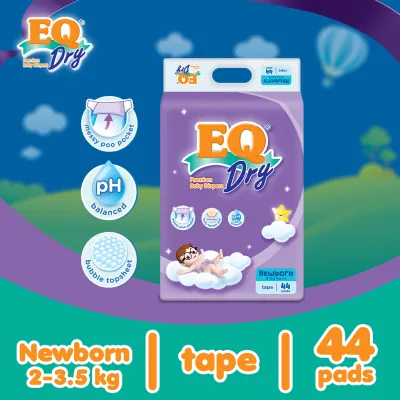

Prices are valid at publication and may change. Please refer to the product page for the latest price.
Leg Cuffs and Elasticity
The leg openings are the most common escape route for liquid stool and urine. High-quality newborn diapers feature gathered leg barriers, often called double leak guards. These consist of an inner standing cuff that hugs the baby’s groin and an outer ruffled cuff that sits flat against the thigh. For babies with leaner thighs, highly elastic and flexible leg cuffs are critical to close any gaps. If the elastic is too loose, liquid will bypass the absorbent core entirely; if it is too tight, it can cause painful red marks and restrict circulation. Parents should inspect these cuffs during diaper changes to ensure they are fully flared outward.
Absorbent Core Distribution
Newborns feed frequently—often every two to three hours—which results in regular, highly liquid waste. The absorbent core of a diaper must quickly draw this moisture away from the skin and lock it inside. Modern diapers use superabsorbent polymers (SAP) mixed with wood pulp to turn liquid into a stable gel. The speed of this absorption is vital; if the core cannot absorb liquid quickly enough, the pooling waste will leak out of the sides before it can be locked away. This is especially true for breastfed babies, whose stools are naturally loose and runny.
Waistband and Back Pocket Design
When a newborn lies flat on their back, gravity pushes liquid stool upward toward the spine. Without a secure barrier at the rear waistband, this frequently results in a “blowout” that ruins clothing. Some diaper designs incorporate elasticized waistbands that cling snugly to the lower back, while others feature physical pockets or debris guards designed to trap traveling liquid. A secure fit at the waist is just as important as the fit around the legs, particularly for active babies who stretch and wiggle.
Wetness Indicators and Breathability
In the warm, humid climate of the Philippines, trapped moisture inside a diaper quickly leads to skin maceration and severe diaper rash. Breathable outer covers allow heat and water vapor to escape while keeping liquid contained. Furthermore, wetness indicators—external strips that change color when exposed to moisture—are invaluable for newborn care. They allow parents to see at a glance if a diaper is saturated, encouraging timely changes before the absorbent core reaches its limit and begins to leak.
Brand Breakdown: Design and Fit for Newborns
Every brand designs its newborn diapers with a specific target shape and parental priority in mind. By analyzing the structural features of Pampers, Huggies, and Equator, you can determine which brand’s blueprint aligns with your baby’s physical build and your daily caregiving routine.

Pampers: Flexibility and Umbilical Cord Care
Pampers designs its newborn diapers with a strong emphasis on contouring flexibility and protecting delicate skin. One of the most notable features of Pampers newborn sizes is the umbilical cord cut-out. The front waistband is contoured downward to avoid rubbing against the healing umbilical stump. This design helps keep the area dry and exposed to air, which is crucial for preventing irritation or infection during the first few weeks of life. Parents should monitor the umbilical area daily and consult a pediatrician if they notice redness, discharge, or an unusual odor.
In terms of fit, Pampers features highly stretchable side panels. These panels expand and contract easily, accommodating the rapid abdominal expansion that occurs when a newborn feeds. This flexibility ensures a snug fit around the waist without constricting the baby’s breathing. The leg cuffs are soft and highly pliable, making them well-suited for babies with average to leaner thighs, as they wrap closely around the groin without requiring high tension. Parents should verify the specific leg cuff design on the packaging, as product lines can vary slightly in their elasticity.
Huggies: Back Barriers and Secure Containment
Huggies is widely recognized for its robust approach to heavy-duty containment, making it a popular choice for parents dealing with frequent liquid stools. The defining feature of Huggies newborn diapers is the pocketed waistband at the back. This physical pocket acts as a secondary barrier, catching and holding runny poop that travels upward when the baby is lying down. This design is highly effective at preventing back blowouts, saving parents from frequent clothing changes and extra laundry.
Additionally, Huggies diapers tend to feature a slightly wider cut and stronger, more robust leg elastics. This structure is highly beneficial for babies with chunkier thighs, as the wider cut provides ample coverage while the strong elastics create a secure, reliable seal around the legs. To ensure this system works correctly, parents must pull the diaper up high enough at the back and ensure the pocket lies flat against the skin rather than folding inward during fastening.
Equator: Core Absorbency and Value-Driven Fit
Equator occupies a highly practical space in the Philippine market, offering reliable leak protection at a budget-friendly price point. Because newborns require up to 10 to 12 diaper changes a day, the cost of diapering accumulates rapidly. Equator addresses this by focusing on solid, dependable core absorbency without unnecessary design frills. The core layer is designed to handle frequent urination efficiently, locking moisture away from the skin to maintain dryness in humid conditions.
While Equator may feature a more straightforward fastening system compared to premium brands, its tape fasteners are designed to hold securely throughout regular daily use. The overall cut is functional and accommodates a wide range of baby shapes. When purchasing Equator newborn diapers, parents should verify the presence of standing inner leak guards on the packaging. These standing guards are essential for containing sudden bursts of liquid stool, ensuring that the diaper provides reliable daytime protection during high-frequency change intervals.
Decision Framework: Match the Diaper to Your Baby
To simplify your purchasing decision, use this structured framework to match the specific design strengths of each brand to your newborn’s physical characteristics, feeding habits, and your household budget.
- Choose Pampers if:
- Your baby still has a sensitive, healing umbilical cord stump that requires a cleared, rub-free front waistband.
- Your newborn is highly active, requiring a highly flexible, stretchy diaper that conforms to frequent movement and feeding expansion.
- Your baby has a leaner, longer build with thinner thighs that benefit from soft, contouring leg elastics.
- Choose Huggies if:
- Your baby is prone to frequent, explosive back blowouts, especially during or immediately after feedings.
- Your newborn has a chunkier physical build with thick, round thighs that require a wider diaper cut and robust, secure leg seals.
- You prefer a diaper with a physical rear pocket to trap liquid stools before they travel up the back.
- Choose Equator if:
- You practice high-frequency diaper changes (every 1 to 2 hours) to keep your baby's skin perfectly dry in hot, humid weather.
- You are looking for a highly cost-effective daytime diaper that manages the high volume of newborn waste without straining your budget in Philippine Pesos (₱).
- Your baby has a standard physical build and does not experience frequent back blowouts or severe skin sensitivities.
- Verify First Before Buying in Bulk:
- Always check the manufacturer's weight guidelines on the packaging rather than relying solely on age labels. Newborn sizes typically accommodate babies up to 5 kilograms, but physical proportions vary.
- If your baby has highly sensitive skin, verify the material composition and hypoallergenic ratings on the packaging.
- Purchase a small trial pack of any brand before committing to bulk boxes. This allows you to test the fit and monitor your baby's skin for any signs of irritation or redness. If persistent rashes or skin breakage occur, stop use immediately and consult a healthcare professional.
Practical Checks to Prevent Newborn Blowouts
Even the highest-quality diaper will leak if it is not fitted correctly. Many common diaper leaks are the result of minor application errors rather than product failure. Incorporating these quick, practical checks into your changing routine will drastically improve leak protection.
The Two-Finger Rule
When fastening the diaper tapes, it is easy to pull them too tight out of fear of leaks, or leave them too loose to ensure comfort. To find the perfect balance, use the two-finger rule. After securing the tapes symmetrically on the front landing zone, slide two fingers flat into the waistband at the baby’s tummy. The waistband should feel snug against your fingers but not tight. If you cannot fit two fingers, the diaper is too tight and may restrict breathing or cause skin chafing. If there is a gap wider than two fingers, the waistband is too loose, creating an easy escape path for leaks.
Ruffling the Leg Cuffs
This is perhaps the most critical step in diaper application. When you pull a fresh diaper out of the packaging and slide it under your baby, the inner and outer leg cuffs naturally fold inward. If left this way, these cuffs act as a channel, guiding liquid straight out of the diaper. After fastening the tapes, always run your index finger around both leg openings. Gently pull the ruffled outer cuffs outward so they flare flat against your baby’s thighs, and ensure the inner standing guards are upright in the groin area. This simple five-second check prevents the majority of leg leaks.
Sizing Up vs. Changing Brands
Parents often assume that persistent leaks mean they need to switch brands, but it is frequently a sign that the baby has outgrown their current size. You should consider sizing up if you observe any of the following signs:
- The diaper is fully saturated and heavy within an hour of application.
- The fastening tape tabs must be secured at the very outer edges of the front landing zone rather than near the center.
- You notice deep, persistent red marks around your baby's thighs or lower back after removal.
- The diaper sits too low on the waist, failing to cover the lower back completely.
Conversely, if the diaper is leaking but is not fully wet, and you notice gaping holes around the legs or waist when your baby moves, the size is likely correct but the brand’s cut does not match your baby’s body shape. In this scenario, switching to a brand with a different cut (such as moving from a wider cut to a narrower, more flexible cut) is the best course of action.
Positioning for Boys vs. Girls
Anatomical differences play a role in diaper performance. For baby boys, always ensure that their anatomy is pointed downward before fastening the diaper. If pointed upward or to the side, urine will shoot directly toward the waistband or leg cuff, bypassing the absorbent core entirely. For baby girls, ensure the diaper is centered evenly from front to back, as liquid waste tends to pool directly underneath and toward the rear of the diaper.
Frequently Asked Questions (FAQ)
How do I know if the newborn diaper is too small?
You can tell a newborn diaper is too small if the fastening tabs struggle to reach the center of the landing zone, or if the waistband sits significantly below your baby’s belly button. Physical indicators include persistent red elastic marks on your baby’s thighs or lower back. Additionally, if the diaper becomes fully saturated and leaks within an hour of application despite being fitted correctly, your baby likely requires the increased absorbent capacity of the next size up.
Should I size up if my baby keeps leaking?
Sizing up only helps if the current diaper is leaking because it has reached its maximum absorbent capacity or because it is physically too tight, causing liquid to spill over. If the diaper is leaking but remains mostly dry, or if you can see visible gaps around the legs and waist when your baby moves, the diaper is actually too loose. In this case, sizing up will make the gaps larger and worsen the leaks; instead, you should adjust your fitting technique or try a different brand with a narrower or more elasticized cut.

Community discussion
Share your experience or ask a question. Comments are reviewed before publication.