
Finding a diaper that keeps your baby dry through the night is one of the most practical challenges of early parenthood. When your child reaches the XXL size range, their bladder capacity increases, and their active sleeping positions can easily test the limits of standard disposable diapers. Choosing between Pampers, Equator, and Huggies XXL diapers for overnight protection is not about finding a single universal winner; instead, it requires matching the specific structural design of each brand to your baby’s unique body shape, sleeping habits, and skin sensitivity.
In tropical climates like the Philippines, where overnight humidity and warmth are constant factors, a diaper’s performance is measured by more than just how much liquid it can hold. It must also keep the skin dry and cool to prevent irritation. By evaluating the physical construction, core technologies, and fit mechanisms of these three brands, you can determine which option provides the most reliable barrier against midnight leaks and wet sheets.
Key Features to Check for Overnight Absorbency
To understand how an XXL diaper performs under pressure, you must look closely at its physical construction. The primary mechanism of any modern disposable diaper is its absorbent core. Most brands utilize superabsorbent polymers (SAP) mixed with wood pulp. When liquid enters, these polymers lock it into a gel state. Parents often refer to this gel-bead structure when searching for a highly absorbent “bean diaper xxl” to handle heavy nighttime wetting. The distribution of these beads within the core determines whether the diaper swells evenly or clumps in one area, which can cause sagging and subsequent leaks.
Products mentioned in this guide
![[Bundle of 2] Cloud Diaper Pants XXL - Big Pack (100s)](https://img.lazcdn.com/g/p/fe082e0ee1eab5993500b5a8f4c82bb7.png_400x400q80.png_.webp)
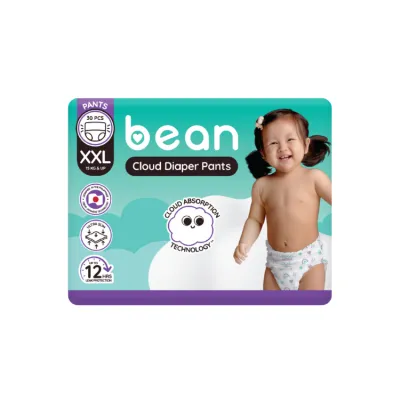
![[Bundle of 4] bean Cloud Diapers Pants XXL (15 kg and up)- 120 pcs](https://img.lazcdn.com/g/p/177391af914bc09d7b840fe8d0cf96ea.png_400x400q80.png_.webp)
![[Bundle of 2] bean Cloud Diapers Pants XXL (15 kg and up) - 60 pcs](https://img.lazcdn.com/g/p/cdbf74ddada50ebb5000a953c49c965e.png_400x400q80.png_.webp)
![[Bundle of 5] bean Cloud Diapers Pants XXL (15 kg and up) - 150 pcs](https://img.lazcdn.com/g/p/dc1a949def23842e0242c51a6b5383cc.png_400x400q80.png_.webp)
![[Bundle of 2] bean Cloud Diapers Pants 3XL (30s) - 60 pcs](https://img.lazcdn.com/g/p/dd88d21bd75ebe74052b7d6f2d9c426f.jpg_400x400q80.jpg_.webp)
Prices are valid at publication and may change. Please refer to the product page for the latest price.
Beyond the core, the physical barriers of the diaper are your secondary line of defense. Double-layered leg cuffs, also known as leg gathers, must sit snugly in the groin creases. These cuffs act as dams to contain sudden gushes of liquid before the core can fully absorb them. The elasticity of the waistband is equally critical. A diaper needs a flexible, high-rise back waistband to prevent leaks when a baby sleeps on their back, as liquid can easily travel upward when compressed.
Finally, breathability is a vital feature to verify on the packaging, especially during warm, humid tropical nights. Look for labels indicating a micro-porous outer cover that allows hot air and moisture vapor to escape while keeping liquid contained. A wetness indicator—usually a line that changes color when wet—is a helpful tool for parents to monitor saturation levels without fully opening the diaper, minimizing sleep disruptions for both baby and caregiver.
Comparing Pampers, Equator, and Huggies XXL Designs
Each of these three brands approaches XXL diaper construction with distinct design philosophies, which you can verify by examining their packaging and product specifications.

Pampers XXL variants, particularly within their premium or dedicated overnight lines, typically focus on a slim profile that utilizes advanced channel technology. Instead of a single thick block of absorbent material, the core is divided into distinct longitudinal channels. This design is intended to distribute liquid rapidly from front to back, preventing the diaper from sagging between the legs. Additionally, Pampers designs often feature highly stretchable side panels that adapt to a baby’s movements, making them a strong candidate for babies who twist and turn throughout the night.
Equator XXL diapers are often recognized for their straightforward, high-capacity utility. When inspecting an Equator package, you will want to review the core thickness and the structure of the leg gathers. This brand typically emphasizes a robust, traditional absorbent core designed to handle high volumes of liquid. The value-to-absorbency ratio is a key consideration here; parents looking to manage their weekly diaper budget in ₱ often compare the cost per piece of Equator against premium alternatives to see if the standard absorbency meets their child’s specific nighttime output without requiring a premium price tag.
Huggies XXL diapers frequently highlight specialized leak-prevention structures on their packaging, such as their proprietary leak-guard or leak-lock systems. One of the most notable physical features to look for on Huggies diapers is the pocketed waistband at the back. This pocket is designed to catch runny stools and liquid that might otherwise escape up the baby’s back during sleep. Huggies also utilizes wide, secure fastening tabs that resist tearing or slipping, which helps maintain a consistent fit even if the diaper becomes heavy with overnight wetness.
How to Choose the Best Overnight Diaper for Your Baby
Selecting the right XXL diaper involves matching these brand-specific features to your baby’s physical traits and sleep behaviors.
If your baby is an active sleeper who tosses, turns, and sleeps in unusual positions, Pampers XXL may be the most suitable choice. The flexible side panels and channel-based core distribution allow the diaper to move with your baby’s body, reducing the likelihood of gaps forming around the thighs and waist as they reposition themselves.
If your baby is primarily a back sleeper or frequently experiences leaks that escape from the top of the diaper at the back, Huggies XXL is a strong candidate. The pocketed waistband and higher-rise back design provide a physical barrier that is specifically engineered to contain upward leaks, keeping pajamas and bedding dry.
If your baby has a predictable sleep pattern, does not typically experience extreme heavy-wetting episodes, and you are looking to optimize your household budget, Equator XXL offers a practical option. It provides standard overnight protection with a focus on core capacity, making it a reliable choice for babies whose body shapes align well with the brand’s specific cut.
Regardless of the brand you choose, always verify your baby’s skin compatibility first. Check the packaging for explicit material composition details, hypoallergenic certifications, and fragrance-free claims. In hot, humid environments, fragrances and certain synthetic materials can sometimes trigger skin irritation or heat rash when trapped against the skin for 10 to 12 hours.
Troubleshooting Nighttime Leaks in XXL Diapers
Even the most absorbent diaper can leak if it is not fitted or managed correctly. If you are experiencing persistent leaks with your chosen XXL brand, start by auditing the fit. When securing the diaper, apply the two-finger rule: you should be able to slide two fingers comfortably between the diaper waistband and your baby’s tummy. If it is tighter, the diaper may cause discomfort; if it is looser, liquid will easily escape. Additionally, always run your finger around the leg cuffs after fastening to ensure the elastic ruffles are fully flared outward rather than tucked inward.
Another critical factor is managing liquid intake before bedtime. While keeping your baby hydrated is essential, offering large bottles of water, milk, or juice immediately before sleep can overwhelm any diaper’s absorbent capacity. Try shifting the bulk of their evening fluids to an hour before bedtime, allowing them to urinate once before they are put down for the night.
If your baby is at the upper weight limit of their current diaper size or is a consistently heavy wetter, consider sizing up. Moving to a larger size—or transitioning to a dedicated overnight diaper variant—provides a larger absorbent core and higher containment walls. However, if you observe persistent skin irritation, severe diaper rash, or if leaks continue despite adjusting the fit and size, stop using the current brand and consult a pediatrician or healthcare professional to rule out skin sensitivities or underlying issues.
Frequently Asked Questions (FAQ)
How do I know if my baby needs to size up to XXL or a larger overnight diaper?
Your baby may need to transition to an XXL or larger size if you notice consistent physical signs of a poor fit. Look for deep red marks or indentations along your baby’s thighs, hips, or waist, which indicate the elastic is under too much tension. Frequent leaks or blowouts, especially when they occur shortly after your baby falls asleep, are also strong indicators. Additionally, if the diaper’s fastening tabs can only be secured at the very outer edges of the waistband, or if the diaper core feels completely saturated and heavy long before morning, it is time to move up to a larger size to ensure adequate absorbency and coverage.
Can I use standard daytime XXL diapers for overnight protection?
While you can use standard daytime XXL diapers overnight, they may not always provide sufficient protection for heavy wetters or long sleep stretches. Daytime diapers are designed for mobility and frequent changes, meaning they often have a slimmer absorbent core to allow for easier movement. Dedicated overnight diapers, by contrast, typically feature a thicker distribution of superabsorbent polymers, reinforced leg cuffs, and a higher capacity to lock away moisture over a 10-to-12-hour period. If your baby sleeps through the night without waking or is a heavy wetter, investing in a specialized overnight variant is often necessary to prevent leaks.

Community discussion
Share your experience or ask a question. Comments are reviewed before publication.