
Choosing the right diaper for your baby is a balancing act between comfort, performance, and budget. When comparing Pampers, Equator, and Huggies tape diapers in the popular 50-piece (50pcs) pack size, there is no single universal winner that works for every infant. The ideal choice depends entirely on your baby’s unique body shape, skin sensitivity, and daily output volume.
Each of these three brands approaches diaper design with a different philosophy. Some prioritize maximum stretch and flexibility for active babies, while others focus on heavy-duty core absorbency or straightforward, budget-friendly utility. Furthermore, features can vary significantly between a brand’s standard and premium product lines, even within the same 50pcs packaging.
Because diaper fit and skin compatibility are highly individual, committing immediately to a bulk 50pcs pack can sometimes lead to wasted money if the diaper leaks or causes irritation. Before purchasing a full mid-sized pack, buying a smaller trial pack is a practical way to test how a specific brand performs on your baby under real-world conditions.
Products mentioned in this guide
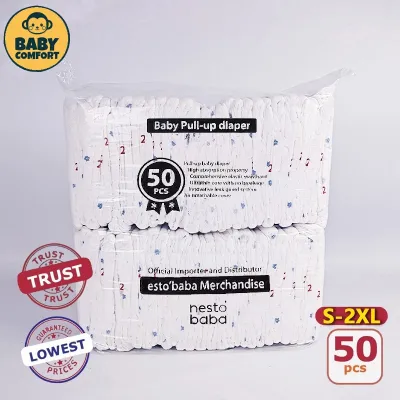
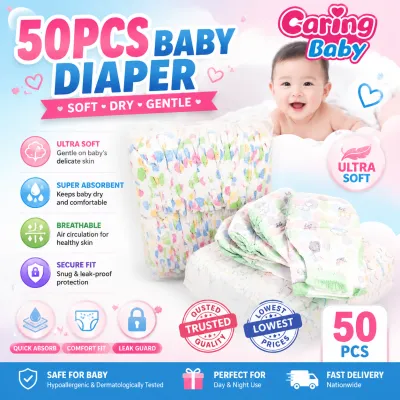
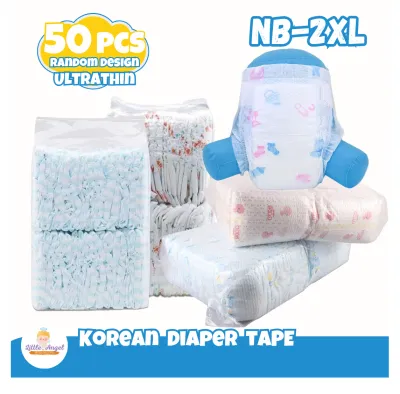
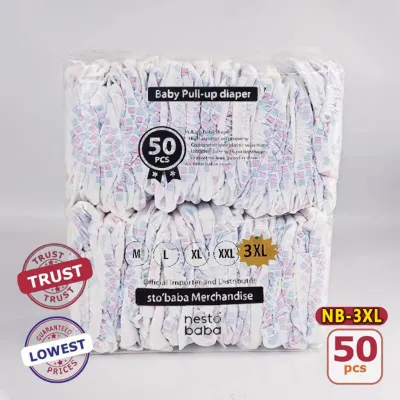
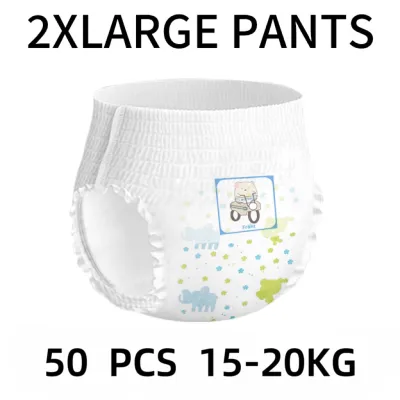
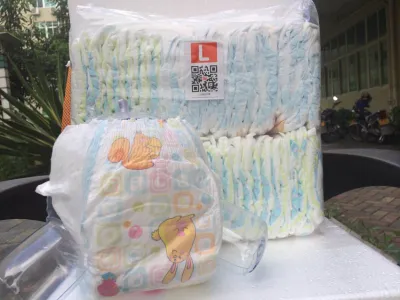
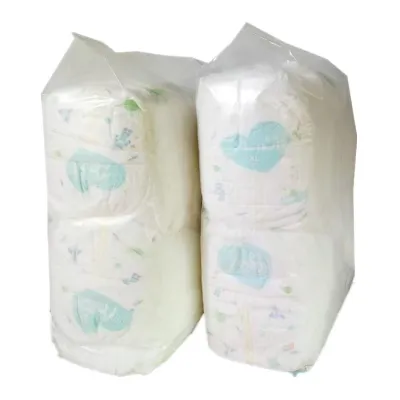
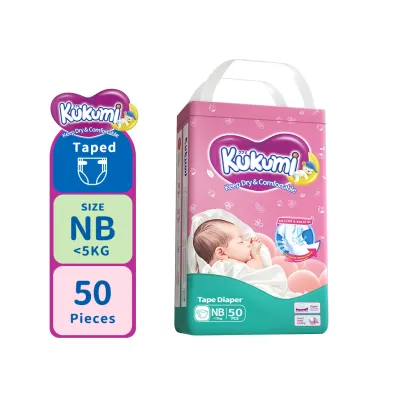
Prices are valid at publication and may change. Please refer to the product page for the latest price.
How to Verify Absorbency and Leak Protection on the Box
Evaluating absorbency claims before opening the packaging requires a close look at the technical specifications printed on the diaper box. Manufacturers use various terms to describe how their diapers handle liquid, but you can look for specific structural indicators to gauge how well a diaper might perform.
Absorbent Core Technologies
Scan the packaging for diagrams explaining the core construction. Modern tape diapers generally use a mix of fluff pulp and Superabsorbent Polymer (SAP) gel beads. Look for terms like “absorbent channels” or “segmented cores,” which indicate that the diaper is designed to distribute wetness evenly rather than letting it pool in one spot. This channel design helps prevent the diaper from sagging and clumping between your baby’s legs as it fills.
Standing Leak Guards and Waistband Barriers
To prevent side leaks, look for illustrations or descriptions of double-layered leg cuffs or standing leak guards. These are the elasticized inner barriers that run along the leg openings. A high-quality leak guard should stand upright when the diaper is opened. Additionally, check if the packaging highlights a pocketed waistband or an elastic back barrier, which is specifically designed to contain runny bowel movements and prevent up-the-back blowouts.
Daytime vs. Overnight Marketing
Not all 50pcs packs are designed for extended wear. Check the packaging to see if the product is marketed for “day use” or “overnight protection.” Overnight diapers typically feature a thicker absorbent layer or a higher concentration of SAP to handle multiple wettings over ten to twelve hours. If the box does not explicitly mention overnight or extended-wear capabilities, the diapers may require more frequent changes, making them better suited for daytime use.
Comparing Fit, Sizing, and Tape Fastening Systems
A diaper’s ability to prevent leaks is only as good as its fit. Because babies come in all shapes—some with round tummies, others with chubby thighs—the cut of a diaper plays a massive role in its performance. Comparing the physical design of the fastening systems on Pampers, Equator, and Huggies can help you determine which brand matches your baby’s build.

Understanding Brand Sizing Discrepancies
Sizing is not standardized across the diaper industry. A “Medium” diaper in one brand may be cut narrower or shorter than a “Medium” in another. Instead of relying solely on the letter size (S, M, L, XL), always refer to the weight range printed on the front of the 50pcs pack. If your baby is approaching the upper limit of a brand’s weight recommendation, it is generally wise to size up to ensure adequate coverage and prevent red marks on their skin.
Evaluating the Tape Fastening System
For tape diapers, the quality of the adhesive or hook-and-loop tabs is critical. Look for packaging that highlights “refastenable” or “multi-use” tapes. This feature allows you to open and adjust the diaper multiple times without losing grip, which is especially helpful when checking for wetness. Some brands also print numerical guides (1, 2, 3) on the front landing zone to help you align the tapes symmetrically, ensuring an even, balanced fit around the waist.
Stretchable Side Panels and Waistbands
Active babies who are beginning to roll, crawl, or pull themselves up need a diaper that moves with them. Check the product description for stretchable side panels or an elasticized waistband. A diaper with flexible sides can expand and contract as your baby breathes and moves, maintaining a snug seal against leaks without digging into their soft skin.
Checking Skin-Friendliness and Material Breathability
In hot and humid tropical climates, keeping your baby’s skin dry and cool is essential for preventing diaper dermatitis and heat rash. The microclimate inside a wet diaper can quickly become a breeding ground for irritation if the materials do not allow adequate airflow.
Breathability Indicators on the Packaging
When examining a 50pcs pack, look for specifications regarding the outer cover or backsheet. Features such as “micro-pores,” “breathable outer cover,” or “cottony soft materials” indicate that the diaper is designed to let hot air and moisture escape while keeping liquid contained. High breathability helps lower the temperature inside the diaper, reducing the risk of sweat rash.
Fragrances, Lotions, and Chemical Processing
Parents of babies with highly sensitive skin should carefully read the ingredient list on the packaging. Some brands infuse their diapers with light fragrances or soothing lotions, while others focus on completely fragrance-free and elemental chlorine-free (ECF) materials. If your baby is prone to eczema or allergic reactions, look for packs that explicitly state they are free from added perfumes, parabens, and natural rubber latex.
Verifying "Hypoallergenic" Claims
While terms like “hypoallergenic” or “dermatologically tested” are reassuring, they are not absolute guarantees of safety. These labels indicate that the manufacturer has conducted basic safety screenings, but every baby’s skin chemistry is unique. Always monitor your baby’s skin closely during the first few days of using a new brand. If you notice persistent redness, swelling, or a rash that does not clear up with standard diaper cream, stop using the brand immediately and consult a qualified pediatrician.
Calculating the True Value of a 50pcs Diaper Pack
A 50pcs pack is a highly popular mid-sized option in the local market, but it is important to verify whether it offers the best value for your household budget. Price comparisons should always be calculated systematically rather than relying on bulk-buy assumptions.
The Cost-Per-Piece Formula
To find the true value of any diaper pack, do not look only at the total shelf price. Instead, divide the total cost of the pack by the number of diapers inside to find the exact cost per piece:
- Cost per Diaper (₱) = Total Pack Price / 50
Using this simple calculation allows you to make an accurate, apples-to-apples comparison across Pampers, Equator, and Huggies, regardless of any temporary store discounts or packaging differences.
Comparing Pack Sizes
Do not assume that a 50pcs pack is automatically cheaper per diaper than a smaller pack or a larger bulk box. Retailers occasionally run promotions where smaller packs have a lower unit cost, or online marketplaces offer bulk boxes (such as 80pcs or 100pcs) that significantly reduce the price per piece. Always run the cost-per-piece calculation on different pack sizes before making your final purchase.
Factoring in Baby's Growth Rate
Babies grow incredibly fast, especially during their first year. Before purchasing multiple 50pcs packs of a single size, consider your baby’s current growth trajectory. If your baby is near the upper weight limit of their current size, they may outgrow the diapers before you can finish a 50-piece supply. To avoid being left with unusable diapers, buy only what you need for the immediate future.
Final Decision Framework: Which Brand Fits Your Baby?
To make your final selection from the available 50pcs tape diaper options, use this structured, condition-based decision framework to match a brand’s design strengths with your baby’s current needs.
- Consider a brand focusing on high-stretch side panels and flexible waistbands if: Your baby is highly active, constantly rolling, or crawling, and you notice that stiffer diapers tend to gap or slide down during play.
- Consider a brand emphasizing deep absorbent channels and overnight protection if: Your baby is a heavy wetter, sleeps for long stretches at night, or if you frequently experience leaks during car rides and naps.
- Consider a straightforward, budget-friendly brand focusing on core utility if: Your baby has a predictable changing schedule, does not experience frequent leaks, and you prioritize minimizing your daily cost-per-piece expenditure.
- Verify first if your baby has highly sensitive skin: Opt for packs that explicitly state they are fragrance-free and dye-free. If a persistent diaper rash develops and does not resolve with frequent changes and barrier creams, consult a pediatrician to rule out allergies or infections.
Ultimately, the best way to ensure long-term satisfaction is to monitor your baby’s comfort, skin condition, and leak frequency over a trial period of three to five days. Once you find the specific brand and size that consistently keeps your baby dry and rash-free, you can confidently invest in larger quantities.

Community discussion
Share your experience or ask a question. Comments are reviewed before publication.