
Quick Guide: Which Medium Pants Diaper Fits Your Baby's Needs?
Finding the right medium pants diaper for your growing baby involves balancing comfort, performance, and household expenses. The “best” diaper is not a single universal product; rather, it is the one that matches your baby’s unique body shape, skin sensitivity, and daily activity levels. In the Philippines, where tropical heat and high humidity are constant factors, choosing a diaper that keeps your baby dry and rash-free is a top priority for caregivers.
Pampers, EQ (often referred to as Equator), and Huggies are three of the most prominent brands offering medium pants diapers. Each brand approaches diaper design with different priorities. A quick comparison shows that Pampers focuses heavily on a thin, highly flexible fit; EQ emphasizes practical, budget-friendly daily protection; and Huggies prioritizes a secure, snug waistband designed to contain active messes.
To make the right choice, you must look beyond brand popularity and evaluate how each diaper performs under real-world conditions. Your baby’s physical build, urine volume, and movement patterns will ultimately determine which brand provides the most reliable protection without causing skin irritation.
Products mentioned in this guide
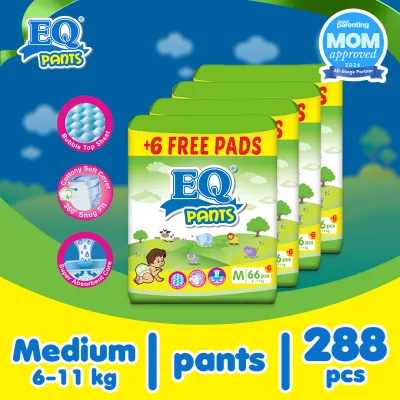
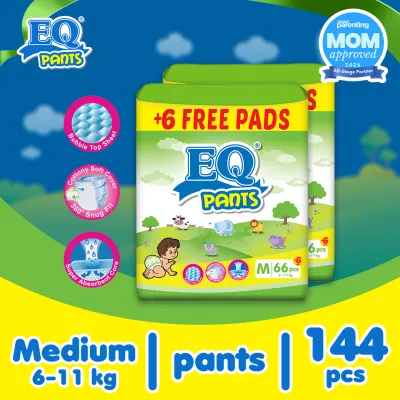
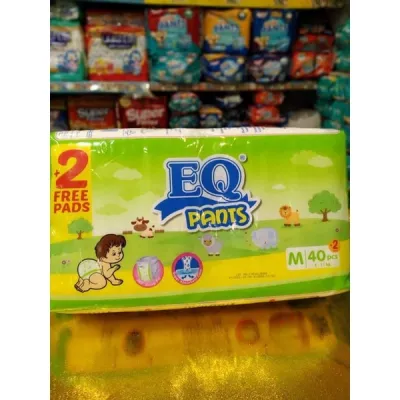
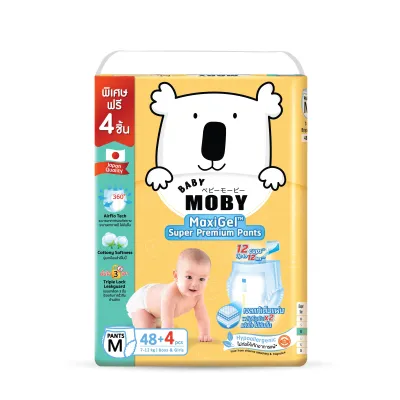
Prices are valid at publication and may change. Please refer to the product page for the latest price.
Checking the Fit: Weight Ranges and Leg Cuff Designs
Before purchasing any medium pants diaper, you must verify if your baby falls within the manufacturer’s recommended weight range. Medium diapers generally cater to babies who are starting to crawl or stand, typically weighing between 6 and 12 kilograms. However, because every brand uses slightly different sizing templates, you should always check the specific weight chart printed on the packaging of Pampers, EQ, and Huggies before buying a large pack.

Once the diaper is on, you can assess the physical fit by observing how the waistband and leg cuffs sit against your baby’s skin. A well-fitting pants diaper should sit snugly around the waist without sagging, yet remain loose enough for you to slide two fingers comfortably under the band. After your baby has worn the diaper for a few hours, check for red marks around the thighs and waist. Persistent red indentations indicate that the elastic is too tight, meaning you may need to transition to a larger size or try a brand with a more generous cut.
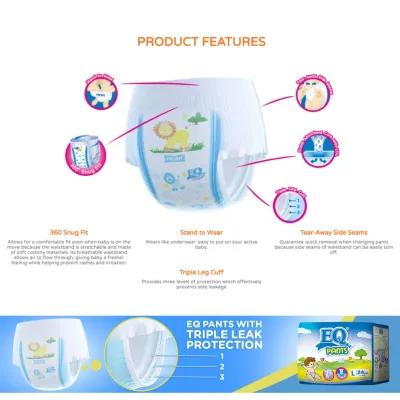
Leg cuff design is critical for preventing side leaks, especially when your baby is highly active. Look for double-layered leg barriers that fold outward rather than inward. If your baby has chubby thighs, a diaper with highly stretchable, soft leg garters is essential to prevent chafing. Slender babies, on the other hand, require a more contoured, snug leg cuff to eliminate gaps that inevitably lead to leaks when they sit or crawl. Pampers is known for its highly elastic, cloth-like stretch; Huggies often features a wider, pocketed waistband to catch back leaks; and EQ provides a structured, classic fit that holds its shape well during play.
Comparing Absorbency Claims and Skin Comfort Features
Diaper packaging is filled with technical terms describing absorbency, such as speed-dry layers, magic gel channels, or super-absorbent polymer cores. These features are designed to draw wetness away from your baby’s skin and lock it deep inside the diaper core. While these claims sound impressive, you can easily evaluate their effectiveness at home by performing a simple touch test. After your baby has worn the diaper for a few hours, gently press a dry tissue against the inner liner; if the tissue remains dry, the core is successfully locking away moisture.
In the warm and humid climate of the Philippines, breathability is just as important as absorbency. When moisture and heat are trapped inside a diaper, it creates a breeding ground for bacteria, leading to diaper rash or prickly heat. To prevent this, look for diapers with micro-pore breathable outer sheets that allow hot air to escape while keeping wetness inside. You can observe this working if the outside of the diaper feels slightly cool or damp to the touch when saturated, which indicates that air is circulating properly.
Skin comfort features vary across the three brands. Some diapers include liners infused with mild lotions, aloe vera, or pH-balancing formulas to protect delicate skin. When testing a new brand, monitor your baby’s skin closely for any signs of redness, small bumps, or dry patches. If your baby develops a reaction, stop using that specific diaper immediately, revert to a familiar brand, and consult a pediatrician if the irritation persists.
Calculating Price Per Diaper and Bulk Value
Comparing diaper prices can be confusing because manufacturers package their products in various quantities, ranging from small travel packs to mega-value boxes. To find the true cost of each brand, you must calculate the price per piece. This simple calculation ensures you are getting the best value for your money, regardless of the packaging size.
To find the price per diaper, use this straightforward formula:
- Price Per Piece = Total Pack Price (₱) / Number of Diapers in the Pack
For example, if a jumbo pack of EQ diaper medium pants costs ₱500 and contains 40 diapers, the price per piece is ₱12.50. If a standard pack of another brand costs ₱350 and contains 25 diapers, the price per piece is ₱14.00. By comparing these unit prices, you can easily identify which option fits your household budget.
When shopping for diapers, explore different retail channels to find the best deals. Official brand stores on e-commerce platforms often offer exclusive online vouchers, bundle discounts, and subscription services that can significantly lower the cost per piece. Local supermarkets and wholesale clubs are also excellent sources for bulk promotions. However, avoid buying massive quantities of medium diapers if your baby is near the upper limit of the weight range, as they may outgrow the size before you finish the supply.
Final Verdict: How to Choose Based on Your Baby's Routine
Selecting the right medium pants diaper requires matching the diaper’s design strengths with your baby’s daily routine and your family’s budget.
Choose Pampers Medium Pants if:
- Your baby is highly active during the day and needs a thin, ultra-flexible diaper that moves naturally with their body.
- You prefer a soft, cloth-like waistband that does not leave marks on sensitive skin.
- You are willing to pay a slight premium for a lightweight, low-profile design.
Choose EQ Medium Pants if:
- You want a highly cost-effective option for frequent daytime changes.
- You prefer a structured, reliable diaper that offers solid everyday protection without a high price tag.
- You want a brand that is widely accessible in local retail stores and supermarkets.
Choose Huggies Medium Pants if:
- Your baby is a heavy wetter or prone to loose stools, requiring a secure waistband with a built-in pocket to prevent leaks.
- You need a snug, secure fit that stays in place during vigorous crawling or playing.
- You prioritize robust elastic barriers around the legs and waist.
Verify first if:
- Your baby has extremely sensitive skin; check the packaging for hypoallergenic certifications or fragrance-free labels.
- Your baby's weight is at the boundary of the medium size; if they are close to the limit, purchase a small trial pack of the next size up to compare the fit before committing to a bulk purchase.
Frequently Asked Questions (FAQ)
When should I switch from taped diapers to medium pants?
You should consider switching to medium pants diapers when your baby reaches key mobility milestones, such as rolling over, crawling, pulling themselves up to stand, or actively resisting diaper changes. Fastening the tapes on a squirming baby can be incredibly challenging and often results in an uneven, leaky fit. Pants diapers can be quickly pulled up while your baby is standing or playing, making diaper changes much faster and less stressful for both you and your child.
How do I know if my baby has outgrown medium pants?
Your baby has likely outgrown medium pants if you notice frequent leaks despite putting the diaper on correctly, or if the waistband sits significantly below the belly button. Physical indicators include deep red marks on your baby’s thighs or waist, indicating the elastic is too tight. Additionally, if the diaper fails to fully cover your baby’s bottom or if you find yourself struggling to pull the pants up over their hips, it is time to check their current weight and transition to the next size up.

Community discussion
Share your experience or ask a question. Comments are reviewed before publication.