
Quick Answer: Which Nursing Cover Style Fits Your Needs?
Choosing the right nursing cover breastfeeding accessory is not about finding a single universal winner. Instead, the ideal option depends on where you plan to nurse, how you manage the tropical heat, and your personal privacy preferences. Every mother has a unique daily routine, and matching your cover to your lifestyle ensures both you and your baby remain comfortable during feeding sessions.
- Choose a traditional full-coverage cover if your top priority is absolute 360-degree privacy. This style is excellent for crowded public spaces, busy transit hubs, or family gatherings where people may approach you from any angle.
- Choose a nursing scarf if you want a stylish, dual-purpose accessory. This option is ideal for mothers who spend time in cool, air-conditioned offices or shopping malls and want a cover that easily transitions into an everyday outfit accessory.
- Choose an apron-style cover if your main concerns are preventing your baby from overheating in humid weather and maintaining clear eye contact to monitor your baby's latch.
Ultimately, the best choice is the one that aligns with your primary nursing environment and makes you feel confident and relaxed while feeding your baby.
The 3 Main Nursing Cover Styles Explained
Before deciding on a specific product, it is essential to understand how these three styles differ in design, structure, and functionality. Each style serves the same primary purpose but approaches coverage and usability in distinct ways.
Products mentioned in this guide
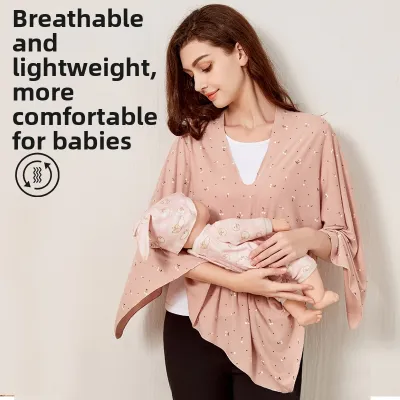
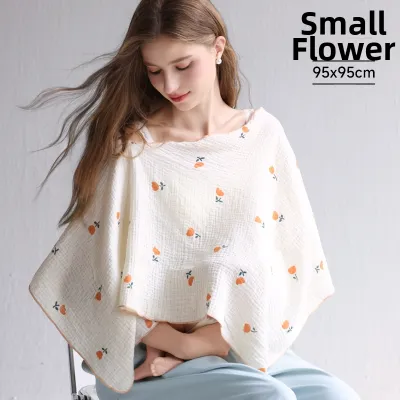
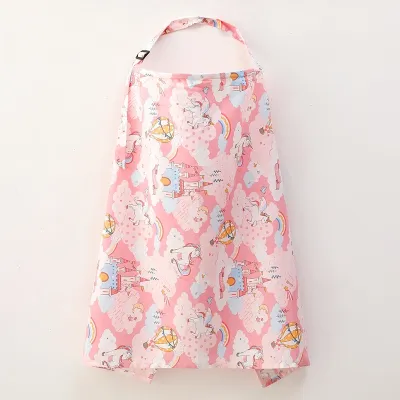
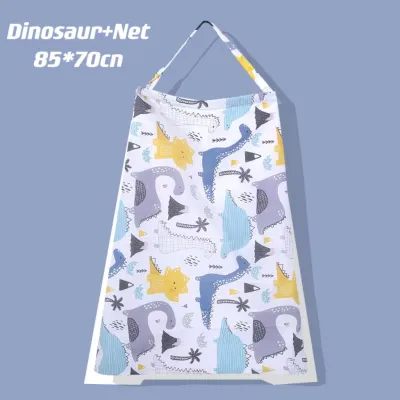
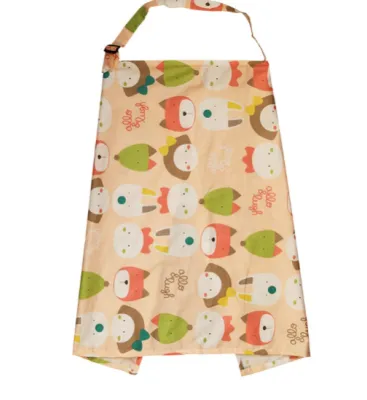
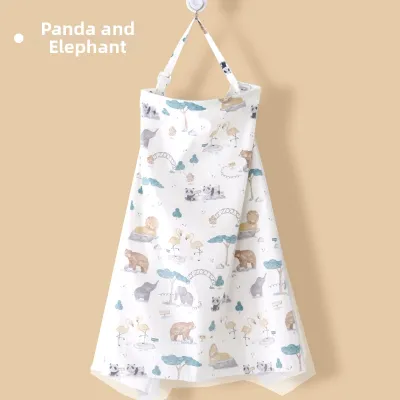
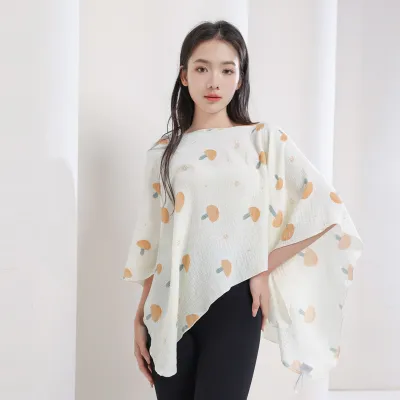
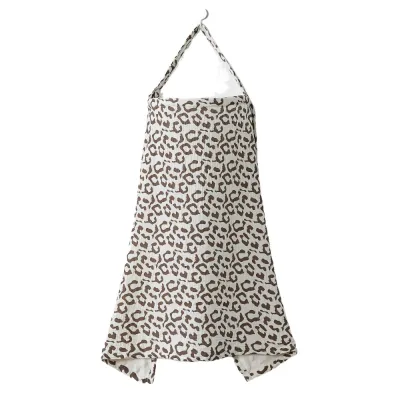
Prices are valid at publication and may change. Please refer to the product page for the latest price.

Traditional Nursing Covers (Full Coverage)
Traditional full-coverage nursing covers, often designed as ponchos or wide 360-degree wraps, slip completely over your head and cover your entire torso. This design ensures that your front, sides, and back are fully shielded from view, leaving no gaps for accidental exposure.
Because they drape entirely around your body, they provide a highly secure visual barrier. Some versions feature stretchy fabrics that allow you to move your arms freely underneath, while others use structured, lightweight woven materials. This style is designed specifically for breastfeeding and pumping, making it a dedicated utility item in your diaper bag rather than a wearable fashion piece.
Nursing Scarves (Infinity or Loop Styles)
Nursing scarves are continuous loops of fabric, commonly known as infinity scarves, designed to be worn around your neck as a fashionable accessory. When it is time to nurse, you simply unloop the fabric and drape it over one or both shoulders to create a private pocket for your baby.
These scarves are typically made from soft, highly stretchable fabrics that conform easily to your body shape. They appeal greatly to mothers who prefer a discreet look, as the scarf blends seamlessly into your daily wardrobe. There is a slight learning curve to adjusting the drape so that it covers your baby securely without pulling too tight against your body.
Apron-Style Nursing Covers
Apron-style covers consist of a flat, rectangular front panel that hangs down the front of your chest, secured by a strap that loops around your neck. This design leaves your sides and back completely open, prioritizing maximum airflow and ventilation.
A defining feature of many apron-style covers is a rigid, curved neckline made of flexible plastic or boning. This structured top bow holds the fabric away from your body, creating a convenient viewing window. This allows you to look directly down at your baby to guide their latch and maintain eye contact without needing to hold the fabric back with your hand.
Comparing Privacy, Comfort, and Versatility in Humid Weather
Evaluating these three styles requires looking closely at how they perform in daily life, especially under the unique environmental conditions of a tropical climate.
Privacy & Coverage Traditional full-coverage covers offer the highest level of security. If you are nursing in a crowded environment, such as a busy food court or during a commute, you do not have to worry about side angles or wind lifting the fabric. Apron-style covers offer excellent front coverage but leave your sides exposed, which can feel less secure if your baby kicks or if there is a strong breeze. Scarves provide moderate, adjustable coverage, but because they fit relatively close to the body, they can sometimes outline the baby’s movements underneath.
Breathability & Comfort In hot and humid weather, heat retention is a major concern for both mother and baby. Traditional full-coverage covers can trap body heat quickly, creating a warm, stuffy environment underneath. Apron-style covers perform exceptionally well in warm climates because the open sides allow air to circulate freely, keeping your baby significantly cooler. The comfort of a nursing scarf depends heavily on the fabric choice; dense or highly synthetic materials can quickly become hot and sweaty, making lightweight options essential.
Versatility & Everyday Use Nursing scarves are the most versatile option because they serve as a wearable accessory when you are not feeding. You do not need to search through your diaper bag to find them, which saves time and storage space. Traditional covers and apron-style covers are single-purpose items. While they fold relatively flat, they must be packed away in your bag when not in use, adding extra bulk to your daily gear.
Baby’s Visibility & Airflow Monitoring your baby’s breathing and ensuring they have a safe, unobstructed airway is a critical safety practice. Apron-style covers with a rigid neckline excel here, as the built-in viewing window stays open naturally. Traditional covers and scarves require you to manually lift or pull the fabric away to check on your baby. This action can be awkward to manage while trying to support your baby’s head and keep them latched comfortably.
Side-by-Side Comparison Table
The table below summarizes how each nursing cover style performs across key decision criteria to help you quickly identify the best fit for your routine.
| Style | Privacy Level | Airflow & Breathability | Versatility | Ease of Use | Best Environment |
|---|---|---|---|---|---|
| Traditional (Full Coverage) | Excellent (360-degree) | Low to Moderate | Low (Single-use) | Moderate (Slip-on) | Crowded public spaces, transit hubs |
| Nursing Scarf | Moderate (Front & sides) | Moderate | High (Wearable accessory) | Moderate (Requires adjusting) | Air-conditioned malls, offices |
| Apron-Style | Moderate (Front only) | High (Open sides) | Low (Single-use) | High (Rigid neckline) | Warm outdoor spaces, home use |
Choosing the Right Fabric for Tropical Heat
While the structural style of your cover is important, the fabric you choose plays an equally vital role in keeping you and your baby comfortable. The wrong material can trap humidity, leading to discomfort, sweating, and skin irritation for your little one.
When selecting a nursing cover breastfeeding accessory, look for these breathable, skin-friendly fabrics:
- Cotton Muslin: This is an exceptionally lightweight, open-weave fabric that allows excellent air circulation. It is highly breathable, absorbs moisture quickly, and gets softer with every wash, making it ideal for warm outdoor settings.
- Bamboo Blends: Bamboo fabric is known for its silky texture, natural coolness, and moisture-wicking properties. It is gentle on sensitive baby skin and helps regulate temperature effectively in humid conditions.
- Modal or Tencel: Often used in nursing scarves, these semi-synthetic fibers are highly breathable, drape beautifully, and feel cool to the touch. They also resist wrinkling, which is convenient for items kept in a diaper bag.
Avoid heavy synthetic fabrics, thick polyester blends, or multi-layered covers that do not allow air to pass through easily. These materials can trap heat, which may cause your baby to become fussy or develop heat rashes (commonly known locally as bungang-araw).
Always check the product’s care label and manufacturer instructions before purchasing. Because nursing covers frequently come into contact with milk spills, sweat, and spit-up, you will want a fabric that is durable, machine-washable, and quick to dry. Verify that the dyes used are safe and non-toxic, especially since babies often pull or chew on the edges of the fabric during feeding.
Final Decision: Match the Cover to Your Daily Routine
To make your final decision, look closely at where you spend most of your day and how you prefer to travel. Matching the cover style to your regular environment ensures you get the most practical use out of your purchase.
If you frequently commute using public transportation or attend busy community events, a traditional full-coverage cover offers the peace of mind you need to nurse comfortably in active crowds. For mothers who work in air-conditioned offices, pump at their desks, or enjoy spending weekends in shopping malls, a nursing scarf provides a stylish, warm, and highly convenient solution.
If you spend a significant amount of time outdoors, in non-air-conditioned spaces, or simply want an easy-to-use option for home visits, the superior ventilation and clear viewing window of an apron-style cover make it an excellent choice. Some mothers find it helpful to own two different styles—such as an apron-style cover for outdoor errands and a nursing scarf for indoor, air-conditioned environments—to handle different situations easily.
When shopping online or visiting local baby boutiques, always check the return policies, fabric certifications, and physical dimensions of the cover. Prices generally range from budget-friendly options around ₱300 to premium, organic fabric styles reaching ₱1,500 or more. Ensure the neck strap on apron styles is easily adjustable, and verify that the loop size of a scarf fits comfortably over your shoulders without restricting your baby’s movement.
Frequently Asked Questions (FAQ)
Can I use a regular scarf or shawl as a nursing cover?
Yes, you can use a regular fashion scarf, shawl, or lightweight swaddle blanket as a temporary nursing cover. However, regular clothing items lack the specialized safety and convenience features of dedicated nursing covers, such as adjustable neck straps or rigid necklines. If you choose to use a regular scarf, ensure it is made of highly breathable fabric and does not have loose threads, heavy beads, fringes, or pins that your baby could pull, scratch themselves on, or swallow. Always monitor your baby closely to ensure the fabric does not block their nose or mouth.
Are nursing covers necessary for breastfeeding in public?
No, using a nursing cover is entirely a personal choice based on your comfort level and privacy preferences. In the Philippines, public breastfeeding is widely supported, and many public spaces, offices, and shopping malls provide dedicated, comfortable lactation rooms. Some mothers prefer the complete privacy of a cover, while others find them hot or restrictive and choose to use specialized nursing tops, drape a simple light cloth, or nurse without any cover at all. Choose the approach that makes both you and your baby feel most relaxed and secure.
Community discussion
Share your experience or ask a question. Comments are reviewed before publication.